• Post Reply Bookmark Topic Watch Topic
  • New Topic
permaculture forums growies critters building homesteading energy monies kitchen purity ungarbage community wilderness fiber arts art permaculture artisans regional education skip experiences global resources cider press projects digital market permies.com pie forums private forums all forums
this forum made possible by our volunteer staff, including ...
master stewards:
  • Carla Burke
  • Nancy Reading
  • John F Dean
  • r ransom
  • Jay Angler
  • Timothy Norton
stewards:
  • paul wheaton
  • Pearl Sutton
  • Tereza Okava
master gardeners:
  • Christopher Weeks
  • M Ljin
gardeners:
  • thomas rubino
  • Jeremy VanGelder
  • Megan Palmer

Advice needed on weeding and cover cropping, garden bed maintenance

 
pollinator
Posts: 156
Location: Mid-Atlantic zone 6
35
forest garden trees woodworking wood heat
  • Likes 1
  • Mark post as helpful
  • send pies
    Number of slices to send:
    Optional 'thank-you' note:
  • Quote
  • Report post to moderator
We're heading into our 4th season with our current home garden and have scaled it up a bit each year. Now we are trying to get better at maintaining what we've started. We get a lot of weedy grasses in our garden and some are a pain to pull. We're trying to get better at cover cropping. Coming here looking for advice, please lay it on me!

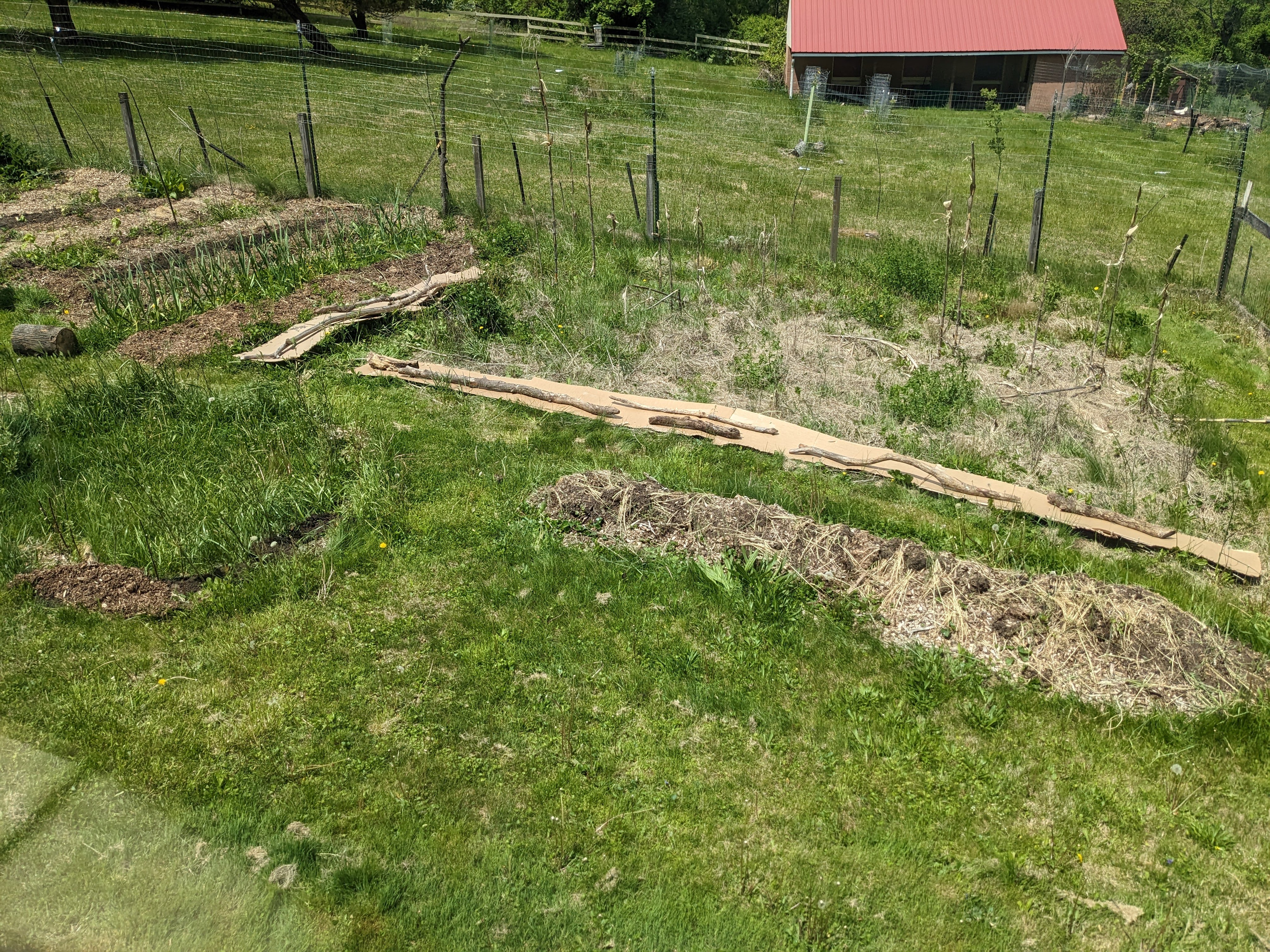
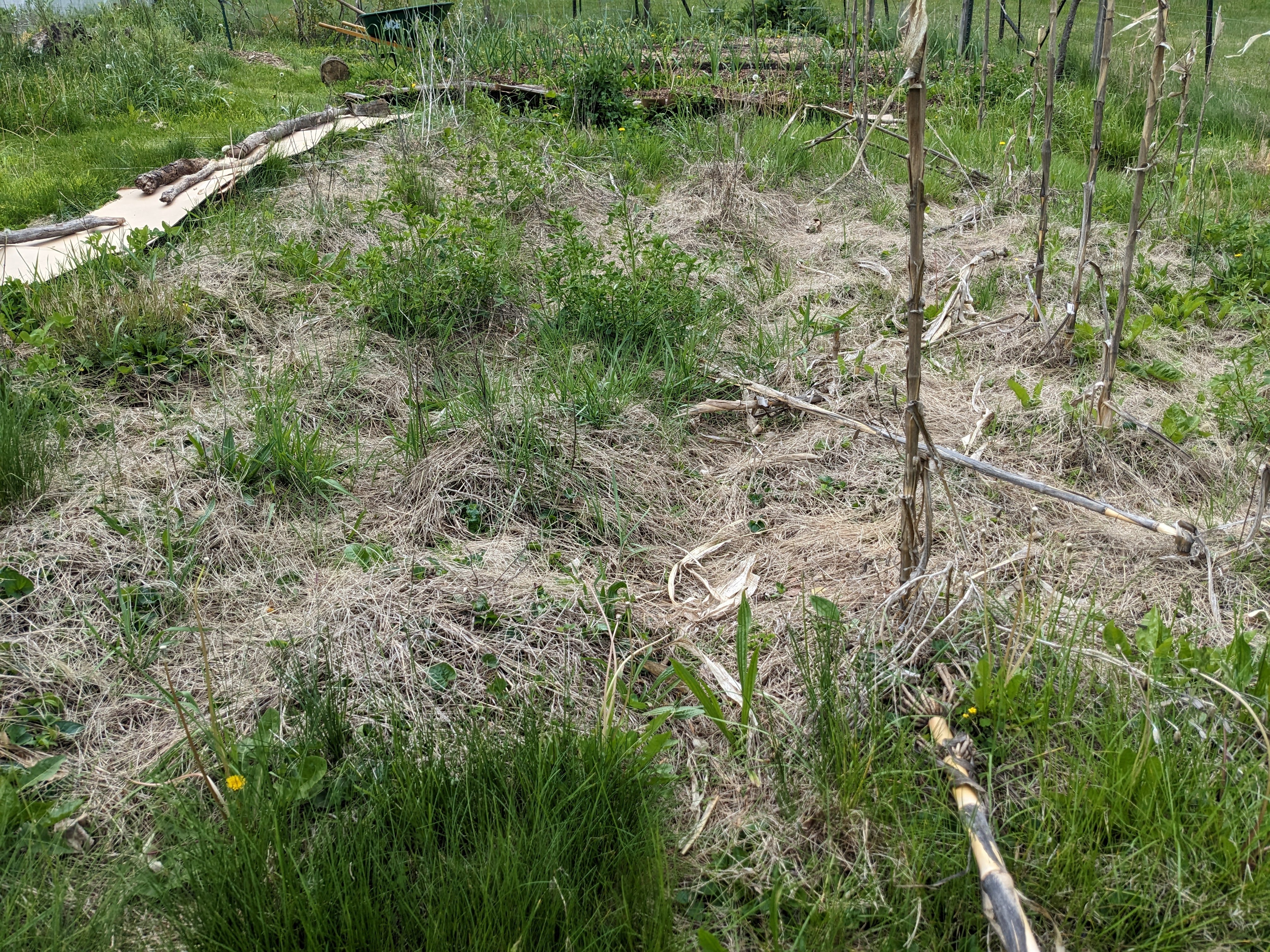
I'll post some photos of beds we're working on now (bare with me as I figure out attachments on this forum). We have about 10 beds like this, then 6 rows of planting mounds for melons and 3 sisters style plantings, then a raised bed for herbs and various forest gardening on further zones. It's in the beds like shown below that we struggle with weeds. We broadforked the lawn, flipped its top layer upside down, piled on compost on beds and woodchips (free mulch) on the paths in between. Then we mow the lawn around it. We've tried mulching with hay and with straw but always find weeds in it. We are now adding more compost to these beds and mulch to the paths, and trying to use cover crops more effectively to reduce stubborn weeding (speedily spreading stiltgrass, clumps of I think crabgrass that can be stubborn to pull out).

What cover crops should we be working with and when? I know weeding is part of gardening, but should we be clearing beds at this time of year? The thatch from last fall's dead stiltgrass seems preferable to bare soil until we are ready to plant, basically acting as a mulch. Where we are clearing beds and/or dumping compost on dandelions and things like that, we are hand broadcasting clover seed mix to try and take up the space usefully and be easy to weed as we introduce crops. Then in fall we're trying to hand broadcast winter rye to hold the space, and this spring we are pulling up or crimping the over-wintered rye.

Whenever I refer to compost in this post i mean finished compost blend ready for raised beds. We get a few cubic yards each year for this garden and other areas, some of our own and some from a local supplier.
PXL_20260418_135846540.jpg
[Thumbnail for PXL_20260418_135846540.jpg]
This is a zoom in on a bed. Mulch is the paths. We have compost to add to this bed. Can I just smother what's growing here with compost? This is not a new bed, we once had cardboard down then compost.
PXL_20260418_135855399.jpg
[Thumbnail for PXL_20260418_135855399.jpg]
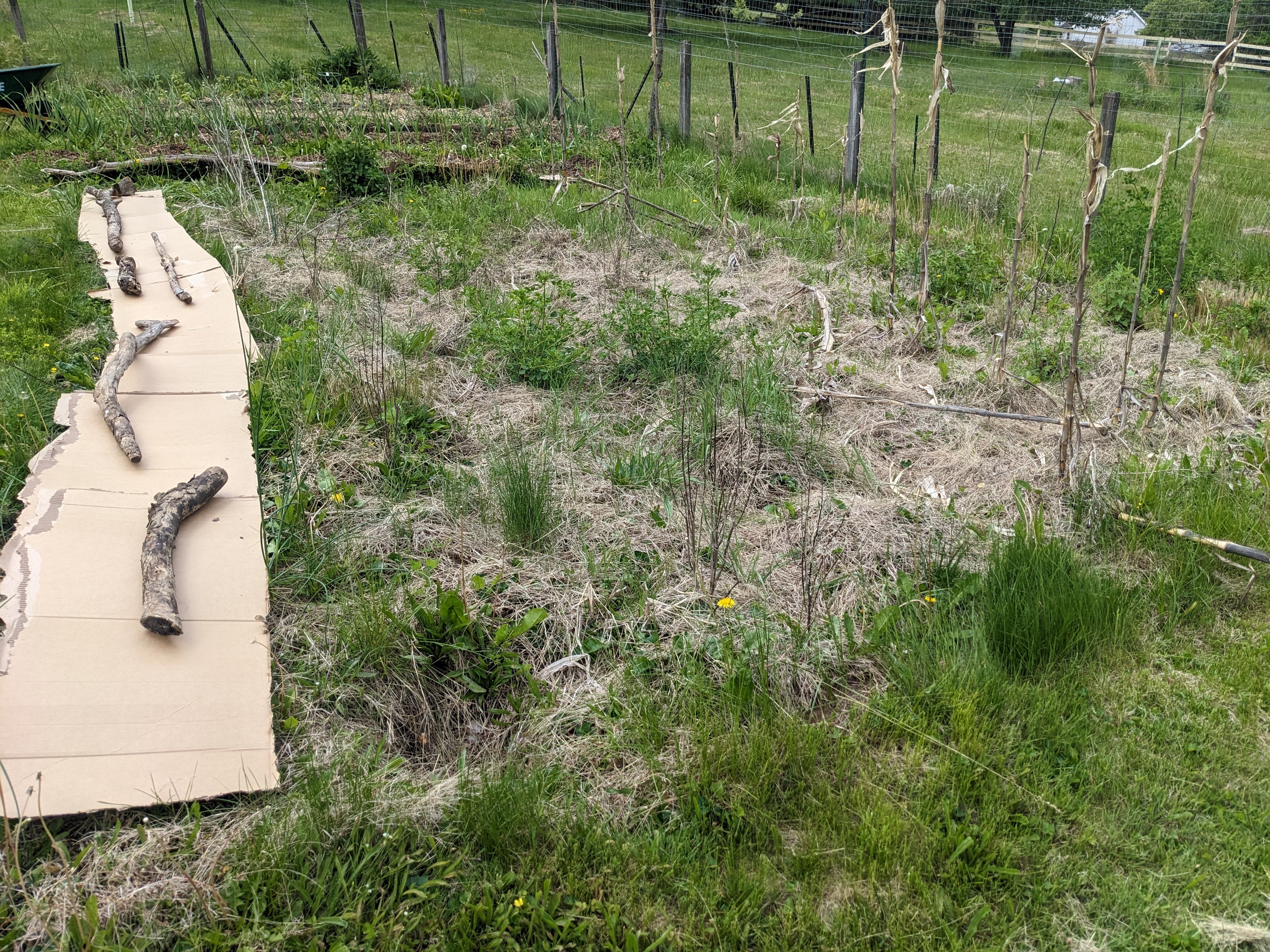
General view of the beds, including sunflower stalks from last year. Again wondering if I can just fill the bed with compost/garden soil mix and broadcast (what type of) cover crop.
PXL_20260418_135904001.jpg
[Thumbnail for PXL_20260418_135904001.jpg]
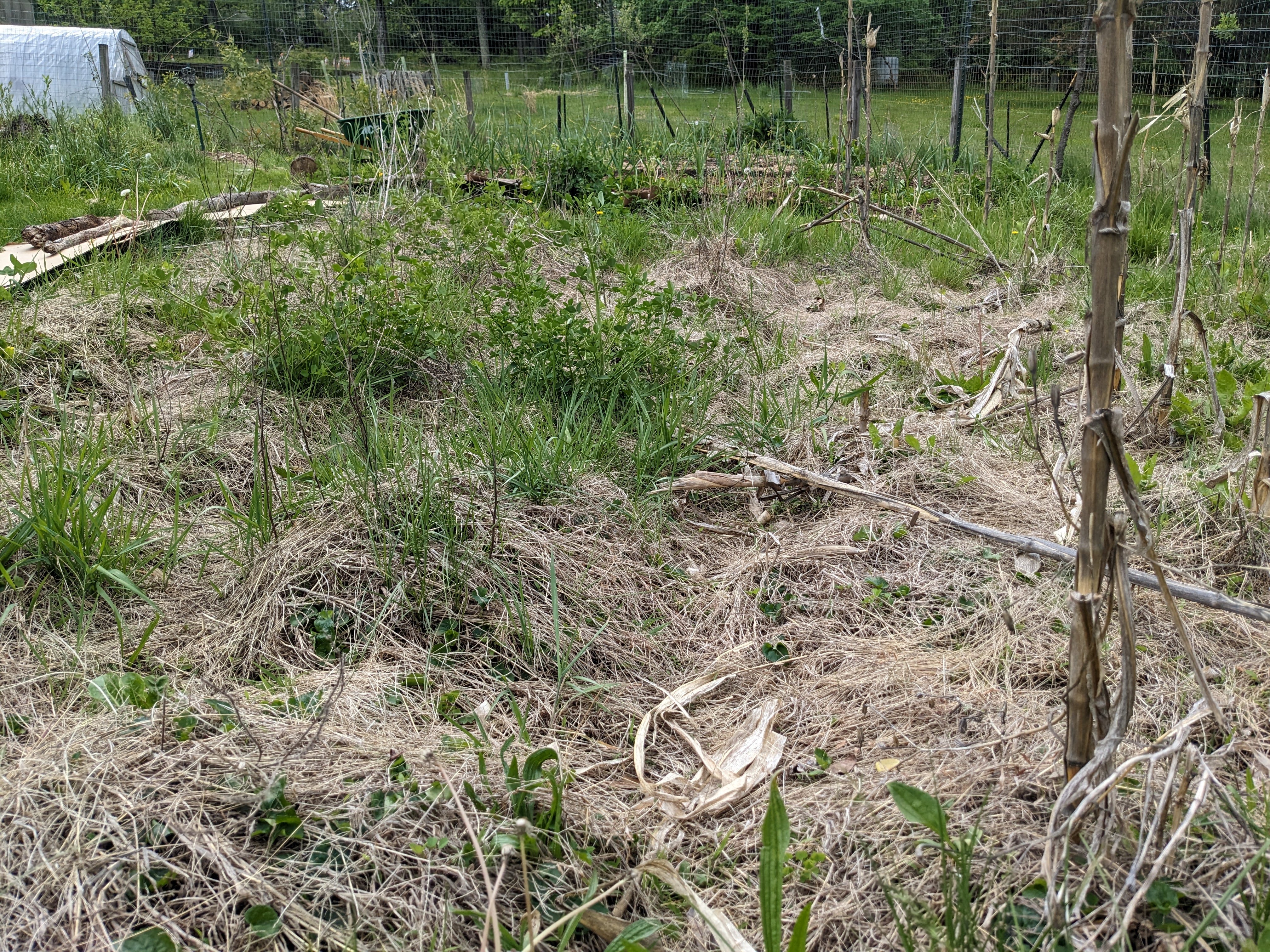
A few more beds, the pots are just hauling compost. Can we just top this off with compost and cover crop, or do we need to hack it up with a hoe first, seems unrealistic and inviting weeds to clear the bed completely
PXL_20260418_140802824.jpg
[Thumbnail for PXL_20260418_140802824.jpg]
Another bed zoomed in on, this one a happy accident of dandelions. Can we mow/hand cut these down and plant into the mess
PXL_20260418_140808654.jpg
[Thumbnail for PXL_20260418_140808654.jpg]
More general garden bed views, showing on left-side a bed we topped off with compost between fresh woodchip paths.
PXL_20260418_140814487.jpg
[Thumbnail for PXL_20260418_140814487.jpg]
One last zoom in on a garden bed.
 
gardener
Posts: 962
Location: Ontario - Zone 6a or 4b, depending on the day
664
dog foraging trees tiny house books bike bee
  • Mark post as helpful
  • send pies
    Number of slices to send:
    Optional 'thank-you' note:
  • Quote
  • Report post to moderator
In my experience, cover crops are no match for established perennial weeds. They are useful for maintaining a fallow bed, but not for smothering established dandelions or competing with rhizomous grasses. I have started to use them to CREATE mulch for future crops, rather than in an attempt to smother existing weeds.


If you asked 100 gardeners how to weed, you'd get 100 answers but if it were my bed I would be:
-Removing all flowers before they go to seed. This is my #1 weeding priority - never letting weeds go to seed.

- Adding some sort of mulch - likely paper held down with sticks and stones to give me a fighting chance

-Hand weeding the rest - 15 min a day is enough to make a big impact in such a small space. Expect to have to re-weed, but the goal is to keep the above ground portions of the plant from having time to feed the roots below that the weeds resprout from.

If I wanted to plant something fine seeded, I'd probably fork the bed, hand pull what I could, and disrupt the rest with a hoe, wait a week, hoe it again, then plant.

I am a big proponent of mulch, but don't think there is any system that is truly zero weeding required.
 
Posts: 80
14
  • Mark post as helpful
  • send pies
    Number of slices to send:
    Optional 'thank-you' note:
  • Quote
  • Report post to moderator
Catie's right that cover crops won't outcompete established perennial weeds. I had the same problem with couch grass running through everything and the only thing that actually worked was pulling it out by hand after rain when the soil was soft, then mulching thick with cardboard and woodchip straight away so it couldn't re-establish. Tedious but it does work if you stay on top of it for a season.
 
Posts: 12
Location: Upstate NY, Zone 5b, 43 inch Avg. Rainfall
6
  • Mark post as helpful
  • send pies
    Number of slices to send:
    Optional 'thank-you' note:
  • Quote
  • Report post to moderator
I don't think those beds look too bad with weeds. Here are some observations from someone near your zone, climate and geography. Firstly, learn to embrace some weeds; dandelions for example are dynamic accumulators--meaning they bring up minerals from the deep subsoil--chop and drop them on your beds before they go to seed--this will feed your soil. I let a lot of small flowering weeds flower along the sides of my veggie beds to help bring in beneficial insects.

Don't use stilt grass for anything; kill it before it takes over. It is an invasive prolific seeder so, it is worse than a bare bed.

I use winter rye on only my beds that will have warm season crops the following year, like squash, tomatoes, etc. You need to let winter rye grow until it reaches the milk stage ( mid May here )  in order to terminate it via cutting or crimping; otherwise it will grow back, and you'll think it's a weed.

I prep the beds I will be using for cool season crops, such as arugula, kale, lettuce, etc... in the fall after everything is out. Since a cover crop, like winter rye or winter peas won't work, because it won't be out by April, I mulch the beds with straw, or leaves and pine needles--whatever I have. These beds are mostly entirely weed free come April. There may be an errant weed here and there, but they're easy to pull in good loose garden bed soil.

Sometimes I can't prep a bed in the fall or plant a winter cover crop, because I have crops that spend the winter in them; like parsnips, carrots, and rutabaga, for example. Then there may be a few weeds come spring, but they should be easy to hoe up. Any type of Grass is one you will need to nip in the bud as soon as you can.

My garden paths are a combo of woodchips, and living mulches. I've tried ajuga and mock strawberries in the paths; both of those didn't work well for me for various reasons, so I pulled them. I have now seeded some of my paths with Dutch white clover. That seems to work better. I just mow the paths with an electric bag mower and toss the clover clippings in the beds as mulch, or add them to the compost pile. The clover does want to spread into the beds some, but a quick pull/hoe and the drop it into the beds as mulch.

Finally: it get's easier as the beds mature, and the seed bank diminishes. Mulch helps. I use the winter rye I cut in mid May to mulch my veggies. Beware however, that bringing in compost, hay/straw from outside sources can bring in more weed seeds. Use the weeds as mulch--chop and drop before they go to seed. Weeds are just plants in the wrong ( for you ) place. There's a book titled: When Weeds Talk; I think it's available in pdf form on the internet. The book details what weeds are growing in your soil and what that means in terms of soil mineral imbalances.

 
I agree. Here's the link: http://stoves2.com
reply
    Bookmark Topic Watch Topic
  • New Topic