posted 2 months ago
Bridget -
I have some experience with UP winters, since I've lived in the Keweenaw for more than 40 years.
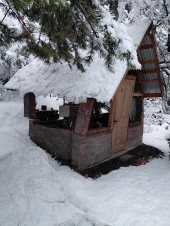
Snowfall totals may sound impressive (and, come March or April, they really can be), but we rarely have snow deeper on the ground than 5 feet, even if the snowfall total for the season is upwards of 350 inches. Snow settles, and the ground, being well insulated by that much snow, doesn't freeze (unless the snow is consistently removed - streets, driveways, etc.) so there is some melting at the ground surface, even in the coldest of weather. If snowfall is scant (rarely), or in places where snow doesn't accumulate or is removed, then the ground may freeze to the foundation code depths (42" or deeper). Animals can get stuck (my brother did rescue someone's horse once, which had post-holed after it strayed off the packed down trail), but generally critters manage at least as well as people. A covered run, or at least a good run in shelter, will give them some respite, but my brother's goats and Shetlands get no special treatment, other than jackets. I really don't see people doing anything special - barn or shelter, with fenced paddock or run.
Keeping critters from going over fences, especially once the snow firms up in the late winter or early spring, after a few good thaws and re-freezes, may require taller fences than ordinary or other confinement approaches. When we lived "in town" - we're still in a town, but smaller, now - our dogs would walk over the 4 foot chain link fence which surrounded our back yard. I kept the yard blown out, so there was a steep wall at the edge of the yard next to the fence - this was a concession to the low slung dog, a short-legged Jack Russell terrier - but once the melt started, the snow walls would become climbable, and I'd need to shave it right up to the fence to keep them in. That only lasted a few weeks; then the snow had melted or settled enough that they couldn't easily escape, anymore.
Snowfall amounts can also be highly variable from one locale to another. Calumet, Mohawk or Delaware is entirely different from Lake Linden or Sedar Bay. Baraga and Amasa get nothing like the snowfall totals in Munising. A distance of a couple of miles or 400 feet of elevation can put you in a different world, snow-wise. On the other hand, big snow areas are usually a little less cold (sometimes a lot less cold), due to the lake effect cloud cover. It is rarely colder than -20F in the Keweenaw, but back inland away from the Big Lake, that can be a pretty common overnight low temp. I think I'd rather deal with the snow, but it's worth considering the trade-offs. Sunnier days that attend the clear skies may be necessary for your mental health, if nothing else. Though not recently, I've seen runs in excess of 30 days in a row when you didn't see the sun, even if there was a brightish spot in the clouds. Taking Vitamin D supplements can help to ameliorate the effects if you discover that you do suffer from SAD, as can exercise - especially outdoor exercise, like skiing, snowshoeing, snow biking, etc.
Good snow removal tools are a must. A snowblower may be necessary, depending on the layout of your property and your needs. Pushing snow back with a plow may work, but you'll need to push snow much farther back early in the season than you think is sane, so that you have room for the later season snow. A snowblower will allow you to stack snow higher than you can with a plow. A tractor front loader could be a useful alternative, since you may need the tractor and bucket for other homestead tasks.
A good snow scoop, and good shovels too, may be indispensable. I really like the Silver Bear brand scoops, but they stopped making them a couple of years ago, so you might need to haunt FB Marketplace or watch garage and estate sales if you want one of those. The plastic Garant brand scoops are also pretty good, but they won't stand up to being kicked into the bank which the wing grader pushes up after a big dump the way the Silver Bear scoops can be. To work around this, you'll need to chop the grader bank into manageable chunks with a steel square nose shovel (I prefer a short cross-handle model), then slide the chunks around with the scoop. Watch what the neighbors do to manage their snow, but just remember that situations differ from one property to another, and one homestead's priorities to another.
Buy the best snow tires you can afford for your vehicle. Blizzak brand are very highly regarded, but I've never felt rich enough to afford them. I've had Winterforce brand, which were pretty good. Long ago, I had Power King snow tires, which were about the cheapest snow tires money could buy, and they were better than good all seasons (at the time, anyway - but I don't think there are any snow tires made under that brand name any more, and all season tires are better now, too). I've heard good things about the Nokian Hakapeliitta snow tires, but I've never had those either.
Four wheel drive or all wheel drive can be somewhere between helpful and indispensable, but I've managed with an old 2WD Ford Ranger as a daily driver the last few years, with a bunch of sand sausages in the box over the rear axle. Tire chains may be a good idea if you end up out in the rough stuff, or if you really need to go down the county road after a big dump of snow and the Oshkosh with the V-plow hasn't come through yet. My brother runs chains on his bucket loaders.
You may notice that some people will have a garage out near the road, and will haul stuff from the garage up to the house with a toboggan and snowshoes or with a snowmobile. This can reduce the snow removal burden. I've also seen one driveway covered by what was basically a high tunnel, several hundred feet long.
There is no shame in calling someone with a bucket loader or tractor mounted blower to blast your snow back once or twice a winter to get things opened up again; this is bread and butter for my brother for a couple of months running, most winters.
Regarding snowmobiles, I've never had one, but I am keeping my eyes peeled for an old Ski Doo twin track to re-power with a 4-stroke Honda. However, my co-worker has a Honda 4 wheeler with track pods for winter use, and he is happy with the performance, and with only maintaining one machine. Several of the nordic ski trail systems around here use side-by-sides with track pods for grooming and maintenance. At least one uses a Jeep with track pods made by American Truck Track, in Chassell.
Snowshoes and cross country skis can be very helpful, as well, for getting around in the winter.
I tried to give a broad overview of my direct experience and some 2nd hand anecdotes, to help frame the overall situation, which may help to inform your thoughts and address your concerns about snow management, though perhaps not so directly the point of critters in the snow. If you have other questions, or if these answers aren't helpful to you, please ask again.
Now, about the bugs...
Kevin
"Ah, but a man's reach should exceed his grasp,
Or what's a heaven for?"
Andrea del Sarto by Robert Browning





 8
8