This is my first attempt to make animal rennet at home, for cheese making.
WARNING: SOME READERS MAY FIND THE FOLLOWING PHOTOS DISTURBING, I know I do.
Our two day old lamb died due to 'wounds received' during lambing. This is heartbreaking for me, made worse because it took it's last breath while I cuddled it in my arms. Please understand this is very difficult for me. I didn't enjoy it a bit, in fact I cried buckets. I think a few tears even made it into the photos, sorry about that.
It's important for me that my actions match my values. My values abhore waste. My goal is to start cheese making this year, and one of the things I need for that is rennet. I could go out and buy commercial rennet, but very little of that is made the traditional way, and a great deal of commercial rennet is now from genetically modified organisms. Instead of composting this lamb and going out to support big business and buy their rennet(-like substances), I decided to make rennet at home.
I received David Asher's book,
The Art of Natural Cheese Making yesterday. Inside this book, there is a recipe for making rennet from a calf stomach. It will also work for lamb. Perfect timing. I'm following the instructions in this book.
Here's what I've done so far:
The lamb died and I went and had a good cry. This was a mistake because the body had begun to enter rigour by then. This makes it more difficult to work with. I forgot how quickly little bodies go into rigour, as I've almost always worked with large mammals.

The little lamb was about the size of rabbit, and working with it almost identical. For this I used two very sharp knives, a bucket for the
compost and a towel to wipe my hands and knives on while working.
Everyone in the house agreed that it was simply too sad to eat the meat, so I focused on extracting the digestive track.
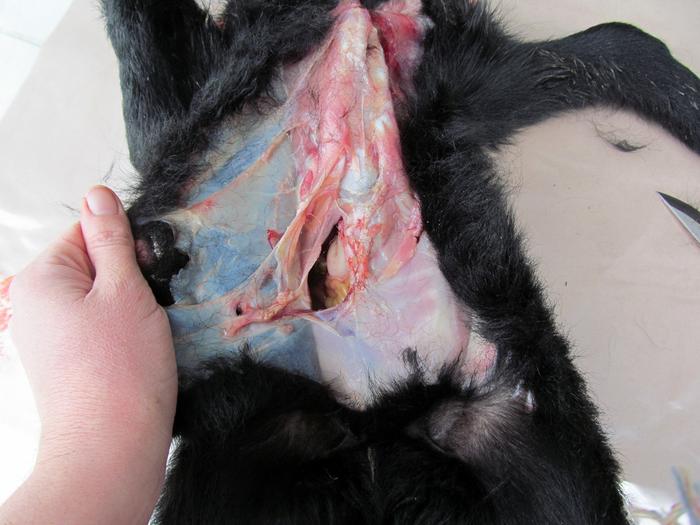
Cut carefully, I slit the skin down the middle. Once I got to the cavity, I worked with my knife to open it up, being careful to not cut or puncture any organs.
The first thing I did was remove the liver and the (can't remember the name right now) green sack that is full of disgusting tasting bile. This bursts really easily and can taint the taste of the whole innards. You can see it here, it's attached to the liver.
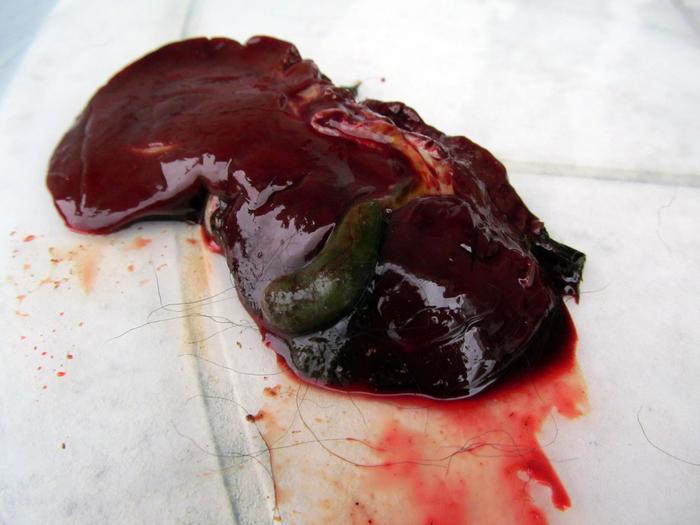
liver's a bit dirty because I fished it out of the compost bin to photograph it for you.
Without the liver, this is what the organ cavity looks like:

Not very nice.
Took the digestive track out, and tried to sort out which stomach I'm looking for.

The rennet comes from the stomach just above the intestines.

These are the stomachs... I want the last one. But how to separate between one and the others? Here's my best guess.

Now it's time to cure it. I packed it in fine Kosher salt, and will leave it in the jar for 6 months or longer. The book doesn't say what temperature to store this at, so it's going in the back of the fridge. If I had a cellar, I would probably keep it there instead.
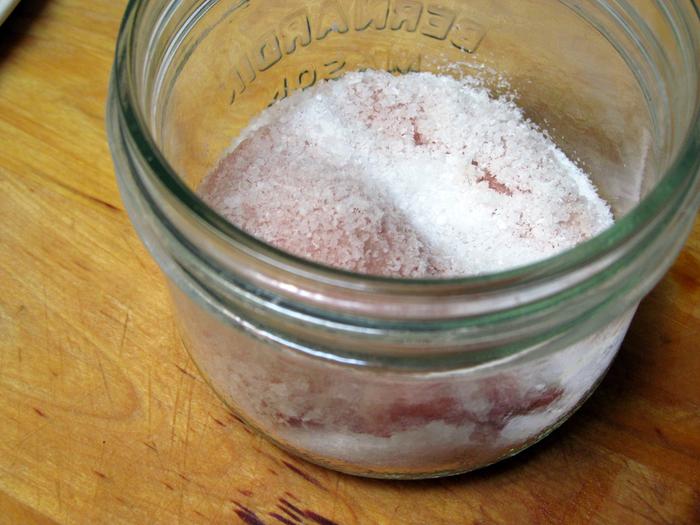
I noticed that commercial rennet wants to be kept cool, but haven't had a chance to look into it. Good quality rennet is a specialty item here, and I've never been able to find a shop that carries it.
The stomach, once cured will be inflated with air, and hung to dry. Once dry it should keep at room temperature (so about 20 degrees C) or less for several years. At least that's according to what I've read. To prepare the rennet we break off a bit of stomach, then do something with it in liquid to reactivate the enzymes, then the liquid is added to the milk. I'll know more in about 6 mont
We
have a thread about wild rennet. I think it would be a great idea to start a thread about vegetable rennet in general. I'm really curious about this too... yesterday's adventure was not nice at all. I can't see ever being able to kill a lamb just for rennet, so I might run out if I don't have any more young lambs that die of natural (non disease related) ailments. Knowing how to make vegetable rennet would be a great skill to have.
After the stomach has cured, it will be time to dry it. Once it's dry, I can make cheese from it.
This was a very interesting and educational experience. I'm glad something productive could come from sadness. But still, sadness.






 14
14


![[Thumbnail for 20160227_160004.jpg]](/t/54165/a/37030/20160227_160004.jpg "Filename: 20160227_160004.jpg
Description: Calf Rennet")


![[Thumbnail for IMG-20230407-WA0010.jpg]](/t/54165/a/207646/IMG-20230407-WA0010.jpg "Filename: IMG-20230407-WA0010.jpg
Description:")



