

• Post Reply Bookmark Topic Watch Topic
  • New Topic
permaculture forums growies critters building homesteading energy monies kitchen purity ungarbage community wilderness fiber arts art permaculture artisans regional education skip experiences global resources cider press projects digital market permies.com pie forums private forums all forums
this forum made possible by our volunteer staff, including ...
master stewards:
  • Carla Burke
  • Anne Miller
  • Nancy Reading
  • John F Dean
  • r ransom
  • paul wheaton
  • Timothy Norton
stewards:
  • Jay Angler
  • Pearl Sutton
  • AndrĂ©s Bernal
master gardeners:
  • Christopher Weeks
gardeners:
  • M Ljin
  • Thekla McDaniels
  • May Lotito

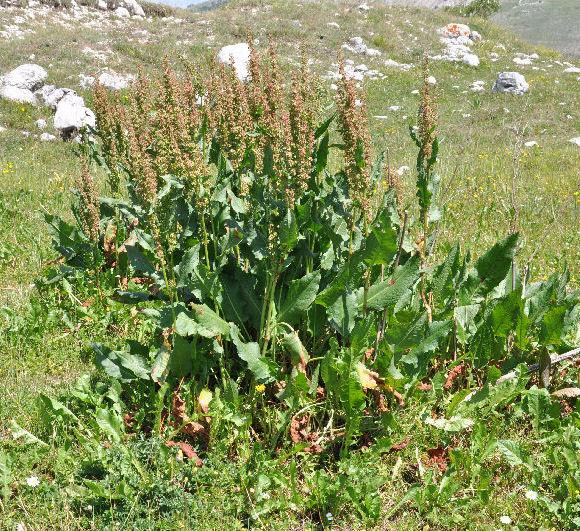
Underappreciated rumex patientia - Patience dock

 
Posts: 51
Location: The Balkans, Sofia
9
forest garden fungi trees
  • Likes 13
  • Mark post as helpful
  • send pies
    Number of slices to send:
    Optional 'thank-you' note:
  • Quote
  • Report post to moderator
Here people use it as food, it has a spinach like taste, but it is better to be cooked.

I like it for several reasons, it has really deep tap root, I cant find information how deep it is, but once I was digging for a pond and I got at 1,5m and the root of that plant was still going down(I am pretty sure it was going down much deeper), and it belonged to a plant that was not that big at all.

During summer(we have really dry summer here), it is one of the few plants that continue to look green and happy even after 2-3 months without any rain, the only similar plants that manage this I can think of now is the alfalfa and the horseradish. For a climate with a similar type of summer I cant think of any better plant that gives you green leafs.

It tolerates shading, and will thrive in clay soil, you can cut it several times during the year and it still keep showing again and again, if you let it to develop seeds and the seeds mature it will calm down eventually.


^ I see it really often here on places where other plants just cant manage to grow good, maybe thats why I like it so much, that plant is a really good fighter.


How people prepare it sometimes:

 
steward
Posts: 3595
Location: Maine, zone 5
2253
9
hugelkultur dog forest garden trees foraging food preservation cooking solar seed wood heat homestead
  • Likes 5
  • Mark post as helpful
  • send pies
    Number of slices to send:
    Optional 'thank-you' note:
  • Quote
  • Report post to moderator
Thank you Borislav!  You've just reminded me to get the patience dock seeds out of my refrigerator and into a pot of soil to germinate :)

I've been very interested in this plant but haven't ever tried it.  I thought people only ate the tender early spring leaves, but it seems like they're using the leaves from the flower shoot as well in the video you attached.  Can't wait to start playing with this in the kitchen!  
 
Greg Martin
steward
Posts: 3595
Location: Maine, zone 5
2253
9
hugelkultur dog forest garden trees foraging food preservation cooking solar seed wood heat homestead
  • Mark post as helpful
  • send pies
    Number of slices to send:
    Optional 'thank-you' note:
  • Quote
  • Report post to moderator
For anyone considering trying this plant, the experimental farm network has seeds!
 
Posts: 22
Location: Buckley, WA, USA
9
  • Likes 6
  • Mark post as helpful
  • send pies
    Number of slices to send:
    Optional 'thank-you' note:
  • Quote
  • Report post to moderator
I tried growing patience dock in Western Washington.  I have to say I found it very tender and palatable, but insect pressure made it not worth continuing to grow.  By my second year of growing it, some sort of insect(s) discovered it and from then on kept it so chewed full of holes that it was pretty much unusable.  That combined with the fact that this species has been documented as becoming invasive in some regions where it's been planted made me decide to stop growing it.

Fortunately, I found an alternative with very similar leaf quality, even if the leaves don't get quite as large.  Pudding dock (Bistorta officinalis) is in the same family as patience dock, and really makes a good substitute.  Bonus is that it has a broad native distribution throughout Eurasia, and though not native where I am in North America, it's available from nurseries here since it was introduced for its ornamental properties.  Plus, it does not have a reputation of becoming invasive!
 
steward and tree herder
Posts: 15122
Location: Isle of Skye, Scotland. Nearly 70 inches rain a year
8729
6
transportation dog forest garden foraging trees books food preservation woodworking wood heat rocket stoves ungarbage
  • Likes 7
  • Mark post as helpful
  • send pies
    Number of slices to send:
    Optional 'thank-you' note:
  • Quote
  • Report post to moderator
Is there an easy way of telling patience dock from curly dock: rumex crispa? I thought I had curly dock growing, but it looks very much like the pictures above! I was thinking about getting some herb patience (another name for patience dock, I believe) but there is no point if I already have it! Both are supposed to be native here so either is possible I guess. I did nibble a raw leaf or two and thought it tasted much milder than common dock and possible to eat when mature.
I don't think we have a thread just on Bistort yet... just my dock pudding thread I'm growing it mainly towards a possible perennial grain (the seeds are very like a small buckwheat). Perhaps a new thread is due....
 
pollinator
Posts: 589
Location: UK
197
kids urban seed
  • Likes 7
  • Mark post as helpful
  • send pies
    Number of slices to send:
    Optional 'thank-you' note:
  • Quote
  • Report post to moderator
Nancy, from what I've seen the patience dock leaves are broader and flatter, more like a big floppy spinach leaf, where curly dock has that frilly wavy edge. Johann's point about it getting chewed up is interesting though, I'd have assumed a dock would shrug that off.
 
Johann Kuntz
Posts: 22
Location: Buckley, WA, USA
9
  • Likes 6
  • Mark post as helpful
  • send pies
    Number of slices to send:
    Optional 'thank-you' note:
  • Quote
  • Report post to moderator

Joao Winckler wrote:Johann's point about it getting chewed up is interesting though, I'd have assumed a dock would shrug that off.


I have a number of Rumex species here, some intentional and some weedy.  It's not unusual to see an occasion hole in a leaf from some sort of insect or mollusk chewing, but the patience dock was next level holey.  

Regarding Nancy's unknown dock species.  As long as you're sure it's a Rumex species, I'd go ahead and enjoy eating it if it tastes good.  Not all do.
 
Nancy Reading
steward and tree herder
Posts: 15122
Location: Isle of Skye, Scotland. Nearly 70 inches rain a year
8729
6
transportation dog forest garden foraging trees books food preservation woodworking wood heat rocket stoves ungarbage
  • Likes 4
  • Mark post as helpful
  • send pies
    Number of slices to send:
    Optional 'thank-you' note:
  • Quote
  • Report post to moderator

Johann Kuntz wrote:I have a number of Rumex species here, some intentional and some weedy.  It's not unusual to see an occasion hole in a leaf from some sort of insect or mollusk chewing, but the patience dock was next level holey.


I always feel that if a plant gets eaten a lot it likely to be a more palatable plant for us too...

Regarding Nancy's unknown dock species.  As long as you're sure it's a Rumex species, I'd go ahead and enjoy eating it if it tastes good.  Not all do.


My plant is definitely a dock. It has narrower leaves which are brighter green than a common dock and they have slightly curly edges rather than being completely flat. The seeds are different too - larger with a pronounced pale bump in the middle. So far I've only nibbled on a raw leaf, which you wouldn't expect to be particularly nice but was milder than normal dock. Next year I'll try some leaves cooked.
 
Please do not shame this tiny ad.
Heat your home with the twigs that naturally fall of the trees in your yard
http://woodheat.net
reply
    Bookmark Topic Watch Topic
  • New Topic