• Post Reply Bookmark Topic Watch Topic
  • New Topic
permaculture forums growies critters building homesteading energy monies kitchen purity ungarbage community wilderness fiber arts art permaculture artisans regional education skip experiences global resources cider press projects digital market permies.com pie forums private forums all forums
this forum made possible by our volunteer staff, including ...
master stewards:
  • Carla Burke
  • John F Dean
  • r ransom
  • Nancy Reading
  • Timothy Norton
  • Jay Angler
stewards:
  • paul wheaton
  • Pearl Sutton
  • Eric Hanson
master gardeners:
  • Christopher Weeks
  • M Ljin
gardeners:
  • thomas rubino
  • Megan Palmer
  • Benjamin Dinkel

Help, my canvas has a hole

 
steward & author
Posts: 44225
Location: Left Coast Canada
17006
9
art trees books chicken cooking fiber arts
  • Likes 3
  • Mark post as helpful
  • send pies
    Number of slices to send:
    Optional 'thank-you' note:
  • Quote
  • Report post to moderator
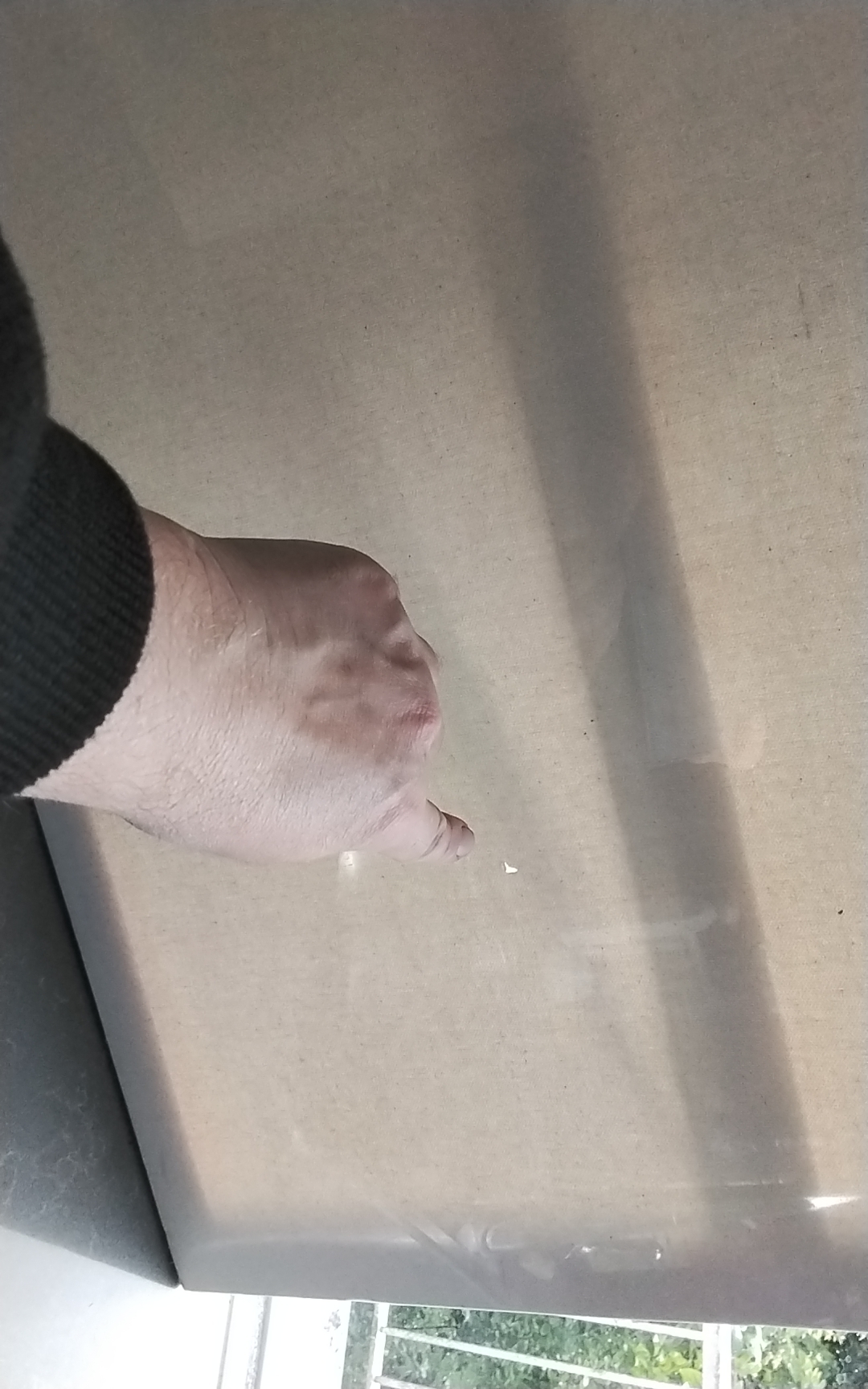
How do I repair a hole in my canvas?

Got this canvas on sale for oil painting.  Didn't see why it was such a good price until I got it home.

Is there an easy way to fix a hole in a canvas without risking it showing on the good side like a patch might?
Cotton-canvas-with-hole.jpg
Cotton canvas with hole
Tiny-hole-in-cotton-canvas.jpg
Tiny hole in cotton canvas
 
steward
Posts: 18188
Location: USDA Zone 8a
4627
dog hunting food preservation cooking bee greening the desert
  • Likes 5
  • Mark post as helpful
  • send pies
    Number of slices to send:
    Optional 'thank-you' note:
  • Quote
  • Report post to moderator
While I have no idea, I have seen some painting that were repaired when I was staying in New Orleans.

That is such a small hole I wonder if some oil paint might fill it in.

A small patch of canvas glued to the back side would help secure the oil paint.
 
Rusticator
Posts: 9433
Location: Missouri Ozarks
5120
7
personal care gear foraging hunting rabbit chicken cooking food preservation fiber arts medical herbs homestead
  • Likes 6
  • Mark post as helpful
  • send pies
    Number of slices to send:
    Optional 'thank-you' note:
  • Quote
  • Report post to moderator
Maybe a few tiny stitches with a strong, but thin thread & a tiny needle will work, to flatten it & keep it from worsening,  then the brush strokes in your paint will hide the repair?
 
Posts: 68
Location: Ozarks
28
cooking building homestead
  • Likes 6
  • Mark post as helpful
  • send pies
    Number of slices to send:
    Optional 'thank-you' note:
  • Quote
  • Report post to moderator
I am not a painter but a woodworker. My thoughts are to embrace the imperfection.

I don't know if you had painting in mind or not. A few ideas that come to mind, make an obvious repair like darning the front of the canvas and incorporate the theme in your painting. Raggedy Ann or  a patch on a boy's pants for example. Or maybe a hole in spacetime  draining your painting into the void. ;)
 
Carla Burke
Rusticator
Posts: 9433
Location: Missouri Ozarks
5120
7
personal care gear foraging hunting rabbit chicken cooking food preservation fiber arts medical herbs homestead
  • Likes 5
  • Mark post as helpful
  • send pies
    Number of slices to send:
    Optional 'thank-you' note:
  • Quote
  • Report post to moderator
Do you have any book binding tape? A bit of that applied to the back ought to do it... (still thinking - may come back, yet again)
 
r ransom
steward & author
Posts: 44225
Location: Left Coast Canada
17006
9
art trees books chicken cooking fiber arts
  • Likes 6
  • Mark post as helpful
  • send pies
    Number of slices to send:
    Optional 'thank-you' note:
  • Quote
  • Report post to moderator
Great ideas and brainstorming. Thanks.

Two issues come to mind that I didn't think of at first.

a. the canvas is under tension.  The wood and canvas expand and contract as humidity and environment changes, so it has a strong chance to enlarge the hole if I don't do something to keep it at the same tension of the rest of the cloth.

b. anything with a hard edge like tape or a patch, will migrate through to the other side and the edge of the patch will be visible.

When I watch the restoration videos, I see he often uses bits of thread or frays the patch so it has a soft edge.  But that also looks like a lot of work.  A lot more work than my current skill level warrants.  https://www.youtube.com/@BaumgartnerRestoration/videos

But, this canvas is 24" square, so it's quite big by my standards and I had hoped to paint something wall-worthy on it.  So I guess I got to put some effort in to fixing this.  I'll be putting extra layers of gesso on top so that will fill in the hole I guess.  Maybe?

Another option would be to get some new cloth, but it's not a normal stretcher.  Maybe it's a strainer although I haven't seen one of those before.  The outer frame has the canvas stapled to it as per normal, then there is an inner wooden frame that's very firmly stapled in place at the corners so it wouldn't be able to stretch even if there was a place for keys.  

And because I only understand about half of that last paragraph at the time of writing, I'm going to translate into what my brain understands to see if it makes sense.

Because wood and cloth change size over time, there a "stretcher" is the wooden frame to hold the canvas that has nothing holding the wood together except the canvas.  But it has little slots where we can put triangles to "stretch" the frame apart a little bit to accommodate any slack that forms over time because weather or something.  

This has no place for the triangles (keys) and has wood attached to wood via staples at the corners so it has no room to move if I hammered the triangles in anyway.  

...

I wonder if book binding tape can be frayed on the edges?  It should have archival sticky right?  
 
r ransom
steward & author
Posts: 44225
Location: Left Coast Canada
17006
9
art trees books chicken cooking fiber arts
  • Likes 3
  • Mark post as helpful
  • send pies
    Number of slices to send:
    Optional 'thank-you' note:
  • Quote
  • Report post to moderator
Then again, the frugal crafter who usually has good advise isn't bothere with lining up the grain of the patch or fraying the edges.


Maybe I overthought it.

On second watching, the patch is seriously noticeable on the good side when she turns it over and the light catches it from the side.
 
Carla Burke
Rusticator
Posts: 9433
Location: Missouri Ozarks
5120
7
personal care gear foraging hunting rabbit chicken cooking food preservation fiber arts medical herbs homestead
  • Likes 2
  • Mark post as helpful
  • send pies
    Number of slices to send:
    Optional 'thank-you' note:
  • Quote
  • Report post to moderator
After watching & considering the video, a couple things come to mind. First, hers has an actual open hole, while yours looks like more of an L shaped tear, with a flap that would close the hole. I think you could safely use her method, using a piece of thinner fabric, for a substantially less noticeable lump, if any at all, because you'd only need the fabric to hold the edges together, not fill a hole. Secondly, if there's any noticeable edge, with a thinner fabric, it would be very easy (especially compared to the canvas patch) to smooth it out with the gesso, on the front, with the palette knife.
 
r ransom
steward & author
Posts: 44225
Location: Left Coast Canada
17006
9
art trees books chicken cooking fiber arts
  • Likes 2
  • Mark post as helpful
  • send pies
    Number of slices to send:
    Optional 'thank-you' note:
  • Quote
  • Report post to moderator
This is why I worry about getting the patch wrong


I agree. Here's the link: http://stoves2.com
reply
    Bookmark Topic Watch Topic
  • New Topic