|

|
|
|
|

|

|

|

|

|
 9
9


Air and opportunity are all that stand between you and realizing your dreams!
6
6
“The most important decision we make is whether we believe we live in a friendly or hostile universe.”― Albert Einstein
6
Rico Loma wrote:Certainly sounds like a winner. In your specific situation, did you compile a direct cost comparison between the two battery types? I'd love to see the numbers if possible, while still keeping the vast performance improvement in the back of my (rapidly shrinking) mind. Thanks for this post, it helps to shape my decisions
Air and opportunity are all that stand between you and realizing your dreams!
3
3
3
Tommy Bolin wrote:I have 1500+-ah of series/parallel 24 volt L-16 type lead acid US Batteries. No grid here anywhere close.
Looking at Battle Born's website, for American tech, I would likely need about 15,000USD worth of heated batteries, to replace them. Mine cost, in 2023, about 2600USD through Oasis Montana, no sales tax, picked them up in Missoula, no freight.
LA batteries, for all their apparent shortcoming are:
Stone
Axe
Simple.
....and pretty dang heavy.
Been around for well over a hundred years. I'm not sure I want a battery that takes it's own brain to function, even if that brain is American made.
We leave our home 4-6 weeks in the early winter, the temps inside get down to about 10F. Therefore the self heating batteries. Our winter sun is actually decent. My snow covered yard opens to the south, our lake freezes/snows over. One big reflector. Solar panels work better in the cold.
You could spend less for LiFePo I'm sure. But if you told me you believe the circuitry and safety features of some cut rate Chineese battery you bought on TEMU/AliBaba/Amazon, for which you will have NO recourse in 2-4 years, were equivalent to the units sold by a Nevada based company, I would say my belief is you are delusional. In my mind because of complexity and 'newness' of tech, the lithium is not yet close to proven.
Go to the Battle Born website and look at the list of tests and compliances they subject their batteries to and provide the same data for the batteries you seem to want to recommend to me.
I may or may not not get 3000 cycles to death a LiFePo battery seems to promise, but I never run my batteries to less than 70%, and the 4v lead beasts these batteries replaced lasted about 30 years. I don't kid myself that these batteries are the equivalent of the 4V KWatts we had, but I also could apparently replace my US Batteries like 5-6 times before the cost breakeven for lithium is approached.
My only caution for a high capacity LA like these is to mind the charge rate they like for bulk charging. These batteries like almost 40A of charge to begin.
300W panels are cheap, charge controllers and cabling are not, doing that on a budget is tough, possibly not having to panel up is a plus for lithium. Some of the current charge controllers or control/inverter options no longer support three stage LA charging, something else to consider.
Battery prices in Canada are quite high. I can buy in the States and pay the 10% duty and come out money ahead, even with currency conversion.
When your lithium batteries are 15 years old you can tell me how wonderful they are/have been.
I'll be waiting/listening.
Air and opportunity are all that stand between you and realizing your dreams!
3
Air and opportunity are all that stand between you and realizing your dreams!
2
John Daley Bendigo, Australia The Enemy of progress is the hope of a perfect plan
Benefits of rainfall collection https://permies.com/t/88043/benefits-rainfall-collection
GOOD DEBT/ BAD DEBT https://permies.com/t/179218/mortgages-good-debt-bad-debt
3
larry kidd wrote:It got down to about 20f last night and I never insulated or heated the batteries. Lost power about 2:30am took till about noon to get the cells warmed up to about 35f or 2c and got power back online. Spent the better part of the day after that wrapping the cells with heat tape for pipes and put insulation under and over , still need to go back and insulate the sides. Used 30 feet of heat tape with a 90w draw. It has it's own thermostat on at 35 off at 50 if I remember correctly.
My suburban building and homesteading blog https://offgridburbia.com/
 2
2
larry kidd wrote:It got down to about 20f last night and I never insulated or heated the batteries. Lost power about 2:30am took till about noon to get the cells warmed up to about 35f or 2c and got power back online. Spent the better part of the day after that wrapping the cells with heat tape for pipes and put insulation under and over , still need to go back and insulate the sides. Used 30 feet of heat tape with a 90w draw. It has it's own thermostat on at 35 off at 50 if I remember correctly.
“The most important decision we make is whether we believe we live in a friendly or hostile universe.”― Albert Einstein
3
John Weiland wrote:
larry kidd wrote:It got down to about 20f last night and I never insulated or heated the batteries. Lost power about 2:30am took till about noon to get the cells warmed up to about 35f or 2c and got power back online. Spent the better part of the day after that wrapping the cells with heat tape for pipes and put insulation under and over , still need to go back and insulate the sides. Used 30 feet of heat tape with a 90w draw. It has it's own thermostat on at 35 off at 50 if I remember correctly.
Living where we do in the central US just below the Canadian border, an experience like this is what causes me to hesitate on diving into LiFePO4. I probably will anyway and just keep the investment small to modest. Wife is still tooling around the farmyard with recent ~10 degree F using lead-acid batteries in a Polaris Ranger EV and we are grateful for the robustness of the time-tested tech, even with the known power deficits of these batteries in cold weather.
There was mention recently of Canada leaning more towards solid-state/sodium ion technology, partially because it may be a less expensive battery to produce, but also in large part due to its greater resiliency to cold temperatures. Still that battery too will use a battery management system (BMS) and one hopes these don't turn out to be a weak link in the technology. Larry K, I always wondered if a seedling heating mat would be enough to prevent severe temperature drop in such situations. CLearly if the location is too cold and the batteries unprotected, the BMS will do best to shut down the battery. But in situations where the batteries are housed in an insulated container of sorts, a seedling mat seems to be designed to produce low temperature, low wattage heat to the item(s) sitting on the mat. Perhaps this would be a safe solution for many out there? Also a question for those having installed LiFePO4 batteries going back a decade or two: Have you experienced or heard of situations where either the cells or the BMS itself failed causing need for battery or cell replacement? If the BMS goes bad and the cells are otherwise good, can the BMS be replaced (assuming a battery case whose contents can be accessed) fairly easily? Thanks!
3
Air and opportunity are all that stand between you and realizing your dreams!
2
larry kidd wrote:I was really excited about Sodium ion until I realized the way they work all the way across the voltage. Where as most equipment is set for the small voltage range of lead acid cells. LifePO4 also uses a fairly small range L-ion uses a larger range and sodium uses almost the entire voltage from 2 past 12 on a 12 volt system. To put this further in context a lead battery at full charge 12.7V down to about 12 volts if you want any kind of battery life. While the system can go down to maybe 10 volts it will kill a lead battery quick fast and in a hurry. Look at the range on sodium to see what I'm talking about. This will require largely different equipment for sodium from lead acid.
“The most important decision we make is whether we believe we live in a friendly or hostile universe.”― Albert Einstein
2
John Weiland wrote:
larry kidd wrote:I was really excited about Sodium ion until I realized the way they work all the way across the voltage. Where as most equipment is set for the small voltage range of lead acid cells. LifePO4 also uses a fairly small range L-ion uses a larger range and sodium uses almost the entire voltage from 2 past 12 on a 12 volt system. To put this further in context a lead battery at full charge 12.7V down to about 12 volts if you want any kind of battery life. While the system can go down to maybe 10 volts it will kill a lead battery quick fast and in a hurry. Look at the range on sodium to see what I'm talking about. This will require largely different equipment for sodium from lead acid.
Yes, this seemed to be an aspect of sodium ion batteries that was not receiving as much attention. Certainly it **seems** from several sources that the battery industry is gearing up a lot of sodium ion battery production, .... but are they waiting for the roll-out to drop the other shoe??--- That a buyer will have to re-tool much of their whole system to adapt to the power curve of sodium ion batteries? Would be curious to know other's thoughts here...
Also, my impression is that 48V battery systems are winning out in the popularity battle for alt-energy based systems for home, cabins, etc. Yet I can see advantages of 24V systems...especially with LiFePO4 batteries....when considering weight and safety. In my case, I'm potentially looking at a 10 kW hybrid inverter/charger with solar, but initially only for a few critical items like well pump and propane furnace and a few light circuits. Only rarely would the batteries be drawn down to 50% with ample anticipated time to recharge before needing again. The inverter system and batteries would be wall-mounted in a basement ranging from 50F to 65F winter to summer and ~2 kW of solar PV capacity used for charging. About 30 ft of cabling would separate the PV panels from an MPPT charge controller. So to be clear, this would be an introductory backup system for when grid power failure occurs. Is there some reason that for such a system I should go with 48V instead? Thanks!
Air and opportunity are all that stand between you and realizing your dreams!
2
larry kidd wrote:
John Weiland wrote:...... Is there some reason that for such a system I should go with 48V instead? Thanks!
Amperage and wire size / expense!
“The most important decision we make is whether we believe we live in a friendly or hostile universe.”― Albert Einstein
5
John Weiland wrote:
larry kidd wrote:
John Weiland wrote:...... Is there some reason that for such a system I should go with 48V instead? Thanks!
Amperage and wire size / expense!
So the extra cost of wire size is undertandably a factor. It also seems like there are fewer offerings for 24V inverter combos that are in the 10 kW output range and perhaps the higher amperage is a factor here as well? If the wiring run from the PV panels to the MPPT controller and batteries is kept to a minimum -AND- the inverter is within a few feet as well, it's then 120/240V AC beyond this point and now can use the smaller wire, correct? Certainly, there are many pros with just focusing on 48V systems, but as an aging amateur I'm also inclined to the purported increased safety of 24V and the lighter weight and size of the LiFePO4 batteries being installed. Don't know if this makes sense or is really just unfeasible or not so logical in the end.....? Thanks!
Air and opportunity are all that stand between you and realizing your dreams!


 4
3
4
3
Guadagno Attilio-Cesare wrote:could we not be getting away from all lithium and lead type batteries… on favor of the old orginal superpower: Nickel-iron? (a.k.a. “the edison battery”)
1
4
4
John Weiland wrote:
larry kidd wrote:
Also, my impression is that 48V battery systems are winning out in the popularity battle for alt-energy based systems for home, cabins, etc. Yet I can see advantages of 24V systems...especially with LiFePO4 batteries....when considering weight and safety. In my case, I'm potentially looking at a 10 kW hybrid inverter/charger with solar, but initially only for a few critical items like well pump and propane furnace and a few light circuits. Only rarely would the batteries be drawn down to 50% with ample anticipated time to recharge before needing again. The inverter system and batteries would be wall-mounted in a basement ranging from 50F to 65F winter to summer and ~2 kW of solar PV capacity used for charging. About 30 ft of cabling would separate the PV panels from an MPPT charge controller. So to be clear, this would be an introductory backup system for when grid power failure occurs. Is there some reason that for such a system I should go with 48V instead? Thanks!
2
“The most important decision we make is whether we believe we live in a friendly or hostile universe.”― Albert Einstein
Jackie Lei wrote:Most people talk about capacity, but the bigger difference is how the system behaves day to day.
With lead acid, once you get past ~80% it barely takes charge, so a lot of solar ends up wasted. LiFePO4 keeps accepting charge almost to the top, so you actually use more of what you generate.
It’s also not just a battery swap — a lot of issues people see (cold weather behavior, charging logic, weird cutoffs) are more about system setup than the chemistry itself. For example, setups like this 48V LiFePO4 system are basically designed around that kind of full-solar usage: https://cmxbattery.com/product/48kwh-lifepo4-solar-battery-51-2v-942ah-300a-bms-home-backup/
4

 2
2
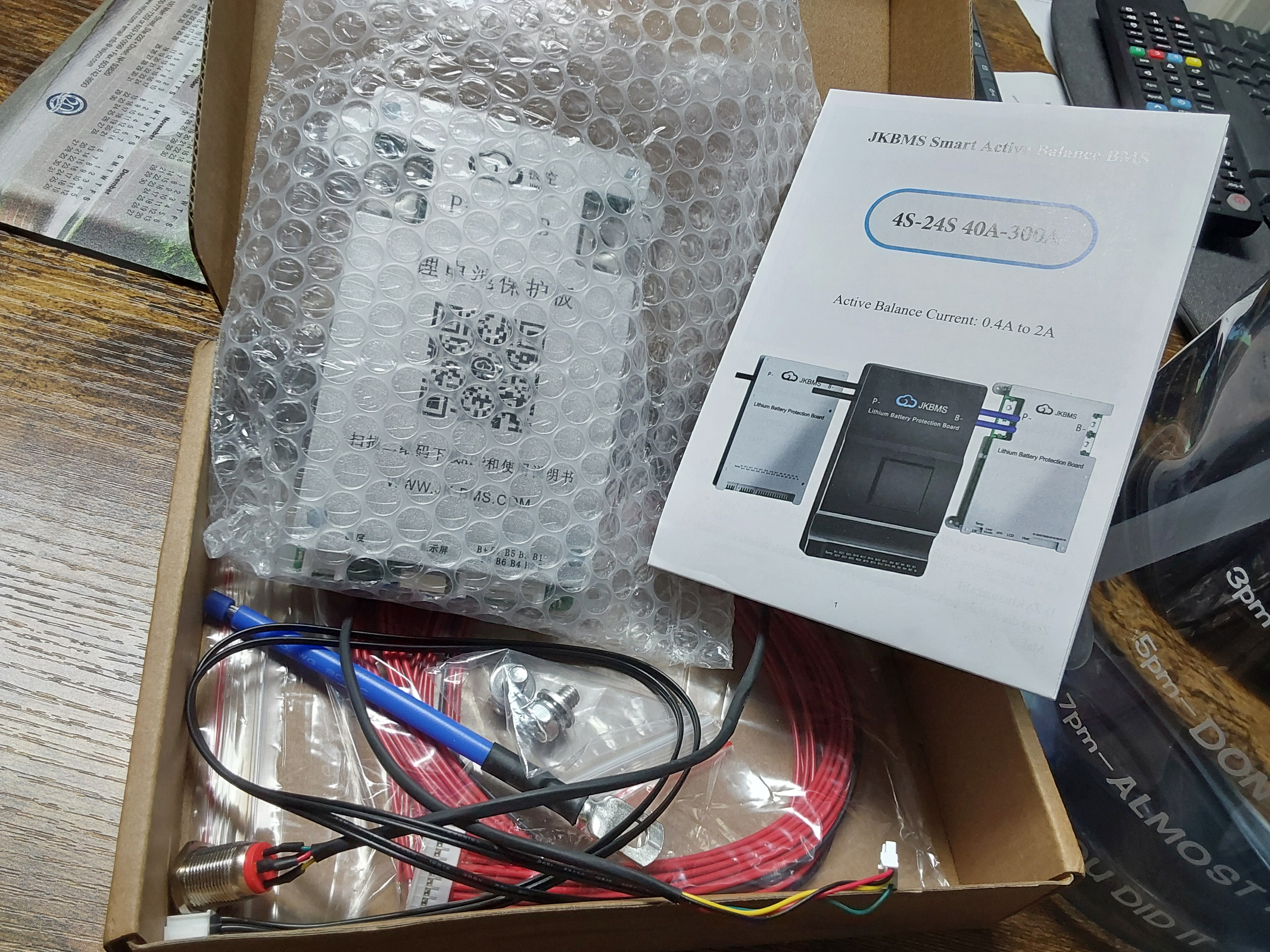
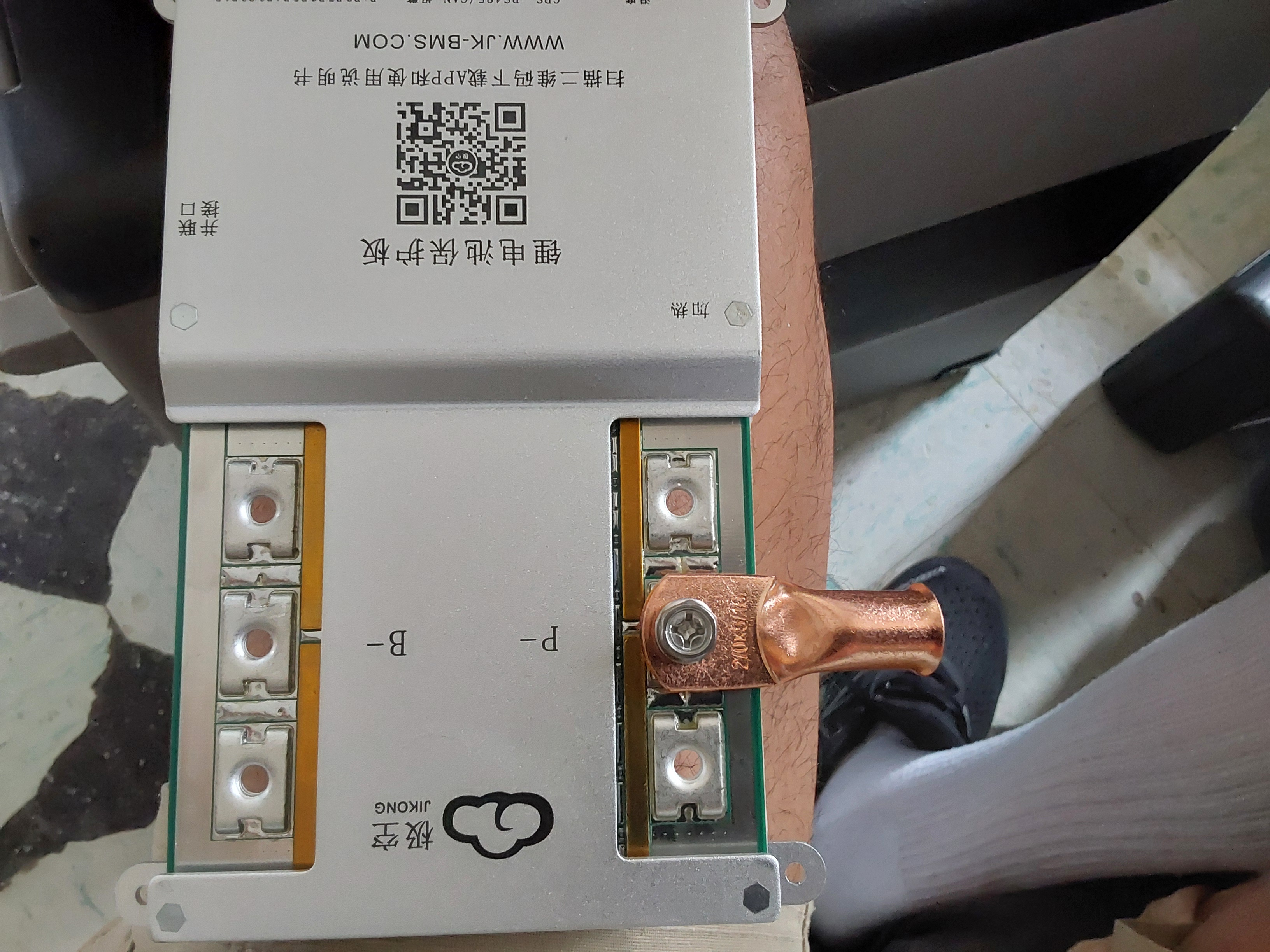
Allen Jackson wrote:There has been a bit of talk in this thread about essentially the fear of what happens if the BMS in a lithium battery dies, and if those batteries are a commercial pre-built system, I suppose those concerns are real factors in the decision process. If you build a battery from parts, it's really not an issue, because you can still use the cheapest parts around, but if/when they fail, you can still replace them, you can upgrade them to less cheap parts, or you can replace them with the best quality parts available, now that you have experienced the functionality the battery system has brought to your life.
I'm not a big fan of buying commercial battery systems any more than I'm not a fan of buying a pre-built computer for a specialized use. "If you want a 'gaming' computer, build it to meet the junction of your needs and your budget, don't buy into the marketing of what some sale/marketing team decided would be flashy enough to bump their profit margins...
LiFePO4 batteries have become a commodity item, that's too easy to duplicate with readily available components, that it's hard to justify the extra expense of buying the package, unless you really wanted/needed the convenience of buying it and plugging it in, then quickly moving on to something else. For the same reasons I'd avoid the pre-built 'gaming' computers, manufacturers of battery systems are still for-profit businesses, that will cut corners to appeal to the middle of the bell curve, since that's where the profit is. If you happened to want or need anything just outside of that, you end up compromising your needs, or wasting time/money to do it over just to get it right. DIY doesn't mean that you don't have to do anything over, it just increases the speed with which you can, plus it drops the cost of doing so.
Case in point, last week, I built a LiFePO4 battery that I was & am very happy with, but I wasn't happy with the BMS or the "brains" of the battery. Yesterday, I replaced the old BMS with a much better matched one for my needs and it pretty much just involved using a screwdriver to swap the connections.
2
David Baillie wrote:Hi Jackie,
I do not see on the link anything about UL9540 compatibility or certification in Europe or North America.
2
David Baillie wrote:
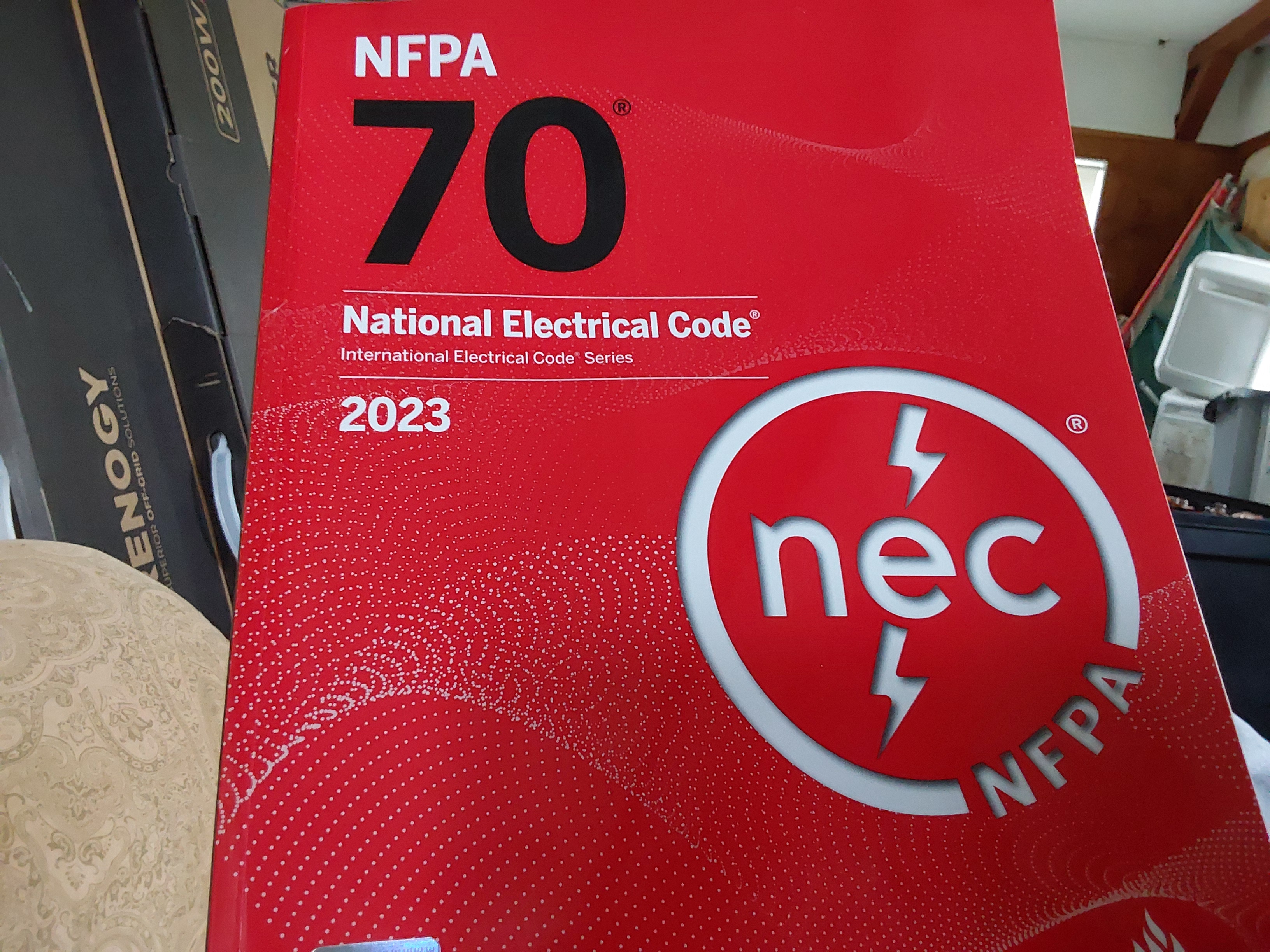
Allen, I respect your desire to build the battery you want for a specific application. My issue is when people install non certified gear in their house and expose themselves to all sorts of insurance and mortgage complications because of it. Some areas are more forgiving but a non certified piece of gear become a great way to deny a claim whether it was at fault or not. The good thing is the technology is so much better than even 3 years ago and good safe solutions are common and dropping in price.
Cheers, David
2
 2
2
David Baillie wrote:
Allen, I respect your desire to build the battery you want for a specific application. My issue is when people install non certified gear in their house and expose themselves to all sorts of insurance and mortgage complications because of it. Some areas are more forgiving but a non certified piece of gear become a great way to deny a claim whether it was at fault or not. The good thing is the technology is so much better than even 3 years ago and good safe solutions are common and dropping in price.
Cheers, David
2
Allen Jackson wrote:
David Baillie wrote:Hi Jackie,
I do not see on the link anything about UL9540 compatibility or certification in Europe or North America.
I haven't seen anything about UL9540 compatibility either, so I started digging...
For the most part, it doesn't matter, and it's NOT applicable!
Let me explain. UL 9540 is the standard, to which energy storage systems are tested.
UL 9540A is the testing method of those systems to determine & evaluate their capacity for thermal runaway in a fire.
(This is used to determine how close they can be to each other, and most of the requirements don't apply to single and 2-family residences)
UL 9540B was developed to specifically address residential energy storage systems.
While UL 9540 is NOT just for lithium ion batteries, it really doesn't have much to say about LiFePO4 batteries. Because it's primarily focused on fire hazards and fire safety, it covers lead acid batteries, which can generate explosive hydrogen gas, and lithium ion batteries, which can be driven into thermal runaway by damage or heat. Since lithium iron phosphate batteries don't exhibit those characteristics, they already inherently pass the basic cell-level test requirements of UL 9540A (or UL 9540B), and per the testing norms, if the cells cannot be driven into thermal runaway, there's no further need to test the module or system that they are installed in.
UL 9540B was driven primarily by California fire code, that became more strict than UL 9540, to focus on the gaps in coverage of residential systems (pretty much due to the rise in popularity of Tesla Powerwalls and Tesla vehicles), because they DO use lithium ion batteries, and are most commonly found in residential settings.
Unless you're planning to install a DIY lithium ion based system the applicable regulatory agencies aren't likely to be paying much attention to your systems, unless there's an outside chance you're looking at a large scale installation of lead acid batteries, because of the hydrogen generation).
The fervor over insurance companies and inspectors not liking LiFePO4 battery systems, is only possible if they are ignorant of the differences between lithium ion and lithium iron phosphate batteries. It's even likely that inspectors will see the word "lithium" and automatically assume that a system is equivalent to a Tesla powerwall. That doesn't mean it can be set on fire, though...
2
That’s a huge upgrade. Good job!larry kidd wrote:So I finally got around to replacing my ancient 35000 watt hours of LA batteries with about 30000 watt hours of LifePO4. What a major change this is! It over doubled my usable watt hours even though the total bank has less. With LA cells I could only use about 25-30% with the new LifePo4 I can use 60%. Voltage sag is more or less a thing of the past. With a full system load the voltage only sagged 0.1 volt with my old bank under full load it was over 1.0 volt of sag.
Simply amazing!!!
2
if they are not lithium its a vented to the outside box with a powered fan. Must be in a dedicated mechanical room, must have a smoke detector, must have a headroom of 6'9". Most of those apply to lithium as well except the venting and box.Allen Jackson wrote:Out of curiosity David, what if they aren't "lithium" batteries?

|
Feb-ROO-airy. I can't stop saying it this way. Help me tiny ad!
a new overhaul of the freeheat page - need feedbacks for world domination
https://permies.com/t/389799/overhaul-freeheat-page-feedbacks-world
|