• Post Reply Bookmark Topic Watch Topic
  • New Topic
permaculture forums growies critters building homesteading energy monies kitchen purity ungarbage community wilderness fiber arts art permaculture artisans regional education skip experiences global resources cider press projects digital market permies.com pie forums private forums all forums
this forum made possible by our volunteer staff, including ...
master stewards:
  • Devaka Cooray
  • Carla Burke
  • John F Dean
  • Nancy Reading
  • Timothy Norton
  • r ranson
stewards:
  • Jay Angler
  • Pearl Sutton
  • paul wheaton
master gardeners:
  • Christopher Weeks
  • M Ljin
gardeners:
  • thomas rubino
  • Eino Kenttä
  • Jeremy VanGelder

Chimney

 
pollinator
Posts: 610
Location: Zone 8A
120
homeschooling kids rabbit tiny house books chicken composting toilet medical herbs composting homestead
  • Likes 7
  • Mark post as helpful
  • send pies
    Number of slices to send:
    Optional 'thank-you' note:
  • Quote
  • Report post to moderator
Are you finding that you still need to follow the "3-2-10" rule with the different heater styles? What has worked for you not following that rule?

Would having a bypass make it necessary for correct draw when starting a fire?

My current conventional setup is 2' above the roof line with a 5/12 pitch. So the closest thing 10' away is 50" high. I am not even close to fulfilling that rule. I always light a piece of paper and hold under the chimney before I start the fire to get the draft going and never experienced any issues. Metal roof so sparks are not an issue and even on windy 40-50 gust days, no downdraft.

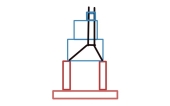
3-2-10 rule
Your chimney must extend at least three feet above the point where it exits your roof.
It must also be at least two feet higher than any part of the roof (or nearby structure) within ten feet horizontally.
 
master rocket scientist
Posts: 6935
Location: latitude 47 N.W. montana zone 6A
3925
cat pig rocket stoves
  • Likes 9
  • Mark post as helpful
  • send pies
    Number of slices to send:
    Optional 'thank-you' note:
  • Quote
  • Report post to moderator
Hey Jackson;
I have been breaking that chimney rule my whole life.
You will know if your chimney is too short.

As far as bypasses go.
Appropriately built to specification, you should not need a bypass, BUT... they are a darn good idea.

When your stove is freshly built, cold, and wet... You will love having a bypass.
When you are firing it up for the season... You will love a bypass.
When it is shoulder season, and you want some heat, but not that much...  You will love having a bypass.
When you build a Batchbox Masonry stove, once your bricks are heated for the season, you can leave the bypass closed.
 
Jackson Bradley
pollinator
Posts: 610
Location: Zone 8A
120
homeschooling kids rabbit tiny house books chicken composting toilet medical herbs composting homestead
  • Likes 4
  • Mark post as helpful
  • send pies
    Number of slices to send:
    Optional 'thank-you' note:
  • Quote
  • Report post to moderator

thomas rubino wrote:
As far as bypasses go.
Appropriately built to specification, you should not need a bypass, BUT... they are a darn good idea.


Thanks, Thomas.

I mentioned the bypass because, from what I understand, you are making the masonry stove more like a conventional stove for a short time. I didn't know if that would make the flu draw easier or harder than when in "normal" mode for the masonry heater.

Am I right in thinking that once the mass is heated up, you would not need to do anything to heat the flu to create a draw for the next fire?
 
Rocket Scientist
Posts: 4710
Location: Upstate NY, zone 5
661
5
  • Likes 5
  • Mark post as helpful
  • send pies
    Number of slices to send:
    Optional 'thank-you' note:
  • Quote
  • Report post to moderator
You are correct, a heated mass when airflow is allowed will start a decent draft in most cases.

A bypass definitely makes a masonry heater behave like a common wood stove, allowing easy flow of heat to begin warming the chimney.

Some situations, like mine, have good draft through the operating configuration as long as the house is warmer than outside even when the mass is stone cold. This condition necessitates a tight inlet shutoff whenever the fire is not going, to avoid stored heat being drawn up the chimney. I built a bypass opening in my bell next to the chimney, but never needed it so it remains permanently plugged.
 
Glenn Herbert
Rocket Scientist
Posts: 4710
Location: Upstate NY, zone 5
661
5
  • Likes 7
  • Mark post as helpful
  • send pies
    Number of slices to send:
    Optional 'thank-you' note:
  • Quote
  • Report post to moderator
As for the 3-2-10 rule, I ran a temporary 6" metal chimney up 6', out the wall, and up another 4' because I didn't want to build the stone chimney into the loft space above the heater until I finished the master bedroom addition. The chimney top ended up 3' below the roof edge and I didn't want to work on the roof three stories up with nobody else around... That configuration worked fine most of the year because the chimney on the east side was always in the lee of prevailing winds. A few days each spring we get east winds and those made it impossible to run the RMH without backdrafting. Since I raised the chimney 5' I have had zero issues with backdrafting. It is only 2' above the adjacent roof edge and 1' above the other side of that piece of shed roof 10' away.
 
Posts: 132
Location: 55 deg. N. Central B.C. Zone 3a S. Nevada. Hot and dry zone
40
  • Likes 6
  • Mark post as helpful
  • send pies
    Number of slices to send:
    Optional 'thank-you' note:
  • Quote
  • Report post to moderator
Remember rules/regs/codes are there to help ensure that the lowest common denominators both (builders and homeowners) are somewhat safe from their builder's/their own ignorance or malicious intent.
Ignore them if you like, you'll likely get away with it, they are designed to accommodate the widest range of possibilities. Make whatever decision you like for the people whose safety depends on your judgement, just don't try sell it to anyone else. That's not right.

If you live with home insurance and building inspectors, (we don't, yet, up here) then don't forget there is also generally a 'minimum developed height' to chimney termination or something similar for woodburning appliances, which is 15ft above the firebox. Believe it is 5ft for gas appliances. Helps ensure constant available draft, minimizing possibility of stagnant or backdraft conditions, help with potential creosote.

If you are bragging to your inspector about how little heat your wondrous homemade woodstove 'wastes' up the chimney, realize in his/her experienced mind that some (gas) appliances have a minimum BTUH they are required to send up the chimney to ensure a constant draft. You'll be fine, I'm sure, but that is how engineers/inspectors think.

Seems intuitive, (maybe wrong) that a steeper pitched roof would have a heavier 'cascade' of cold air to backdraft a chimney. So to me, if your little cabin has a 20ft roof span of 4/12 with a chimney near the peak, the height of your stack will rule and you can have whatever chimney you want. Ignore if you like.
If your house has a roof span of 40ft with a 10/12 snow pitch and a chimney near the eaves, seems logical to pay attention to codes.
After all, they were implemented only after tragedy.

I worked a bit underground in Nevada gold mines. The one thing they tell you in your safety certification classes is more or less:
"Yes, there are a ton of regulations. But. most of these came about as a result of fatalities. If you guys would stop killing yourselves ( and having your grieving family try to sue the mine for something you did to yourself ), we would stop making rules." Once again, rules are for the Lowest Common Denominator. If you don't have a lot of practical experience in the area you are contemplating, that LCD might be you.

I framed a small addition to a trailer my new 'neighbor' had moved into out back, kind of a mud room to house his woodstove. 6/12 metal roof. He ignored my few suggestions re: the chimney/stove. He is the LCD type.
1. Use insulated pipe outside heated envelope of the house and through the roof.
2. It is a simple thing to build the horizontal section through the wall on a 45deg angle up, rather than the even easier square/flat horizontal section most folks use. Reduces stagnant air on a cold start.
3.Minimum 10ft. stack or so, above the bend as his chimney is right at the eaves.
These ideas are especially critical, because he is the grasshopper not the prepared ant, and needs to burn wood, wet or not, that he cuts on a semi daily basis all winter.
What he built was single wall pipe, three sections long, with a horizontal wall penetration. What he got was creosote, he's already had a chimney fire.
Maybe worse, his stove will actually snuff itself out with damp wood, because of lack of draft when the temps are below -25F at night. Seems poor timing. We get those every winter.

I very much doubt he is equipped to live out here. Not only is he LCD, but he also the one who believes he knows everything better than you ever will, because he worships at the altar of EweTube.
Practical experience be damned!  Forums and video are his guiding lantern, his freedom train Polaris.

 
I've read about this kind of thing at the checkout counter. That's where I met this tiny ad:
All of the video from the Eat Your Dirt Summit - more than 42 hours!
https://permies.com/wiki/106759/video-Eat-Dirt-Summit-hours
reply
    Bookmark Topic Watch Topic
  • New Topic