posted 7 months ago
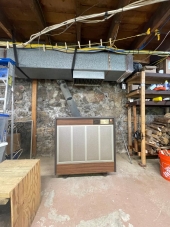
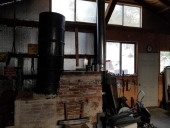
I just bought a 1990s 1,500 sq ft ranch with a 1,500 sq ft unfinished, wide-open block basement. While I would prefer to place a wood stove on the main level, space constraints likely mean installing it in the basement near the centrally located stairwell. Overall, the house is a good buy and reasonably well insulated for its age.
The stairway comes up into the center hallway of the home. In one (short) direction is an open-concept kitchen, dining room, and living area. In the other direction, a bit farther down the hall, are three bedrooms and a bathroom. I understand there are limitations to heating a home from the basement, but unless it proves to be truly ineffective, it seems like the best option given the layout.
The basement ceiling is largely uninsulated, with the majority of the floor system above left exposed. If leaving the ceiling uninsulated meaningfully helps heat transfer to the main living space, I do not intend to insulate it. I do, however, plan to foam board and spray-seal the block foundation walls and rim joist to reduce heat loss and air infiltration.
I’m getting mixed guidance on stove sizing. I have no issue installing a large stove, as the basement space is essentially unlimited. I understand that at least ~2.5 cu ft is desirable for meaningful long-burn capability. The question I’m struggling with is whether I should size the stove for 1,500 sq ft (the living space) or 3,000 sq ft (including the basement).
I plan to run a dedicated outside air intake through the rim joist. Beyond the basement walls and rim joist, I’ll also be addressing any other obvious air-sealing opportunities in the house.
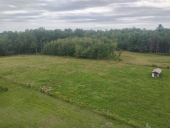
I’m located in northeastern Pennsylvania and have abundant access to hardwood. I plan to stack and season well ahead of use. I expect roughly three to four cords per season with near full-time use and will be storing significantly more than that to stay ahead.
As for stove type, I’m interested in what catalytic stoves can offer, particularly in terms of efficiency and long burn times, but I’m hesitant about the added cost and maintenance. That said, I’m willing to go “buy once, cry once” if the use case really justifies it.
My goals are high efficiency and reduced overall fuel consumption, both through improving the home’s envelope and making the most of the wood available to me. Ideally, I’d like to supplement, or possibly replace, the existing propane and oil heat.
I’d also like the ability to turn the stove down and extend burn times while remaining efficient. I want to move heat upstairs passively (or actively, but I really don't know my options), without cutting floor penetrations or adding registers.
I don’t mind routine maintenance and am comfortable being diligent about it, but I’d prefer to keep ongoing costs as reasonable as possible.
I think I may have rambled a bit, but that’s the full picture. Thanks for taking the time to read through it.



 3
3