• Post Reply Bookmark Topic Watch Topic
  • New Topic
permaculture forums growies critters building homesteading energy monies kitchen purity ungarbage community wilderness fiber arts art permaculture artisans regional education skip experiences global resources cider press projects digital market permies.com pie forums private forums all forums
this forum made possible by our volunteer staff, including ...
master stewards:
  • Carla Burke
  • Nancy Reading
  • r ransom
  • John F Dean
  • paul wheaton
  • Jay Angler
stewards:
  • Timothy Norton
  • Pearl Sutton
  • Tereza Okava
master gardeners:
  • Christopher Weeks
  • M Ljin
gardeners:
  • Jeremy VanGelder
  • Matt McSpadden
  • thomas rubino

Building a round timber framed structure, approx 3m x 3m into a steep slope using Earthbags

 
Posts: 7
2
  • Likes 5
  • Mark post as helpful
  • send pies
    Number of slices to send:
    Optional 'thank-you' note:
  • Quote
  • Report post to moderator
Hi,

I've been doing some Earthbag retaining...

It's a very steep slope, made of a mixture of silty / clay / organic matter and 75% granite rocks in the hills of the Welsh border lands. My first retaining wall is around 1m high, this is 3m wide and is where my floor begins, I have built it one layer underground with a 200mm deep drainage coarse of rocks underneath. From here I want it to go back into the hill by 3m, this will require an earthbag retaining wall of 1.5m high. What should I be thinking about, its 75% rocks of varying sizes, so do i need a layer rocks behind it? i guess i should run a drainage pipe underneath the wall, maybe one half way up?

Love to hear from you,

Many Thanks
Erol
 
gardener
Posts: 648
Location: Boudamasa, Chad
262
2
forest garden
  • Likes 6
  • Mark post as helpful
  • send pies
    Number of slices to send:
    Optional 'thank-you' note:
  • Quote
  • Report post to moderator
Hey Erol,

Can you share some pictures to help visualize? My main concern would be getting the earth bags covered in some sort of plaster, because they will degrade in the sun.
 
Erol Flow
Posts: 7
2
  • Likes 5
  • Mark post as helpful
  • send pies
    Number of slices to send:
    Optional 'thank-you' note:
  • Quote
  • Report post to moderator

Nathanael Szobody wrote:Hey Erol,

Can you share some pictures to help visualize? My main concern would be getting the earth bags covered in some sort of plaster, because they will degrade in the sun.


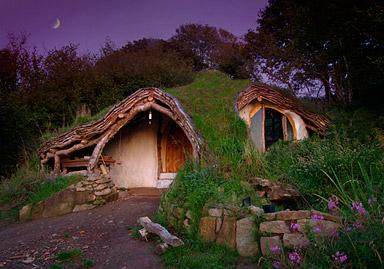
Yeah, i'll cover that front sun facing part with rocks and lime etc. and the back wall will be rendered in lime by the time im done.
/
My main concern is this 1.5m high wall and what i should do since i'd like the space to stay as dry as possible, would a plastic sheet help i wonder?
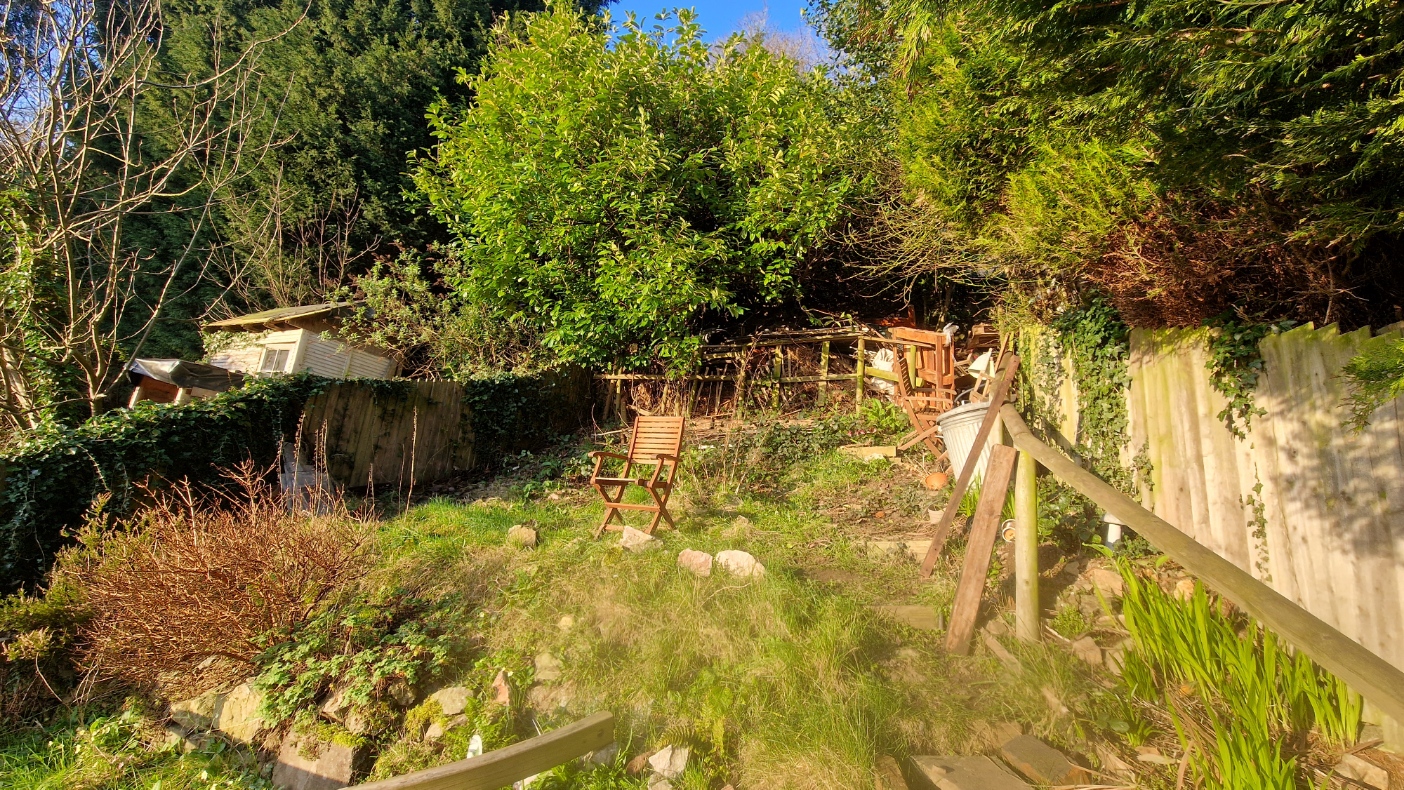
20260304_073957.jpg
Before
Before
20260304_173613.jpg
After first wall and total area half flattened
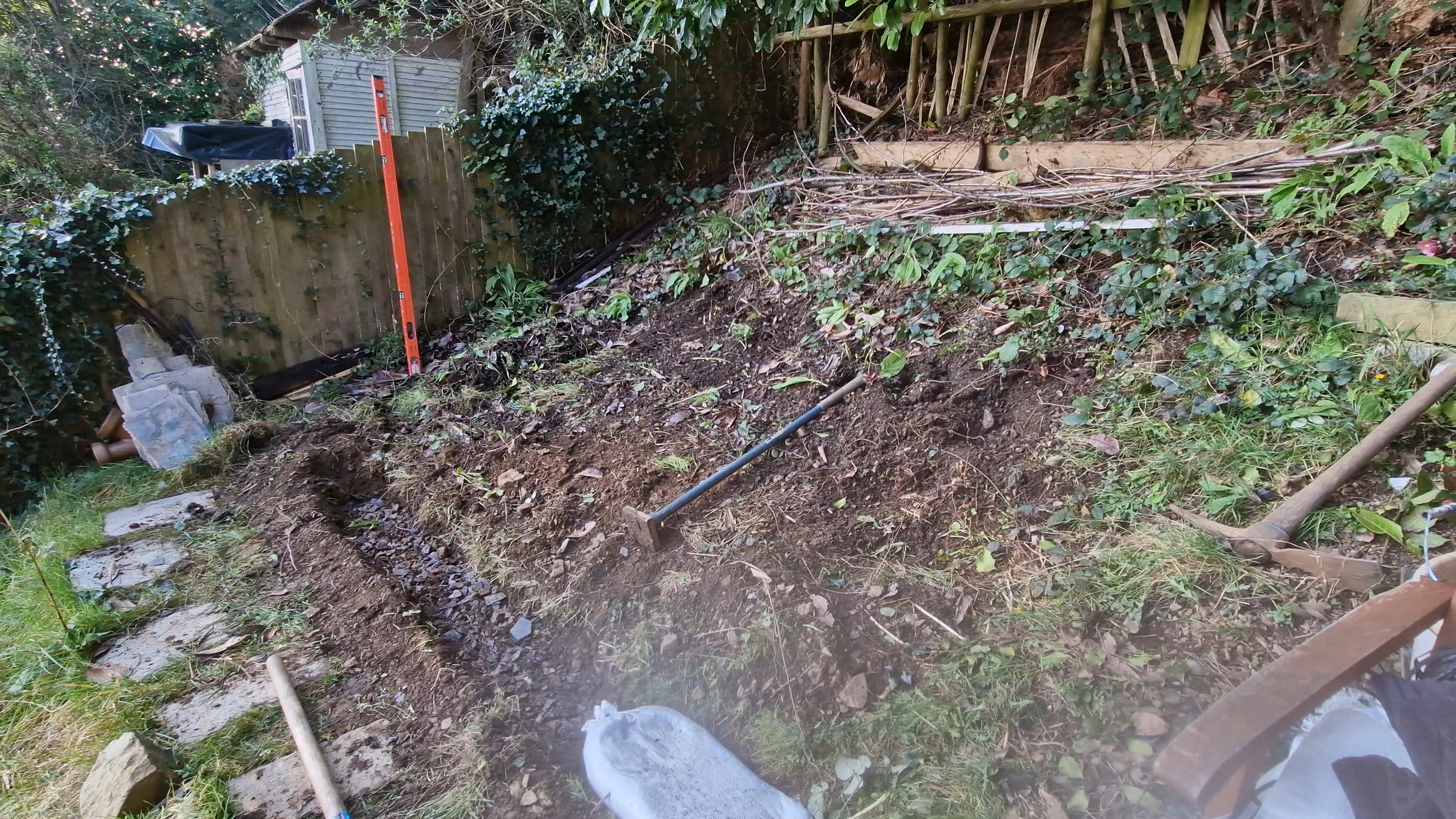
20260304_101823.jpg
Close up of the zone in question, I want to level this all and build a wall at the back which will be 1.5m high.
front.jpg
Maybe it can look like this when im done?!?!?!
 
pollinator
Posts: 6018
Location: Bendigo , Australia
552
plumbing earthworks bee building homestead greening the desert
  • Likes 5
  • Mark post as helpful
  • send pies
    Number of slices to send:
    Optional 'thank-you' note:
  • Quote
  • Report post to moderator
My first choice for that site would be a pole house.
With large poles set into the ground, then timber beams and floor joists to create the flat floor.
It would not be suitable for a soil building with the pole designs.
Some questions;
- IF the 1.5M wall you mention going to be at back, up the slope, the downhill wall will need to be about 2.5M high? is that correct?
- Have you thought of building a stone wall?
 
steward and tree herder
Posts: 12811
Location: Isle of Skye, Scotland. Nearly 70 inches rain a year
6699
6
transportation dog forest garden foraging trees books food preservation woodworking wood heat rocket stoves ungarbage
  • Likes 4
  • Mark post as helpful
  • send pies
    Number of slices to send:
    Optional 'thank-you' note:
  • Quote
  • Report post to moderator
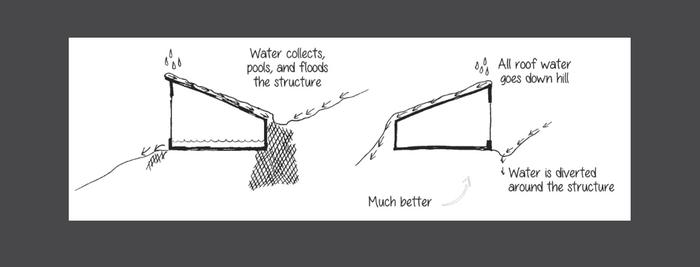
I'm planning a somewhat similar earth sheltered structure here. I'm hoping that a rubble/gravel filled trench behind my wall will be enough to keep it dry. But my structure will be stone, so a bit of damp won't cause too much trouble. Have you looked a paul's wofati concept? The idea there is for the roof/walls to always go downwards so that the water pressure never builds up. He also lives in a somewhat dry cold climate, unlike Wales (or Skye)
wofati concept from'build a better world book'

more information about wofati here

I may even turn my building around to open up behind it on the uphill side, although my thoughts are that driving rain is just as likely to casue damp issues as soil moisture wicking.
 
Posts: 1053
Location: In the woods, West Coast USA
220
  • Likes 4
  • Mark post as helpful
  • send pies
    Number of slices to send:
    Optional 'thank-you' note:
  • Quote
  • Report post to moderator
I've built a lot of structures on my steep property, and I won't build any structure unless it is on a flat, level surface, then build up from that so that all of the stresses are equal on all sides, and so the structure won't start leaning downhill.  Gravity is not your friend.

There needs to be almost overkill in the foundation, including a very deep concrete retaining wall down into the soil at depths of 3 feet/1 meter to 4 feet/1.3 meterrs on all sides of a steep slope with rebar extending upwards that the bags are on.

Be aware of all the forces on a structure:  wind, soil density, rodents digging under it, erosion, and roof drainage around the foundation, tree root intrusion, the weight of the building.  Over the years, even a few years, all of these things will come into play.   You'll end up struggling to keep something like that in its original condition if even one of the above things starts to change or is effected by heavy storms or earth movement.   Just like any retaining wall, it needs to be leaning back into the hillside.  Check out retaining wall construction on YouTube.

You might want to look into a mini earthship that uses tires for a back wall, then you could use earth bags and a wood frame along the front.  Or check out a mini hobbit-type house.   There is one guy who did a hobbit house where the back wall is backed into the hillside, and he dug out an extra deep excavation behind the back wall, filled it with concrete that was attached to the back wall as an anchor of his hobbit house because of the weight of the soil pressing against it.

That will tell you how serious it is to build on a slope, even if it's on flat ground.

Check out YouTube for either of the above.

You won't want to have this structure on the list for needing to be fixed in the future.  You'll have plenty of other things to do.

:-)

I put another message here, but I don't know where it went.  That picture of the house with the rounded roof is a hobbit house, but it's on flat ground.  There is a hillside behind it.   Be careful not to destablize the hillside and what's above it if you decide to dig it out.   Retaining walls need to lean back into the hillside, not be straight up and down.  All drainage should take water away from the foundation, including downspout water.
 
John C Daley
pollinator
Posts: 6018
Location: Bendigo , Australia
552
plumbing earthworks bee building homestead greening the desert
  • Likes 1
  • Mark post as helpful
  • send pies
    Number of slices to send:
    Optional 'thank-you' note:
  • Quote
  • Report post to moderator
Christo, do you have links to the Videos you speak of.
Also, retaining walls need to have a heal and toe, if made of concrete so that the soil assists in keeping it stable and harder to "roll" over.
 
Erol Flow
Posts: 7
2
  • Likes 3
  • Mark post as helpful
  • send pies
    Number of slices to send:
    Optional 'thank-you' note:
  • Quote
  • Report post to moderator
The front wall will mainly be window frames, the 1.5m back wall is from how much earth needs to be retained in order to go that far back and achieve a flat floor to the front. The earthbags are for the primary reason of getting rid of the dug out soil. Its a long way up this hill from the road with poor access and carrying materials up there is an exhaustive process, which makes concrete or any such thing not ideal. This is why I thought retain those walls using earth bags and any excess soil can be used to build up the walls, then timber frame the rest, as i do have a fair bit of timber laying around.

So, as far as dealing with the gravity of a 1.5m wall perhaps i should start it a little further forward to allow it to properly lean into the hill behind, Perhaps I could run a perforated plastic pipe along the edge of each coarse of earth bag for drainage? I cant really bring a load of concrete up here... but on the plus side the soil is predominantly granite rocks as the geography here is upon an ancient granite outcrop.
 
Posts: 20
6
  • Likes 3
  • Mark post as helpful
  • send pies
    Number of slices to send:
    Optional 'thank-you' note:
  • Quote
  • Report post to moderator
Hi !

One practical option would be to slope the roof clearly to one side, or even better, make it shed water forward in a controlled way, so it ends up away from the back wall. Then you could guide that runoff with a shallow stone-lined drain or rock-filled swale in front, so water does not linger around the structure. On this kind of site, keeping water moving is half the battle. Earthbags can be a good idea, but I would be careful about assuming all bags will age well. Some do not handle UV exposure or long-term weathering very well, so if any part will see sunlight for a while, I would protect it as soon as possible. In a project like this, drainage and durability matter more than optimism, gravity always works.
 
John C Daley
pollinator
Posts: 6018
Location: Bendigo , Australia
552
plumbing earthworks bee building homestead greening the desert
  • Likes 4
  • Mark post as helpful
  • send pies
    Number of slices to send:
    Optional 'thank-you' note:
  • Quote
  • Report post to moderator
Erol, why not create a railway line up the hill to the build site.
I have built them using a cable around a tree past the build site, tracks made from timber or steel pipes.
 
Cristo Balete
Posts: 1053
Location: In the woods, West Coast USA
220
  • Mark post as helpful
  • send pies
    Number of slices to send:
    Optional 'thank-you' note:
  • Quote
  • Report post to moderator
I am not trying to be a Debbie Downer here, it's just that you can't fool Mother Nature.  For what it's worth, it may be hard to haul bags of concrete up that slope, but you'll have to haul heavy dirt up that slope to fill bags.  If you do the math, that's a lot of bags and a lot of dirt.

We all have the most motivation at the beginning of a project, even if it means hauling bags of concrete up a hill.  That's just a commitment to a project.   Concrete bags can be cut in half with a heavy wire and hauled up in 30 lb increments on site.  

Aren't most structures out of earthbags round?  Looking at all the ones in Arizona/New Mexico, ones that have been successful, they are round.   Even if you downhill wall was a half circle, what's going to hold those bags together, and then hold them upright as a wall?  Thick 1"/ 2.5 cm rebar will bend if there's too much weight on it.  Rebar works in construction because it's encased in concrete.

One reality check is hold a 3 meter board with one end on the uphill side and put a level on the board, then hold it up until it is level.  That distance on the downhill side up to the level board looks like more than a meter to me?  That would be the bottom of that wall that would go up 2 meters for head clearance.   That's a 3 meter tall wall, plus a roof.  The rest of the structure is relying on that wall because of gravity.

Everything below the base of that wall is a foundation that all three of the other sides are relying on.  Gravity is pulling downhill on that, the weight of the roof is pushing down on that, The side walls and back wall are pushing on that, you on the roof building it and repairing it is pushng down on that.  It's all a matter of long-term safety.

Not sure what kind of soil you will put in the bags, but if they get wet the soil will shift, so relying on bags as a foundation in the ground is really risky.   To keep bags dry eaves of that building have to be extended out enough so that the bags don't get wet.   That's more weight pushing on that downhill wall.  Or the bags all have to be coated in plaster that is painted to keep them dry.  There is a lot of upkeep with plaster exteriors because the Earth jiggles just in general making it crack.  Heavy trucks driving by jiggle the ground.

Honestly, the safest structure there, if you're not going to level the hillside,  is to put a wooden floor on a frame on nine 4x4 inch/ 15cm x 15 cm treated posts sunk a minimum of 3 feet/1 meter in the ground, preferably with concrete around them, and criss-cross braces on three sides.  Then wooden siding walls with windows in frames.  

Maybe someone here who has more experience than I do with earthbags on a steep slope can recommend something,

The Hobbit style house I mentioned is Flannagan Hobbit House.  He did it with cinder blocks on flat level ground, then put a tar-like substance over fabric that is between the cinder blocks and the soil.  He also made arches for the roof with 4 layers of plywood screwed together, and mounted those on a wooden rail on top of the cinder blocks, set on rebar.  The cinder blocks are filled with concrete and rebar in the traditional way.  



Erol Flow
Posts: 7
2
  • Mark post as helpful
  • send pies
    Number of slices to send:
    Optional 'thank-you' note:
  • Quote
  • Report post to moderator

John C Daley wrote:Erol, why not create a railway line up the hill to the build site.
I have built them using a cable around a tree past the build site, tracks made from timber or steel pipes.


That is something I had thought of. It's a bit more complicated than just a hill, there are several elevations to traverse, 2 of them very high retaining walls, we live on a very steep hill. Out of interest though, would you tell me more about how you operated the railway line?
 
Erol Flow
Posts: 7
2
  • Mark post as helpful
  • send pies
    Number of slices to send:
    Optional 'thank-you' note:
  • Quote
  • Report post to moderator

Cristo Balete wrote:I am not trying to be a Debbie Downer here, it's just that you can't fool Mother Nature.  For what it's worth, it may be hard to haul bags of concrete up that slope, but you'll have to haul heavy dirt up that slope to fill bags.  If you do the math, that's a lot of bags and a lot of dirt.

We all have the most motivation at the beginning of a project, even if it means hauling bags of concrete up a hill.  That's just a commitment to a project.   Concrete bags can be cut in half with a heavy wire and hauled up in 30 lb increments on site.  

Aren't most structures out of earthbags round?  Looking at all the ones in Arizona/New Mexico, ones that have been successful, they are round.   Even if you downhill wall was a half circle, what's going to hold those bags together, and then hold them upright as a wall?  Thick 1"/ 2.5 cm rebar will bend if there's too much weight on it.  Rebar works in construction because it's encased in concrete.

One reality check is hold a 3 meter board with one end on the uphill side and put a level on the board, then hold it up until it is level.  That distance on the downhill side up to the level board looks like more than a meter to me?  That would be the bottom of that wall that would go up 2 meters for head clearance.   That's a 3 meter tall wall, plus a roof.  The rest of the structure is relying on that wall because of gravity.

Everything below the base of that wall is a foundation that all three of the other sides are relying on.  Gravity is pulling downhill on that, the weight of the roof is pushing down on that, The side walls and back wall are pushing on that, you on the roof building it and repairing it is pushng down on that.  It's all a matter of long-term safety.

Not sure what kind of soil you will put in the bags, but if they get wet the soil will shift, so relying on bags as a foundation in the ground is really risky.   To keep bags dry eaves of that building have to be extended out enough so that the bags don't get wet.   That's more weight pushing on that downhill wall.  Or the bags all have to be coated in plaster that is painted to keep them dry.  There is a lot of upkeep with plaster exteriors because the Earth jiggles just in general making it crack.  Heavy trucks driving by jiggle the ground.

Honestly, the safest structure there, if you're not going to level the hillside,  is to put a wooden floor on a frame on nine 4x4 inch/ 15cm x 15 cm treated posts sunk a minimum of 3 feet/1 meter in the ground, preferably with concrete around them, and criss-cross braces on three sides.  Then wooden siding walls with windows in frames.  

Maybe someone here who has more experience than I do with earthbags on a steep slope can recommend something,

The Hobbit style house I mentioned is Flannagan Hobbit House.  He did it with cinder blocks on flat level ground, then put a tar-like substance over fabric that is between the cinder blocks and the soil.  He also made arches for the roof with 4 layers of plywood screwed together, and mounted those on a wooden rail on top of the cinder blocks, set on rebar.  The cinder blocks are filled with concrete and rebar in the traditional way.  


It'll be a timber framed structure, all the load bearing will be on the timber frame. The earth bags are only for retaining the hill so I can have a flat surface. I will certainly have enough earth to retain the back wall after i've dug some 2m into the hill. its a 3m wide 1.5m high wall 50cm'ish thick after patting these earth bags down using the soil i'll get from excavating to 2m into the hill with 3m width and 1.5m high, there will be left over soil which i can raise the front wall slightly or build pillars for the timber frame which will hold the roof. Maybe the timber frame will be anchored to raised footings of lime and cement hardcore, these bags of lime/cement will have to be carried up the hill, if only i had a donkey!

I have since decided that the 1.5 m earth bag retaining wall will lean into the hill, behind it will be a damp proof membrane of some sort, then a plastic pallet (these create a sort of soak away zone that a layer of gravel otehrwise would) and then geotextile fabric (this will stop soil from entering my plastic pallet soak away). just below all this will be a perforated drain pipe. Oh and i'll also put barbed wire between each coarse.

The hobbit house im going for is the Simon Dale one, i've just got to figure out how to run my living roof down and over the front at the sides...

 
peep peep peep tiny ad peep peep
Your suggestions have been mashed into the PIE page - wuddyathink?
https://permies.com/t/369924/suggestions-mashed-PIE-page-wuddyathink
reply
    Bookmark Topic Watch Topic
  • New Topic