• Post Reply Bookmark Topic Watch Topic
  • New Topic
permaculture forums growies critters building homesteading energy monies kitchen purity ungarbage community wilderness fiber arts art permaculture artisans regional education skip experiences global resources cider press projects digital market permies.com pie forums private forums all forums
this forum made possible by our volunteer staff, including ...
master stewards:
  • Carla Burke
  • Nancy Reading
  • John F Dean
  • r ransom
  • paul wheaton
  • Jay Angler
  • Timothy Norton
stewards:
  • Pearl Sutton
  • Tereza Okava
  • Nicole Alderman
master gardeners:
  • Christopher Weeks
gardeners:
  • M Ljin
  • Megan Palmer
  • Pete Podurgiel

Sumac varnish/resin?

 
gardener
Posts: 3048
Location: Zone 4b/5a
1816
ancestral skills forest garden foraging composting toilet fiber arts bike medical herbs seed writing ungarbage
  • Likes 12
  • Mark post as helpful
  • send pies
    Number of slices to send:
    Optional 'thank-you' note:
  • Quote
  • Report post to moderator
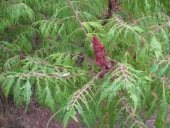
Varnish, in its botanical form, is a kind of poison sumac tree. The sap is tapped like rubber and used to coat and seal things. Staghorn sumac, Rhus typhina, also has a milky sap which hardens to a clearish wax/resin.

In staff meeting today we discussed pottery a little in its being an alternative to plastic. Paul thought that the glazes in pottery could be a potential source of toxins, and I replied that natural varnishes or shellacs could work, although varnish is derived from the poisonous, allergenic urushiol. Perhaps ordinary sumac could be a source of varnish for pottery or wood projects?

Can we think of any other uses for this sort of substance? Processes for tapping? (Likely similar to rubber…)
 
gardener
Posts: 837
Location: Semi-nomadic, main place coastal mid-Norway, latitude 64 north
575
  • Likes 11
  • Mark post as helpful
  • send pies
    Number of slices to send:
    Optional 'thank-you' note:
  • Quote
  • Report post to moderator
Interesting idea! Cool substance for sure, but also slightly frightening, using something that allergenic on stuff that's supposed to come into contact with food...

As for waterproofing unglazed pottery, I heard of a method where you apply conifer resin to the still-warm pottery pieces after firing. The resin melts, wicks into the pottery and seals the pores. I imagine if you burnish the inside of the piece and apply the resin from the outside, whatever you keep in the container might not even taste of pine resin... Haven't got around to trying this yet, but I will eventually.
 
master steward
Posts: 16295
Location: Pacific Wet Coast
10794
duck books chicken cooking food preservation ungarbage
  • Likes 11
  • Mark post as helpful
  • send pies
    Number of slices to send:
    Optional 'thank-you' note:
  • Quote
  • Report post to moderator
M Ljin wrote:

Paul thought that the glazes in pottery could be a potential source of toxins


I haven't done pottery for decades, but even back then, people were becoming more aware of the need to identify and document "food safe" glazes.

This fellow compared Milk, starch (corn), lard, and a commercial "food safe" product for sealing, so there are ways to slow down what is absorbed. None of them were perfect, but perfection may not be the goal.


I am *sure* I have read of other methods in the past, but that would take a bunch more research.

However, I have had a bad experience with a piece of pottery I thought was sealed, but it wasn't. It acted like an olla through just the base were I didn't realize it was damaging a table top. Live and learn! However, there's a big difference between leaving water in pottery for hours, vs. drinking a cup of water out of an unglazed cup - that leakage takes time!
 
Posts: 1
1
  • Likes 10
  • Mark post as helpful
  • send pies
    Number of slices to send:
    Optional 'thank-you' note:
  • Quote
  • Report post to moderator
I read a lot about urushiol and where to get it from, as I'm from North America I was looking for alternatives to the asian lacquers shown on the internet. I wanted something that would be native to my area so I considered poison sumac but apparently poison sumac would be the worst type of tree to extract it from. it is the most toxic tree in north america, the areas where these type of trees are found makes it a pain in the ass to harvest said tree, and the configuration of the tree makes it difficult to not get the rest of your body in contact with the tree. plus they say the sap is way more watery in terms of ratio of urushiol /water compared to traditional asian trees that do have urushiol.

ive seen then, switched my approach and think of harvesting pine and spruce resin, to either mix with beeswax or lindseed oil. i know the finish wont be lacquer like and will have to be applied throughout the years but i still think it is the more natural and easiest way to acheive the results i want.

other types of lacquers I learned about that did not contain urushiol were insects based, and I do not intend to start a colony of insects to harvest their secretions.

if you guys have different results and experiences i'd like to kbnow about it,

thanks,
 
Chop wood, carry water. Find enlightenment. Chop wood, carry water, and read tiny ads.
better than composting toilets
https://www.richsoil.com/willow
reply
    Bookmark Topic Watch Topic
  • New Topic