Here we need to define some terms. There is a lot of confusion regarding specific techniques of cooking. A few years ago, I tried writing a cooking blog… few people noticed or cared, so I gave it up. I will never forget one reader, though. She was a successful woman with advanced degrees. She emailed one day, asking how to cook pasta. That was a very surprising email! It seemed, every time she tried to cook macaroni or spaghetti she ended up with a congealed mass of all the pasta stuck together at the bottom of the pot. I was really shocked. I researched all sorts of stuff in regard to water and pasta… trying to figure out how pasta didn’t just cook in boiling water as intended. I researched adding oil to pasta water…. Anything you can imagine. We exchanged several emails. Eventually. I had her walk me through every step of her pasta cookery. It turned out that this educated, mature, successful woman had never been taught the basics of cooking. She did not know the difference between a simmer and a boil. She honestly thought that water shouldn’t be heated to a strong boil because it splashes out and you have to clean up. She had been trying to cook pasta in barely simmering water! Of course, it just sank to the bottom and became an unappetizing mess.
My point is that we have gone long past the time when in our culture, girls learned to cook from their mothers and grandmothers. Boys have even less opportunity. So, to the experienced cook some of what I will say may seem simplistic. For others, this basic information may make all the difference.
Grilling versus Barbecuing
Cooking over fire is the oldest form of cooking. It is primal. We all desire the flavor and most of us enjoy the process. These techniques are simple and basic, but not without nuance.
Grilling is cooking over hot coals. You can cook over live flames, but not without a cooking vessel. You can put a pot or a pan over flames. Flames may be allowed to briefly sear meat, but live flames will burn food. In grilling, we use either live coals (red, hot burned wood after the flames die down… those that glow in a fire), charcoal, which are those same coals stopped and extinguished before they burn out either through oxygen deprivation or naturally, charcoal briquettes (which are pretty nasty petrol-chemical byproducts) or gas. I prefer the flavor of wood or charcoal cooked meat, but a gas grill is almost just as good. Many vegetables, especially corn, are best cooked on a grill.
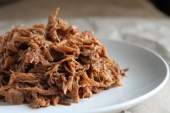
Barbecue is a different technique utilizing the same elements. The difference is that barbecue is cooked low and slow over cooler coals. Contrary to popular belief, barbecue cannot be cooked over gas. Admittedly, I am a barbecue fanatic and purist. Cooking barbecue is part of my family heritage. While a passable substitute may be cooked using any heat source with an offset smoker - smoldering hardwood smoke used to flavor the meat as it roasts, it is not barbecue. It is roasted meat. Many will consider this BBQ heresy (I use the term BBQ for fake barbecue). The key to real barbecue is not only the flavor of the smoke, but the flavor that comes from the fat dripping onto the coals and burning. It creates a blue smoke as it combines with the steam from the cooking meat.
I made a good bit of my living cooking barbecue for political events. I well recall on instance in which I was asked to cook for several thousand people with barely a day to prepare. I did not have a barbecue cooker large enough or near enough to the event. I was prepared to dig a pit and go old school. But, at the last minute, someone volunteered a huge, drum style cooker that they used to cook game for a hunting club. It was gas fired, and the gas burners had to be replaced. We pulled out the burners and I converted it to a real barbecue pit. We bought over 800 pounds of pork shoulders, a pickup truck bed full of hardwood, lump charcoal, dry oak and hickory. The man organizing the event was skeptical. He bought 200 lbs of cooked barbecue from his favorite gas fired BBQ joint… just in case. For 24 hours, I sat by that cooker, cooking real barbecue. People watched in amazement as I put my bare hand on the metal cooker in various places, turned the meat and added wood as needed. That is how I ensure a constant temperature of around 200 degrees F. I tended the cooker all night, napping only briefly as curious folks visited and chatted with me every now and then.
In the morning, a few folks helped me unload the beautifully barbecued meat from the smoker, pull out the bones and chop the meat with huge butcher’s cleavers that were on loan from a supporter. The organizer hauled the cooker to the site of the event so we could use it to reheat the meat and the incredible aroma would draw a crowd. Of course, I was exhausted, but that is all part of cooking barbecue. We had only rolls, baked beans and coleslaw to accompany the meat. I insisted on using an eastern NC style barbecue sauce that contains no tomato or sugar (Scotts). Eastern NC sauce is little more than apple cider vinegar, salt, black pepper and cayenne. I combined the chopped or sliced meat with the sauce depending on the preference of the customer. Again, the organizer doubted my wisdom and brought some sweet ketchupy BBQ sauce (a heresy in eastern NC… even western NC is a vinegar based sauce with just a little ketchup added). It was very gratifying to see the commercial BBQ go un-served as people lined up for my barbecue and begged for leftovers! Sworn vegetarians could not help but be allured by the aroma and ate pork that day. The politician thanked me later and admitted, “I never even liked BBQ. I’ve eaten so much of yours just plain that I can barely walk!”
Barbecue is an art.
This article is an excerpt from
Available on in paperback on Amazon:
The Omnivore’s Guide to Home Cooking for Preppers, Homesteaders, Permaculture People and Everyone Else: Carroll, Judson: 9798354856374: Amazon.com: Books
Also, I am back on Youtube. Please subscribe to my channel: @judsoncarroll5902 Judson Carroll - YouTube
Read about my new book:
https://sophiainstitute.com/product/herbs-that-heal/ 





 2
2