

• Post Reply Bookmark Topic Watch Topic
  • New Topic
permaculture forums growies critters building homesteading energy monies kitchen purity ungarbage community wilderness fiber arts art permaculture artisans regional education skip experiences global resources cider press projects digital market permies.com pie forums private forums all forums
this forum made possible by our volunteer staff, including ...
master stewards:
  • paul wheaton
  • Anne Miller
  • Carla Burke
  • Nancy Reading
  • John F Dean
  • Timothy Norton
  • Jay Angler
stewards:
  • r ransom
  • Pearl Sutton
  • Tereza Okava
master gardeners:
  • Christopher Weeks
gardeners:
  • M Ljin
  • Megan Palmer
  • Kate Downham

Watercolour resists - seeking alternatives to masking fluid

 
steward & author
Posts: 48422
Location: Left Coast Canada
20272
10
art trees books chicken cooking fiber arts
  • Mark post as helpful
  • send pies
    Number of slices to send:
    Optional 'thank-you' note:
  • Quote
  • Report post to moderator
Seeking tips and tricks to help preserve the white of the paper when using watercolour paint.

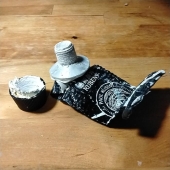
I didn't use my masking fluid often enough and it dried in the bottle.  The mostly full bottle.  It feels very wasteful to just buy another, and expencive as it's not the most affordable art supply.  Also, it smells bad.  So I've been trying to figure out some alternatives.  

Masking fluid is a fancy latex paint that we apply to the paper first.  When it is dry, we can paint our little hearts out.  And when the paint is dry, we can rub off the dry masking fluid latex stuff and where it was, the paper is white again.

Masking fluid is very useful for watercolours and ink painting as we usually don't have a white paint and we have to use the whiteness of the paper as a substitute for white paint.

Of course, we can always use gouache or white markers, but this has a different look.

Another alternative is to just not paint where we want it to stay white, but.... it's never really that simple.

I've tried painting without masking fluid for a few months now, and alas, I miss it.  Or, more specifically, I miss the results it gives.  Here begins a quest to find an alternative t masking fluid.

But  also, each paper and painter is unique, so if one idea doesn't work for me, it might work for others.
 
r ransom
steward & author
Posts: 48422
Location: Left Coast Canada
20272
10
art trees books chicken cooking fiber arts
  • Mark post as helpful
  • send pies
    Number of slices to send:
    Optional 'thank-you' note:
  • Quote
  • Report post to moderator
Crayola crayon

I got a set of mostly broken crayons in the thriftshop for a dollar.   I only wanted the white one so I feel like I overpaid horribly.

Wax resists (a reaist being a substance added on top of the paper to make it resist accepting the paint) are very traditional.   In theory, it makes a barrier where the water cannot get at the paper, so the watercolour cannot get there either.  Draw rhe crayon where we want it to stay white, paint, and the crayon will repell the water.

In theory.

I had to apply it very thick and it worked okay-ish on regular watercolour paper.  But it was shiny and obviously wax.  Not like the 'white of the paper'.  

When I used it on a paper with internal sizing like khadi, it looked good at first, then a few seconds later, the colour absorbed under the wax and it looked silly.

On both papers, the more I moved the paint, the less good the wax was...almost like it was desolving.

That's too bad as I had high hopes for crayon.  Back to the drawing board.
 
pollinator
Posts: 604
Location: Oz; Centre South
220
trees books cooking fiber arts writing
  • Mark post as helpful
  • send pies
    Number of slices to send:
    Optional 'thank-you' note:
  • Quote
  • Report post to moderator
This webpage may prove useful - no idea really, watercolours are outside my experience, but I'm one of those folks who have to "know".
https://www.kerriewoodhouse.com/blog/watercolour-masking-fluid-alternatives
Having read through it, I'd suggest using a cotton bud (tip?) for mopping up operations rather than a paper towel.  
At least there are some ideas to try.  Best of luck.
 
r ransom
steward & author
Posts: 48422
Location: Left Coast Canada
20272
10
art trees books chicken cooking fiber arts
  • Mark post as helpful
  • send pies
    Number of slices to send:
    Optional 'thank-you' note:
  • Quote
  • Report post to moderator


Thanks for the lijk.

Jill Dyer wrote:
Having read through it, I'd suggest using a cotton bud (tip?) for mopping up operations rather than a paper towel.  
At least there are some ideas to try.  Best of luck.


That sounds more like a lifting/blotting technique where we apply the paint, then lift it (either when the paint is still wet or later by rewetting the paint,  usually both are called lifting,  but the article seems to call them different names).  This is a wonderful technique for the toolbox, but doesn't achieve the same results as a resist.  For starters, it only works with non-staining pigments and to find one that doesn't leave any colour behind when lifted is difficult.  It is also rather difficult to be precise and get the hard edges a resist can offer.

As the link described, lifting also works best when very little water is applied, so it doesn't work for a very lush wet wash (which is exactly the technique I want to use for this specific painting that started this rabbit hole).  

But lifting does create some awesome effects and it's a mighty powerful tool.
 
r ransom
steward & author
Posts: 48422
Location: Left Coast Canada
20272
10
art trees books chicken cooking fiber arts
  • Mark post as helpful
  • send pies
    Number of slices to send:
    Optional 'thank-you' note:
  • Quote
  • Report post to moderator
When I was very young, we used masking tape a lot in the past.

Masking tape is excellent for blocking off large areas.  But also, has the major disadvantage that the better quality the paper, the more it damages the paper when lifting and more bleeding of colour under the tape edge.

So, for example, we used it to mask off the hills, when we were doing a sky wash.

With my style as an adult, I kind of like letting sky and land blend together.   I also don't find it a challenge to avoid larger areas.  It's smaller and medium details that I used masking fluid on.
 
Jill Dyer
pollinator
Posts: 604
Location: Oz; Centre South
220
trees books cooking fiber arts writing
  • Mark post as helpful
  • send pies
    Number of slices to send:
    Optional 'thank-you' note:
  • Quote
  • Report post to moderator
In the back of my mind (my, it's cluttered in there) I seem to remember that there is a removable sticky tape (3M or Scotch maybe) that might do the trick.  Approx. 1cm wide.  
 
r ransom
steward & author
Posts: 48422
Location: Left Coast Canada
20272
10
art trees books chicken cooking fiber arts
  • Mark post as helpful
  • send pies
    Number of slices to send:
    Optional 'thank-you' note:
  • Quote
  • Report post to moderator
Painters masking tape tends to be the kindest on paper that I've tried so far.  Some people use the wall tape but I like the masking tape made for watercolour as it comes in various widths from 1/8in to 4in

We can put the sticky side on our clothes first to put some lint on it to make it less sticky, so it won't rip the paper.  But it also makes the edge less good at stopping the paint.

I hugely recommend testing on the same type of paper first as the paper has strong opinions about tape and if it will rip.
 
r ransom
steward & author
Posts: 48422
Location: Left Coast Canada
20272
10
art trees books chicken cooking fiber arts
  • Mark post as helpful
  • send pies
    Number of slices to send:
    Optional 'thank-you' note:
  • Quote
  • Report post to moderator
Washi tape is another really popular one, but either i got poor quality tape or it's just not a good match for the papers i use.
 
Replace the word "snake" with "danger noodle" in all tiny ads.
the next generation of humanure
https://www.richsoil.com/willow
reply
    Bookmark Topic Watch Topic
  • New Topic