|

|

|

|
|

|
|
|
|
|
|
|
|

|
|
.jpeg)
|

|

|
 1
1


 ). It is a bit more familiar to me and my fellow volunteers, though I am by far the most knowledgeable, i.e. I have attended Toby Hemenway's 1-day class, and have his book "Gaia's Garden" (and I hang out on this forum ).
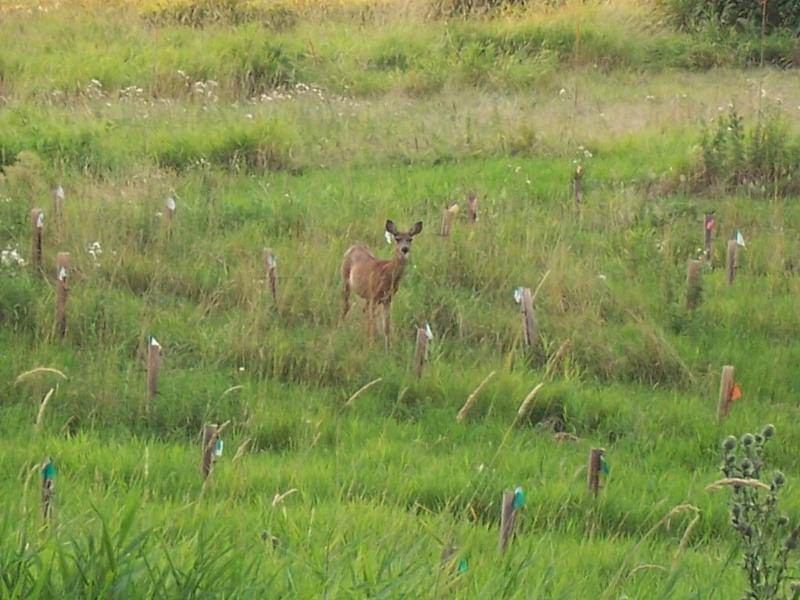
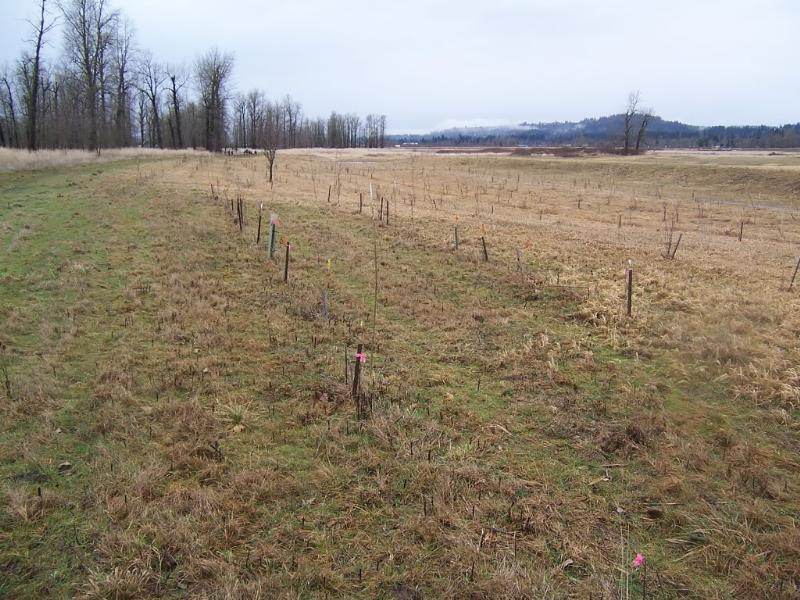
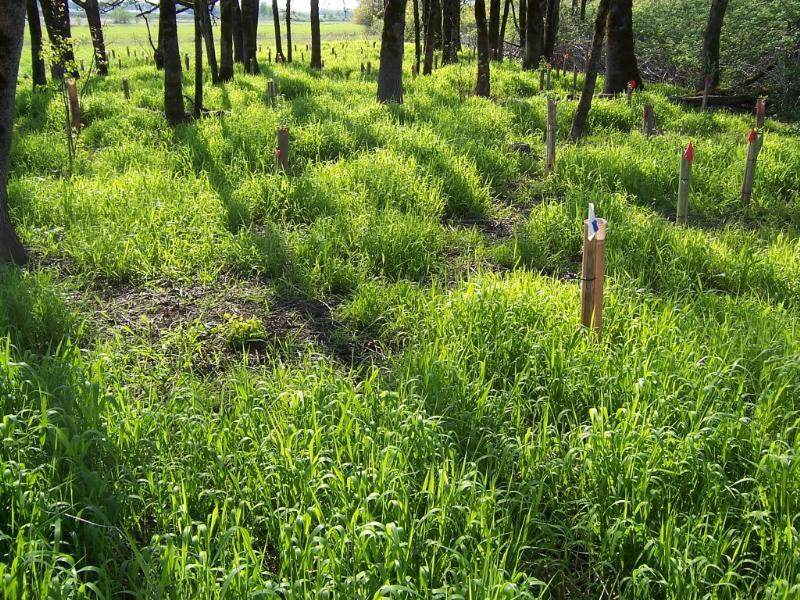
Here are the experiments I was thinking of. I would only do this on plants that we expect to thrive in a certain location but have not been thriving. No need to do it for plants that are doing well or that are obviously not in their element (and which should never have been planted there). The "control" for each would be to do the opposite.
1. Mowing grass around plants. I am fairly certain that mowing is attracting deer to the site. It may be slowing the growth of the canarygrass somewhat. And it was certainly helpful when we were watering.
2. Spraying grass around plants. The big disadvantage of this is if the shrub has sent up any suckers and the suckers get sprayed, you have killed the plant.
3. Mulching:
3.1. Sheet (i.e. wetted newspaper with a layer of mulch on top. The mulch could be hay which was cut on the site)
3.2. Straw:
3.2.1. loose
3.2.2. mat ("flakes" from a bale)
3.3. Wood chips:
3.3.1. fresh
3.3.2. aged
4. Hugelkultur:
4.1. Place decomposing wood chips in bottom of hole
4.2. Place decomposing log/branch vertically in hole next to plant
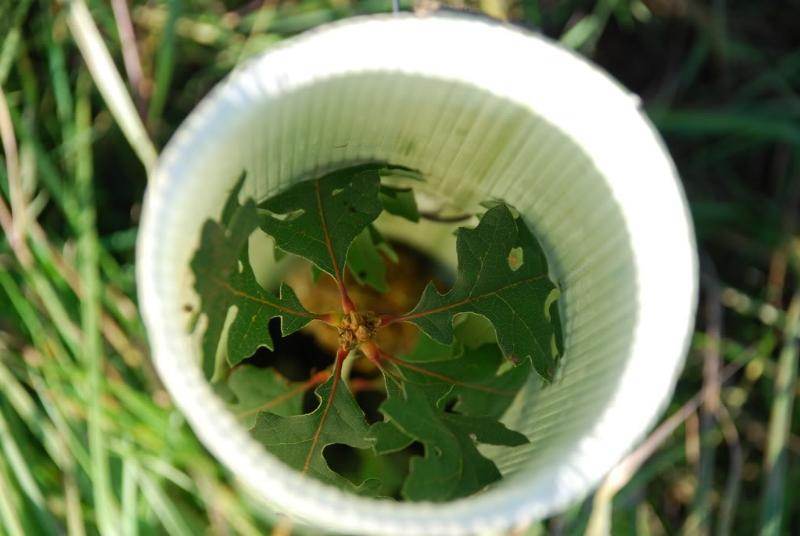
5. Protective tubes:
5.1. solid vs. mesh
5.2. various colors (blue seems to be in vogue)
5.3. various diameters
5.4. various lengths:
5.4.1. 1 foot
5.4.2. 2 foot
6. Companion planting. In nature, it is very rare for a native shrub to sprout up in the middle of a grassy field all by itself. The idea is to plant not just the shrub, but some companion plants as well. These could be in the same pot (e.g. via seed), in seed balls dropped around the shrub when it is planted, or in potted plants planted very near the shrub.
6.1. Permanent:
6.1.1. Perennial forbs that encourage the growth of the shrub and/or discourage the growth of canarygrass by growing aggressively, fixing nitrogen, accumulating nutrients, etc. Examples are vetches, flowering bulbs, yarrow, clovers.
6.2. Temporary:
6.2.1. Annuals that encourage the growth of the shrub and/or discourage the growth of canarygrass by growing aggressively, fixing nitrogen, accumulating nutrients, etc., and which do not aggressively reseed. Examples are (TBD)
6.2.2. Fast-growing trees that encourage the growth of the shrub and/or discourage the growth of canarygrass, and which are easily killed after they have served their purpose (e.g. by girdling or cutting). Examples are alder, cottonwood, fir? The shrub could be encouraged and the grass discouraged by cutting off the branches only on the shrub side of the tree. Other habitat restorers do this sort of thing by interplanting with firs which are then girdled, but the refuge manager has resisted planting firs thus far. This would also probably protect the shrub from deer damage since they would browse/scrape the tree instead of the shrub.


 1
1
I'm offering weekend permaculture courses in the SF Bay area. Info (and more) at http://patternliteracy.com
The biologist also noted that mulch had caused root rot on some plants due to too much moisture and says that if plants are in suitable areas they shouldn't need mulch. At the meeting we discussed how much voles love to use thatch as nesting material and it's ability to hide mice also. Thatch should be pulled far away from plants.
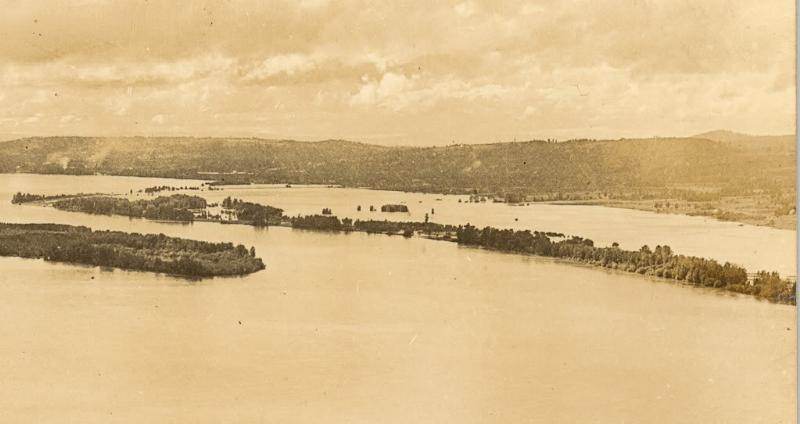 1
1
I'm offering weekend permaculture courses in the SF Bay area. Info (and more) at http://patternliteracy.com


Paul Cereghino- Ecosystem Guild
Maritime Temperate Coniferous Rainforest - Mild Wet Winter, Dry Summer
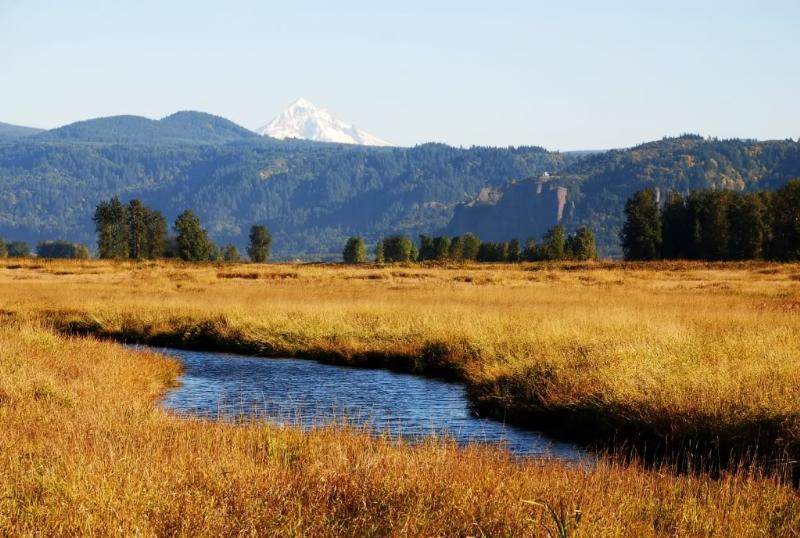
Goal 1. Protect, restore, and enhance the natural diversity of floodplain, upland forest, and grassland habitats representative of the lower Columbia River ecosystem.
Goal 2. Protect and enhance populations of native flora and fauna with an emphasis on State- and federally listed threatened and endangered species, species of conservation concern, and their habitats.
Goal 3. Reduce the impacts of nonnative and invasive species on native flora and fauna.
Goal 4. Provide management-based research opportunities and conduct Refuge studies to investigate ecosystem dynamics, wildlife and habitat relationships, habitat use patterns, and human impacts.
Goal 5. Develop and encourage public understanding of and support for the purposes and visions of Steigerwald Lake, Franz Lake, and Pierce National Wildlife Refuges.
- From http://www.fws.gov/pacific/planning/main/docs/WA/cgorge/final%20ccp/1%20Chapter%201.pdf
 1
1


Idle dreamer


Idle dreamer


 2
2
List of Bryant RedHawk's Epic Soil Series Threads We love visitors, that's why we live in a secluded cabin deep in the woods. "Buzzard's Roost (Asnikiye Heca) Farm." Promoting permaculture to save our planet.


 2
2
How Permies works: https://permies.com/wiki/34193/permies-works-links-threads
My projects on Skye: The tree field, Growing and landracing, perennial polycultures, "Don't dream it - be it! "
2
Canyon T Cassidy

|
Have you no shame? Have you no decency? Have you no tiny ad?
Permaculture Voices 1, 2 and 3 - all 117 hours of video!
https://permies.com/t/voices123
|