
• Post Reply Bookmark Topic Watch Topic
  • New Topic
permaculture forums growies critters building homesteading energy monies kitchen purity ungarbage community wilderness fiber arts art permaculture artisans regional education skip experiences global resources cider press projects digital market permies.com pie forums private forums all forums
this forum made possible by our volunteer staff, including ...
master stewards:
  • Carla Burke
  • John F Dean
  • r ransom
  • Nancy Reading
  • Timothy Norton
  • Jay Angler
stewards:
  • paul wheaton
  • Pearl Sutton
  • Eric Hanson
master gardeners:
  • Christopher Weeks
  • M Ljin
gardeners:
  • thomas rubino
  • Megan Palmer
  • Benjamin Dinkel

What is in your Foraging Kit?

 
Posts: 703
Location: Iqaluit, Nunavut zone 0 / Mont Sainte-Marie, QC zone 4a
127
3
  • Likes 8
  • Mark post as helpful
  • send pies
    Number of slices to send:
    Optional 'thank-you' note:
  • Quote
  • Report post to moderator
I go foraging for certain items, so it depends

This time of year, I am going wild leek collecting or fiddlehead picking.

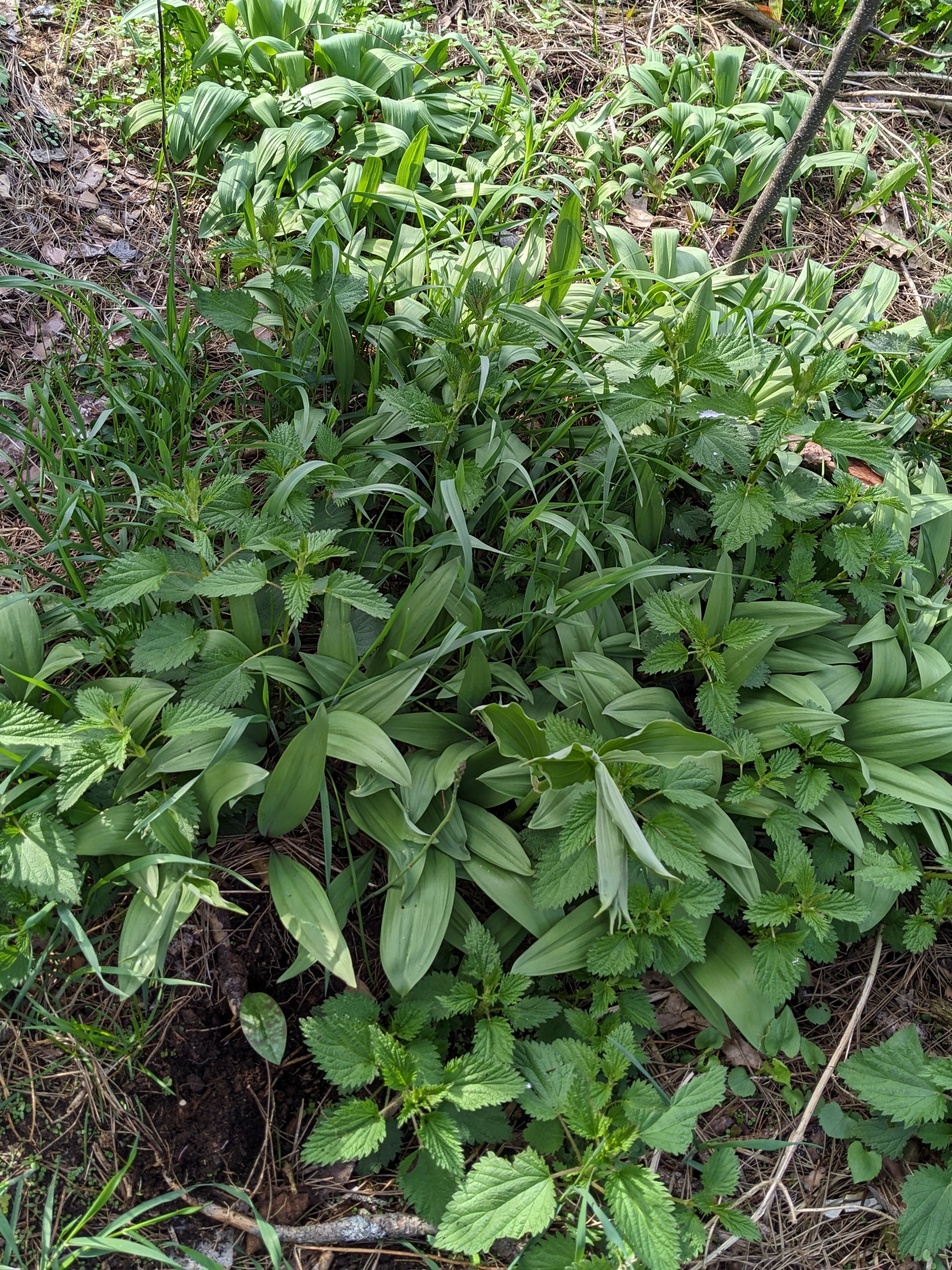
Wild leeks, the limit is 50 yearly, but I don't forage fully mature leeks which take 7 years before they flower. I leave those. I take a decent shovel and bring back two shovelfuls of immature leeks in a plastic container -- a bucket or whatever. I bring under the limit, at day break, plant them.

Out of the wild in better conditions, they will flower in 4-5 years. I plant those seeds and also share them.

From my domesticated supply, I then harvest one of the leaves of leeks that have three leaves, and let them flower. Those leaves never make it to the kitchen. Current year transplants get partial shade from a discarded patio umbrella for the whole season, and require some rain watering for the first few weeks.

Fiddleheads I bring a few plastic bags and I take a picture of where I harvested then and they get frozen until the ferns there are mature and I can double check there are no bracken that have invaded them. Once I am double sure they aren't bracken, they are rinsed, flash boiled, then baked in a casserole with other things.

Nettles, I need to no further than my garden, asparagus you have to scout out once they're mature so you know where to find roadside asparagus but I also grow them...

Wild spinach, again, garden. Most things I forage for I need go no further than zone one.

Thumbleberries I get the plastic bags and go roadside picking, and apples, cherries or plums I scout out the flowers this time of year so I can go back and find them later -- cardboard boxes.
PXL_20250510_212643685.jpg
Wild leeks transplants from 2-4 years ago
 
pollinator
Posts: 113
Location: Southern Tier NY; and NJ
54
monies foraging medical herbs
  • Likes 4
  • Mark post as helpful
  • send pies
    Number of slices to send:
    Optional 'thank-you' note:
  • Quote
  • Report post to moderator

Ra Kenworth wrote:

Fiddleheads I bring a few plastic bags and I take a picture of where I harvested then and they get frozen until the ferns there are mature and I can double check there are no bracken that have invaded them. Once I am double sure they aren't bracken, they are rinsed, flash boiled, then baked in a casserole with other things.


I ate fiddlehead ferns about 30 years ago, once. Partway through eating them I pulled one apart to see what it looked like and it was filled with bugs! I've been afraid of them since. If you have any advice, I'd like to hear some encouragement and work up the guts to try them again.

And.... zone 0!!! Wow, I've never seen anyone from Zone 0! Looks like it's only part time?
 
Ra Kenworth
Posts: 703
Location: Iqaluit, Nunavut zone 0 / Mont Sainte-Marie, QC zone 4a
127
3
  • Likes 4
  • Mark post as helpful
  • send pies
    Number of slices to send:
    Optional 'thank-you' note:
  • Quote
  • Report post to moderator

Kim Wills wrote:

I ate fiddlehead ferns about 30 years ago, once. Partway through eating them I pulled one apart to see what it looked like and it was filled with bugs! I've been afraid of them since. If you have any advice, I'd like to hear some encouragement and work up the guts to try them again.

And.... zone 0!!! Wow, I've never seen anyone from Zone 0! Looks like it's only part time?


That's a really unfortunate experience you had with fiddleheads! Perhaps it was a case of Murphy's Law...

I can only say if they are washed, boiled, then baked, I don't know of any bugs that would hurt you. I definitely would try looking somewhere else -- and not too close to the waterline -- and peel some of those fiddleheads open to check them and if you're afraid of getting bitten to wear nitrile gloves while you do that. When I rinse, I use salted water -- not sure if makes a difference but as a kid, I got to wash the lettuce which was usually fairly slug ridden so using salted water became a habit. Perhaps weight down your fiddleheads to submerge them and see if the bugs try to escape?

The first year I ate fiddleheads I didn't know bracken will cause stomach cancer and I was lucky they were ostrich fern like I thought they were.

Is it possible a guardian angel had your back with those bug ridden ferns?

Zone zero:
Yes, if you click on my profile I have two zones. I spend slightly more than half my time in Iqaluit Nunavut (although I have considered Campbell's Bay which is way further north, and also Baker Lake which is very beautiful and plenty of nice fishing, however my son lives in Iqaluit. It's about 66 latitude. In summer it never really gets dark.

The rest of my time I have a homestead in the Gatineau mountains in zone 4a at 600' which is where I am until June 1, and back "south" the end of June.

Tiny blueberries, cranberries and a few other berries grow in Iqaluit and I have brought back berries and poked them in among my wild blueberries and will continue to do this, hoping some will grow. They also have willow which grows to about 3-4" in height. It is very beautiful and full of flowers in June and I look forward to returning. Many people bring food with them. I brought arctic char south and will bring vegetables north!

 
Rusticator
Posts: 9445
Location: Missouri Ozarks
5126
7
personal care gear foraging hunting rabbit chicken cooking food preservation fiber arts medical herbs homestead
  • Likes 7
  • Mark post as helpful
  • send pies
    Number of slices to send:
    Optional 'thank-you' note:
  • Quote
  • Report post to moderator

Carla Burke wrote:If it strips leaves(which makes sense), then I won't use it on my blueberries or elderberries, but it makes it even more perfect for my wild blackberries, because the canes only produce for one year, anyway, and I'm also looking to harvest a high amount of leaves, for my herbal teas. Blackberry leaves have essentially the same health benefits of raspberry leaves, which I go through MUCH faster than the berries, themselves.


Update: Nope. Not for the wild blackberries. The tines shred the leaves, it doesn't allow for leaving the unripe ones on the canes, and it actually sent thorns flying, with my first swipe through, because I pulled too fast. I think the thorns are the bigger problem with the shredding, because as I pull, the leaves get caught on them. So, maybe, if you're not worried about the next flush of ripe ones staying put, it might work for the thornless berries, but I can't recommend it for the best harvest of cane type berries.
 
Posts: 8
Location: Blue River, Oregon
10
  • Likes 5
  • Mark post as helpful
  • send pies
    Number of slices to send:
    Optional 'thank-you' note:
  • Quote
  • Report post to moderator
Hey, I’m an avid forager. Equal opportunity and very general (mushrooms, lichen, moss, greens, ferns, rocks, clay, switches, bark, roots, cones, nuts, fruits, trash, plant starts, etc. I let the area tell me what’s ready at the time, but while out and about. I barely ever enter the area I am foraging with a certain plan. So my foraging kit is extremely generalized and tiny. It’s a fanny pack, a few carabiners (to clip bags to my fanny pack), a few plastic poo bags and random fast food wrappers  (for various tiny objects), a hawksbill knife (various uses), ratcheted pruners (switch cutting), a pair of needle nose fishing pliers (really short is good for fanny pack, used in basketry usually), a 3” round masonry chisel (or will sometimes use a pencil) (this is for poking holes into willow switches for basket bases, also for rockhounding). Then in my cross shoulder cloth bag I use for collecting, I’ll have a collapsing car trash can and one of the more robust plastic grocery bags. Sometimes mesh laundry bags. Then in the car, I’ll have a 2gal bucket or 2 as drop spots. Various mesh bags. Extra plastic bags, a few baskets. A big collapsible trash can (always hopeful, rarely needed). Gloves, shovels, rakes, extra rain gear, a mini chainsaw. This is my world and thank you for asking!

Photo is me with this exact fanny pack+cross shoulder bag setup i described above.
IMG_9027.jpeg
[Thumbnail for IMG_9027.jpeg]
 
Hang a left on main. Then read this tiny ad:
New Year, New Earth Summit - register for free!
https://permies.com/t/367268/Year-Earth-Summit-register-free
reply
    Bookmark Topic Watch Topic
  • New Topic