• Post Reply Bookmark Topic Watch Topic
  • New Topic
permaculture forums growies critters building homesteading energy monies kitchen purity ungarbage community wilderness fiber arts art permaculture artisans regional education skip experiences global resources cider press projects digital market permies.com pie forums private forums all forums
this forum made possible by our volunteer staff, including ...
master stewards:
  • Devaka Cooray
  • Carla Burke
  • John F Dean
  • Nancy Reading
  • Timothy Norton
  • r ranson
stewards:
  • Jay Angler
  • Pearl Sutton
  • paul wheaton
master gardeners:
  • Christopher Weeks
  • M Ljin
gardeners:
  • thomas rubino
  • Eino Kenttä
  • Jeremy VanGelder

Demilune growing in Eastern Colorado

 
Posts: 2
  • Likes 6
  • Mark post as helpful
  • send pies
    Number of slices to send:
    Optional 'thank-you' note:
  • Quote
  • Report post to moderator
Hello! I'm a very, very novice gardener. I have a small back yard with some wild weeds and crummy soil that's being successfully restored through some permaculture principles and a lot of dirty, dusty weekend work, but that's actually not what I'm here to talk about.

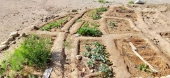
I have recently learned about demilune (half moon) restoration techniques (https://www.youtube.com/shorts/WKrANHuWM8E) being used to hold back the desertification of the Sahel in Africa and actually restore food-forest savanna for those living nearby. I have been pondering this question: How well would this technique work if applied to a cheap spit of flat steppe land in Eastern Colorado? With enough hard work and good planning, could something like this yield a drought-resistant and bountiful food forest in the high, semi-arid planes of the Western USA? Surely the presence of some water basins, partially shadowed areas, windbreaks, and the variety of plants that would be incorporated to such a demilune design could create a thriving microbiome amongst the steppe?

I'm very curious to hear what more experienced folks have to say about this. Thanks in advance for any responses!
 
pollinator
Posts: 172
Location: Missouri Ozarks
35
  • Likes 5
  • Mark post as helpful
  • send pies
    Number of slices to send:
    Optional 'thank-you' note:
  • Quote
  • Report post to moderator
I don't have personal experience with such an environment, but I'd imagine that such a system would have the added benefit of capturing wind blown snow in the winter time, thus concentrating the moisture in areas where plantings could take advantage of it.
 
master gardener
Posts: 1412
Location: Zone 5
731
ancestral skills forest garden foraging composting toilet fiber arts bike medical herbs seed writing ungarbage
  • Likes 7
  • Mark post as helpful
  • send pies
    Number of slices to send:
    Optional 'thank-you' note:
  • Quote
  • Report post to moderator
I think it’s a wonderful idea! Especially since you are hoping for a perennial food forest—if you were tilling and growing annual crops or using large machinery it might not work as well, but for a human scale and growing perennials, it’s very practical.

Demilunes are known as pillows and cradles when they form naturally in the forest—when an old tree is tipped over and uprooted during a windstorm. They are a reliable indicator and one of the defining characteristics of old growth forests! So it’s very fitting to that you would combine those ideas.

How much land do you have to work with? Theoretically, the bigger the area, the more improvement there should be in microclimate, especially towards the center. And mycorrhizal networks that transport and store water would appreciate it… oaks (and the rest of Fagaceae), birches, and conifers tend to be the most mycorrhizally partnering trees, so planting them at least in small numbers throughout could be of benefit.
 
Paul S
Posts: 2
  • Likes 7
  • Mark post as helpful
  • send pies
    Number of slices to send:
    Optional 'thank-you' note:
  • Quote
  • Report post to moderator

M Ljin wrote:I think it’s a wonderful idea! Especially since you are hoping for a perennial food forest—if you were tilling and growing annual crops or using large machinery it might not work as well, but for a human scale and growing perennials, it’s very practical.

Demilunes are known as pillows and cradles when they form naturally in the forest—when an old tree is tipped over and uprooted during a windstorm. They are a reliable indicator and one of the defining characteristics of old growth forests! So it’s very fitting to that you would combine those ideas.

How much land do you have to work with? Theoretically, the bigger the area, the more improvement there should be in microclimate, especially towards the center. And mycorrhizal networks that transport and store water would appreciate it… oaks (and the rest of Fagaceae), birches, and conifers tend to be the most mycorrhizally partnering trees, so planting them at least in small numbers throughout could be of benefit.


I don't currently have any steppe land, just a small piece of suburban dirt. One mortgage is enough for me right now. That said, it's not out of the question that someday I might have the opportunity to buy a barren piece of the void. If I have a realistic plan to make it something nice (like a perennial food forest that could feed my family) then maybe it'd be worth it. It's definitely the kind of project I like to take on, and it will at least get me outside enjoying the sunshine every weekend for the rest of my life.

At the moment, land restoration and permaculture are subjects that I find extremely interesting to learn about regardless, which is why I ask this question now.

I'm wondering what array of plants should go in such demilunes. As I understand, you can put different types of plants in different parts of the basin. This enables companion planting. I'd naturally want a mixture of plants that go well together and are, ideally, native or non-invasive. Nitrogen fixers, shade and windbreaking shrubs or trees, and as much yummy food as I could get out of it. Would it benefit from letting chickens graze as well? What could grow in the spaces between the demilunes?
 
Posts: 5
Location: USA, SouthEast
3
hugelkultur hunting solar
  • Likes 6
  • Mark post as helpful
  • send pies
    Number of slices to send:
    Optional 'thank-you' note:
  • Quote
  • Report post to moderator
Not experienced in much at all here, but throwing in some food for thought anyway cause I like the idea 🤔

If had access to wood, would be interesting to build a demilune/hugelkulture mound hybrid of sorts. Not only would it give you some nutrient release into the mound, but youd get a little bit more height on the demilune for wind capture/redirection. And I guess in sandy soil the carbon material could "hold" water more efficiently than just the dune alone?

As for thoughts on companion planting and natives, I'd think that trying to track down some native legumes to act as ground cover, nitrogen source for other plants, and green mulch would be a good "foundational" plant. I've had fair success planting into white clover, which was essentially acting as a living ground cover to block weeds while also providing nitrogen.

Doing a quick Google, Astragalus crassicarpus aka Ground Plum seems to be a native legume in your region, no idea how aggressive it is, tho I guess aggressiveness isn't too much of a concern when just starting in barren land.
 
pollinator
Posts: 553
Location: Boudamasa, Chad
171
2
forest garden
  • Likes 6
  • Mark post as helpful
  • send pies
    Number of slices to send:
    Optional 'thank-you' note:
  • Quote
  • Report post to moderator
If you're looking to rehabilitate a large area some time in the future, then one of the best things you can do to get ready is master the native species. Get a book on the plants,  another one in the trees,  and be a familiar face at the botanical gardens.

You can also be collecting seeds. Take some hikes and observe what grows well and in what conditions. If you can collect seeds you'll need lots of them when the time comes.

When you dig your demilunes you can scatter a handful of seeds and cover with deep mulch.

In those videos you see if the sahel,  all of that greenery is from native plants that were able to grow on their own once there was enough moisture. You can mimic that effect by scattering native seeds under deep mulch.

Of you're going to irrigate them you can plant whatever you want.
 
pollinator
Posts: 5821
Location: Bendigo , Australia
520
plumbing earthworks bee building homestead greening the desert
  • Likes 4
  • Mark post as helpful
  • send pies
    Number of slices to send:
    Optional 'thank-you' note:
  • Quote
  • Report post to moderator
Sahel meaning shore in Arabic refers to the desert's, Edge.
https://www.youtube.com/shorts/WKrANHuWM8E
 
pollinator
Posts: 399
123
  • Likes 4
  • Mark post as helpful
  • send pies
    Number of slices to send:
    Optional 'thank-you' note:
  • Quote
  • Report post to moderator
If you want to build half-moons on a large scale, and can afford the use of a tractor, the Vallerani system might be for you.
Below a really short video on the system, there are other documentaries, longer ones, also available.


The system is also described in the WOCAT database, where you can download it as pdf. Here the example from Northern Burkina Faso https://qcat.wocat.net/en/wocat/technologies/view/technologies_1528/
 
brevity is the soul of wit - shakespeare. Tiny ad:
Rocket Mass Heater Resources Wiki
https://permies.com/w/rmh-resources
reply
    Bookmark Topic Watch Topic
  • New Topic