
• Post Reply Bookmark Topic Watch Topic
  • New Topic
permaculture forums growies critters building homesteading energy monies kitchen purity ungarbage community wilderness fiber arts art permaculture artisans regional education skip experiences global resources cider press projects digital market permies.com pie forums private forums all forums
this forum made possible by our volunteer staff, including ...
master stewards:
  • Devaka Cooray
  • Carla Burke
  • John F Dean
  • Nancy Reading
  • Timothy Norton
  • r ranson
stewards:
  • Jay Angler
  • Pearl Sutton
  • paul wheaton
master gardeners:
  • Christopher Weeks
  • M Ljin
gardeners:
  • thomas rubino
  • Eino Kenttä
  • Jeremy VanGelder

What are the permiest ways to get rid of ivy/brambles permanently?

 
Posts: 85
Location: Barcelona
38
forest garden trees tiny house urban books fiber arts
  • Likes 4
  • Mark post as helpful
  • send pies
    Number of slices to send:
    Optional 'thank-you' note:
  • Quote
  • Report post to moderator
The place: Catalunya, Spain about 5km inland from the Mediterranean near the town of Cubelles

The context: some time in the 1980s  a drunken excavator operator carved out the wrong part of the mountain so that the house had to be re-sited farther up the slope. When my mother-in-law complained he walked off the job and kept all of the money. Eventually the good sunny site was backfilled with construction rubble and English ivy was planted to hide the mess. The local birds and squirrels have helped plant a large briar through the mature ivy. A few fir trees volunteered recently, but it's mostly ivy and bramble. The home is in the greenbelt area of the development and is beside one of the never-built vacant lots offering alternative habitat for what's currently in this spot.

Present day: I would like to reclaim this steep area to grow better more useful things. It has been building up a soil layer from leaf litter for many years, but itsn't especially stable and I really don't know what all was dumped under there 40 years ago. I can picture a small apricot-guild orchard if I add some some terracing for stability and/or putting some solar panels there to help power the garage/workshop/house if what's underneath turns out to be a terror.

I wish I could rent a ruminant but absent a helpful goat I've been removing ivy and brambles by hand weekend after weekend. I don't want to fight ivy for the rest of my life. What are the permiest ways to get rid of ivy/brambles permanently? I'm also assuming that biochar when it has dried out would be better than trying to compost something so invasive, but I'm open to suggestions. This is a hard place to work since it's about ten feet above the ground story at its lowest point. The area will be frequently seen but infrequently walked upon once I've cleared and replanted it.

PS. I'm looking for recommendations for delicious apricot cultivars suitable to this area, too. Thanks, E
CubellesStreetViewOLDjpg.jpg
Outdated GStreetView image to give the general idea, mentally add tall brambles through the middle of the ivy!
 
pollinator
Posts: 3930
Location: Kent, UK - Zone 8
733
books composting toilet bee rocket stoves wood heat homestead
  • Likes 6
  • Mark post as helpful
  • send pies
    Number of slices to send:
    Optional 'thank-you' note:
  • Quote
  • Report post to moderator
The permie way would be goats and/or pigs. Pigs will get the roots out.

Next step down is you manually removing them by hand, but this is a horrible job and likely to be futile if the roots go into rocky rubble.

Slightly less natural, but still a lot better than using sprays, is to put the whole area under thick black plastic weed barrier for 12 months or so. It's a super effective way, especially on awkward terrain that isn't well suit to other methods. You will still need to do some manual reduction initially to get the plastic to lay properly, but you won't need to get roots out. Even after 12 months you may find some very stubborn plants still alive, but you should be able to easily spot weed those few remaining ones. Avoid fabric weed barriers. The theory is they allow rain to percolate through, but in practice they degrade down to plastic fibres that end up polluting your soil for ever more. Proper thick black plastic will last decades and can be stored and used again as needed.
 
Posts: 720
154
  • Likes 3
  • Mark post as helpful
  • send pies
    Number of slices to send:
    Optional 'thank-you' note:
  • Quote
  • Report post to moderator
Sheep
 
steward
Posts: 18060
Location: USDA Zone 8a
4604
dog hunting food preservation cooking bee greening the desert
  • Likes 2
  • Mark post as helpful
  • send pies
    Number of slices to send:
    Optional 'thank-you' note:
  • Quote
  • Report post to moderator
Do they deliver free wood chips in your part of the world?

Cover the whole area with a thick layer of cardboard then have a load of wood chips on top of that.  3 to 6 inches probably...

Watch for stragglers to appear at the edges.
 
Posts: 12
  • Likes 1
  • Mark post as helpful
  • send pies
    Number of slices to send:
    Optional 'thank-you' note:
  • Quote
  • Report post to moderator
I'm thinking for brambles that I'll just heavily lime the area where they are growing to a pH of 9.0+ to starve,  weaken and kill the plants, then burn them off, and then throw down a mix of seeds with cover crops that have varying tolerance to alkaline soils so that they can grow in succession over 2-3 years, so they can dominate the space by the time the pH shifts acidic again. I'm going to discuss with my local extension and NRCS offices, but I'm interested to get feedback on this approach from you other permies or there.
 
Anne Miller
steward
Posts: 18060
Location: USDA Zone 8a
4604
dog hunting food preservation cooking bee greening the desert
  • Likes 1
  • Mark post as helpful
  • send pies
    Number of slices to send:
    Optional 'thank-you' note:
  • Quote
  • Report post to moderator
Since she posted in January, I hope she will come back and let us know how this went over the summer.
 
Eileen Kirkland
Posts: 85
Location: Barcelona
38
forest garden trees tiny house urban books fiber arts
  • Likes 4
  • Mark post as helpful
  • send pies
    Number of slices to send:
    Optional 'thank-you' note:
  • Quote
  • Report post to moderator
Photographic walk of shame - taken today.

Glad for good ideas. In the spring I cut it back to the ground and used some astroturf (my in-laws had already) to smother the most vigorous bit of ivy. Then I traveled, had a health crisis (bye bye gallbladder, bye bye thousands of dollars), and...did nothing else. Oops. In retrospect I probably should have covered the hardest part to reach not the patch closest to the stairs. At least it isn't several feet tall? ;)

PS. I'm still wishing I could rent a ruminant and goat the heck out of it!
IMG20251112170604.jpg
[Thumbnail for IMG20251112170604.jpg]
 
Anne Miller
steward
Posts: 18060
Location: USDA Zone 8a
4604
dog hunting food preservation cooking bee greening the desert
  • Likes 1
  • Mark post as helpful
  • send pies
    Number of slices to send:
    Optional 'thank-you' note:
  • Quote
  • Report post to moderator

Eileen Kirkland wrote: In retrospect I probably should have covered the hardest part to reach not the patch closest to the stairs. At least it isn't several feet tall?


If that were mine I would use a lawn mower to move everything down.  

If I did not have a lawn mower then I would use a weed eater.  They are fairly cheap to buy those if you do not have one.

Then, if I did not want it to come back, I would cover with cardboard and mulch, 12 inches deep.

I personally think that area is beautiful if it could be managed with the mower or weed eater.
 
Eileen Kirkland
Posts: 85
Location: Barcelona
38
forest garden trees tiny house urban books fiber arts
  • Likes 3
  • Mark post as helpful
  • send pies
    Number of slices to send:
    Optional 'thank-you' note:
  • Quote
  • Report post to moderator
That picture doesn't do justice to the slope of this terrace or how far it is off the ground (10 or eleven feet). Running a lawnmower over decades-old ivy vines would almost certainly end badly. Some vines that I sawed out in the spring were bigger than my forearm and it's full of rocks underneath. A weedwacker might work for the runners, but I don't want it to multiply like starfish if little bits fly all over. It's too windy for mulch (there's a pool below it too, so although I love that solution in a different context I know it wouldn't work well here.) Sorry to be a nay-sayer. Until you've spent a few weekends kneeling to keep your center of gravity low so you don't fall off the wall it's hard to get a feel for it. (I do have scaffolding to attack it from below, but that only lets me reach the bottom foot or so of the terrace and it doesn't fit between the pool and the wall. Aesthetically I don't hate hate ivy but it is invasive here, a tripping hazard when it tries to conquer the stairs and it's taking up a lot of real estate on land where owners have been devoted to paving paradise (or burying it in river rocks) for decades. The solar package already went on the roof instead. (My husband said solar on the ground would get stolen (!) so the reset is to grow something else (maybe?) Keeping the rough bindweed from swallowing the fourth terrace (above and behind the house) distracted me from my goal here since it's tenacious and thorny, too. Cheers, E
 
Anne Miller
steward
Posts: 18060
Location: USDA Zone 8a
4604
dog hunting food preservation cooking bee greening the desert
  • Mark post as helpful
  • send pies
    Number of slices to send:
    Optional 'thank-you' note:
  • Quote
  • Report post to moderator
Well if you don not want to mow why not use hand clippers.

Then use vinegar to soak in well.

Cover the whole area with cardboard and mulch 12 inches deep so that no light can get through to what is left.


source
 
Eileen Kirkland
Posts: 85
Location: Barcelona
38
forest garden trees tiny house urban books fiber arts
  • Likes 2
  • Mark post as helpful
  • send pies
    Number of slices to send:
    Optional 'thank-you' note:
  • Quote
  • Report post to moderator
Hi Anne,

As I said in the OP I have been hand cutting it. It's tedious, dangerous and was ineffective in the spring. It's been too much for me to finish at once and comes back quickly. (Although in fairness I was away from mid June until November.) As mentioned above, the site is too steep and windy to mulch. Deep or otherwise the mulch and cardboard would mostly end up in the pool or the neighbor's yard to the west. Even the heavy astroturf sometimes blows down although it's held in at the corners with big sturdy metal brackets.

My neighbors to the west have planted even more ivy on their fenceline so I have to fight another variety creeping all along that perimeter where my mother in law had roses and grapes. The native rough bindweed is relentless, too.

This terrace is irregularly shaped but about 18 meters/60 feet long. How much vinegar would it take to cover an area this large? What would be the long-term effect of using it for growing other things? At what strength do you use it? I have a hard time picturing myself choosing that solution, but I'm curious. Lots of the ideas suggested by others are good, too, but site specific. I can't burn it, for example, because there's a gas line running through it at the garage end :)

 
Zach Simmons
Posts: 12
  • Likes 3
  • Mark post as helpful
  • send pies
    Number of slices to send:
    Optional 'thank-you' note:
  • Quote
  • Report post to moderator
You can lime it though. Ivy can't stand alkaline soil
 
Eileen Kirkland
Posts: 85
Location: Barcelona
38
forest garden trees tiny house urban books fiber arts
  • Likes 3
  • Mark post as helpful
  • send pies
    Number of slices to send:
    Optional 'thank-you' note:
  • Quote
  • Report post to moderator
Zach, if I cut it back again and lime it then when I make it alkaline maybe it gets replanted in lavender and a few valiant fig trees. They tend to be most productive when fairly miserable ;)
 
steward and tree herder
Posts: 11615
Location: Isle of Skye, Scotland. Nearly 70 inches rain a year
5694
5
transportation dog forest garden foraging trees books food preservation woodworking wood heat rocket stoves ungarbage
  • Likes 3
  • Mark post as helpful
  • send pies
    Number of slices to send:
    Optional 'thank-you' note:
  • Quote
  • Report post to moderator
Thanks for the update Eileen, I can see why the ivy was planted there originally...
Ivy can root from little bits left, but doesn't tend to root unless decapitated I believe. I managed to get rid of some ivy growing up a wall by cutting it back to the main root - but that did take a bit of digging out then! I don't fancy doing that on your slope!
In the UK ivy and bramble are woodland plants, I'm thinking that in Spain you may be able to use the heat of the summer to knock it back, and suspect that may be the lowest effort way of doing it as MIchael Cox suggested. Dessication and heat over a Spanish summer is likely to do the trick.
Hopefully next year you won't have the medical issues and will be able to have another go. I hope you are now fully recovered.
 
Eileen Kirkland
Posts: 85
Location: Barcelona
38
forest garden trees tiny house urban books fiber arts
  • Likes 2
  • Mark post as helpful
  • send pies
    Number of slices to send:
    Optional 'thank-you' note:
  • Quote
  • Report post to moderator
Thank you!

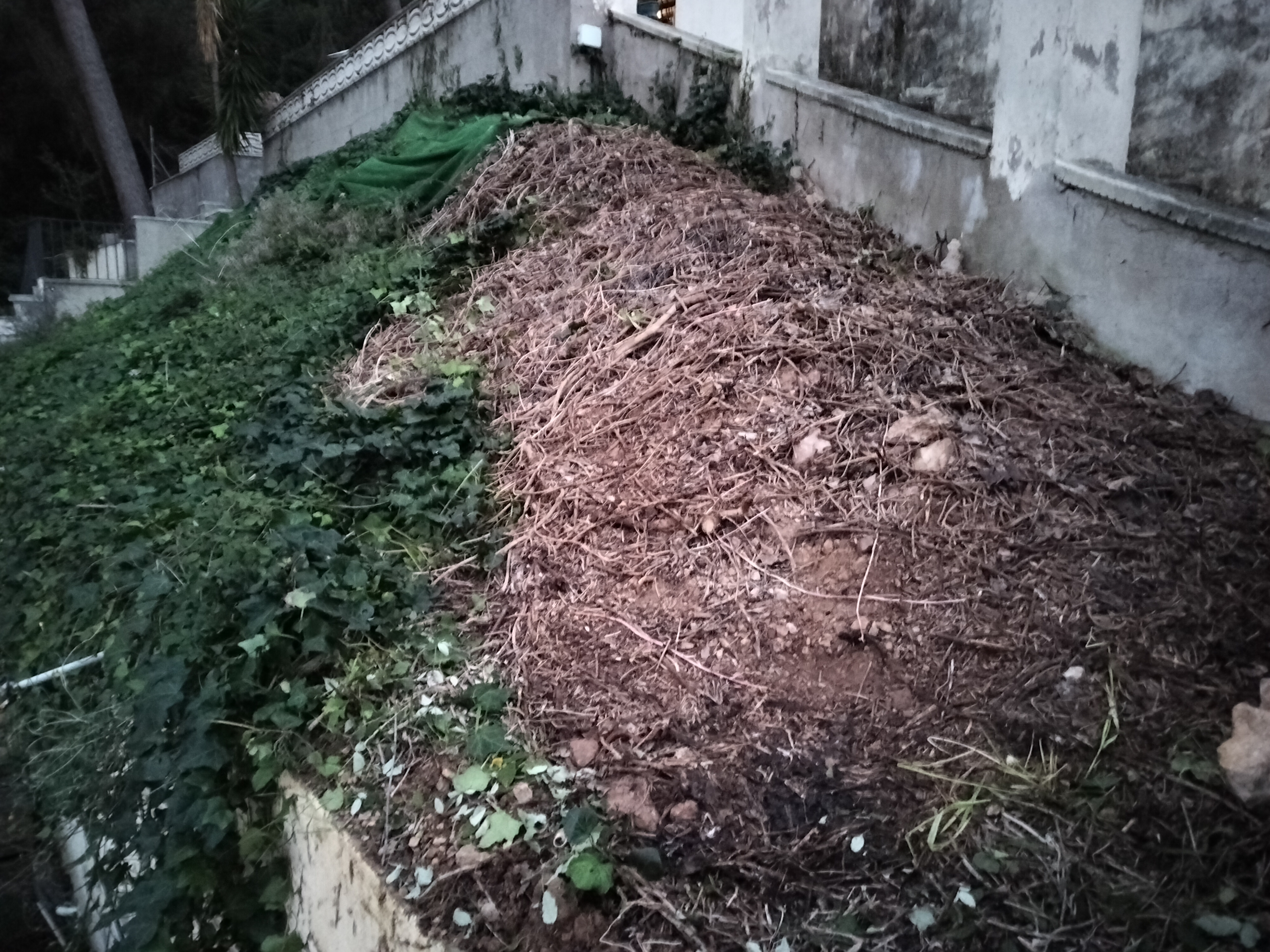
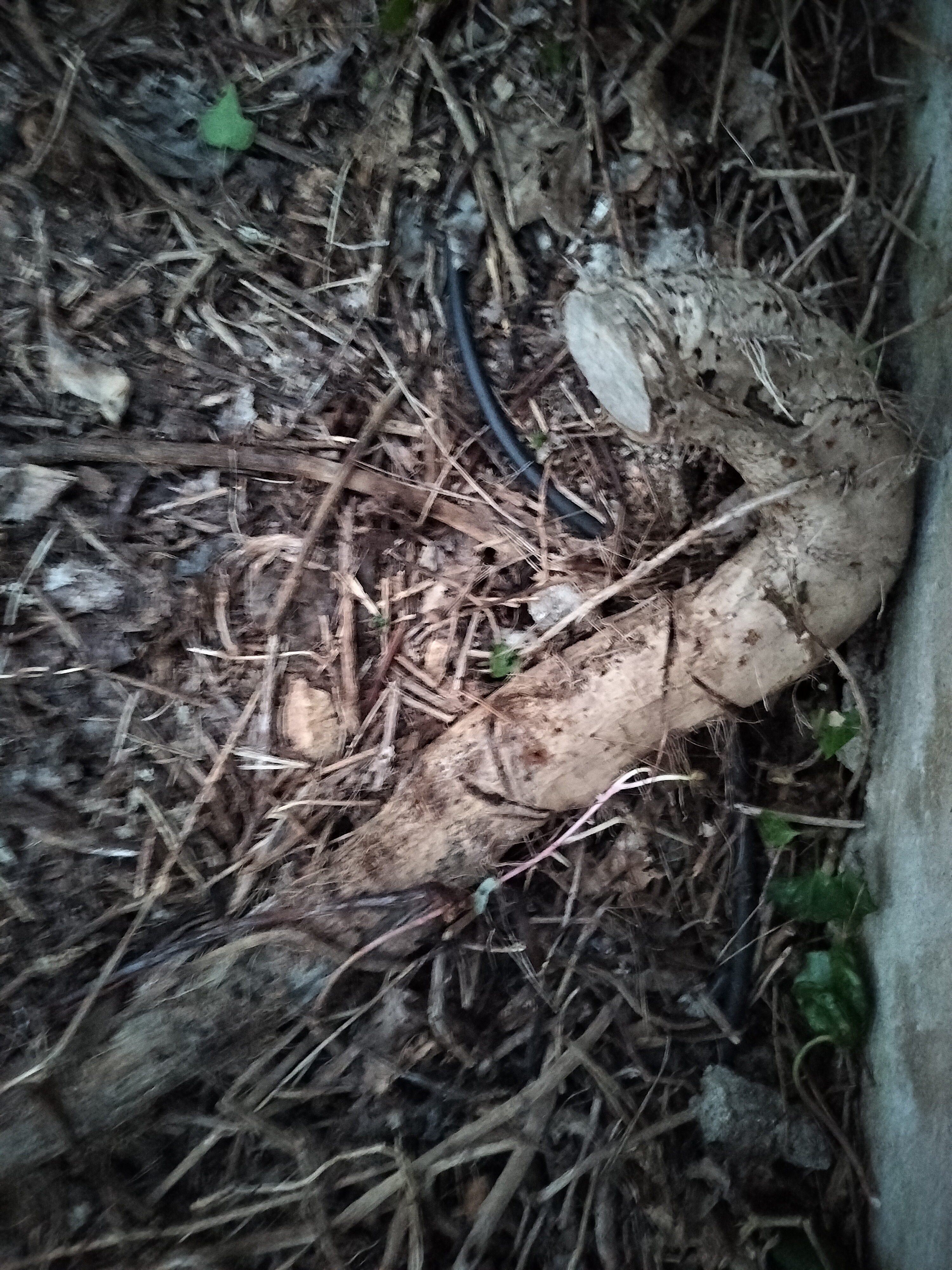
Interest from Permies got me out of bed today. Here's a more optimistic view of my spring efforts. Astroturf was pretty effective where it created full blackout. Regrowth since spring isn't rooted nearly as firmly as older vines so it pulls away across the terrace more easily from safer places to work. It's still bothersome where it has direct contact with the wall. Runners crossing the astroturf were starting to adhere to the top, so it's good I cleared as much as I got to today. There were ZERO SNAKES living under there, fear of which I admit had been holding me back. (I once reached for a garden hose that wasn't one and may never recover.) New briars are shallowly rooted. My next step might be trying to figure out how many days of cover it takes to get a similar result. These were on at least five (mostly hot) months. I'm certain I could reduce the hand-trimming work significantly in much less time if I were around to check and drag them to new spots.

Cheers, E
IMG20251114175424.jpg
Ivy removal in progress, how astroturf worked
IMG20251114175523.jpg
Thick old ivy vine
Thick old ivy vine
 
You've got to ask yourself one question: "Do I feel lucky?" Well, do ya, tiny ad?
The new permaculture playing cards kickstarter is now live!
https://www.kickstarter.com/projects/paulwheaton/garden-cards
reply
    Bookmark Topic Watch Topic
  • New Topic