• Post Reply Bookmark Topic Watch Topic
  • New Topic
permaculture forums growies critters building homesteading energy monies kitchen purity ungarbage community wilderness fiber arts art permaculture artisans regional education skip experiences global resources cider press projects digital market permies.com pie forums private forums all forums
this forum made possible by our volunteer staff, including ...
master stewards:
  • Carla Burke
  • Nancy Reading
  • John F Dean
  • r ransom
  • Jay Angler
  • Timothy Norton
stewards:
  • paul wheaton
  • Pearl Sutton
  • Tereza Okava
master gardeners:
  • Christopher Weeks
  • M Ljin
gardeners:
  • thomas rubino
  • Jeremy VanGelder
  • Megan Palmer

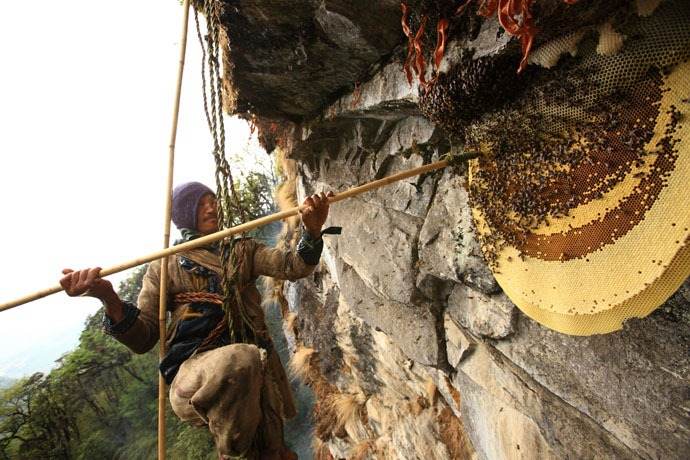
Honey hunting in Nepal

 
out to pasture
Posts: 13176
Location: Portugal
4279
goat dog duck forest garden books wofati bee solar rocket stoves greening the desert
  • Likes 7
  • Mark post as helpful
  • send pies
    Number of slices to send:
    Optional 'thank-you' note:
  • Quote
  • Report post to moderator
"Some villagers in Nepal depend on honey hunting for their livelihood, and the country is home to the Apis laboriosa, which is the biggest honeybee on the planet. These bees construct their hives on the cliffs of the country’s foothills, and watching the honey hunters at work is a sight to be seen. Due to the location of the bee hives, honey hunters make use of rope ladders and baskets to get to the combs after the bees have been flushed out with smoke by lighting a fire underneath the hives."


Full article here with more amazing photos here - The Honey Hunters of Nepal
 
Posts: 22
Location: Tidewater Virginia
2
  • Likes 3
  • Mark post as helpful
  • send pies
    Number of slices to send:
    Optional 'thank-you' note:
  • Quote
  • Report post to moderator
I stumbled upon this documentary about these fellows today. In addition to the hunting, there are great examples of other daily life in nepal. A must-watch for anyone interested in bushcraft, etc.

 
Posts: 3
1
  • Likes 1
  • Mark post as helpful
  • send pies
    Number of slices to send:
    Optional 'thank-you' note:
  • Quote
  • Report post to moderator


and there are these guys selling it from where i bought and find it really nice

https://mad-honey.com/collections/all
 
Posts: 5
Location: Nepal
  • Likes 2
  • Mark post as helpful
  • send pies
    Number of slices to send:
    Optional 'thank-you' note:
  • Quote
  • Report post to moderator

Burra Maluca wrote:"Some villagers in Nepal depend on honey hunting for their livelihood, and the country is home to the Apis laboriosa, which is the biggest honeybee on the planet. These bees construct their hives on the cliffs of the country’s foothills, and watching the honey hunters at work is a sight to be seen. Due to the location of the bee hives, honey hunters make use of rope ladders and baskets to get to the combs after the bees have been flushed out with smoke by lighting a fire underneath the hives."


Full article here with more amazing photos here - The Honey Hunters of Nepal


Also see Mad Honey Hunting Community
 
Rashmi Kandel
Posts: 5
Location: Nepal
  • Mark post as helpful
  • send pies
    Number of slices to send:
    Optional 'thank-you' note:
  • Quote
  • Report post to moderator
Honey Hunting in Nepal has been around the Globe since centuries and has been practiced till date. Honey Hunters from the Himalayas are primarily known for daring and adventurous activity.

honey hunters
huntt.jpg
Mad Honey Hunting in Nepal
 
Posts: 3
  • Mark post as helpful
  • send pies
    Number of slices to send:
    Optional 'thank-you' note:
  • Quote
  • Report post to moderator

Rusty Shackleford wrote:I stumbled upon this documentary about these fellows today. In addition to the hunting, there are great examples of other daily life in nepal. A must-watch for anyone interested in bushcraft, etc.


What an incredible tradition. The Apis laboriosa are remarkable not just for their size but for their behavior, they build single-comb open hives on vertical cliff faces specifically to exploit thermal regulation, which no domesticated species does. The whole system, bees and hunters both, has co-evolved over centuries.


One thing that often gets overlooked in coverage of Nepali honey hunting is how the Gurung communities manage harvest timing around the rhododendron bloom seasons. Spring honey from high-altitude rhododendron nectar has very different properties from autumn harvests, something the hunters have always understood intuitively. There's a good breakdown of the seasonal differences and the ecology behind it at allaboutmadhoney.com if anyone wants to go deeper.
 
Uh oh. Gotta go. Here, you read this tiny ad. Bye!
Learn Permaculture through a little hard work
https://wheaton-labs.com/bootcamp
reply
    Bookmark Topic Watch Topic
  • New Topic