• Post Reply Bookmark Topic Watch Topic
  • New Topic
permaculture forums growies critters building homesteading energy monies kitchen purity ungarbage community wilderness fiber arts art permaculture artisans regional education skip experiences global resources cider press projects digital market permies.com pie forums private forums all forums
this forum made possible by our volunteer staff, including ...
master stewards:
  • Carla Burke
  • Nancy Reading
  • John F Dean
  • r ransom
  • Jay Angler
  • Timothy Norton
stewards:
  • paul wheaton
  • Pearl Sutton
  • Tereza Okava
master gardeners:
  • Christopher Weeks
  • M Ljin
gardeners:
  • thomas rubino
  • Jeremy VanGelder
  • Megan Palmer

Propagating arborvitae from cutting?

 
gardener
Posts: 2171
Location: Zone 6b
1357
forest garden fungi books chicken fiber arts ungarbage
  • Likes 13
  • Mark post as helpful
  • send pies
    Number of slices to send:
    Optional 'thank-you' note:
  • Quote
  • Report post to moderator
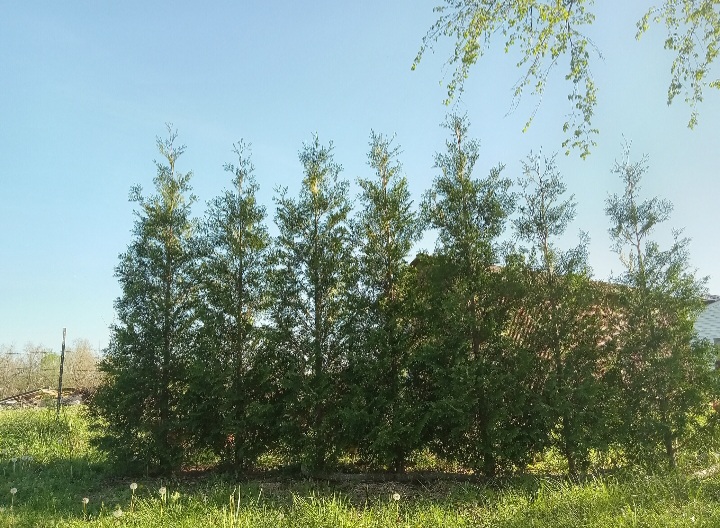
I planted a row of American pillar arborvitae several years ago from 6" starting plants. Oaks and Eastern red cedars are the most prevailing tree species around so no wonder the arborvitae are doing well too. They have grown to very 10 ft tall while remaining narrow. I'd like to have more for wind breaking and privacy screening purposes. The patent has expired a few years ago so it's legal to grow them by asexual propagation. However, there seems to be few examples of rooting conifers in general. Has anyone successful grown coniferous trees from cuttings? What media to use? And how long does it take to root? Thanks!
Arborvitae-hedge.jpg
Narrow arborvitae for privacy screen 2ft spacing
 
gardener
Posts: 649
Location: Boudamasa, Chad
262
2
forest garden
  • Likes 10
  • Mark post as helpful
  • send pies
    Number of slices to send:
    Optional 'thank-you' note:
  • Quote
  • Report post to moderator
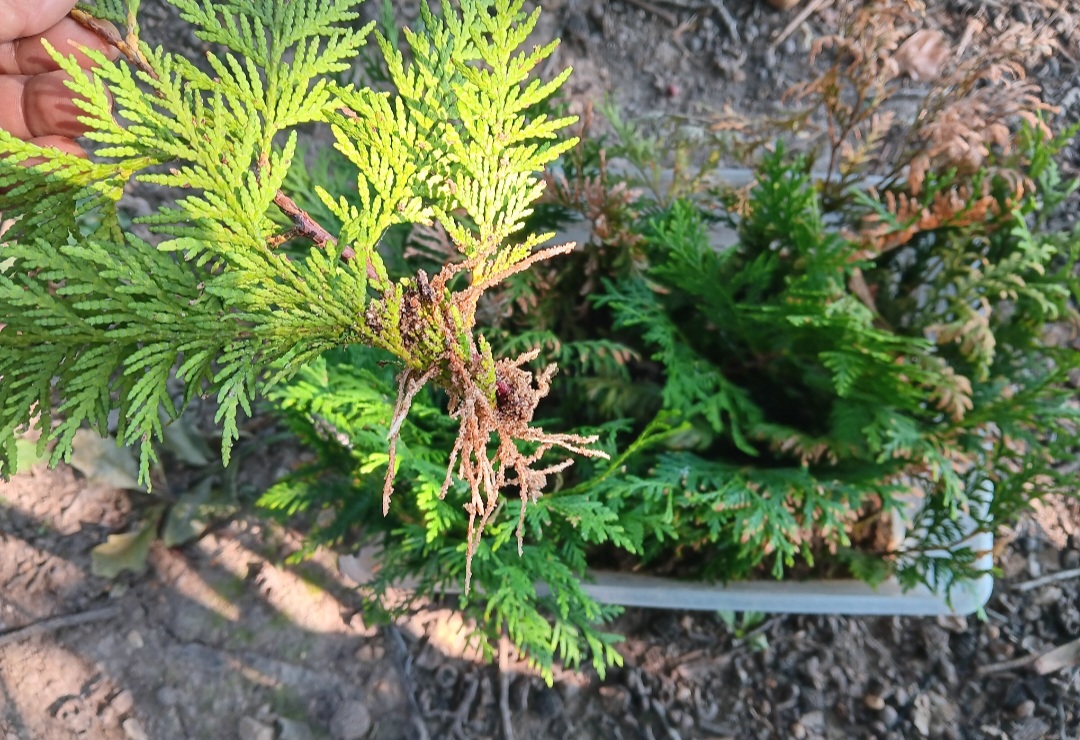
Arborvitae are extremely hardy. Cut about 8 inches of a branch tip off and stick it in soil. If kept moist and warm it should root in a couple months.

This was grown from a cutting:
IMG_20260318_134853_306.jpg
[Thumbnail for IMG_20260318_134853_306.jpg]
 
pollinator
Posts: 432
131
2
dog trees books bee medical herbs
  • Likes 6
  • Mark post as helpful
  • send pies
    Number of slices to send:
    Optional 'thank-you' note:
  • Quote
  • Report post to moderator
I've heard from a nursery owner that propagating arborvitae is very easy. You can even do it in sand. He uses the branches of a sacrificial tree to propagate a heck of a lot. Sits at a table, cutting branch by branch, only keeps the tops few inches of leaves, and sticks the bottoms into moistened sand. From there he uses a mister, but said they will also root as long as they are kept watered. It does take some time, however, like 6 months or so without a mister, and about 4 months with.
I also wanted to say that if you want your current trees to get a bit wider and fuller, cut off the tops a bit. That will encourage them to put on more width as well as get fuller. Another nursery person showed me some beautiful full and wide arborvitaes that were fuller and wider than many of his other ones, and he said they were like that because the crows loved sitting on the tops of those particular ones, thereby breaking the tops. And that caused the trees to get nice and full and wide.
 
Posts: 28
Location: Adirondack Park, New York
9
  • Likes 2
  • Mark post as helpful
  • send pies
    Number of slices to send:
    Optional 'thank-you' note:
  • Quote
  • Report post to moderator
I like to experiment with different methods to see which best works for my specific conditions, try sticking some in sand, some in other media, have some covered and others open, things like that.  It's been interesting to see how different my results are here versus what others say is typical.  Evergreens especially, which I'm in constant need of thanks to the dang deer...

For arborvitae and such I've had the best luck with prop trays made of scrap 1x4 lumber and a hardware wire bottom screen, filled with a mix of sand and vermiculite, covered by an old 10-gallon aquarium that has been painted over 2/3 of the surface by white paint leaving strips of clear glass.  I keep it in a lit area protected from direct sun for spring summer, and fall.  Before winter comes I move it into the garage or barn to protect from snow crushing it.  Got the idea from Mike McGroarty who does a bunch of great vids on YT and has a book with excellent propagation tips I found at a yard sale.  Same thing works for a lot of other cuttings like dogwoods, forsythia, rhododendron, etc.  It usually results in good cuttings ready to pot up and grow out by the following season, so not super fast but very easy.  And the bonus is I've picked up dozens of tanks to use at garage sales over the years, for just a few bucks each.  I get plenty for my garden this way, and usually plenty to share or trade

Open sand beds would work too likely, but it's hard to keep out the rodents that come in under the snow and chew off all the bark over the winter.  

 
May Lotito
gardener
Posts: 2171
Location: Zone 6b
1357
forest garden fungi books chicken fiber arts ungarbage
  • Likes 4
  • Mark post as helpful
  • send pies
    Number of slices to send:
    Optional 'thank-you' note:
  • Quote
  • Report post to moderator
Thanks all. It's not as hard as I thought but it's going to be a slow process. I will start in May and hopefully get some rooted young trees before winter. I will keep them under a roof and set up a wicked bed underneath to maintain moisture level. Natural rainfall tends to be too erratic.
 
I agree. Here's the link: http://stoves2.com
reply
    Bookmark Topic Watch Topic
  • New Topic