• Post Reply Bookmark Topic Watch Topic
  • New Topic
permaculture forums growies critters building homesteading energy monies kitchen purity ungarbage community wilderness fiber arts art permaculture artisans regional education skip experiences global resources cider press projects digital market permies.com pie forums private forums all forums
this forum made possible by our volunteer staff, including ...
master stewards:
  • Carla Burke
  • Nancy Reading
  • John F Dean
  • r ransom
  • Jay Angler
  • Timothy Norton
stewards:
  • paul wheaton
  • Pearl Sutton
  • Tereza Okava
master gardeners:
  • Christopher Weeks
  • M Ljin
gardeners:
  • thomas rubino
  • Jeremy VanGelder
  • Megan Palmer

Could this be Camellia?

 
steward and tree herder
Posts: 12882
Location: Isle of Skye, Scotland. Nearly 70 inches rain a year
6754
6
transportation dog forest garden foraging trees books food preservation woodworking wood heat rocket stoves ungarbage
  • Likes 7
  • Mark post as helpful
  • send pies
    Number of slices to send:
    Optional 'thank-you' note:
  • Quote
  • Report post to moderator
I'm so excited!

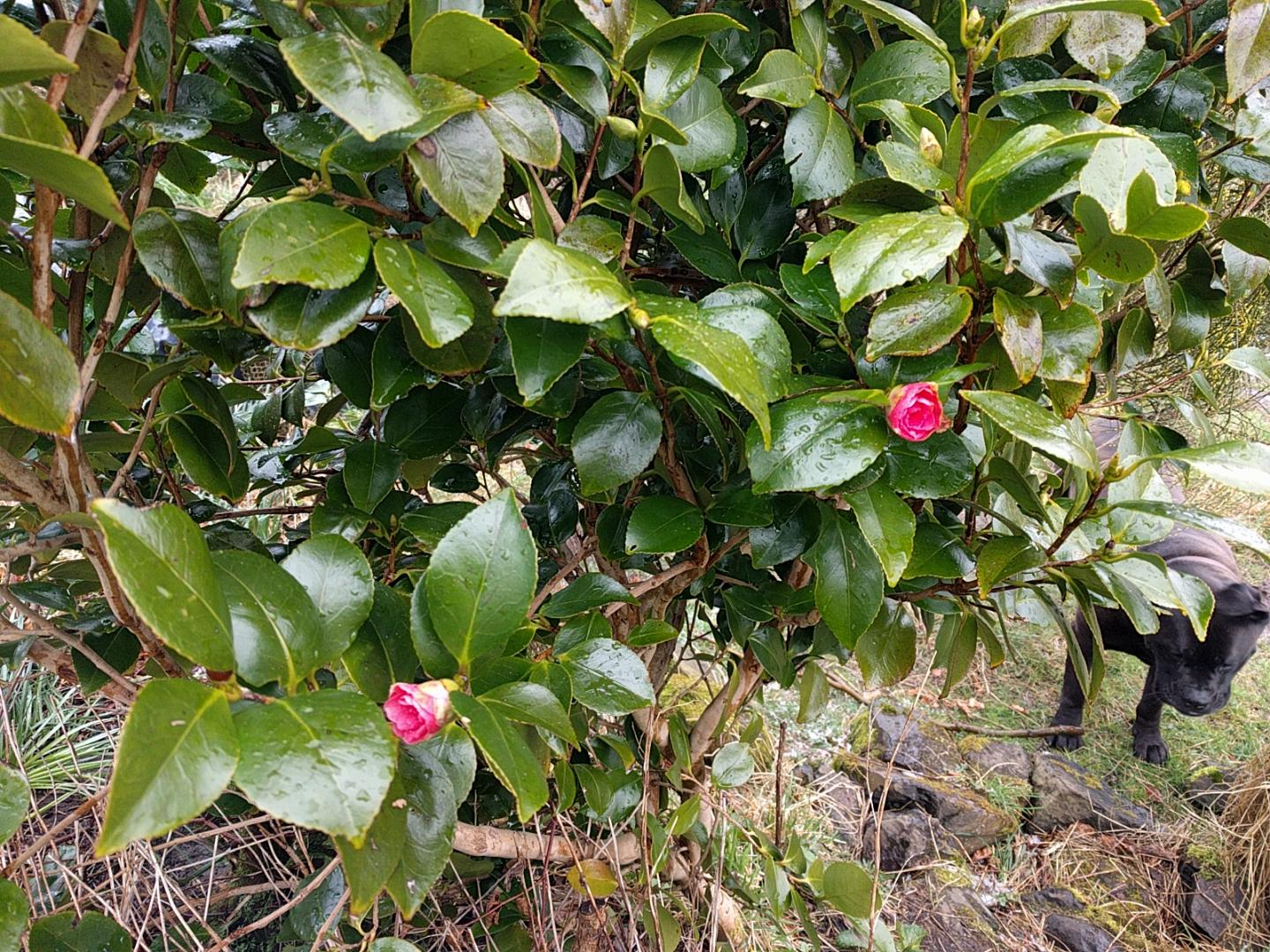
Despite the horrid weather this shrub has decided to flower this year for the first time in my knowledge. It came with the house when we moved here 18 years ago. I moved it onto the bank by the path, because it's original position was in the way of something (I can't now remember it was so long ago!)

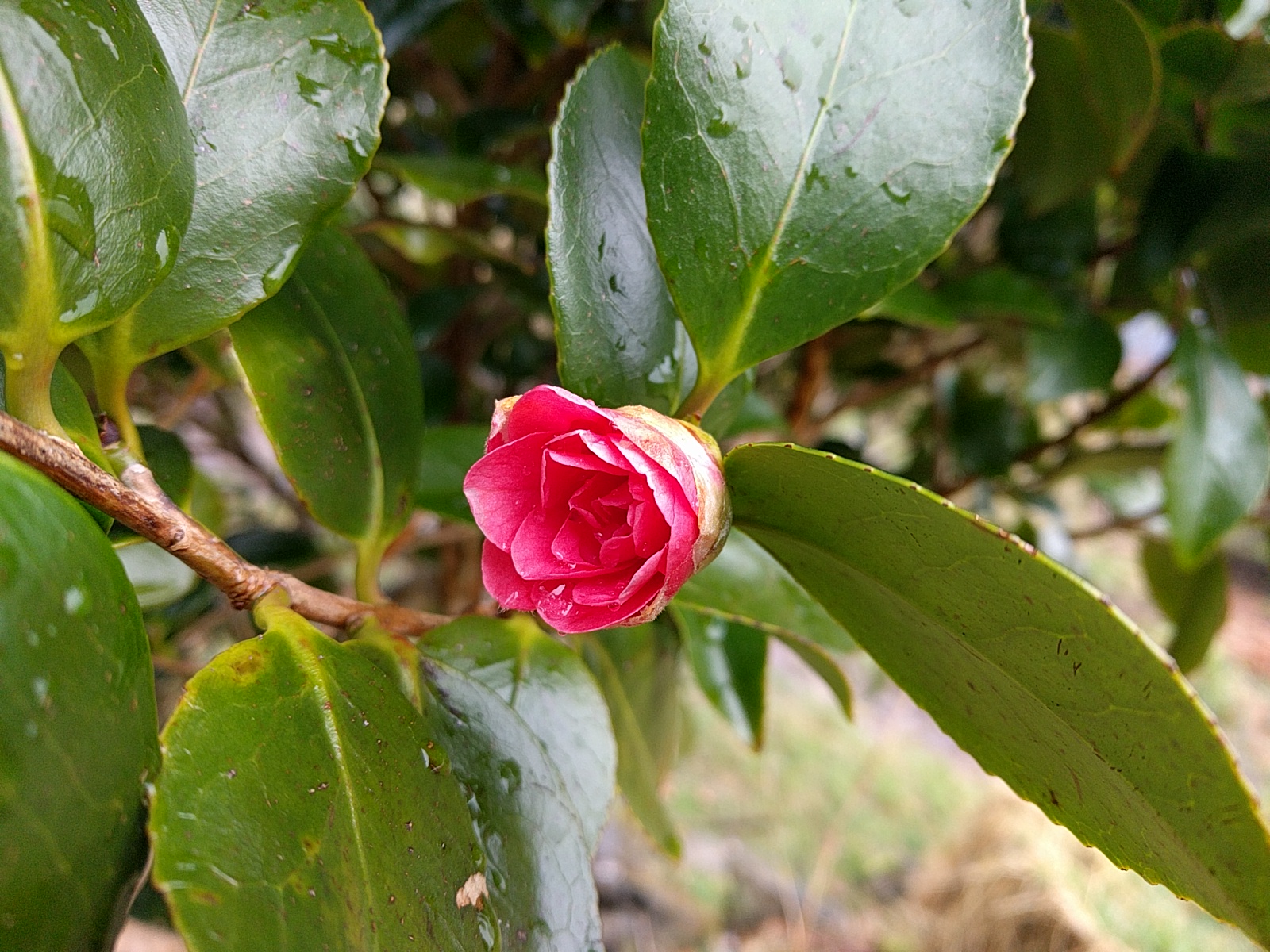
It has waxy, dark green evergreen leaves about 2 1/2 inch long. Very slow growing - even now it is only about 3 ft tall/diameter. I do have acidic soil and cool damp climate. There are lots of flower buds (!) and the first are starting to open to display this lurid pink colour. I'll try and get another picture in a day or so when the flowers hopefully open a bit more.

Is it a Camellia? or what else might it be?

If I tried making tea with the leaves is it likely to be horrid/noxious? Or are all Camellia leaves nice for tea making?
pink_flower_bush.jpg
View of bush and opening pink flowers
camellia_maybe.jpg
close up of flower bud showing colour
 
pioneer
Posts: 375
94
cat trees urban
  • Likes 8
  • Mark post as helpful
  • send pies
    Number of slices to send:
    Optional 'thank-you' note:
  • Quote
  • Report post to moderator
That does look a lot like a flowering camellia, which are apparently Japanese camellia varieties.

As for tea making, I think the short answer is, no?

Camellia sinensis has apparently been selectively bred for tea making for centuries.

Whereas, there are apparently triterpenoid saponins in Camellia japonica L. leaves water extract:

Enrichment process, structural prediction, isolation, in vitro cytotoxic and anti-inflammatory effects of triterpenoid saponins in Camellia japonica L. leaves water extract through UPLC-Q-TOF based mass spectrometry similarity networking, Lou et al. 2024
https://www.sciencedirect.com/science/article/abs/pii/S0308814624000086
 
gardener
Posts: 1843
Location: the mountains of katuah, southern appalachia
609
forest garden trees foraging chicken food preservation wood heat
  • Likes 7
  • Mark post as helpful
  • send pies
    Number of slices to send:
    Optional 'thank-you' note:
  • Quote
  • Report post to moderator
yep, definitely a camellia. most likely to be either C. japonica or C. sasanqua. it’s been suggested to me that any camellia can be made into tea, though ac’s info is definitely worth considering!

on a real thick-leaved camellia like this it would basically have to be done on the shoots before the leaves differentiate much. C. sinensis has leaves that are much more thin and easy to manipulate for the various ways of processing.
 
pollinator
Posts: 65
Location: Haarlem, The Netherlands
44
forest garden fungi trees urban writing ungarbage
  • Likes 4
  • Mark post as helpful
  • send pies
    Number of slices to send:
    Optional 'thank-you' note:
  • Quote
  • Report post to moderator

Ac Baker wrote:

...As for tea making....no? ...
Whereas, there are apparently triterpenoid saponins in Camellia japonica L. leaves water extract ...


I think that is a big YES for tea making. Maybe we should call it an "infusion" or "herbal tea" because it will be different than regular tea.
Or am I wrong? Do I misunderstand the scientific information, maybe there is something I have missed, because I am not a native english speaker?

I have such a bush as well, and I have never thought of trying it. If it is really a bad idea, please let me know.
 
Rusticator
Posts: 9655
Location: Missouri Ozarks
5293
7
personal care gear foraging hunting rabbit chicken cooking food preservation fiber arts medical herbs homestead
  • Likes 4
  • Mark post as helpful
  • send pies
    Number of slices to send:
    Optional 'thank-you' note:
  • Quote
  • Report post to moderator

Nynke Muller wrote:I think that is a big YES for tea making. Maybe we should call it an "infusion" or "herbal tea" because it will be different than regular tea.
Or am I wrong? Do I misunderstand the scientific information, maybe there is something I have missed, because I am not a native english speaker?

I have such a bush as well, and I have never thought of trying it. If it is really a bad idea, please let me know.


For medicinal use, the term you may be looking for is tisane? Tea and herbal infusion are also correct, though 'infusion' is an umbrella term, that includes oils, vinegars, liniments, honey, and alcohols...  'Tea' is commonly used for black, green or white teas, but those are also herbs, so there is that.

And, shifting back on topic...
 
greg mosser
gardener
Posts: 1843
Location: the mountains of katuah, southern appalachia
609
forest garden trees foraging chicken food preservation wood heat
  • Likes 2
  • Mark post as helpful
  • send pies
    Number of slices to send:
    Optional 'thank-you' note:
  • Quote
  • Report post to moderator
there is so much variation in ‘true’ teas that i wouldn’t have a problem referring to a tea made from this plant as ‘tea’, especially if some of normal processes of wilting and rolling or especially letting the enzymatic oxidation that makes tea ‘black’ happens…i make some non-sinensis tea from related species.
 
Nancy Reading
steward and tree herder
Posts: 12882
Location: Isle of Skye, Scotland. Nearly 70 inches rain a year
6754
6
transportation dog forest garden foraging trees books food preservation woodworking wood heat rocket stoves ungarbage
  • Mark post as helpful
  • send pies
    Number of slices to send:
    Optional 'thank-you' note:
  • Quote
  • Report post to moderator
Thank you all! I'll hopefully see how the flowers develop. There are quite a few on the bush, so it should look rather pretty in a week or so.
Following the link from Ac (and others) it looks like the other Camellia are more medicinal than for everyday use, although good for just about everything! I might try some to see what it is like, in case of tea emergencies. I do have some true Camellia sinensis (that hasn't died yet!) which is my true hope. I think that might prefer it slightly warmer, so I am also going to plant some in the polytunnel.
 
Always! Wait. Never. Shut up. Look at this tiny ad.
The Permaculture and Food Self-Reliance Power Pack!
https://permies.com/wiki/369977/Permaculture-Food-Reliance-Power-Pack
reply
    Bookmark Topic Watch Topic
  • New Topic