3D Plans - Pebble Style Rocket Mass Heater
will be released to subscribers in:
soon!

|

|

|

|

|
 11
11


 5
5
Life's too short, eat dessert first! [Source of quote unknown]
You have to be warped to weave [ditto!]
5
When breeding polled to polled over time you can expect 50% fertile polled offspring, 25% fertile horned offspring, and 25% non-breeding animals. When breeding polled to horned, you get 50% polled, 50% horned, and 100% healthy fertile offspring.
The Polled Intersex (PIS) locus has been the subject of considerable scientific study. Both the wild type and mutated sequences have been determined, and it is known that the polled trait is due to a large deletion in an area of goat chromosome 1q43. The mutation is homologous to one in a similar region in humans responsible for a condition called blepharophimosis-ptosis-epicanthus inversus syndrome. It is also now known that the mutations disrupt the transcription of at least 3 genes, including the FOXL2 gene, which encodes a transcription factor required for correct ovarian differentiation.
The polled trait in goats is an autosomal dominant trait in both sexes; in other words, one copy of the gene results in the polled phenotype. However, if a goat is homozygous for (having 2 copies of) the polled allele, the result is either a pseudohermaphrodite (in XX, or what would normally be female, goats) and generally a reduction in fertility in XY, or male goats. Homozygous males usually suffer from a condition called sperm granulomas at a young age, which will generally render them infertile. The absence of correct production of the protein encoded by FOXL2 makes it impossible for a female goat to properly develop a functional reproductive system, and results in various degrees of masculinization of the fetus during development. A goat that is homozygous for the PIS allele cannot produce transcripts from the FOXL2 gene, and cannot develop as a normal female.
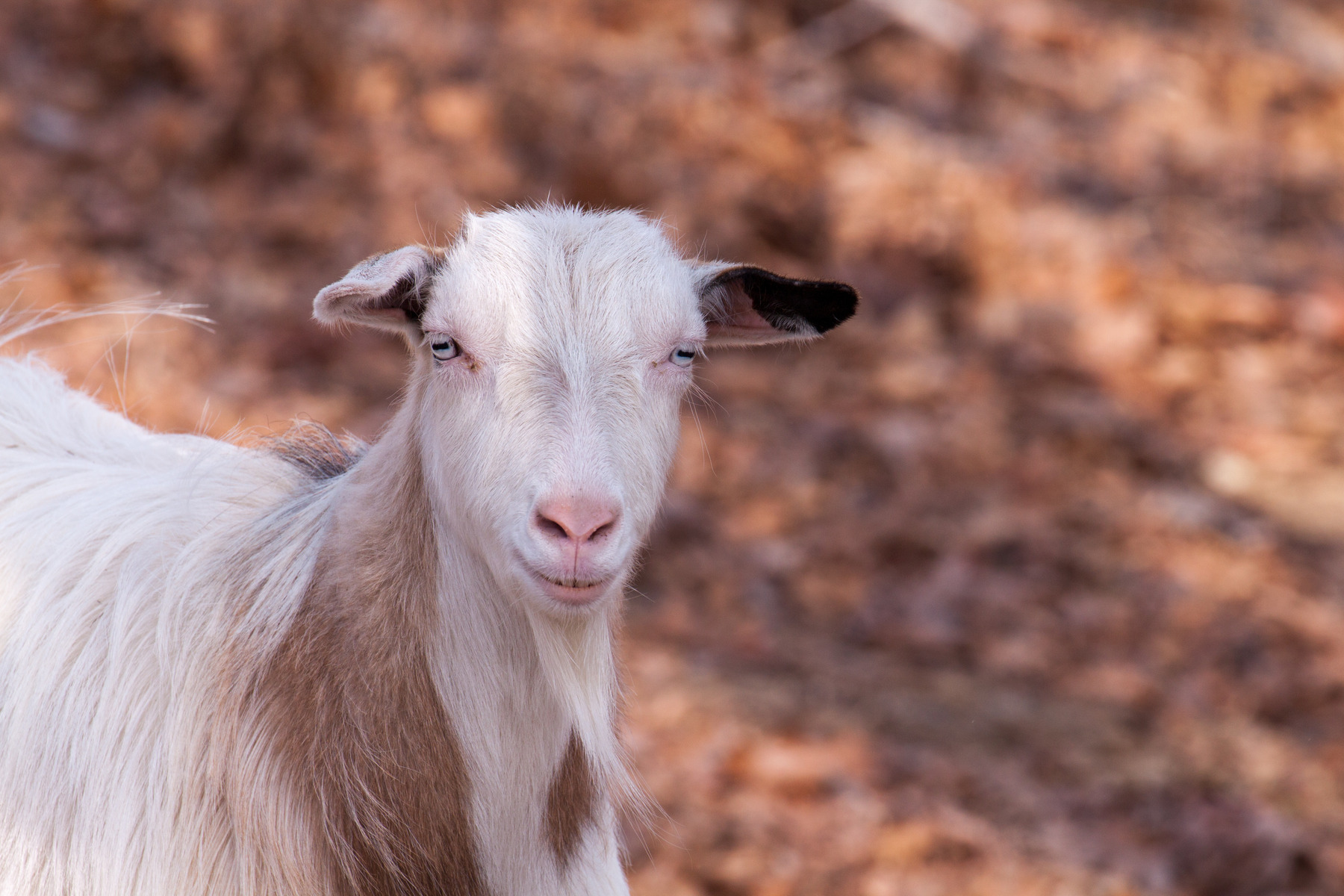
The gene for a goat to be hornless, or polled, is actually dominant to the gene for having horns. Therefore, if a goat gets a gene for being polled from one parent, but a gene for horns from the other, the goat will be polled. However, that goat can pass on either gene, and if it and its mate both pass on the recessive horned gene, they can have horned kids. While hornless goats would seem ideal, they, unfortunately, come with a downside. Apparently, either directly connected to or very close to the same chromosome is a recessive gene that causes hermaphroditism. It is very interesting that this gene is (fortunately) recessive while the polled gene is dominant. However, if you breed two polled goats together, and they both pass on that polled gene with its tag-along intersex gene, that recessive gene will affect the kid₂. If the kid is male, they will appear unaffected physically. Often, the fertility of that male is affected, but there have been cases of homozygously polled male goats siring many kids. However, if the kid is genetically female, there is a high probability of that female being a hermaphrodite with masculine characteristics and sterile.
How permies.com works
What is a Mother Tree ?



|
If you open the box, you will find Heisenberg strangling Shrodenger's cat. And waving this tiny ad:
Permaculture Voices 1, 2 and 3 - all 117 hours of video!
https://permies.com/t/voices123
|