Forums Login/signup

Coppice Species for Firewood

(2 apples) 10
+Pie Number of slices to send: Send
Just wondering if the book COPPICE AGROFORESTRY Tending Trees for Product, Profit & Woodland Ecology by MARK KRAWCZYK has been reviewed here.  Among other things, he talks about coppice (or 'pollard') above the browse-line of the livestock in your system: If you do that, you'll be able to drop leafy branches to any livestock below, and the livestock will still have shade under any that weren't just trimmed. New growth will be above browse line. Such an in-pasture system can feed the cattle below, while the cut tree regrows, the cattle eat the small branches and leaves and you can have stovewood that doesn't need splitting. And that is just one of the possibilities. Also, years ago, I got some selections of Black Locust from Oregon State U. from Ukraine that were selected for timber AND honey bloom. I have one here, now, on my half-acre, and I've got pollarding going on it fairly well. So: Locust has a BTU content equal to mild coal, and you can set up rotations that can supply arbor or fence posts on rotation and only plant once. Yeah, there are thorns- there will be blood, as they say, but you will have a very direct feedback loop to encourage learning to get the thorns the hell off the younger branches, if you want to use them for stove wood. It's easier than striping the thorns off a big climbing Rose. Makes good charcoal too, and they play well with other trees. Being as I had a friend as a kid, whose parents had immigrated from Ukraine, and I got him into playing the board game RISK, which is based on a Ukrainian game originally. If you check out a Youtube video of  combat in the Donbas, you'll probably be seeing woodlots which have a significant amount of Black Locust growing. Here in Oregon I have plans to finish a grape arbor I started over 10 years ago, and the black locust posts I have not placed have been on the ground, ALL That Time, and a sledge hammer blow still sounds normal, and leaves little dent if any.
8
+Pie Number of slices to send: Send
Great reminder of the value of black locust!  Thank you.

Does anyone have any input about box elders or manitoba maples?
They are mentioned on a post in today’s dailyish as rain makers. They provide habitat for a bacterium that enhances precipitation.  I was astonished.  

And to share a learning experience I had recently with coppicing/pollarding large willow trees:  it didn’t work!

Two mature trees, well established.  I thought all I had to do was cut major branches off while the tree was dormant.  I had a crew of professional arborists do it for me.  I had a LOT of grasshoppers last year.  Could they really have eaten a whole year’s production?  They ate the sprouts as they emerged, and tried to grow.  Late in the season the trees did make a few slender twigs, with a few leaves, but I don’t think that it was anywhere near what it will take for the trees to make adequate leaf to support the tree this year.  If anyone has any ideas what besides a plague of grasshoppers could have contributed, could there be a new thread on that topic, with a link posted here?  Many thanks.

Apologies, it is a little off topic, but seems like valuable information for people interested in coppicing and pollarding.  It never occurred to me that I might be endangering the survival of the trees.

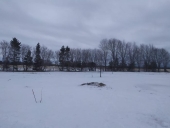
It’s dark right now, but I can post a photo tomorrow of my project one year after cutting.
8
+Pie Number of slices to send: Send
 

Thekla McDaniels wrote:Does anyone have any input about box elders or manitoba maples?


Indeed, I do.

In my current locale, Manitoba Maples grow slow and dense when left to form big trees. A 30+" tree forms genuine hardwood, tight rings, heavy as hell, and wonderful to burn in a wood stove. I suppose our long winters and limited growing season are the reason.

They do punch out a lot of suckers from the root every year, and these are thin stuff. Not dense enough for tool handles or anything beyond kindling. So, not a great coppice candidate. But don't diss the big old stuff.

8
+Pie Number of slices to send: Send
 

Douglas Alpenstock wrote:

Thekla McDaniels wrote:Does anyone have any input about box elders or manitoba maples?


Indeed, I do.

In my current locale, Manitoba Maples grow slow and dense when left to form big trees. A 30+" tree forms genuine hardwood, tight rings, heavy as hell, and wonderful to burn in a wood stove. I suppose our long winters and limited growing season are the reason.

They do punch out a lot of suckers from the root every year, and these are thin stuff. Not dense enough for tool handles or anything beyond kindling. So, not a great coppice candidate. But don't diss the big old stuff.


A town south of here taps the Manitoba maples in the spring and makes syrup.  They host a Sugaring Off Festival, but the timing isn't necessarily right to be able to demonstrate the happenings at the Cabane a Sucre.

Rick, I haven't checked regarding a review, but I'll need to add that to my list.  I really enjoyed how he laid out the history of copse management in the first part of the book.  It is quite informative.  In the longer term, I intend to try some of the stump culture to create an annual supply of Christmas trees for personal use.
7
+Pie Number of slices to send: Send
black locust. its very hard and rot resistant. coppies well. grows fast. and burns hot. one of the most durable rot resistant wood in the u.s. ive heard people compare it to coal for the heat put out. i have about a doz.  they grew 6t from seed.in 3 years in my short summers in poor soil. they also fix N so no need to fertilize..
9
+Pie Number of slices to send: Send
I haven't seen anyone mention cherry. I have a lot of black cherries and chokecherries on my land - I tend not to like them because the foliage isn't useful as goat fodder. But they make excellent firewood. Beautiful wood too. And they respond well to pollarding.

Along with mulberry, it supplies my modest firewood needs.
9
+Pie Number of slices to send: Send
My goats used to like choke cherries. It wasn’t their only feed, they had more than 20 acres of pasture and there were choke cherries in the mixed Woodland that was also available to them. They sought it out when they wanted it.  They liked the fruit too!
9
+Pie Number of slices to send: Send
Never count out Osage Orange.

It is an amazing firewood—burns hotter than any other wood I can think of.  It’s also the hardest of hardwoods.  It would make a great tool handle.  And once established, it grows back at a phenomenal rate.  It might be the absolute perfect tree to copice.


Eric
7
+Pie Number of slices to send: Send
Eric hits a bullseye,  right on the mark , Osage orange is a phenomenal tree.  Besides quality fuel, it has other superpowers

It's also known as bow wood, reputed to make perfect durable bows for indigenous cultures in the US. Tough, flexible,  almost like spring steel

All of the strange green fruit is useful, according to a farmer I know in the Blue Ridge of Virginia.  He says it can dry out in a barn or house attic and prevent insects and critters..... flying squirrels,  mice, red squirrels........from living indoors.   Two or three years of prevention, amazing how our natural world offers gifts every day
3
+Pie Number of slices to send: Send
 

Rico Loma wrote:Eric hits a bullseye,  right on the mark , Osage orange is a phenomenal tree.  Besides quality fuel, it has other superpowers

It's also known as bow wood, reputed to make perfect durable bows for indigenous cultures in the US. Tough, flexible,  almost like spring steel

All of the strange green fruit is useful, according to a farmer I know in the Blue Ridge of Virginia.  He says it can dry out in a barn or house attic and prevent insects and critters..... flying squirrels,  mice, red squirrels........from living indoors.   Two or three years of prevention, amazing how our natural world offers gifts every day


If it can deter roaches my daughters will love it for life.
5
+Pie Number of slices to send: Send
 

Sam Shade wrote:I have a lot of black cherries and chokecherries on my land - I tend not to like them because the foliage isn't useful as goat fodder. But they make excellent firewood. Beautiful wood too. And they respond well to pollarding.


I have a lot of chokecherry growing wild. Mostly I leave it alone unless it's dead because the bees love the flowers and the birds love the berries. But yes, it's a medium hardwood and makes decent firewood, especially for my little hunter stoves which don't have huge fireboxes.
No matter. Try again. Fail again. Fail better. This time, do it with this tiny ad:
Rocket Mass Heater Manual - now free for a while
https://permies.com/goodies/8/rmhman
permaculture bootcamp at wheaton labs Green Living Book 100th Issue of Permaculture Magazine


reply
reply
This thread has been viewed 5236 times.
Similar Threads
Hedging - how best to turn an untended treeline into a UK-style hedge?
planting trees for firewood
Hugelkultur -- good wood, bad (allelopathic) wood
Coppicing for medicinals
"filtering" or analyzing advice from conventional forester
permaculture bootcamp - gardening gardeners; grow the food you eat and build your own home
permaculture thorns, A Book About Trying to Build Permaculture Community - draft eBook
Support the Permaculture Bootcamp - Back the BEL
More...

All times above are in ranch (not your local) time.
The current ranch time is
Mar 11, 2026 03:28:40.