• Post Reply Bookmark Topic Watch Topic
  • New Topic
permaculture forums growies critters building homesteading energy monies kitchen purity ungarbage community wilderness fiber arts art permaculture artisans regional education skip experiences global resources cider press projects digital market permies.com pie forums private forums all forums
this forum made possible by our volunteer staff, including ...
master stewards:
  • Carla Burke
  • John F Dean
  • Nancy Reading
  • r ransom
  • Jay Angler
  • Timothy Norton
stewards:
  • paul wheaton
  • Pearl Sutton
  • Anne Miller
master gardeners:
  • Christopher Weeks
  • M Ljin
gardeners:
  • Jim Garlits
  • thomas rubino
  • William Bronson

American Elderberry, cut to the ground every year? Biomass bonanza?

 
Posts: 142
Location: FEMA District III - Appalachia
93
10
duck forest garden foraging chicken bee homestead
  • Likes 12
  • Mark post as helpful
  • send pies
    Number of slices to send:
    Optional 'thank-you' note:
  • Quote
  • Report post to moderator
My elderberry here in Southern WV go wild, and like crazy. All I do I cut back any of the dead part, and keep the land around them cleared'ish'. So, it can spread in the direct it prefers. I've been doing this for 10 years, and each year I get a good flower and berry crop. I started with just a few sticks in the ground, now I have a few very large 'bushes'. I do the trimming after the berry fruit.  

-Justyn 'Doc'
 
Posts: 47
Location: SE Missouri, 7A
10
  • Likes 11
  • Mark post as helpful
  • send pies
    Number of slices to send:
    Optional 'thank-you' note:
  • Quote
  • Report post to moderator

May Lotito wrote:I don't have elder on my property but they are abundant in the wild. I have seen people foraging by the road side ditch. Does anyone in the ozarks know how do the native elderberries compared to the named varieties?


In general I think the named varieties I grow are larger and the chymes ripen more evenly than the wild ones growing near my place. That said, most if not all named varieties are just variants that were collected and propagated from the wild.  The next new variety may be growing by your road side.
 
pollinator
Posts: 1631
Location: zone 4b, sandy, Continental D
443
  • Likes 8
  • Mark post as helpful
  • send pies
    Number of slices to send:
    Optional 'thank-you' note:
  • Quote
  • Report post to moderator

Nick Shepherd wrote:

May Lotito wrote:I don't have elder on my property but they are abundant in the wild. I have seen people foraging by the road side ditch. Does anyone in the ozarks know how do the native elderberries compared to the named varieties?


In general I think the named varieties I grow are larger and the chymes ripen more evenly than the wild ones growing near my place. That said, most if not all named varieties are just variants that were collected and propagated from the wild.  The next new variety may be growing by your road side.


Nick is correct: We have both the wild and a number of cultivated elderberry bushes, and all the cultivated elderberry bushes do better than the wild ones, especially in ripening more evenly. That is a big advantage as I can usually pick all of them in 2 pickings and the racemes are all ripe or not ripe.
I would like to add, too, that when I buy elderberries, I give them a preferred location [more top soil, which is a big advantage in my sand box] more amendments, mulch, etc. I have no doubt that this also contributes to a better crop.
Note that all bought varieties also sucker abundantly, so a cultivated elderberry could give you many babies.
I'm in Central WI zone 4b, if that helps.
 
Posts: 45
Location: Half acre on a hill in Central Alabama, Zone 8a and 8b
35
hugelkultur fungi foraging
  • Likes 8
  • Mark post as helpful
  • send pies
    Number of slices to send:
    Optional 'thank-you' note:
  • Quote
  • Report post to moderator
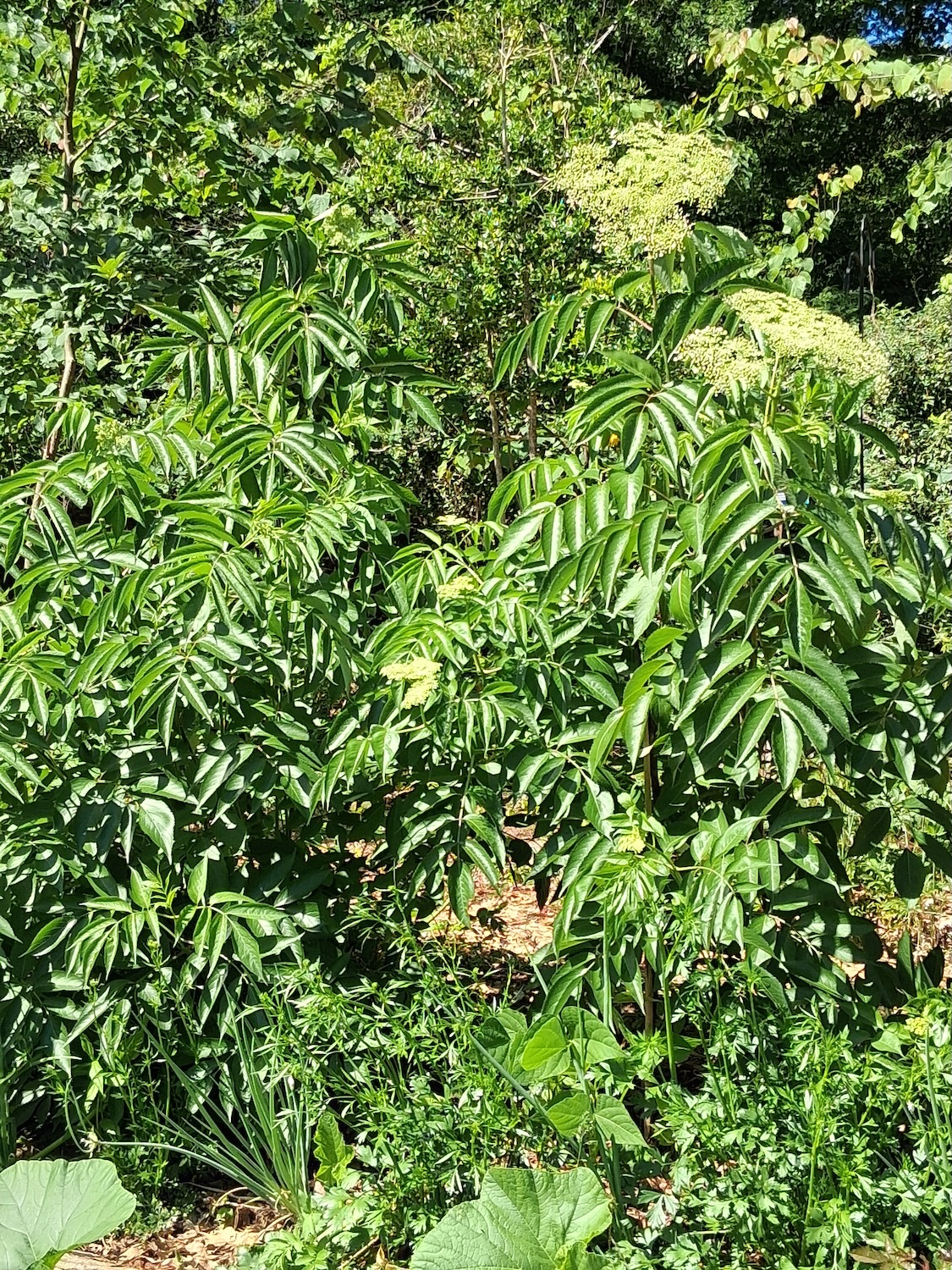
We purchased a healthy specimen of our native elderberry (S. Canadensis) a few years ago, propagated it in pots and planted it in various spots around our property to see where it would do best. It decided to thrive in our hugelkultur beds, and spread through the woodpiles like lightning.

I plan to keep up with it as a major source of fruit *and* biomass for compost and mulch. It has adapted so well, I won't have any problem chopping it back wherever it becomes a nuisance, and letting it flourish where it harmonizes with the rest of our developing food forest.
Elderberry.jpg
A happy elderberry bush
 
For your bravery above and beyond the call of duty, I hereby award you this tiny ad:
grow your own garden and build your own home in the gardening gardeners program
https://wheaton-labs.com/bootcamp
reply
    Bookmark Topic Watch Topic
  • New Topic