
• Post Reply Bookmark Topic Watch Topic
  • New Topic
permaculture forums growies critters building homesteading energy monies kitchen purity ungarbage community wilderness fiber arts art permaculture artisans regional education skip experiences global resources cider press projects digital market permies.com pie forums private forums all forums
this forum made possible by our volunteer staff, including ...
master stewards:
  • Carla Burke
  • Nancy Reading
  • r ransom
  • John F Dean
  • paul wheaton
  • Jay Angler
stewards:
  • Timothy Norton
  • Pearl Sutton
  • Tereza Okava
master gardeners:
  • Christopher Weeks
  • M Ljin
gardeners:
  • Jeremy VanGelder
  • Matt McSpadden
  • thomas rubino

What is this frilly-leaved plant?

 
pollinator
Posts: 413
Location: Hamburg, Germany
132
  • Mark post as helpful
  • send pies
    Number of slices to send:
    Optional 'thank-you' note:
  • Quote
  • Report post to moderator
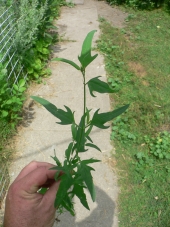
While I'm asking dumb questions, what is this?  It appeared near where my Good King Henrys disappeared, but the leaves are wrong.  It's about 2 feet high - that's lady's mantle in the background for comparison.  And the edges are not quite so silvery in real life as in the photo.

It's quite pretty.  Is it useful?

unknown-plant.JPG
frilly plant
frilly plant
 
out to pasture
Posts: 13098
Location: Portugal
4166
goat dog duck forest garden books wofati bee solar rocket stoves greening the desert
  • Likes 1
  • Mark post as helpful
  • send pies
    Number of slices to send:
    Optional 'thank-you' note:
  • Quote
  • Report post to moderator
It looks like a member of the parsley and carrot family, which includes some highly poisonous plants as well as some useful and edible ones.


This page has some useful information.
 
Morfydd St. Clair
pollinator
Posts: 413
Location: Hamburg, Germany
132
  • Likes 1
  • Mark post as helpful
  • send pies
    Number of slices to send:
    Optional 'thank-you' note:
  • Quote
  • Report post to moderator
Indeed what I suspected.  Which is why I did NOT taste it.  I do have Botany in a Day - thank you for the reminder and I will look it up that way when I'm next at the garden!  Thank you!
 
gardener
Posts: 887
Location: Southern Germany
527
kids books urban chicken cooking food preservation fiber arts bee
  • Mark post as helpful
  • send pies
    Number of slices to send:
    Optional 'thank-you' note:
  • Quote
  • Report post to moderator
I have seen that exact same plant in a FB group.
If I remember correctly it was not yet identified 100%. One guess was Jacobea vulgaris (common ragwort). To identify, you can crush the leaves which will have a repulsive odour.

Careful, it is poisonous for some animals.
If it is ragwort indeed, it will bloom in the second year. It is fodder plant for some specialized butterfly caterpillars.
 
pollinator
Posts: 2339
Location: Denmark 57N
601
fungi foraging trees cooking food preservation
  • Mark post as helpful
  • send pies
    Number of slices to send:
    Optional 'thank-you' note:
  • Quote
  • Report post to moderator
I would guess at ragwort as well, invasive and poisonous to livestock (long term liver damage)
 
pollinator
Posts: 364
Location: East tn
99
hugelkultur foraging homestead
  • Mark post as helpful
  • send pies
    Number of slices to send:
    Optional 'thank-you' note:
  • Quote
  • Report post to moderator
3rd vote for ragwort, somewhat useful

http://www.english-country-garden.com/flowers/ragwort.htm
 
They weren't very bright, but they were very, very big. Ad contrast:
Looking for cold-climate growers to join a GOOF livestream panel (Missoula)
https://permies.com/t/369111/cold-climate-growers-join-GOOF
reply
    Bookmark Topic Watch Topic
  • New Topic