This year I bought some Cranberry Fliederbarben pole bean seeds from Small House and I admit, I felt a touch emotional by how beautiful they are.....showed them to a seed saving friend and then ended up splitting them with her :)
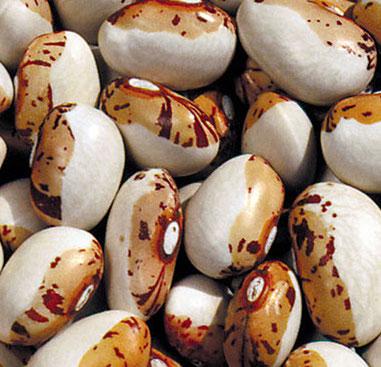
I'm really fond of the Hidatsa Shield Figure bean and as a bonus, they grow well in our cool summers. So do pintos, surprisingly, which is good because I love cooking Sonoran style.
I love that coloration pattern Phil, and as a bonus I've read that Hidatsa Shield beans are great tasting....I ordered some of those this year too :)
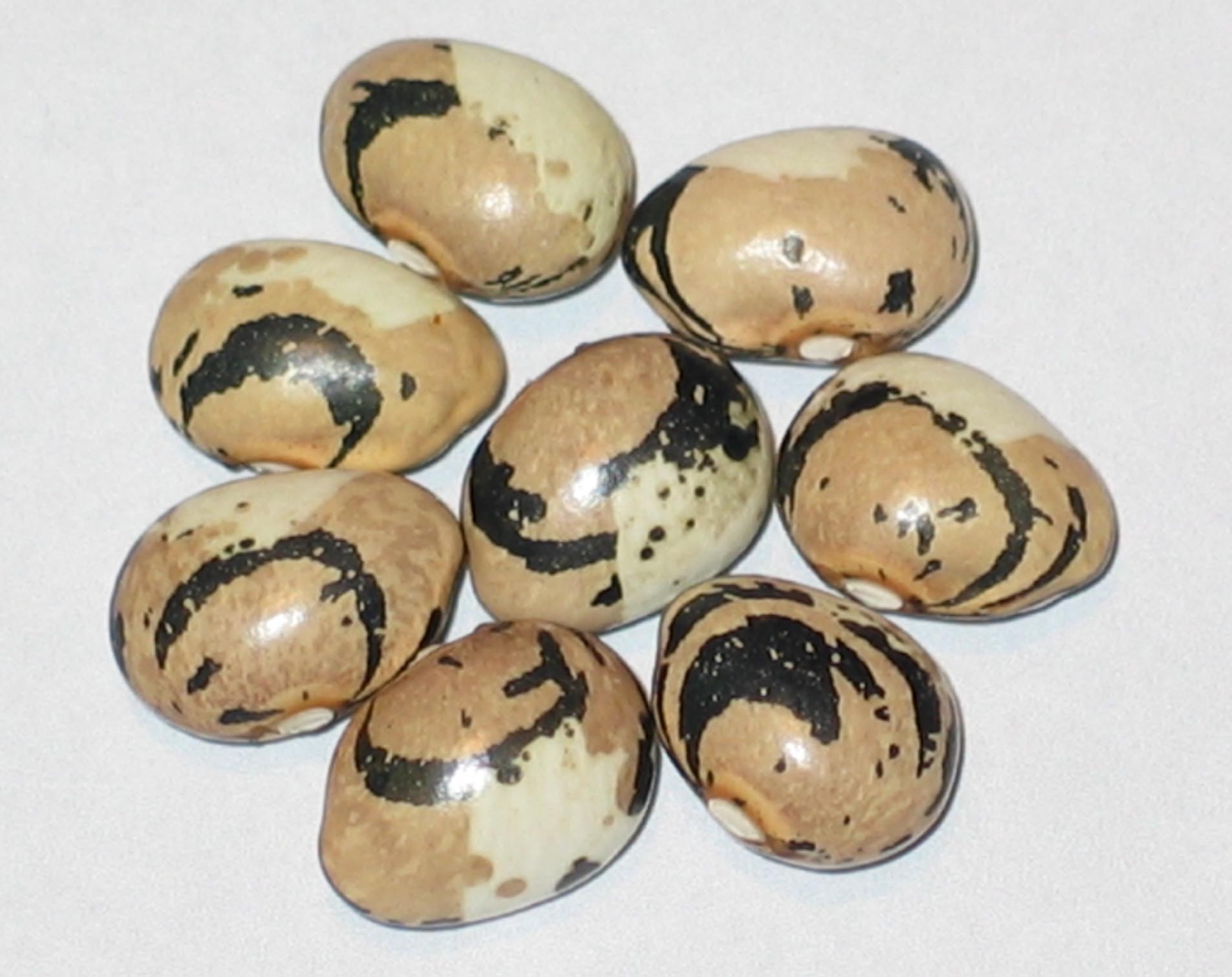
Not quite the same color pattern, but a little similar is another bean that I picked up this year from Russ Crowe's collection, Bosnian Pole bean....can't wait to fill a mason jar with these.
I have a weakness for pretty vegetables, and beans are some of the prettiest. Even the most basic black or white beans are very beautiful, and my kids love playing with them. This is not my photo, but we used to grow a lot of these Christmas Lima Beans. My kids were so excited about the swirls of color that they really enjoyed picking and shelling them, and when I cooked them they'd eat them right up. And they are so large, so it is pretty quick to shell a meal's worth.
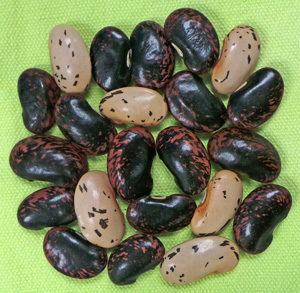
I'm currently soaking, and about to plant out, some Good Mother Stallard Beans. I have not grown them before, so we will see how they do. They are large, round, plump, and beautifully mottled with dark maroon and white. I would love to grow a bunch of them as dried beans; they are supposed to be really tasty.
I just love mottled beans. I have some really pretty varieties of runner beans planted out too.
These are the only beans I can bring to maturity in my short growing season. It takes some coddling, but when I have a jar full of these (as seed) I know I could expand them into good protein, in the coming seasons, if needed.
Meanwhile, they feed my bumblebees and hummingbirds. A most happy plant.
I think I am getting hooked on the Runner beans. Planted them very late last year but still got a few pods and seed to use this year. I planted Black Knight and Painted lady as part of my stealth food garden...
Whelp, I just went and bought more bean seeds... This thread reminded me how much we like Christmas Lima Beans, and that I somehow haven't bought any seeds since we moved and left my seed stash behind.
I headed over to MI Gardener because their seeds are inexpensive and they offer free shipping on any size order. But I hate to make a $2 order probably costs them that much to pack and ship. So I added some Calypso Beans, Painted Pony Beans, a few herbs, and some purple cauliflower seeds. We ate store-bought purple cauliflower side-by-side with white the other day, and I was surprised how much more and better flavor the purple has. So I promised my daughter I'd get some seeds and we'd grow it in the fall.
So all very necessary purchases, if you really think about it. Or, another way to think about it, is there are way worse, and more expensive, addictions I could have.
I tried to pull an image of the Painted Pony Beans from online to post here, but couldn't make it work. But they are pretty!
Wow, I'd never heard of those Shinshu Runner Beans before. How do they taste? I'm not really sure I'd like to eat a bean that big, but it sure would be fun to grow.
I'd never heard of them before this year too so I don't know how they will taste. This first year I want to propagate the seed since they are expensive on a per bean basis. I bought mine from Strictly Medicinal seeds. Here is their description:
"In Zones 7 to 12, a tuberous-rooted perennial vine. Grown as an annual in zones 6 and under–90 days to maturity.
Originating in Japan, these will climb to make a large bush to 12 feet tall (with trellis), very green from spring to frost, dotted with intense red flowers, remaining bushy and vital long past the time that standard pole beans have started to look scraggly. Edible as a green bean or soup bean. Shinshu runner makes a cosmic-patterned purple and pink seed, which is to my knowledge the largest among all Phaseolus. Cultivation: Very, very fun and a good activity for kids. Germination like a small earthquake. Direct seed in a richly composted hill in the early spring. For seed production get an early start, sowing just before the last frost of spring. Provide trellis or grow on the corn. Will run on the ground if not trellised, but for ease of picking, and a good, dry pod in the end, trellis."
That's neat; so the Shinshu would actually be a perennial here in Texas, if they can handle the summer heat. I'm going to look into them more and might give them a try next year. Yes, at $1/ bean they are some pretty pricey beans!
Greg Martin wrote:This year I bought some Cranberry Fliederbarben pole bean seeds from Small House and I admit, I felt a touch emotional by how beautiful they are.....showed them to a seed saving friend and then ended up splitting them with her :)
What is your favorite looking dry bean?
Oh my, these look good! I just had to google (or rather use ecosia) and found that they are sold on a local ads platform (BTW, it is fliederfarben, meaning lilac coloured).
All those beans in this thread look stunning! Most of these are hard to cultivate here because summers are too short. You get good results with runner beans like Prize Winner and similar, but most pole beans here are cultivated for the pods. It is difficult to get the dry beans - which would be cool as a protein source!
I even tried a variety called Canadian Wonder (dwarf bean) because I thought they might reach maturity but our summers are too cool so the beans were too small for drying (well I tried and they only shrivelled down to nothing).
But I might venture into the land of beautiful beans. I received some beautiful beans from an Internet friend in Austria like Yin Yang beans and Angel beans, but I could not grow them in my soil and climate - Austria has some warmer wine-growing regions that allow for such crops (and apricots!). I have to deal with the conditions I have, I guess.
Thanks to this thread I have now sent an order for six or seven beautiful bean varieties which originated in Germany or other European countries so I won't be too frustrated if they don't grow in my climate.
Ahh, pretty beans! I do hope that many of them will mature to harvest the seeds, not only for reseeding but for eating.
It is not too late for this year (last expected frost date is next week).
Greg Martin wrote:This year I bought some Cranberry Fliederbarben pole bean seeds from Small House and I admit, I felt a touch emotional by how beautiful they are.....showed them to a seed saving friend and then ended up splitting them with her :)
What is your favorite looking dry bean?
Those are absolutely beautiful! Your Permaculture quote at the bottom of your post should be made into bumper stickers/t-shirts!
Permaculture...picking the lock back to Eden since 1978.
It would get people to ask about it and/or look it up for themselves.
Ken Parker wrote:Your Permaculture quote at the bottom of your post should be made into bumper stickers/t-shirts!
Permaculture...picking the lock back to Eden since 1978.
It would get people to ask about it and/or look it up for themselves.
Thanks Ken! I hereby grant it's free use by any for the good of all :)
Any bumper sticker/t-shirt printers here that want to run with it?
Anita Martin wrote:
Oh my, these look good! I just had to google (or rather use ecosia) and found that they are sold on a local ads platform (BTW, it is fliederfarben, meaning lilac coloured).
Very much appreciate the spelling Anita, thank you! I left it above as is since in the US, for some reason, it's traded under that name, but added a note. But I did a little digging with the corrected word and did also find several folks offering this variety in the US under the name 'Forelle Fliederfarben'. So lilac trout bean it is...such a fun name!
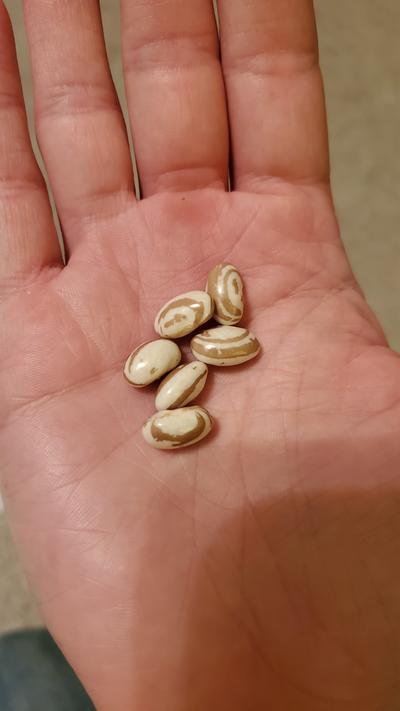
I got something a lot like these "Hidatsa shield" beans, at the local farmers market. Central Portugal is a long way from Japan, and I wasn't completely surprised to find a similar bean, at a seed supplier in Oregon, reportedly sourced from Portugal, under the name "Pepe de Rola". "Rola" refers to various members of the dove/pigeon family.
So I looked that up - Pepe de Rola - and found nothing more, but was elbowed to Papo de Rola - which is usually attached to another bean coloration, a longer shape white bean with dark reddish speckles concentrated around the edges. "Papo" is "crop", the bird anatomical feature. The same vendor also happened to have some of those beans. I'll have to ask her what she calls them, but not expecting much - they don't seem to care much about nomenclature.
Also found a New Brunswick bean "Baie Verte."
I suppose if you mix up a bunch of different kinds of beans and plant the cross pollinated offspring for a few generations, you too may find yourself in the position of being a new origin for beans with this coloration. Whether the flavor has anything to do with the looks, I can't say, but these are pretty good tasting. Mild, tender, with a hint of pinto type flavor but milder. Almost as if they were half way between the white beans I've been eating that they look like from one side, and the pinto they sort of vaguely resemble on the other.
Donn Cave wrote:I'll have to ask her what she calls them
"Cabeça de coelho" - rabbit head. The white speckled bean, she calls "vaca" - cow - after the markings on a milk cow.
One may also find a handful of different dark speckled beans, ranging in color from a deep reddish to a light greyish brown, and a flat white variety that has a pinto-like flavor. They also appreciate scarlet runner beans, but a white variety seems to be preferred over the common purple, and several large seeded fava varieties. No lima beans anywhere, and split peas are apparently for foreigners. In the summer, they'll have shelled beans.
Lila Stevens wrote:I have a weakness for pretty vegetables, and beans are some of the prettiest. Even the most basic black or white beans are very beautiful, and my kids love playing with them. This is not my photo, but we used to grow a lot of these Christmas Lima Beans. My kids were so excited about the swirls of color that they really enjoyed picking and shelling them, and when I cooked them they'd eat them right up. And they are so large, so it is pretty quick to shell a meal's worth.
yeah I love the perennial limas, as well as the purple succotash variety, but I never got hold of those. My uncle grows a pole dry bean variety called “purple buddha” or something similar by the small seed savers club that gave it to him.No information online, I've checked. They are purple and white blotched sometimes half purple half white. I will post a picture soon.
greg mosser wrote:the patterns are really nice, but just to get a different kind of entry to this contest, i give you fort portal jade bean:
saw those once on a catalog of rare beans. The company “Seed Freaks” in Tasmania has that gallery with the photo of the jade beans. not sure if they have them for sale anywhere in Aus.
Wow Joylynn...that's cool. I'm not sure I'd have the patience to arrange them by colour gradation though.
Here are the ones we grew this year - dragon tongue (often used young as they are a purple / yellow pod, but cook to yellow), Steeves case knife (freebie with our order - pole bean), Ukrainian comrade (two colours and both yellow and green pods), red peanut, light brown zebra, molasses face, Annie Jackson (pole), great northern, Hopi black, Canadian wild goose, and Orca. All came from Heritage Harvest Seed. The ones with poor results grew in our dirt while the ones with more of a crop grew in deep compost beds over the dirt (area was industrially farmed through the 2021 growing season). Two slightly different views of the same arrangement. Our average frost-free season is 115 days, so I do have to pay a bit of attention and avoid the longest maturing varieties.
@Douglas, growing up in Rosthern in the 70s, I remember a classmate's mother grew dry beans...I have no idea what variety other than they were a bush, but if they matured halfway between Saskatoon and PA, that suggests most of SK should be able to grow some to maturity. I remember them being laid out on the picnic table at the end of the season to dry.
Last year we had fewer varieties and a poor season, so the limited harvest all got thrown together so I can't make a good comment about flavours.
We have some large multicolored beans here in Guatemala that I like to call my " magic beans"..... Still looking for a spot of land to start my vine and find my giant!
Mike Barkley wrote:These are my choices for the bean beauty contest. Because they look like cows.
Hmm, I see Holsteins and Jerseys. But what on earth are you feeding those purple cows?
Lila, I see them as a deep reddish-purple color..Perhaps like the color of the red heifer as spoken of in Numbers 19:2 in the scriptures?
All these beans are wonderful and the colors are amazing! Thank you everyone for submitting pictures!
But I might venture into the land of beautiful beans. I received some beautiful beans from an Internet friend in Austria like Yin Yang beans and Angel beans, but I could not grow them in my soil and climate - Austria has some warmer wine-growing regions that allow for such crops (and apricots!). I have to deal with the conditions I have, I guess.
These 'angel beans' are the ones I wanted to share. So I don't need to make a photo of my beans, they look exactly like this, with the little dark 'angel' around the eye of the bean.
They grow well at my allotment garden. Starting with a few beans I planted the year before, planting some beans from that harvest this year, I now have some jars full of beans to eat, and of course some to plant next year!
I have runner beans too, the ordinary purple-and-black-speckled ones, and suddenly one plant gave white beans! But these look like large-ish white beans, nothing special.
Post by:autobot
a wee bit from the empire
A rocket mass heater is the most sustainable way to heat a conventional home
![[Logo]](/templates/default/mobile/images/mobile-permies-2015.png)


![[lima.jpg]](/t/178517/a/174550/lima.jpg "Filename: lima.jpg
Description:")
![[1494A92A-9CBB-44E9-891D-F9C9A4053269.png]](/t/178517/a/174551/1494A92A-9CBB-44E9-891D-F9C9A4053269.png "Filename: 1494A92A-9CBB-44E9-891D-F9C9A4053269.png
Description: picture borrowed from baker creek seed")



![[anasazi.jpg]](/t/178517/a/174567/anasazi.jpg "Filename: anasazi.jpg
Description:")
![[calypso.jpg]](/t/178517/a/174568/calypso.jpg "Filename: calypso.jpg
Description:")
![[yellow-eye.jpg]](/t/178517/a/174569/yellow-eye.jpg "Filename: yellow-eye.jpg
Description:")


![[Shinshu_bean_hand_600.jpg]](/t/178517/a/174709/Shinshu_bean_hand_600.jpg "Filename: Shinshu_bean_hand_600.jpg
Description: Shinshu runner bean")
![[Kay-youngs-red-soup-lima-bean.jpg]](/t/178517/a/174710/Kay-youngs-red-soup-lima-bean.jpg "Filename: Kay-youngs-red-soup-lima-bean.jpg
Description: Kay Young's Red soup lima bean")
![[Thumbnail for IMG_20200926_193724.jpg]](/t/178517/a/174747/IMG_20200926_193724.jpg "Filename: IMG_20200926_193724.jpg
Description:")
![[Thumbnail for signal-2021-09-10-10-18-53-498.jpg]](/t/178517/a/180867/signal-2021-09-10-10-18-53-498.jpg "Filename: signal-2021-09-10-10-18-53-498.jpg
Description: beans!")
![[Thumbnail for 20240118_181240.jpg]](/t/178517/a/231306/20240118_181240.jpg "Filename: 20240118_181240.jpg
Description:")

![[Thumbnail for 20241003DSC_0500Beans.jpg]](/t/178517/a/250807/20241003DSC_0500Beans.jpg "Filename: 20241003DSC_0500Beans.jpg
Description: 2024 southern Manitoba bean harvest")
![[Thumbnail for 20241003DSC_0501Beans.jpg]](/t/178517/a/250808/20241003DSC_0501Beans.jpg "Filename: 20241003DSC_0501Beans.jpg
Description: Different viewpoint")


