Hi Anne,
How is this different than green beans?
Where I live everyone eats some of their beans fresh--green beans, and some are left to dry and are eaten later, over the course of the year.
not ‘dry bean’ beans, but there are a number of beans bred to be shelled and eaten fresh. i think i’ve mostly seen them sold as ‘shelling beans’. i think the variety ‘dragon tongue’ is one that i see sold that way a lot.
Anne Miller wrote: Does anyone else eat fresh beans?
Besides green beans? Blue Lake green beans are the only beans we grow, and we steam them as a side dish.
(I disliked green beans as a child--found out later that that was because I had never had freshly-harvested, organic, home-grown ones. Oh, the difference is spectacular! And Miss G loves them.)
Melissa said, "How is this different than green beans?
Do some people eat pinto beans with the shell?
Yes, I guess, maybe picking them a bit earlier than you do. The beans for dry beans they don't pick until they are completely and totally dry on the vine. The whole vines are picked and then the beans are harvested via them being heavier than the dry vines/shells.
In the southeast, there are a lot of very prized and beloved field peas or cow peas which are essentially the fresh version of what we eat dry ( I believe black-eye peas are probably the most well know of the variety and are often found dried but are preferred fresh for hoppin john and dishes like that). Crowder peas, purple hull, lady peas, pink lady, and zipper peas are a few varieties. They are shelled fresh and then simmered with some snapped beans and usually butter or pork. They have a short season and a short shelf life of course and are labor intensive to shell by hand (I've done them by the bushel until my fingers were raw) but they are really special and delicious. Worth seeking out if you aren't growing them yourself, and they do freeze well.
Also, I'm not as well-versed on this variety, but I believe pigeon peas are also similar and are often eaten fresh cooked with rice.
I grow an heirloom variety of field pea (or crowder pea) that my husband's grandfather bred. I frequently harvest them before they're dry and cook them fresh. I started that way because rain kept coming when I was ready to harvest the dried beans.Then the shells got moldy, and even when fully dry, shelling them brought back symptoms from a previous mold exposure.
I haven't compared side by side which texture I prefer of fresh vs dried beans, or if cooking them fresh even makes much difference. I should do that as an experiment.
I've got pigeon peas growing, hopefully they'll bear next year, and the goal is to eat them mature but not dried.
I also grow Christmas lima beans, but usually dry them, since I want a storage crop, but I'm pretty sure I've seen people grow them and eat them fresh (mature).
Melissa said, "How is this different than green beans?
Do some people eat pinto beans with the shell?
Yes, I guess, maybe picking them a bit earlier than you do. The beans for dry beans they don't pick until they are completely and totally dry on the vine. The whole vines are picked and then the beans are harvested via them being heavier than the dry vines/shells.
This ^
When the beans are harvested dry, it's a lot less work to shell them. it's closer to "winnowing" - crushing large batches of pods and letting the heavy beans fall while the papery dry pods "blow away," rather than individually shelling each pod.
I don't remember it being that hard to shell a few beans for a family meal so we could enjoy fresh pinto beans.
Those are the only ones I ever tried because they are the only beans we grow other than a few green beans.
I just remember how much better they tasted fresh.
This was just dear hubby's idea to see how they tasted.
I even found a recipe so I guess we were not the only ones to do this:
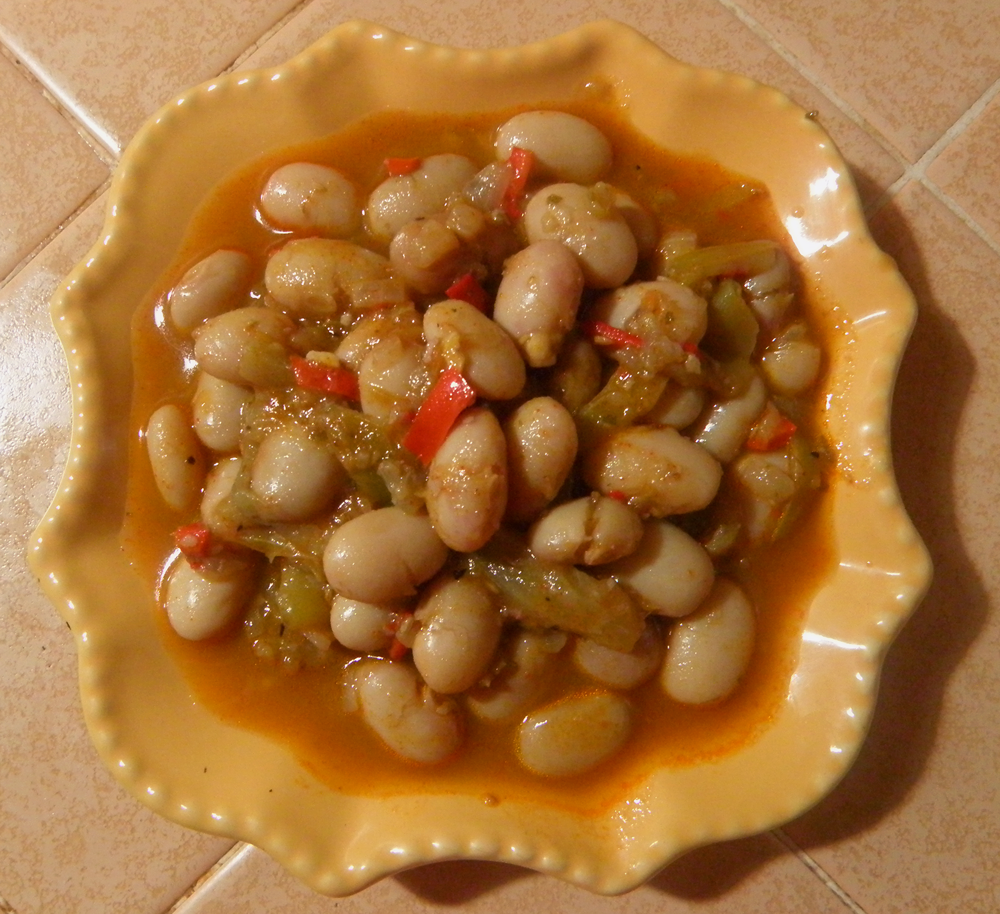
I found some beautifully patterned beans at the Farmer’s Market in Watsonville, CA. I asked some Mexican-American shoppers about them and they told me that that these were fresh pinto beans. "Pinto" means "painted" in Spanish, referring to the spots on the beans.
Plate of Cooked Pinto Beans
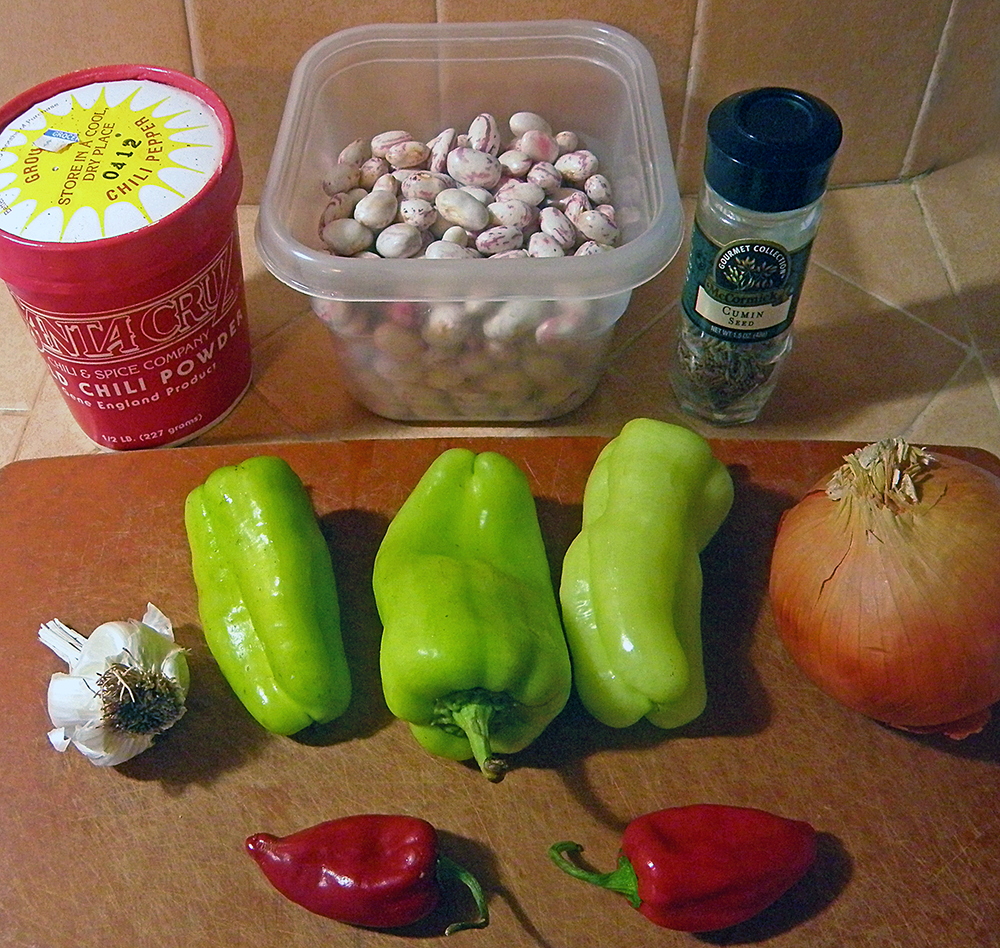
Fresh Pintos Ready to Eat
Fresh Pinto Beans
makes about 5 cups
3 cups fresh shelled pinto beans
1 tbsp. olive oil
½ cup chopped onion
2 cloves garlic, minced
3 small sweet peppers
2 small hot chili peppers
3 ½ cups water
2 tsp. instant veggie broth powder
¼ tsp. black pepper
1 tsp. cumin seeds
2 tsp. mild chili powder
Cut sweet peppers into julienne strips. You should have about 2 cups. Mince hot chili peppers. Grind cumin seeds with a mortar and pestle.
In 2 quart saucepan, sauté onion in olive oil till golden over medium heat. Add garlic and sauté till fragrant, about 30 seconds. Add sweet and hot peppers and stir to coat with oil. Sauté pepper about 2 minutes and add beans. Stir to coat with oil.
Add water, powdered veggie broth, black pepper, chili powder, and cumin. Stir and bring to boil over high heat. Reduce heat to medium and simmer uncovered till beans are tender to your liking, stirring every 10 minutes or so and checking to be sure liquid still covers beans. Cooking time will be about 45 minutes to 1 hour, depending on the size of the beans and how soft you want them. If you want them to get soft and mushy (for refried beans, etc.), continue cooking for up to 1½ hours.
I've done this with Scarlet Runner beans. They can be eaten as green beans, but many people find them tough if they're allowed to get too big. I've used the completely dried bean to make humus with, but in my climate getting them to completely dry is hard work. I've certainly taken those "too tough to be green beans", harvested the mostly mature beans from inside and cooked them, but I haven't yet treated them as a product in themselves - that's the next step! If they do it as "edemame", I'm sure we've got other options!
I had some immature pinto beans, in the pod, sautéed with onions and bell peppers. It was really good! The seeds were barely beginning to form, the pods may have been 3/8ths inch in width.
I agree, fresh pintos are much better than dried. A totally different taste. Being from TX I love them dried too. It's a staple food there.
It seems that every year I grow more beans than the year before. There are so many wonderful varieties. I usually concentrate on a few types each year & save some as seeds for another year. Expanded that this year to refresh all the varieties that want to grow in my new climate & soil. Plus I'm going to use many other varieties as cover crops. Digging deep into my seed bank & adding 16 bean soup mixes from the grocery store too. Should be some interesting results.
Had a conversation with some inexperienced gardening folks a couple weeks ago. "What? Beans suck nitrogen from the air & put it in the soil?" Why yes, yes they do.
Anne Miller wrote:One year, the first year that I grew pinto beans, we ate them fresh off the vine rather than drying them.
These beans were so much better than the dried beans.
I understand why they are usually dried so they will keep longer.
Does anyone else eat fresh beans?
Beans can be eaten at four stages - as green beans (mange-tout), as fresh shelling beans (podded like peas or broad beans), as shelling beans when they are starting to dry and are firmer (the french call this demi-sec - half dry), and then allowed to dry (either on the plant if the climate allows, or picked and then dried indoors.
In my book I explain all these different stages.
In Europe beans are often sold in the markets to eat at the freshly shelled stage or at the demi-sec stage. They are completely delicious when eaten fresh or demi-sec - and at these stages they can be put into the freezer to store. I just throw them into plastic bags without blanching, and then take out handfuls during the year to use as we want. Because they don't need soaking, they are quick to cook.
At one of the restaurants that I worked we made fresh shelled cranberry beans every year in the summer. Honestly I didn't feel like they tasted much different but they cook up quickly. I always eat fava beans fresh, although I know that in the middle east they also eat them dried. I did fresh chickpeas last year, not really impressed, a lot of work.
For the Scarlet Runners or other green beans that have gotten larger and tougher than I like. I blanch and freeze them for use as soup beans. They hold up much better in soup than tender green beans.
I always eat fava beans fresh, although I know that in the middle east they also eat them dried.
I've eaten dried fava beans and they are delicious! - often slightly salted -
The madness is that fava beans are grown in the UK and exported to Middle East for dried fava beans and also for making into a kind of falafel I believe - and we don't eat these delicious dried beans ourselves. And then we import tons and tons of beans from Canada and USA to make baked beans in tins. The food miles issue is obvious.
Fava beans - mashed up, into a kind of puree - is eaten in Greece. Just back from Crete where I ate lots of fava beans in that form - plus gigantes in tomato sauce of course. My favourite. There are lots of wonderful European dishes made with beans.
Have any of you creative chefs ever tried combining humus (or similar bean dip) and a mixed leaf pesto? I just made some Arugula/Nettle pesto, but I left out the nuts because a friend I had visiting is allergic to almost all nuts. She can eat my Scarlet Runner bean dip, so that got me thinking....
But I thought I'd ask here in case someone had already tried that and decided it was horrible!
Jay - you could trying putting a dollop of pesto on top of the hummus like they do in some store bought hummus. If it isn't good together, just scoop out the pesto.
Texan born to a Mississippi mama. We grew and ate fresh shelled pinto beans speckeled butter beans and Peas both purple hull and crowder. Add some fried squash, fresh sliced tomatoes and cornbread and you had some good eating.
I've seen Lima beans traditionally done this way. Once the beans inside are plump, but before drying out, they are in the "shelling bean" stage. This is typically when they are called "Butter Beans." Simmer in a pot with the usual add-ins. This makes the plant flush another round of blossoms that will produce either more shelling beans for fresh eating, or if allowed to dry on the plant, will make your dry beans for storage/seeds for next year.
Post by:autobot
Your opinion of me doesn’t define who I am --tiny ad
![[Logo]](/templates/default/mobile/images/mobile-permies-2015.png)




.png)

