• Post Reply Bookmark Topic Watch Topic
  • New Topic
permaculture forums growies critters building homesteading energy monies kitchen purity ungarbage community wilderness fiber arts art permaculture artisans regional education skip experiences global resources cider press projects digital market permies.com pie forums private forums all forums
this forum made possible by our volunteer staff, including ...
master stewards:
  • Carla Burke
  • Nancy Reading
  • r ransom
  • John F Dean
  • paul wheaton
  • Jay Angler
stewards:
  • Timothy Norton
  • Pearl Sutton
  • Tereza Okava
master gardeners:
  • Christopher Weeks
  • M Ljin
gardeners:
  • Jeremy VanGelder
  • Matt McSpadden
  • thomas rubino

Growing Mexican chayote (Sechium edule) in temperate climate

 
gardener
Posts: 2156
Location: Zone 6b
1351
forest garden fungi books chicken fiber arts ungarbage
  • Likes 14
  • Mark post as helpful
  • send pies
    Number of slices to send:
    Optional 'thank-you' note:
  • Quote
  • Report post to moderator
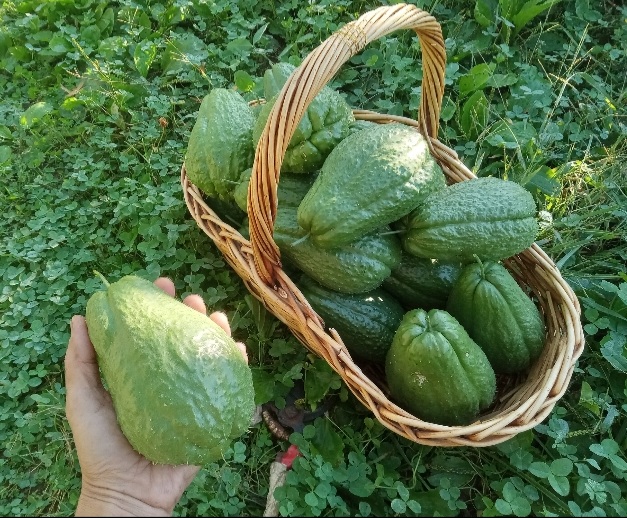
Hi, I am reporting the one year result of growing a grocery store chayote. Grocery store chayotes in US are mostly the smooth light green variety (virens levis) from the mountain areas of Mexico or Costa Rica. They are easy to germinate and grow, as many of us have successfully sprouted them and shared in Joylynn's thread here. Yet it's challenging to get chayote fruits since it's a short daylight plant and flowers very late in the season.

With some hard work, I finally got over 30 chayotes of market size and lost 3 times more of the immature ones to hard freeze.


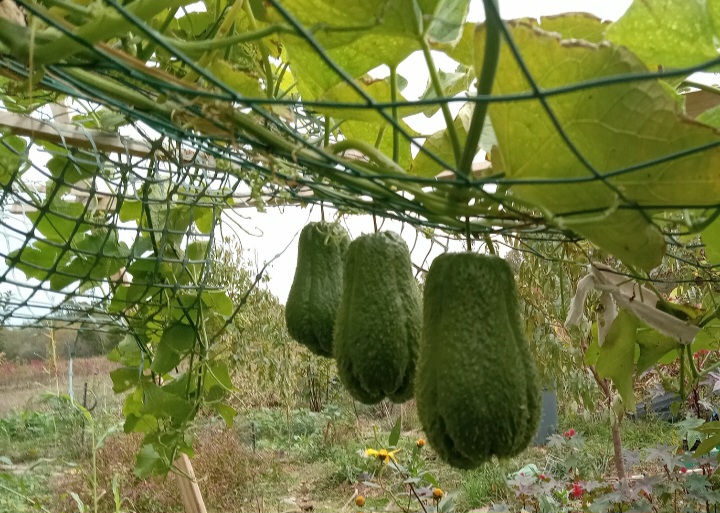
This is the single massive plant with vines running over 30 ft long. The red rectangle is the horizontal 16x5 cattle panel used as trellis.


I made a diagram of chayote flowering and fruiting. Basically flowers initiate when daylight is less than 13 hours a day; it takes one month for the first female flower to open; 10 more days for the first male flower to open and pollination happens; one month for the fruit to mature. for my plant, here are the dates of the events:

First female flower: 09/29
First hand pollination: 10/3
Major pollination period by insects: mid to late October
First fruit picked: 10/31 ( starts to sprout 3 weeks later)
Major harvest period: mid November
First freeze: 10/29-11/1 (protected with cover and heat source)
Freeze killed: 11/22


In general, for the short daylight variety, you will need the frist freeze to happen after Thanksgiving to get some harvest, better if the first freeze is around Christmas or later. In the bottom half of the diagram I list the possible ways of extending the pollination to harvest period. They may not be all that practical so next year I am going to try the day neutral variety. It's dark green with short prickles, a variety that is proven to work even in Canada.


I leave the root of chayote in ground to see if it comes back next year.

Chayote has tasty shoots and provides precious nectar for the pollinators late in the season. Even if it can't produce fruit, it's still a nice plant to have in the garden.


May Lotito
gardener
Posts: 2156
Location: Zone 6b
1351
forest garden fungi books chicken fiber arts ungarbage
  • Likes 8
  • Mark post as helpful
  • send pies
    Number of slices to send:
    Optional 'thank-you' note:
  • Quote
  • Report post to moderator
Here's me trying to protect the plant around Halloween when recold cold temperature reached 20F. Way early as we normally just get light frost at that time. Some leaves showed injuries and died but the vines sent put more new growths in the next few weeks.
20231101_080205.jpg
Freeze protection. Costly when trellis is high and plant is big
20231116_094257.jpg
New growth
New growth
 
May Lotito
gardener
Posts: 2156
Location: Zone 6b
1351
forest garden fungi books chicken fiber arts ungarbage
  • Likes 6
  • Mark post as helpful
  • send pies
    Number of slices to send:
    Optional 'thank-you' note:
  • Quote
  • Report post to moderator
Dr Lance Hill disapproves of growing store chayote as they may introduce disease and endanger the local mirlitons. hereThat's a valid concern as the local variety is adapted to the hot and humid weather and the cross pollination may results in hybrids that lose the trait.

I am not sure if the deadly chayote mosaic virus carried in the fruit will show signs in the seedling stage or not. If the seedling or mature plant is sick, destroying it properly will stop the transmission.

The only pests I have so far are the spotted or stripe potato beetles that are existing in my garden. They pose little threat to the leaves but they nibble the female flowers and young fruits and cause a lot of damage.
20231026_132954.jpg
Potato beetle damage
20231011_081420.jpg
Potato beetle damage
 
master pollinator
Posts: 5308
Location: Due to winter mortality, I stubbornly state, zone 7a Tennessee
2271
7
forest garden foraging books food preservation cooking fiber arts bee medical herbs
  • Likes 2
  • Mark post as helpful
  • send pies
    Number of slices to send:
    Optional 'thank-you' note:
  • Quote
  • Report post to moderator
Was this a first year plant?
 
May Lotito
gardener
Posts: 2156
Location: Zone 6b
1351
forest garden fungi books chicken fiber arts ungarbage
  • Likes 5
  • Mark post as helpful
  • send pies
    Number of slices to send:
    Optional 'thank-you' note:
  • Quote
  • Report post to moderator
It was the same one I sprouted last winter and transplanted in May.

It didn't grow very fast during the summer and the growth exploded in early September after the rain and a cold spell. I guess that reflects its Mexican high altitude origin that prefers cooler night temperature.
20230628_101549.jpg
Chayote climbing onto trellis in late June
 
Joylynn Hardesty
master pollinator
Posts: 5308
Location: Due to winter mortality, I stubbornly state, zone 7a Tennessee
2271
7
forest garden foraging books food preservation cooking fiber arts bee medical herbs
  • Likes 2
  • Mark post as helpful
  • send pies
    Number of slices to send:
    Optional 'thank-you' note:
  • Quote
  • Report post to moderator
Hmmm... mine was in mostly shade and only got 10 feet long.  No flowers. I'm trying to overwinter it. I'll see about doing a new one in more sun.
 
May Lotito
gardener
Posts: 2156
Location: Zone 6b
1351
forest garden fungi books chicken fiber arts ungarbage
  • Likes 7
  • Mark post as helpful
  • send pies
    Number of slices to send:
    Optional 'thank-you' note:
  • Quote
  • Report post to moderator
In commercial production, the farmer prepares a big planting hole of 3 ft wide and 2 ft deep with loads of organic fertilizer in the hole. I kept adding compost and mulch in the 6 ft diameter around the base. That and chickens adding manure on top helped the plant well fed. It likes shade in summer but more sunlight in the fall will speed up the fruit growth.

I dig a hole for next year's plant now and start filling it with layers of leaves and kitchen scraps for in ground composting.
 
pollinator
Posts: 380
Location: Illinois, Zone 6b
98
fish foraging hunting food preservation cooking woodworking
  • Likes 1
  • Mark post as helpful
  • send pies
    Number of slices to send:
    Optional 'thank-you' note:
  • Quote
  • Report post to moderator
Great writeup May!

I've been wondering about these since I saw them in the produce section.  I've done some reading up on them, but haven't taken the plunge yet.  By the time I'm ready to, you'll have worked the kinks out for the rest of us, lol.  Very helpful information...love the data collection as well.
 
May Lotito
gardener
Posts: 2156
Location: Zone 6b
1351
forest garden fungi books chicken fiber arts ungarbage
  • Likes 2
  • Mark post as helpful
  • send pies
    Number of slices to send:
    Optional 'thank-you' note:
  • Quote
  • Report post to moderator
Thanks Cy, here is a scientific report of growing tropical chayote in Macedonia, latitude similar to Ohio but with a Mediterranean climate. webpagehttps://www.researchgate.net/publication/355169398_Evaluation_of_the_tropical_cucurbit_chayote_Sechium_edule_Jacq_Sw_var_albus_spinosum_under_the_temperate_climate_conditions_of_North_Macedonia The variety is white in color with soft pricks and the flowering time is earlier than the autumn solstice. Still they had less than 10 days of harvest season.

There are little information on the photo period of different chayote varieties but cucumbers growing in Asia have adapted to the local day light and climate conditions. Cucumbers of south Asia origin are most short day length sensitive and further north is less so. And those grown in north east Asia are predominantly day neutral.
Screenshot_20231213_085150_Samsung-Notes.jpg
Screenshot from the paper
 
Posts: 1
  • Likes 3
  • Mark post as helpful
  • send pies
    Number of slices to send:
    Optional 'thank-you' note:
  • Quote
  • Report post to moderator
This is great info,I would love to try in New England with a day neutral variety,wondering how to find one?
 
May Lotito
gardener
Posts: 2156
Location: Zone 6b
1351
forest garden fungi books chicken fiber arts ungarbage
  • Likes 7
  • Mark post as helpful
  • send pies
    Number of slices to send:
    Optional 'thank-you' note:
  • Quote
  • Report post to moderator
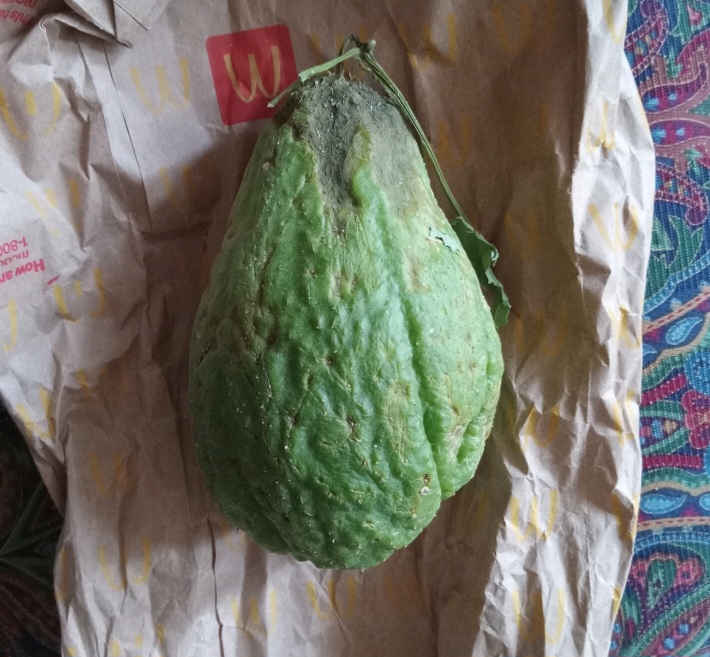
Welcome to Permies! I got my original squash from an etsy seller from Baltimore or DC. Look up "prickly chayote" and maybe there are sellers in your area. I am not sure how different is the climate in NE. My growing season is from May to October and I start harvesting in September. Late harvested chayotes can be stored in the fridge till mid to late February, in time for indoor sprouting and transplanting.
Chayote-harvest.jpg
1.5 lbs
1.5 lbs
10242025-last-flush.jpg
Day before killing frost
02112026-after-3.5-months-in-storage.jpg
Currently sprouting indoors
 
steward and tree herder
Posts: 12691
Location: Isle of Skye, Scotland. Nearly 70 inches rain a year
6607
6
transportation dog forest garden foraging trees books food preservation woodworking wood heat rocket stoves ungarbage
  • Likes 4
  • Mark post as helpful
  • send pies
    Number of slices to send:
    Optional 'thank-you' note:
  • Quote
  • Report post to moderator
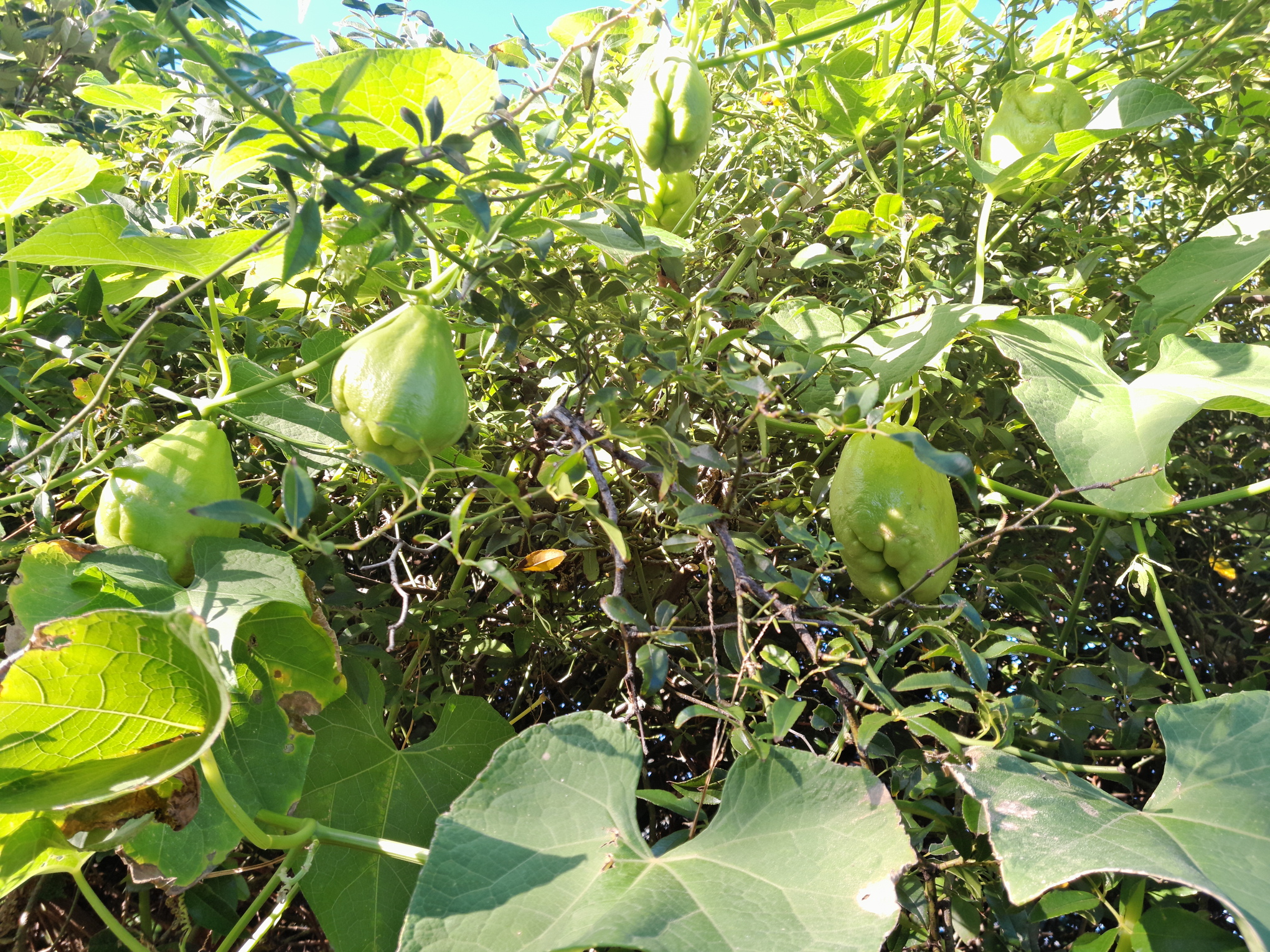
This is really exciting! I see that Alison of backyard larder has successfully grown Chayote in Yorkshire in the UK for the last two years: backyard larder chayote although it isn't clear whether she managed to overwinter the plants.

chayote squash in England
Chayote growing along a fence


She sells off some of her fruit, so I'm keen to give them a go next year (sold out this year) in my new polytunnel. They do seem pretty productive, although huge vines!
 
You guys haven't done this much, have ya? I suggest you study this tiny ad:
permaculture thorns, A Book About Trying to Build Permaculture Community - draft eBook
https://permies.com/wiki/123760/permaculture-thorns-Book-Build-Permaculture
reply
    Bookmark Topic Watch Topic
  • New Topic