• Post Reply Bookmark Topic Watch Topic
  • New Topic
permaculture forums growies critters building homesteading energy monies kitchen purity ungarbage community wilderness fiber arts art permaculture artisans regional education skip experiences global resources cider press projects digital market permies.com pie forums private forums all forums
this forum made possible by our volunteer staff, including ...
master stewards:
  • Carla Burke
  • Nancy Reading
  • r ransom
  • John F Dean
  • paul wheaton
  • Jay Angler
stewards:
  • Timothy Norton
  • Pearl Sutton
  • Tereza Okava
master gardeners:
  • Christopher Weeks
  • M Ljin
gardeners:
  • Jeremy VanGelder
  • Matt McSpadden
  • thomas rubino

Planting for resilience

 
Posts: 5
  • Likes 1
  • Mark post as helpful
  • send pies
    Number of slices to send:
    Optional 'thank-you' note:
  • Quote
  • Report post to moderator

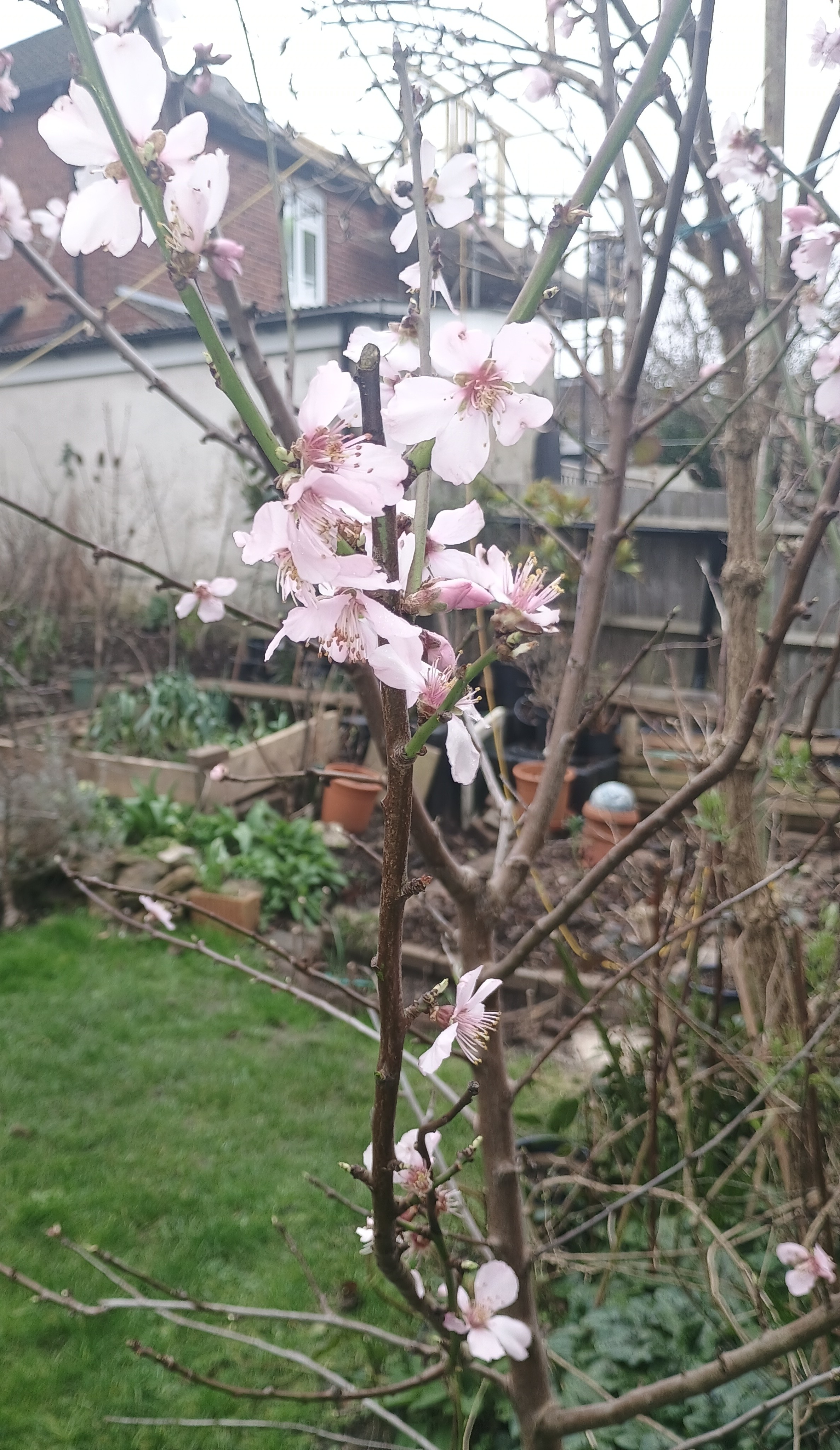
Based in southern UK, I'm amazed that I haven't had to protect my almond, peach trees, from the frost but aware I could be caught out. Yesterday was 15c and the coldest night temperature i meant to be 6c over the next two weeks.

Watching regular garden designers still adding Betula and other cultivars that are struggling with the dry, hot weather.  I have stored water around my site but need to be cleverer about how to move the water efficiently, as my young fruit trees and berries can struggle.

Not sure that the UK will be like Barcelona climate by 2030, as some have predicted but we are definitely needing to shift our plans quicker. My pineapple guava, loquats are doing well but I didn't really add them in because I thought about the climate. However I'm thinking what is best/possible. Maybe some citric?
IMG_20260226_084958834.jpg
almond tree blossom
 
Posts: 68
20
  • Likes 6
  • Mark post as helpful
  • send pies
    Number of slices to send:
    Optional 'thank-you' note:
  • Quote
  • Report post to moderator
Having recently joined Permies I have been made aware of many new things. Gratifying to hear so many are doing the right for themselves and Mother Earth. My efforts are on a farm scale but soil health is the same everywhere. I have been using the word "resilience" as part of our effort to become less dependent on most everything. We are in the Tallgrass Prairie region of the country so I look to the prairie as a guide for maximizing our natural resources. On the prairie, the small plants grow first, having their days in the sun. Next comes the mid height plants before the tallgrasses take most of the sunlight. The last wave of the prairie is the taller species, mainly grasses but also the sunflowers, blazing star and some shorter species that do not require full sun like bottle gentian. A resilient landscape would do well to mimic the grassland, always something blooming and growing. Maximizing the seasonal availability of growing temperatures and adequate sunlight. On the farm we must get away from the monocrop and do much more with the growing season. This year we will feed the soil and soil life first, fingers crossed for an early spring.

To add to this, we are just learning how water comes and goes on our farm. An in-depth study of our hydrology is in order. We have a fair amount of subirrigation here, gravity taking water from points higher and moving it to points lower. The great thing about improving soil and adding organic matter is it will dry better in times of moisture excess but hold moisture better in dry periods. I like these odds. We can start to plan our crop rotation with topsoil and subsoil moisture availability in mind.
 
master steward
Posts: 15037
Location: Pacific Wet Coast
9377
duck books chicken cooking food preservation ungarbage
  • Likes 7
  • Mark post as helpful
  • send pies
    Number of slices to send:
    Optional 'thank-you' note:
  • Quote
  • Report post to moderator

Doug McEvers wrote: The great thing about improving soil and adding organic matter is it will dry better in times of moisture excess but hold moisture better in dry periods. I like these odds.


This! I have two fruit trees, an espaliered Asian Pear, and an Italian Prune Plum which are planted in very poor soil. I'm pretty much on compacted glacial till, and I grow rocks like they're a cash crop. At first, I had to dig out rocks and replace the rocks with dead wood to act like sponges and hold moisture, and I would mulch, but I would still have to irrigate deeply every 2 weeks or so, for fear of loosing them.

Now at most I water deeply (light flow for at least 12 hours) about every 6 weeks if we're in a really bad drought. I watch for signs of stress - trees will tell me once I get to know them. By watering really deeply, it encourages the roots to reach deep for that water. Better soil has allowed me to grow companion plants - comfrey to the north, Iris to the south. The comfrey can be chopped and dropped to add some surface moisture.

I also accept that my fruit will be smaller than Industrially farmed fruit. Mine will have more micronutrients, and I'm trying to feed a family and friends, not hundreds of people. At least here in North America, it seems as if all the grocery store fruit has to not only look perfect, but look huge, and farmers with access to water, can achieve that until the water runs out. By teaching my trees to do "adequately" with minimal water, I am building resilience.  
 
steward and tree herder
Posts: 12798
Location: Isle of Skye, Scotland. Nearly 70 inches rain a year
6697
6
transportation dog forest garden foraging trees books food preservation woodworking wood heat rocket stoves ungarbage
  • Likes 5
  • Mark post as helpful
  • send pies
    Number of slices to send:
    Optional 'thank-you' note:
  • Quote
  • Report post to moderator
I'm trying to add a variety of different shrubs and trees to my site on Skye - some will pay off and some won't work. I've been really pleased with how my monkey puzzles have grown (only another 15 years before the might flower!) One I was rather surprised at was holm oak - I know it grows well on the South coast UK (my in laws have some in their garden, and my Mum used to have a beauty in Oxfordshire). I thought it would be too wet here, but so far the only issue I've had is being evergreen they tend to get blown out of the ground here I wonder how cork oak would do.....
Citrus seems to be more tricky - If you do have a warm enough winter or can bring them inside you may stand a chance. I believe you need the flowers to survive a year....
There are lots of threads on permies on improving water holding capacity of soil and tricks for summer watering - have a look in 'greening the desert' forum and you'll think yourself lucky in South England perhaps.
 
master gardener
Posts: 6091
Location: Carlton County, Minnesota, USA: 3b; Dfb; sandy loam; in the woods
3589
8
forest garden trees books chicken food preservation cooking fiber arts seed woodworking homestead ungarbage
  • Likes 5
  • Mark post as helpful
  • send pies
    Number of slices to send:
    Optional 'thank-you' note:
  • Quote
  • Report post to moderator

Nancy Reading wrote:I'm trying to add a variety of different shrubs...some will pay off and some won't...


And I think the real value of that diversity with regard to resilience planting is that some will work on wet or hot or windy years and others will work on others. So hopefully you get something good every year.
 
I agree. Here's the link: http://stoves2.com
reply
    Bookmark Topic Watch Topic
  • New Topic