• Post Reply Bookmark Topic Watch Topic
  • New Topic
permaculture forums growies critters building homesteading energy monies kitchen purity ungarbage community wilderness fiber arts art permaculture artisans regional education skip experiences global resources cider press projects digital market permies.com pie forums private forums all forums
this forum made possible by our volunteer staff, including ...
master stewards:
  • Carla Burke
  • Nancy Reading
  • r ransom
  • John F Dean
  • paul wheaton
  • Jay Angler
stewards:
  • Timothy Norton
  • Pearl Sutton
  • Tereza Okava
master gardeners:
  • Christopher Weeks
  • M Ljin
gardeners:
  • Jeremy VanGelder
  • Matt McSpadden
  • thomas rubino

Creating Soil

 
Posts: 4
Location: Surf Beach NSW Australia - Mild temperate historically
1
  • Likes 4
  • Mark post as helpful
  • send pies
    Number of slices to send:
    Optional 'thank-you' note:
  • Quote
  • Report post to moderator
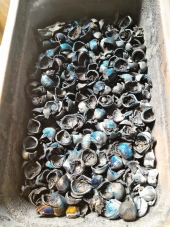
I’m building a house on an infill suburban block. The soil as shown in the photo is pretty degraded and is sandy with very little organic material.

When we excavate the first thing is to remove the top layer which will be 50/50 existing organics and this soil. Organics are grass and shrubs and leaf matter from the eucalypts.

I plan to windrow this outside the building zone and use the 12 months or so I’ll be building to improve the soil.

I’ll have access to seaweed, waste organic material such as coffee grounds and fruit and veg. I’m spending the cooler months to make biochar from the tree tops as well.

My thoughts are that I can have a couple of windrows and put the organics and biochar into the space between the rows. I can then mix from either side to make a mix and hopefully hot compost mounds.

Is this a valid plan? Anything else I should be adding, not adding or doing?

Edit: I should have said I’m building a Jean Pain style compost heater for the first 5 years or so and that’s going to produce about 10m3 of humus each year.
IMG_5944.jpeg
Soil now
Soil now
 
Posts: 32
2
  • Likes 4
  • Mark post as helpful
  • send pies
    Number of slices to send:
    Optional 'thank-you' note:
  • Quote
  • Report post to moderator
You need masses and masses of organic matter. Composting is great but you have to get more than kitchen scraps. Look everywhere for <free> biomass:

Tree trimming services
Ranch waste
Friends with horses?
landscapers
sawmills
Autumn leaves

This is going to take time and effort. Remember that large amounts of biomass can get quite hot piled up into windrows, which is good for composting, but on a large scale is a lot of work without a tractor front bucket. If its not kept wet enough you can risk combustion (specially if your climate is a bit hot and dry). I would go for no more than 12 in deep layer rather than windrows and keep a clear area immediately around the house.
Fortunately I had a friend with horses and brought in around 4-5ton manure each Autumn. The soil was pretty good after ~ 6 years! This was just 1/4 acre in suburbia.

You will notice that the ground will be very "hungry" with all that sand. In a  blink all that biomass will just melt away, but your soil fertility will be much better and you will have much better luck establishing your foundational planting. By around year 3 tree/shrub and other garden waste will be generating substantial amounts of mulch.

Now is a good time to think very carefully about the local flow of water. Since you are on a sandy loam your difficulty will be with having too much drainage and the land will be droughty. A lot of recommendations in books and online often give advice for clay-loams and will not be suitable as the techniques are all aimed at moving water away from plants and improving moisture. Rather than planting on hills go for planting in dips, buried rotting timber (e.g. Hugel), swales to try slowing down run-off (within reason, don't end up directing water into your basement) plus lots and lots of organic matter.
Sandy soils means looking for more drought resistant plants. One trick: if its grey or silver its probably going to work well. Many drought resistant plants have fine hairs or waxes on the leaf surfaces giving them that glaucus look. You will probably get sick of seeing grey everywhere.....but later on you can establish more interesting plants. Work with your environmental conditions, not against them.


Ever since I found this suit I've felt strange new needs. And a tiny ad:
Our PIE page has been updated, anybody wanna test?
https://permies.com/t/369340/PIE-page-updated-wanna-test
reply
    Bookmark Topic Watch Topic
  • New Topic