
• Post Reply Bookmark Topic Watch Topic
  • New Topic
permaculture forums growies critters building homesteading energy monies kitchen purity ungarbage community wilderness fiber arts art permaculture artisans regional education skip experiences global resources cider press projects digital market permies.com pie forums private forums all forums
this forum made possible by our volunteer staff, including ...
master stewards:
  • Carla Burke
  • Nancy Reading
  • John F Dean
  • r ransom
  • Jay Angler
  • Timothy Norton
stewards:
  • paul wheaton
  • Pearl Sutton
  • Tereza Okava
master gardeners:
  • Christopher Weeks
  • M Ljin
gardeners:
  • thomas rubino
  • Jeremy VanGelder
  • Megan Palmer

Oil paint as wood stain?

 
steward & author
Posts: 45753
Location: Left Coast Canada
18287
10
art trees books chicken cooking fiber arts
  • Likes 9
  • Mark post as helpful
  • send pies
    Number of slices to send:
    Optional 'thank-you' note:
  • Quote
  • Report post to moderator
I noticed some wood stains are made from linseed oil and earth pigments (tried and true for example).

Is there a way to make oil paints into wood stain or somewhat transparent wood paint?  I don't mind if it takes a day or two to dry between coats.  I just want it to look good and I cannot find a wood stain in the colour I want without the ingredients I'm sensitive to.

I would use oil paint with earth pigments for faster drying.

The wood will have a linseed oil and/or wax finish on top (from the solvent free tried and true line), so linseed oil soaking into the wood isn't an issue so long as the pigment isn't unbound.

 
steward
Posts: 18633
Location: USDA Zone 8a
4722
dog hunting food preservation cooking bee greening the desert
  • Likes 4
  • Mark post as helpful
  • send pies
    Number of slices to send:
    Optional 'thank-you' note:
  • Quote
  • Report post to moderator
Maybe what you are wanting is called Color Washing?
 
master steward
Posts: 8417
Location: southern Illinois, USA
3329
goat cat dog chicken composting toilet food preservation pig solar wood heat homestead composting
  • Likes 6
  • Mark post as helpful
  • send pies
    Number of slices to send:
    Optional 'thank-you' note:
  • Quote
  • Report post to moderator
I have done this many times.  It took me only a little experimentation. I thin the paint, apply it, then wipe it off to the coverage I am seeking.
 
r ransom
steward & author
Posts: 45753
Location: Left Coast Canada
18287
10
art trees books chicken cooking fiber arts
  • Likes 4
  • Mark post as helpful
  • send pies
    Number of slices to send:
    Optional 'thank-you' note:
  • Quote
  • Report post to moderator
Thinning with linseed oil?

The idea is to avoid solvents as I would be doing this inside and react poorly to solvents, thus the desire to avoid commercial wood stain.
 
r ransom
steward & author
Posts: 45753
Location: Left Coast Canada
18287
10
art trees books chicken cooking fiber arts
  • Likes 3
  • Mark post as helpful
  • send pies
    Number of slices to send:
    Optional 'thank-you' note:
  • Quote
  • Report post to moderator

Anne Miller wrote:Maybe what you are wanting is called Color Washing?


Not sure that's what I'm looking for.  A quick google suggests this is more like a paint wash over a non permeable base. Not a stain that absorbs into the wood.  

To use oil paint for this wash method, it appears to require solvents or to buy special, slow drying, water mixable oils paint.  My goal is to find a solvent free solution to use with the materials I already have at home.

 
r ransom
steward & author
Posts: 45753
Location: Left Coast Canada
18287
10
art trees books chicken cooking fiber arts
  • Likes 4
  • Mark post as helpful
  • send pies
    Number of slices to send:
    Optional 'thank-you' note:
  • Quote
  • Report post to moderator
I was thinking of making something like this

https://www.triedandtruewoodfinish.com/products-landing/stain-finish/


Stain & Finish is a combination of superior penetrating linseed oil and all natural earth pigments. In addition to giving the wood artistic coloration, the stains will also protect the surface and highlight the grains and natural look of the wood. These are perfect for all interior wood working projects, including tables and furniture, cutting boards, butcher’s block, children’s toys, cribs, etc.

All Tried & True products are 100% solvent free, zero VOC, and safe for food and skin contact.


Linseed oil (not sure how it's processed)  and mineral pigments seem the main ingredients.  No solvents like normal stain.

Can still use oil and waxed based finishes on top as it doesn't seal the wood like paint.


My oil paint has linseed oil and earth pigments.   Just more pigment.  In theory, there could be a way from oil paint to oil stain.  Anyone know the path?
 
r ransom
steward & author
Posts: 45753
Location: Left Coast Canada
18287
10
art trees books chicken cooking fiber arts
  • Likes 4
  • Mark post as helpful
  • send pies
    Number of slices to send:
    Optional 'thank-you' note:
  • Quote
  • Report post to moderator
Some good stuff
https://www.wetcanvas.com/forums/topic/oil-paint-to-stain-wood/

Experiment 1

Equal parts aprox by volume
Raw umber oil paint
Calcite powder
Linseed oil

The calcite is to increase transparency and reduce chance of underbounding.  

Applied with rag, it took more paint to cover area than expected.  Wiped off immediately.  Made a very pleasant stain with better colour and controll than gel stain.  

Needs adjusting the ratio, especially if using a more affordable brand.
 
steward
Posts: 22495
Location: Pacific Northwest
13180
13
homeschooling hugelkultur kids art duck forest garden foraging fiber arts sheep wood heat homestead
  • Likes 5
  • Mark post as helpful
  • send pies
    Number of slices to send:
    Optional 'thank-you' note:
  • Quote
  • Report post to moderator
I'm thinking it should work, especially if you go for a warm tone color or don't mind it being a little yellowish from the linseed oil.

Years ago, my kids made trays in their woodworking class. Since this was the covid years, we were doing this all at home, and chose our own finishing materials. So, we stained them with linseed oil and ground up dyes. (See thread )

My


My daughter's pink tray stained with cochineal, and my son's gold tray stained with ossage orange and madder


I was totally winging it when we stained those. We just ground up the plant material, added oil, and then rubbed it into the wood. But, it was sort of like making a lake pigment and adding it to linseed oil to make an oil paint.

Granted, those were both technically dyes, and not pigments, so they soaked into the wood more than a pigment likely would?

BUT, when we made my son's chessboard and stained it with copper + hydrogen peroxide mixed with vinegar, it stated out as a stain and needed LOTS of coats to turn dark enough to become a pigment.

Here's a video showing how many coats it took of the copper stain to get a paint:


I also wonder if adding vinegar to the linseed oil would help it penetrate deeper? A cheap DIY wood sealant that we made years ago was just vinegar and canola oil, shaken up and applied with a brush. The vinegar was there to help it penetrate the wood better. Of course, oil and water aren't supposed to mix, so maybe this was a silly internet idea that wasn't terribly good. Might be worth a test, though...
 
r ransom
steward & author
Posts: 45753
Location: Left Coast Canada
18287
10
art trees books chicken cooking fiber arts
  • Likes 5
  • Mark post as helpful
  • send pies
    Number of slices to send:
    Optional 'thank-you' note:
  • Quote
  • Report post to moderator
https://www.popularwoodworking.com/finishing/linseed-paint-as-a-wood-finish/

The biggest difference between linseed oil paints and other types is that linseed oil paint penetrates into the wood. Because linseed oil paint is simply cold-pressed linseed oil combined with a finely ground pigment, it penetrates deep into the surface and protects from within. Alkyd and latex paint tend to create a film of color on top of the surface. This layer will look great for a while, but at a point, it will fail and start to flake and chip. Linseed oil paint, however, allows the moisture to leave the wood fibers and it will not chip or crack. The protection that linseed oil paint offers is unmatched.

Another benefit of linseed oil paint is that it will stick to nearly any surface without primer. I don’t like painting with a brush, so knowing that I have to less coats to get the coverage that I want is a win in my book.


Bold mine

These are some of the advantage I want to capture with oil stain.  
 
r ransom
steward & author
Posts: 45753
Location: Left Coast Canada
18287
10
art trees books chicken cooking fiber arts
  • Likes 4
  • Mark post as helpful
  • send pies
    Number of slices to send:
    Optional 'thank-you' note:
  • Quote
  • Report post to moderator
From various sources.

Oil paint for artist have denser concentration of pigments and finer pigment particles.

Oil paint for furniture and decorative use about the house, less pigment load and larger pigment particles.  Will often have extra additives to speed drying and curing.   This has chaged dramatically over the course of the 20th century

Not sure the concentration or other qualities of oil stain.
 
r ransom
steward & author
Posts: 45753
Location: Left Coast Canada
18287
10
art trees books chicken cooking fiber arts
  • Likes 5
  • Mark post as helpful
  • send pies
    Number of slices to send:
    Optional 'thank-you' note:
  • Quote
  • Report post to moderator
Experiment two

Artist grade Linseed Oil to artist (winton) raw umber oil paint 1 to 1.  A very runny application, more like a glaze in painting.   It was hard to get the colour to apply evenly.   Dry time three days before sanding.  I would wait another 3 days before adding oil or wax layer on top.  

Absorbed into the wood more than last experiment, slower drying, lighter colour.

Both calcite and raw umber pigments speed drying time.

It's okay, but not what I'm looking for at this time.  

Note, I'm using artist grade linseed oil for these experiments as they are small.  For larger projects, I would probably get pure linseed oil with no additives like used on furniture...but I would want to evaluate the price.
 
Nicole Alderman
steward
Posts: 22495
Location: Pacific Northwest
13180
13
homeschooling hugelkultur kids art duck forest garden foraging fiber arts sheep wood heat homestead
 
r ransom
steward & author
Posts: 45753
Location: Left Coast Canada
18287
10
art trees books chicken cooking fiber arts
  • Likes 4
  • Mark post as helpful
  • send pies
    Number of slices to send:
    Optional 'thank-you' note:
  • Quote
  • Report post to moderator

Nicole Alderman wrote:I'd love to see pictures if you have them. This is facinating!


I wish I had thought of that.  Burnt them so far.  But getting close to what I want, so I'll try to remember the camera with the next experiment.
 
r ransom
steward & author
Posts: 45753
Location: Left Coast Canada
18287
10
art trees books chicken cooking fiber arts
  • Likes 2
  • Mark post as helpful
  • send pies
    Number of slices to send:
    Optional 'thank-you' note:
  • Quote
  • Report post to moderator


This guy is using a wood finish mix as his base for the stain.  

He has some interesting ideas, not all of which sit well with me.  But I adore his willingness to experiment.

For me, faster drying pigments and measuring by volume is going to give more accurate results as oil paint can vary weight quite a lot from pigment to pigment.  But the concentration of colour within a brand is usually standardized per volume of paint.

So far, I'm finding that thinner coats with drying time between gives a better result
 
r ransom
steward & author
Posts: 45753
Location: Left Coast Canada
18287
10
art trees books chicken cooking fiber arts
  • Likes 2
  • Mark post as helpful
  • send pies
    Number of slices to send:
    Optional 'thank-you' note:
  • Quote
  • Report post to moderator
Guitar maker using artist oil paint for staining the wood before applying linseed based finish.


Although he says you can cut it back with the linseed oil, he's mostly applying the paint right from the tube and rubbing it in, then, putting some oil onnthe rag to rub off the extra.  Amazing results, but a stronger colour than I am looking for with my project.

An idea to save for later
 
r ransom
steward & author
Posts: 45753
Location: Left Coast Canada
18287
10
art trees books chicken cooking fiber arts
  • Likes 2
  • Mark post as helpful
  • send pies
    Number of slices to send:
    Optional 'thank-you' note:
  • Quote
  • Report post to moderator


The guitar maker again showing how he dilutes the oil paint with his linseed finish to make a stain.

Note how he shows the stain catching in the grove from poor sanding.  
 
r ransom
steward & author
Posts: 45753
Location: Left Coast Canada
18287
10
art trees books chicken cooking fiber arts
  • Likes 2
  • Mark post as helpful
  • send pies
    Number of slices to send:
    Optional 'thank-you' note:
  • Quote
  • Report post to moderator
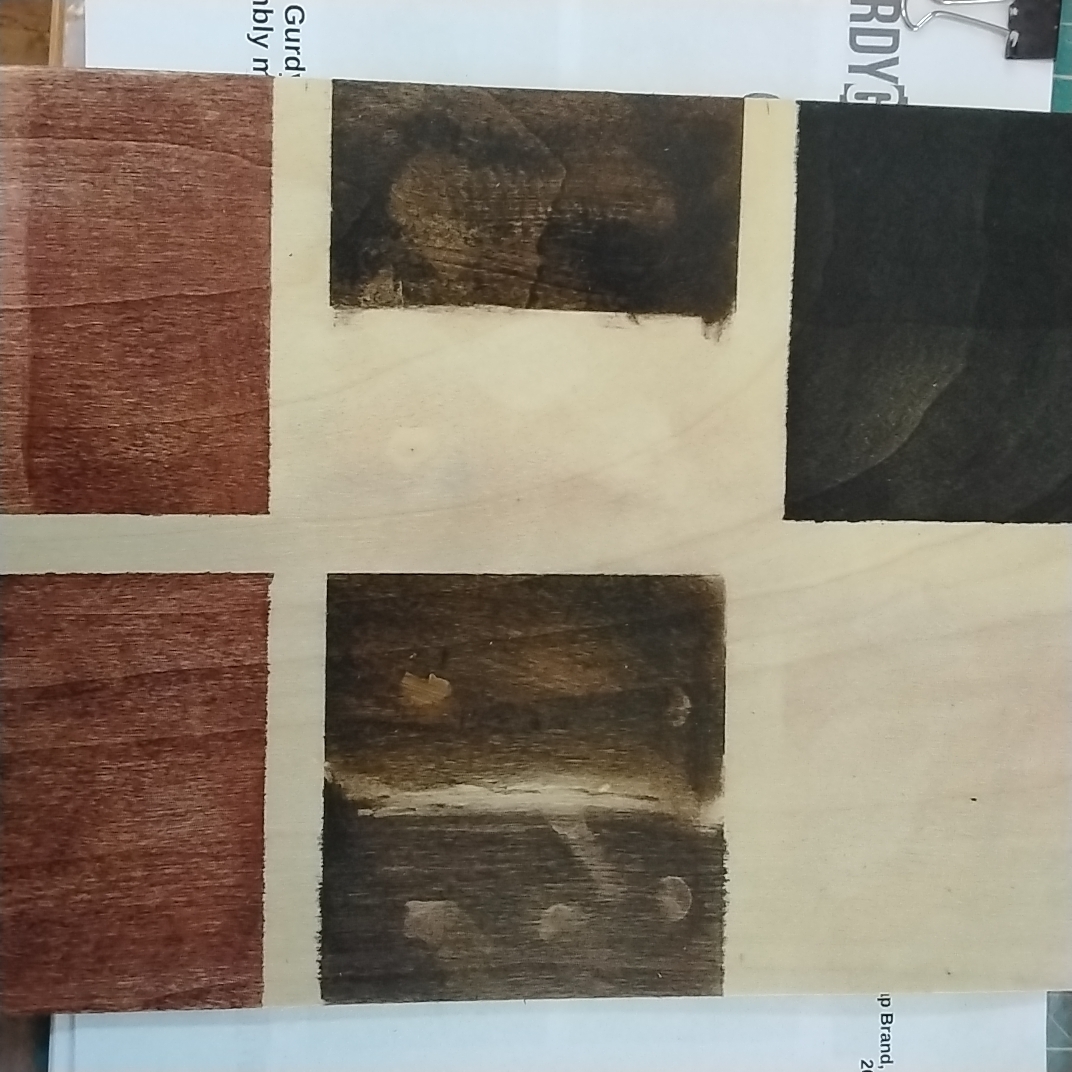
To the left center square, experiment involves mixing a fairly thick paste with raw umber and calcite and applying over a place that has been exposed to wood glue to see if it would show through.  Yes, the wood glue shows through and acts as a resist.  It also made a darker stain than i wanted.

To the right center are attempts with raw umber oil and acrylic paints.  Acrylic on the right.  Again over wood glue to see how it reaponds.  The oil paint was mixed with some linseed oil to make it easier to spread,  the acrylic is just a wash.

The focus of this experiment was solving the problem of the resist made by glue.  The other squares were me trying modern woodstain and confirming my dislike of the icky smells.
Oil-paint-wood-stain-experiments.jpg
Oil paint wood stain experiments
 
gardener
Posts: 949
Location: Ontario - Zone 6a or 4b, depending on the day
656
dog foraging trees tiny house books bike bee
  • Likes 5
  • Mark post as helpful
  • send pies
    Number of slices to send:
    Optional 'thank-you' note:
  • Quote
  • Report post to moderator
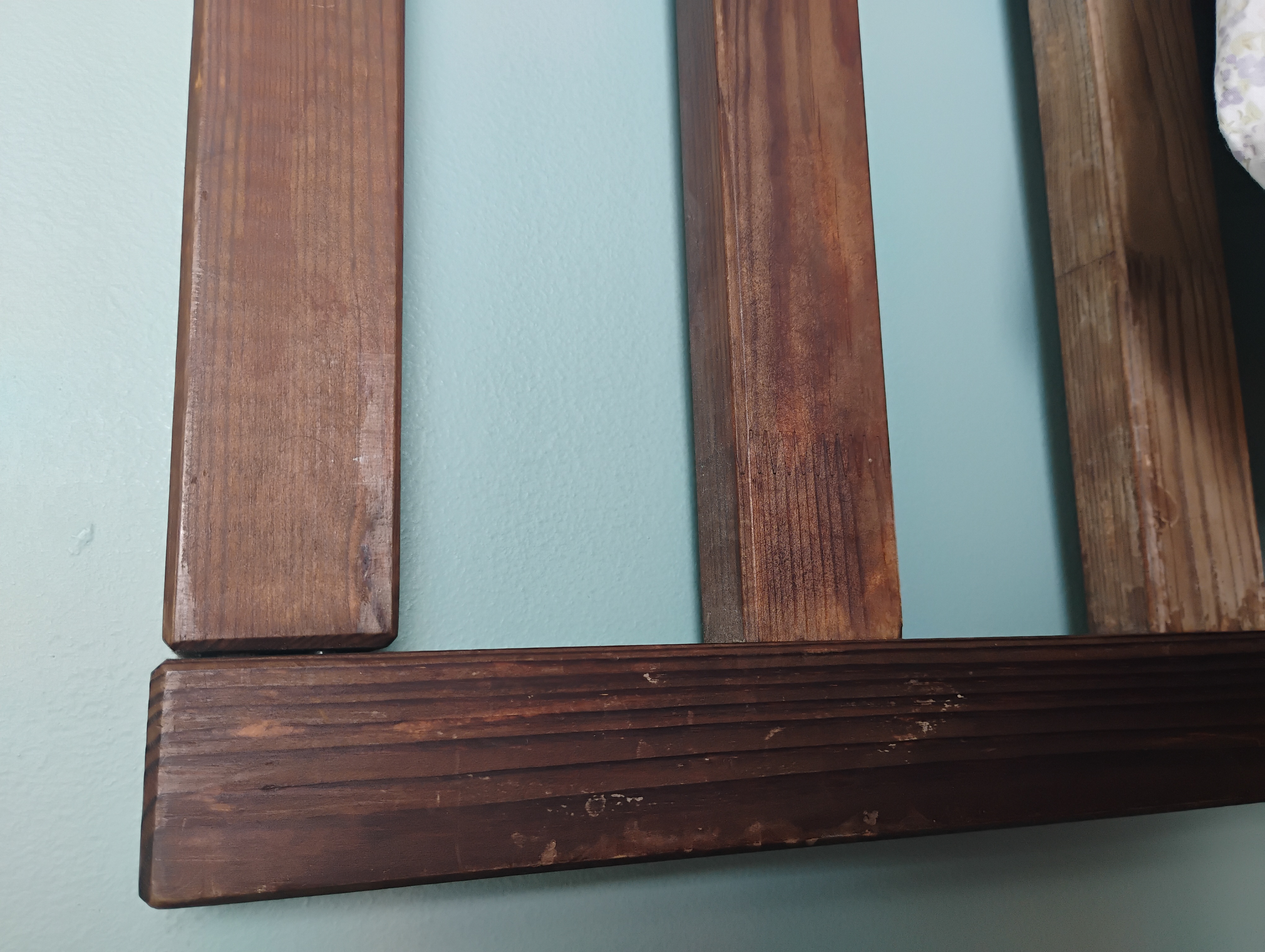
About a decade ago, I bought a cheap pine bedframe from IKEA.

I thought the pine looked cheap but wasn't fond of the idea of stinky paint in my tiny apartment, offgassing from my bed.

I painted the wood with coats of black tea, let it dry, then with a solution of iron soaked in vinegar (iron acetate), to paint on top and react with the tannins in the wood and the tea. Basically you make rust embedded in the wood. Over a couple of days it became a warm rich brown.

Then I coated it in a mix of beeswax and oil.

I still have the headboard and am pleased with the colour, though I sold the matching dresser in a move.

If you do it, outside would be better than in a plastic tote like I used! It permanently staines the tote. Definitely not an acrylic bathtub.

There are pictures online showing how the iron acetate interacts with different wood species.
IMG_20260321_124350951.jpg
Pine bedframe stained with tea and iron acetate.
 
r ransom
steward & author
Posts: 45753
Location: Left Coast Canada
18287
10
art trees books chicken cooking fiber arts
  • Likes 3
  • Mark post as helpful
  • send pies
    Number of slices to send:
    Optional 'thank-you' note:
  • Quote
  • Report post to moderator
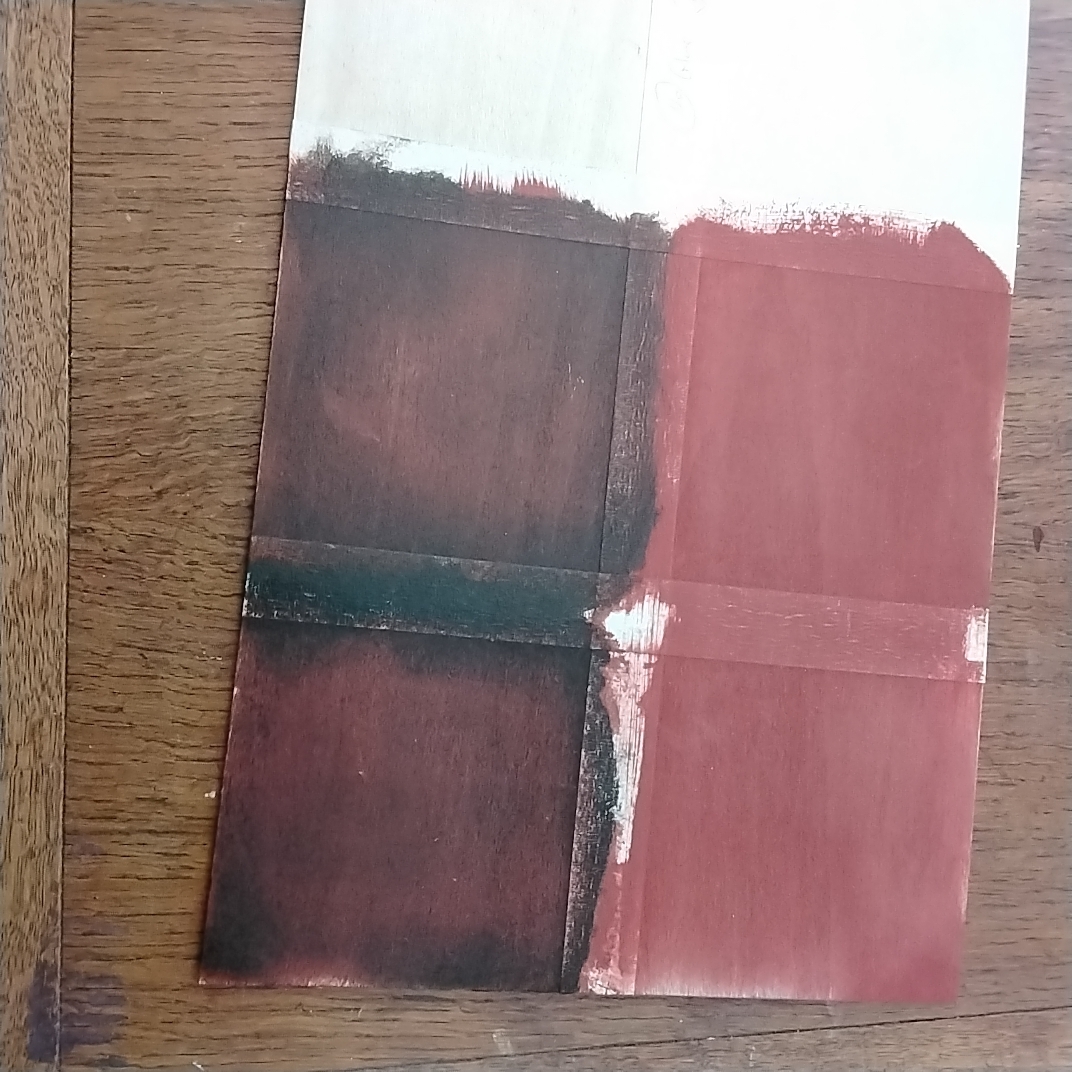
This isn't a normal use of stain, but it does appear to get around glue acting as a resit.  Sorry the photo isn't great.

Red gesso applied with a bit too much water and then sanded so the grain is exposed.  Closer to a wash, but not sealing the wood all the way like a wash usually does.

The corrner square is with acrylic paint.  It didn't soak into the wood like a stain and prevented danish oil from soaking in.  As expected.

Oil paint mixed with linseed oil and calcite (one part each), was easy to rub in and rub off.  It's the left square.  The gesso was light enough, the oil penetrates into the grain a bit.  It improved the feel with the top coat of danish oil.  Downside, 2 days to dry.

Next goal, find a more natural alternative to the primer
Paint-over-gesso.jpg
Paint over gesso
Paint over gesso
 
I think they should change the spelling to Sandy Eggo. This tiny ad agrees with me.
Large Lot for Sale Inside an Established Permaculture Community — Bejuco, Costa Rica
https://permies.com/t/366607/Large-Lot-Sale-Established-Permaculture
reply
    Bookmark Topic Watch Topic
  • New Topic