• Post Reply Bookmark Topic Watch Topic
  • New Topic
permaculture forums growies critters building homesteading energy monies kitchen purity ungarbage community wilderness fiber arts art permaculture artisans regional education skip experiences global resources cider press projects digital market permies.com pie forums private forums all forums
this forum made possible by our volunteer staff, including ...
master stewards:
  • Carla Burke
  • Nancy Reading
  • paul wheaton
  • John F Dean
  • r ransom
  • Jay Angler
stewards:
  • Timothy Norton
  • Tereza Okava
  • Pearl Sutton
master gardeners:
  • Christopher Weeks
  • M Ljin
gardeners:
  • Jeremy VanGelder
  • Megan Palmer
  • Thekla McDaniels

Beyond organic works, if you're patient enough

 
gardener
Posts: 2073
Location: N. California
1073
2
hugelkultur kids cat dog fungi trees books chicken cooking medical herbs ungarbage
  • Likes 20
  • Mark post as helpful
  • send pies
    Number of slices to send:
    Optional 'thank-you' note:
  • Quote
  • Report post to moderator
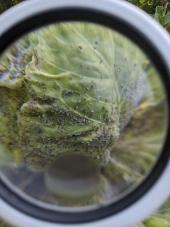
I call my garden style beyond organic because If I add, or use something in my garden, with the exception of seeds, ( I prefer organic seeds, but sometimes they are not readily available, or affordable) it's organic. I don't use any pesticides at all, not even the Organic options. This is harder than it sounds at times. When my beans are covered in aphids, or the kale is crawling with Harlequin bugs there's that human part of me that thinks I need to fix this and get the Neem oil, diatomaceous earth, or Castile soap, something to kill the evil bugs. Oh man there are times I want to so bad. Times I'm freaking out thinking all my hard work is going to be for nothing if I don't do something!!!  Then I get ahold of myself, take a breath and wait. I don't have the time or inclination to be mother nature. I know if I interfere even a little I compromise the whole system. So I wait. When the aphids were totally covering the yard long beans I did spray them off a few times with high pressure water, but only a few times. I thought about buying ladybugs, but then I started to see not only ladybugs, but their babies ( I can't think of what they are called at the moment, but you know what I mean). Then more, and more, the point where I'm seeing ladybugs, and not seeing aphids.  It's hard, but most of the time it works. I think it's important to mention I'm not a farmer, and I won't go hungry if my crops fail. I'm not judging people who can't do this.
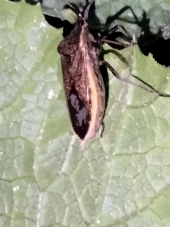
The Harlequin bugs are another matter unfortunately. They have no natural predators ( according to Google) my chickens won't even eat them. Fortunately, and unfortunately if I'm being honest my son has decided to help me with them this year.  I'm lucky in this case anyway to have a lousy sense of smell, so it doesn't bother me to kill them. I usually cut them in half and dump them in a bucket of soapy water we are just keeping in the garden. The good thing about Harlequin bugs is they are bright orange and pretty easy to see. The bad thing is there seems to be massive amounts of them. My son defoliates the entire plant and putting the leaves in soapy water. Thanks goodness kale is so hardy. Mt purple tree kale was recovering nicely, only to be stripped bare again. I know he is helping, but wow, a bit extreme. I'm sure he has been on the Internet, and is convinced it must be done. I get it, but man it's a bummer. At one point we even had Harlequin bugs on the beans, I guess if they can't find brassica's, they will settle for beans. Even with the many Harlequin bugs we have battled, we haven't lost any plants because of them, some sad leaves, (which the chickens enjoy) but the plants survives. I do plan to make some insect netting covers to put over the brassica's I will start this fall.
If it won't interfere with your health, or wealth, leaving mother nature to do what she does best makes for a productive garden. Happy gardening everyone.
PXL_20260731_204341070.PORTRAIT.ORIGINAL.jpg
[Thumbnail for PXL_20260731_204341070.PORTRAIT.ORIGINAL.jpg]
PXL_20260731_204148473.PORTRAIT.ORIGINAL.jpg
[Thumbnail for PXL_20260731_204148473.PORTRAIT.ORIGINAL.jpg]
PXL_20260731_204217280.PORTRAIT.ORIGINAL.jpg
[Thumbnail for PXL_20260731_204217280.PORTRAIT.ORIGINAL.jpg]
 
pollinator
Posts: 1058
Location: Illinois
247
  • Likes 7
  • Mark post as helpful
  • send pies
    Number of slices to send:
    Optional 'thank-you' note:
  • Quote
  • Report post to moderator
I do see some of those bugs, but have not noticed a problem. Just lucky?
 
steward and tree herder
Posts: 14119
Location: Isle of Skye, Scotland. Nearly 70 inches rain a year
7788
6
transportation dog forest garden foraging trees books food preservation woodworking wood heat rocket stoves ungarbage
  • Likes 16
  • Mark post as helpful
  • send pies
    Number of slices to send:
    Optional 'thank-you' note:
  • Quote
  • Report post to moderator
Unfortunately you have to have the pests to be able to support the pest predators. I think that is where sacrificial plants can really help, you can support a population of pests away from your prize beans (or whatever) where the predators can then be ready to move in should the population explode.
Doing nothing worked pretty well for the aphids on my fava beans, but my TPS potato plants have been pretty much demolished by slugs this year - they don't affect the plants grown from tubers significantly, although I do get a bit of damage on the tubers. I suppose the upside is, if the TPS plants do make it to harvest, I'll have selected for slug resistant ones!
 
master pollinator
Posts: 377
Location: UK
135
kids urban seed
  • Likes 12
  • Mark post as helpful
  • send pies
    Number of slices to send:
    Optional 'thank-you' note:
  • Quote
  • Report post to moderator
The aphid thing really does sort itself out given enough time. Painful to watch but once the hoverflies and ladybirds figure out there's a feast on, it turns around fast. Slugs are my nemesis though, especially after a wet spring. Still haven't made peace with just watching them munch everything.
 
Jen Fulkerson
gardener
Posts: 2073
Location: N. California
1073
2
hugelkultur kids cat dog fungi trees books chicken cooking medical herbs ungarbage
  • Likes 12
  • Mark post as helpful
  • send pies
    Number of slices to send:
    Optional 'thank-you' note:
  • Quote
  • Report post to moderator
Joao have you tried the board trick?  Put a wood board, next to the area you are experiencing slug pressure. wet the soil under it, and leave it be. During the day turn it over and dispose of the slugs on the board. This isn't a miracle cure, but it can help greatly reduce the slug population.
 
gardener
Posts: 3872
Location: Western Slope Colorado.
995
5
goat dog food preservation medical herbs solar greening the desert
  • Likes 12
  • Mark post as helpful
  • send pies
    Number of slices to send:
    Optional 'thank-you' note:
  • Quote
  • Report post to moderator
So many variables!  Here in the high desert, the big problem is with grasshoppers.  I have been watching them very closely this year!

Finally the preying mantises are big enough to help!  I pick them off my plants when I can, but at times the grass rattles with them.  I have guineas and chickens, and even my cats chase catch and eat grasshoppers!  We have wild turkeys and they eat a lot of grasshoppers too.

Earlier in the season the grasshoppers chewed up lots of hollyhock seedlings.  I don’t know what happened to change this but in the last few weeks the hollyhock seedlings have begun to grow back.  

I planted a beautiful lemon balm plant which was chewed to the ground.  I don’t know if when fall comes, it will resprout.  That is what happened with my young elderberry trees last year.

This year I put some row cover over my elderberries.  It doesn’t protect them completely, especially with the wind blowing it aside so often.  I keep thinking that eventually the elderberries will get big enough that the grasshopper chewing won’t bother them, but that may be a fruitless act of faith.

It’s hard to understand processes at times.  I had 2 shasta daisies about 2 feet apart.  Same origin, may be clones off the same plant.  They did ok for quite awhile.  Then the grasshoppers ate one to no trace stage.  The other one is blooming now🤷🏻‍♀️

Anyway, I agree wholeheartedly that to arrive at a healthy population of insect predators, I have to support the prey insect species.  And it’s tough!

There’s a nest of roughly two dozen guinea eggs one of the g - hens has begun to set on.  I am hoping hard for her success!  I only have a total of 5 guineas and although I am sure they reduce the populations greatly, at my place and my 3 neighbors we’re talking more than 40 acres of grasshopper habitat that surrounds me.

What I am watching for is which plants the grasshoppers don’t eat.  Sunflowers, squash vine, locust tree saplings, Rocky Mountain bee plant, Maximilian sunflowers, strawberries probably many others.  That’s where I need to concentrate my efforts !
 
pollinator
Posts: 314
Location: North FL, in the high sandhills
126
  • Likes 8
  • Mark post as helpful
  • send pies
    Number of slices to send:
    Optional 'thank-you' note:
  • Quote
  • Report post to moderator
You can get around the bugs with timing...sometimes.

Try to grow whatever when the bugs aren't there.

An example here in N. FL is getting tomatoes in the ground in March, with freeze protection available, to get tomatoes before June first.

June first the bugs arrive and the heat will soon be too much for most tomatoes.

Not always do-able with all veggies but worth a look in case it would work for you.
 
Nancy Reading
steward and tree herder
Posts: 14119
Location: Isle of Skye, Scotland. Nearly 70 inches rain a year
7788
6
transportation dog forest garden foraging trees books food preservation woodworking wood heat rocket stoves ungarbage
  • Likes 4
  • Mark post as helpful
  • send pies
    Number of slices to send:
    Optional 'thank-you' note:
  • Quote
  • Report post to moderator

Dave Bross wrote:Try to grow whatever when the bugs aren't there.


That's supposed to work with carrot root fly too. If you can time your sowing for between generations you can miss the main population of the grubs (allegedly!) I'm not convinces my growing season is long enough to mess around with sowing dates, but it is something else to consider.
 
You can't expect to wield supreme executive power just because
Quit your workee-job and live, year round, for free-ish in Montana
https://wheaton-labs.com/bootcamp
reply
    Bookmark Topic Watch Topic
  • New Topic