• Post Reply Bookmark Topic Watch Topic
  • New Topic
permaculture forums growies critters building homesteading energy monies kitchen purity ungarbage community wilderness fiber arts art permaculture artisans regional education skip experiences global resources cider press projects digital market permies.com pie forums private forums all forums
this forum made possible by our volunteer staff, including ...
master stewards:
  • paul wheaton
  • Anne Miller
  • Carla Burke
  • Nancy Reading
  • John F Dean
  • Timothy Norton
  • Jay Angler
stewards:
  • r ransom
  • Pearl Sutton
  • Tereza Okava
master gardeners:
  • Christopher Weeks
gardeners:
  • M Ljin
  • Megan Palmer
  • Kate Downham

Chicken Molting

 
Steward of piddlers
Posts: 8358
Location: Upstate New York, Zone 5b, 43 inch Avg. Rainfall
5023
monies home care dog fungi trees chicken food preservation cooking building composting homestead
  • Likes 8
  • Mark post as helpful
  • send pies
    Number of slices to send:
    Optional 'thank-you' note:
  • Quote
  • Report post to moderator
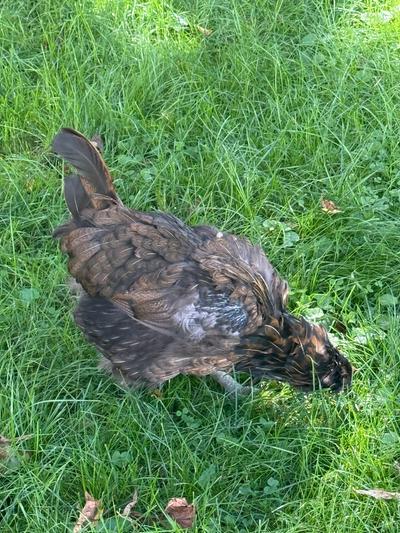
Chickens naturally molt (lose their feathers) annually. For a new chicken keeper, it can look like something is wrong with your birds. I hope the following provides you some confidence that your chickens are doing just fine!


Chickens molt because their feathers are a kind of wear-item on their body. Once a feather is damaged, it doesn't just fix itself. Instead, the old battered feather is dropped and a brand spanking new one will take its place. Chickens who have lost their feathers from infighting, rooster's attention, or whatever other reason can regrow those feathers as long as the feather follicles in the skin are not damaged.

Chickens generally experience their first molt somewhere around 16 months of age, give or take a couple months. Then annually, usually around autumn, they will experience an annual molt. A note, if chickens are stressed, for whatever reason, they can experience a partial or unseasonably early molt. A molting period can last anywhere from three weeks to over a dozen weeks depending on the bird. It appears to me that larger framed, more fully feathered birds take the longest time.

The chicken will start losing their feathers and their egg production will drop. Molting is a protein-related process and the chicken's body will prioritize feather production over egg development. New feathers will start to appear, looking like a keratin covered quill which with time will unravel into a brand new feather.

There isn't really anything out of the normal required out of a keeper to do during their chicken's molting cycle. Some recommendations include providing a little more additional protein to the birds ration to ensure they have what they need for good feather development.

What else should be known about molting? Have any pictures or stories?
 
gardener
Posts: 1974
Location: Zone 9A, 45S 168E, 329m Queenstown, NZ
1207
dog fungi foraging chicken food preservation cooking fiber arts
  • Likes 9
  • Mark post as helpful
  • send pies
    Number of slices to send:
    Optional 'thank-you' note:
  • Quote
  • Report post to moderator
I am too embarrassed for our girls to photograph them when in full moult, they look moth eaten and have bald patches all over.

The weather is just starting to warm up and treated the girls to an extra protein boost of pressured cooked wild goat meat yesterday - the ribs and neck were chopped into pieces that would fit into the pot and stripped off the meat.

The bones get collected and tossed into our wood burner.

Our kitchen scraps buried in a pile in the chook run and I turn them over whenever more is added uncovering the worms. The girls come running when they see me with the kitchen scrap bin.

There are lots of worms in the run under the wood mulch for them to supplement their protein intake.
 
gardener
Posts: 3956
Location: Western Slope Colorado.
1088
5
goat dog food preservation medical herbs solar greening the desert
  • Likes 9
  • Mark post as helpful
  • send pies
    Number of slices to send:
    Optional 'thank-you' note:
  • Quote
  • Report post to moderator
Thanks for mentioning the protein!  I have soybean meal I added to the lay mash when my guineas were keets.  They’ve been eating grasshoppers and what ever all summer.  The guineas aren’t looking too bad, but my poor hens …..

I am training the birds to come in at sunset by putting some scratch in their indoor feeder.  I will add some of the soymeal to the bed time snack.😊

 
rocket scientist
Posts: 561
Location: in the Middle Earth of France (18), zone 8a-8b
359
2
hugelkultur dog tiny house chicken composting toilet cooking building sheep rocket stoves homestead composting
  • Likes 11
  • Mark post as helpful
  • send pies
    Number of slices to send:
    Optional 'thank-you' note:
  • Quote
  • Report post to moderator
One more thing; molting is a tender process, they really REALLY don't like to be touched while molting.
So if your pet chicken is molting, no picking up etc. during this period.
 
Timothy Norton
Steward of piddlers
Posts: 8358
Location: Upstate New York, Zone 5b, 43 inch Avg. Rainfall
5023
monies home care dog fungi trees chicken food preservation cooking building composting homestead
  • Likes 6
  • Mark post as helpful
  • send pies
    Number of slices to send:
    Optional 'thank-you' note:
  • Quote
  • Report post to moderator
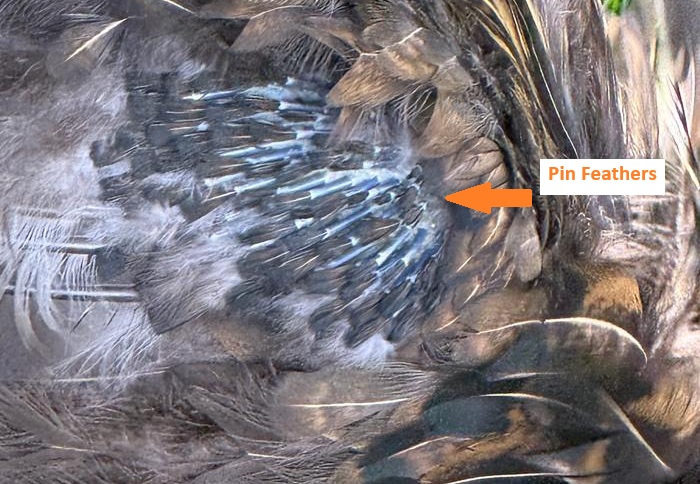
For people who may be new to birds molting, here is an example picture of what pin feathers look like.

Pin Feather Example


A pin feather is a new feather, wrapped in a keratin sheath, that is in the beginning stages of development. There is a live blood supply connection at the base of the feather as it develops. When the pin feather is attached to the blood supply, it is VERY sensitive to the bird. Once the feather is developed, the blood supply severs from the feather and the keratin begins to become brittle. Birds (and their flock mates) will eventually pick the keratin off and the new feather will unfurl.

 
gardener
Posts: 2129
Location: N. California
1134
2
hugelkultur kids cat dog fungi trees books chicken cooking medical herbs ungarbage
  • Likes 3
  • Mark post as helpful
  • send pies
    Number of slices to send:
    Optional 'thank-you' note:
  • Quote
  • Report post to moderator
I like your post. It can be quite alarming if you don't know what is happening. One of my hens looks so pathetic, from a distance she kind of looks like she is molding. It doesn't help that all but 5 of my of my chickens are less than a year old, so they are all shiney and beautiful.
I feed my girls a little higher protein feed in the gravity feeder(18%), because I know it's not there only food source. They get fermented grains once a day, which includes black oil sunflower seeds and other grains I change up depending on the season, and I think it's the nature of chickens to have variety in their diet.  They get lots of garden extras, and mealworm smacks. When I have a  hen that's molting, I give them mealworms a little more regular, not  every day, to much protein is also a bad thing. I will also throw out black oil sunflower seeds. They are a good source of protein, and are supposed to be good for there feathers.
Even though the hen looks like a hot mess, at least in my experience, they tend to go about there business pretty much the same as always. Eventually the sad hen looks beautiful once more.
 
When people don't understand what you are doing they call you crazy. But this tiny ad just doesn't care:
a new overhaul of the freeheat page - need feedbacks for world domination
https://permies.com/t/389799/overhaul-freeheat-page-feedbacks-world
reply
    Bookmark Topic Watch Topic
  • New Topic