
• Post Reply Bookmark Topic Watch Topic
  • New Topic
permaculture forums growies critters building homesteading energy monies kitchen purity ungarbage community wilderness fiber arts art permaculture artisans regional education skip experiences global resources cider press projects digital market permies.com pie forums private forums all forums
this forum made possible by our volunteer staff, including ...
master stewards:
  • Carla Burke
  • Anne Miller
  • Nancy Reading
  • John F Dean
  • r ransom
  • paul wheaton
  • Timothy Norton
stewards:
  • Jay Angler
  • Pearl Sutton
  • Andrés Bernal
master gardeners:
  • Christopher Weeks
gardeners:
  • M Ljin
  • Thekla McDaniels
  • May Lotito

Brown Seaweed (Ascophyllum nodosum) for Dog Dental Health

 
Steward of piddlers
Posts: 8594
Location: Upstate New York, Zone 5b, 43 inch Avg. Rainfall
5265
monies home care dog fungi trees chicken food preservation cooking building composting homestead
  • Likes 9
  • Mark post as helpful
  • send pies
    Number of slices to send:
    Optional 'thank-you' note:
  • Quote
  • Report post to moderator
I've never had dental issue with dogs prior, but my newest rescue is showing signs that I need to keep an eye on her mouth. It seems to be common in smaller breed dogs to have stinky poo-poo breath and plaque buildup.

I have been working on trying to get my dog to be sweet while I attempt to brush her teeth but it has been an exercise in futility. After speaking with her vet, I was pointed towards either a food or water supplement to work on cleaning up her mouth. I couldn't find enough information out there to make me comfortable with the enzymatic water supplement so I have pivoted to the food route. After research and conversation, it appears that supplementing powdered brown seaweed is the route I wish to take.

My understanding is that a small daily dose of powder on their food is enough to spark change in the dog's oral health. When the brown seaweed is consumed, the dog's digestive system absorbs the active compounds and secretes them through saliva to improve their teeth. The compounds help reduce plaque, tarter, and improve breath. The active compounds make the environment less hospitable for tooth decay microbes and is viewed as a gradual slow intervention.

The one BIG consideration when supplementing is to dose correctly. Brown seaweed had a high iodine content and that can cause issues with thyroids if too much is consumed. I consulted with my veterinarian on dosage and so far so good!

Both of my dogs get the supplement, they do not LOVE the powder addition to their food but they do eat it.

Have you heard of using brown seaweed in this way? Do you have an alternative intervention? I would love to hear your thoughts.
 
gardener
Posts: 905
Location: Semi-nomadic, main place coastal mid-Norway, latitude 64 north
661
  • Likes 9
  • Mark post as helpful
  • send pies
    Number of slices to send:
    Optional 'thank-you' note:
  • Quote
  • Report post to moderator
Okay, that is interesting! I hadn't heard about that use for seaweed. Ascophyllum nodosum is probably the most common one around our place, we really have access to effectively infinite quantities, so any new use for it is welcome. So far we've mainly used it for fertiliser. I looked it up, and there seems to be some evidence it has the same effect on dental health in humans.
 
steward and tree herder
Posts: 15226
Location: Isle of Skye, Scotland. Nearly 70 inches rain a year
8829
6
transportation dog forest garden foraging trees books food preservation woodworking wood heat rocket stoves ungarbage
  • Likes 5
  • Mark post as helpful
  • send pies
    Number of slices to send:
    Optional 'thank-you' note:
  • Quote
  • Report post to moderator

Eino Kenttä wrote:I looked it up, and there seems to be some evidence it has the same effect on dental health in humans.


That was going to be my question - thanks!
I wonder now whether any seaweed has the active ingredients, whether it has to be powdered, and what the (human) dose might be.... (plaque, not poo poo breath I hope!)

 
gardener
Posts: 2058
Location: Zone 9A, 45S 168E, 329m Queenstown, NZ
1287
dog fungi foraging chicken food preservation cooking fiber arts
  • Likes 10
  • Mark post as helpful
  • send pies
    Number of slices to send:
    Optional 'thank-you' note:
  • Quote
  • Report post to moderator
Despite brushing our four year old dog's teeth daily, since he was a pup, he still had to have four extractions when he went in for his first dental to have a build up of tartar removed from a couple of his teeth a few months ago.

He is also a small breed dog and the vet explained that the teeth that had to be extracted were slightly oerlapping and despite the daily brushing, tartar had allowed food to get trapped in the gumline and it was inflamed.

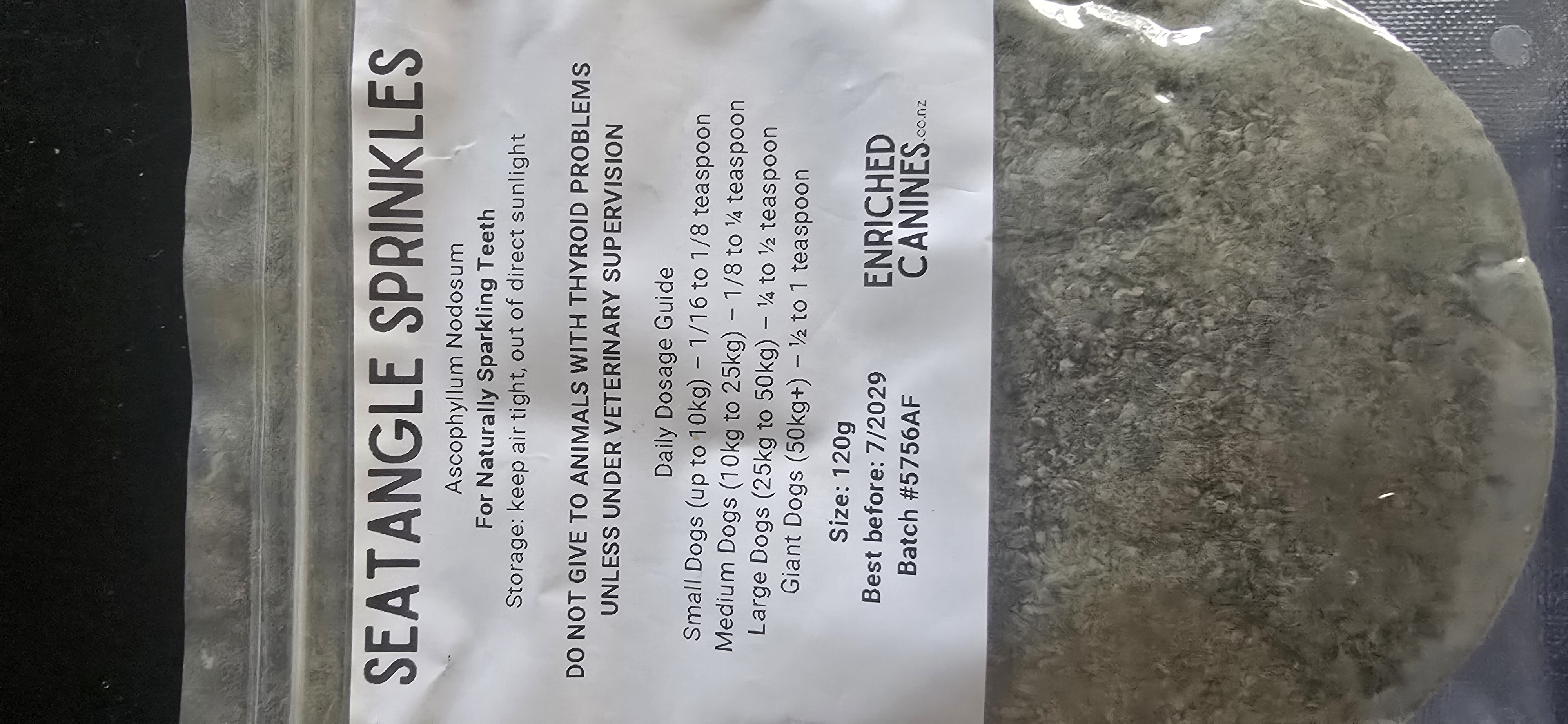
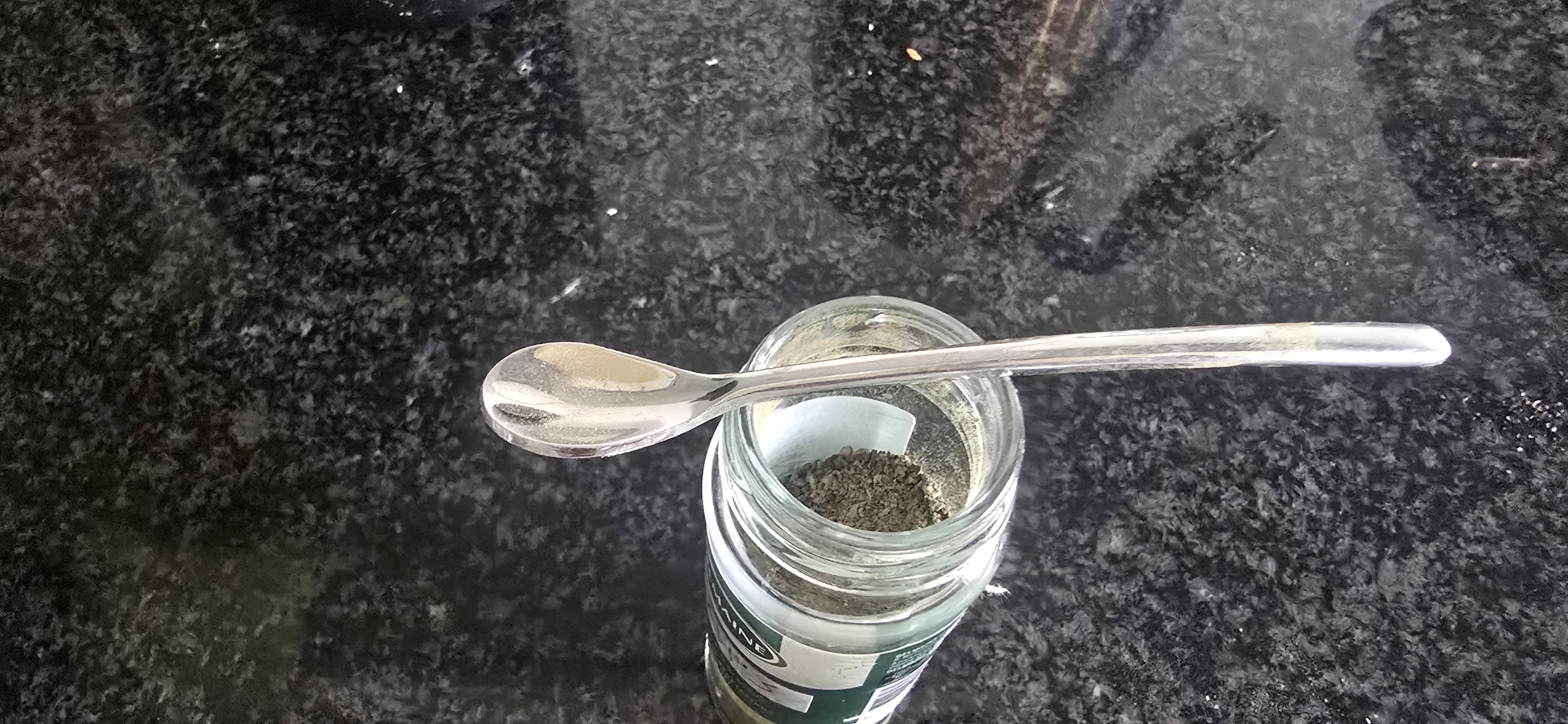
It was recommended that I try the seaweed supplement and have been adding a 1/16th spoon daily to his food. We have transferred the powder from its sachet to a caper jar and keep a mustard spoon in the jar and scoop 1/2 spoon onto his food.

His breath has never been really stinky and I keep an eye on the teeth that used to have the worst tartar build up to make sure that I'm brushing properly.

Too soon to tell whether the seaweed is helping though.
20261126_064211.jpg
Ascophyllum nodosum powder
20261126_073744.jpg
Storage jar for ascophyllum nodosum powder
 
Eino Kenttä
gardener
Posts: 905
Location: Semi-nomadic, main place coastal mid-Norway, latitude 64 north
661
  • Likes 8
  • Mark post as helpful
  • send pies
    Number of slices to send:
    Optional 'thank-you' note:
  • Quote
  • Report post to moderator

Nancy Reading wrote:That was going to be my question - thanks!
I wonder now whether any seaweed has the active ingredients, whether it has to be powdered, and what the (human) dose might be.... (plaque, not poo poo breath I hope!)


In this study they report significant benefits to oral health from taking a total of 0.5g of dried and powdered A. nodosum daily for six months. They seem to have used the actual supplement originally intended for dogs!

I suspect taking more than that wouldn't be a big problem. I haven't heard of any significant health hazards associated with eating brown seaweeds, other than possibly an excess of iodine?
 
Is this the real life? Is this just fantasy? Is this a tiny ad?
Soil-First Gardening Extended Edition by Anna Hess
https://permies.com/t/211958/Soil-Gardening-Extended-Edition-Anna
reply
    Bookmark Topic Watch Topic
  • New Topic