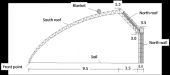
As stated above I have several hundred sheets of tempered glass. Aprox 40"x68"x3/16". I live east of Tucson, AZ at about 3600' elevation.
I am planning on building a green house approximately 24'x36'. The summers are veerrry hot 108-110 and winters can be perty cold (Ihave seen it at +8 f here.
My thought is a 14'-16' north wall (tin sheeting) sloping over 24' to an 8'-10' south facing wall the top half to be glass bottom half tin sheeting (same with side walls). Vents on the high end and inlet vents low to ground south east and south west corners. Two doors one on each end E&W next to the tall wall. Is there any body out there with suggestions about the construction of this desert dream (mirage) of mine? I hope to here from any of you especially if you have delt with a green house in AZ heat.
Thank you for your time in advance, RICK in Pantano, AZ.
yes the ghost town.
Around here, a lot of the large greenhouses have banks of swamp-coolers. It sure gives the farmers a lot of versatility in what crops they can grow: spinach, radishes, and lettuce out of season sell really well.
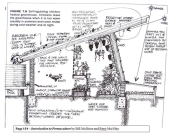
At our school in the high desert, we heat our houses with seasonally attached greenhouses. We have a cold winter, mostly sunny, and a warm but not hot summer, mostly sunny. I've been in greenhouses in the summer in the area, and they are roasting hot. I think a lot of plants would be killed or damaged by that kind of heat. A few windows and doors for ventilation is really not enough to keep the greenhouses cool enough for most living things. At our school, we remove the glazing in April or early May when the outside weather no longer has much risk of frost, and we attach the greenhouses in October or November, when our houses start to need the heat. So my recommendation would be if there's any way to design it to be able to remove or totally open some of the glazing for the summer, it would be much better than keeping a few ventilators and shades.
Post by:autobot
please buy my thing and then I'll have more money:
A rocket mass heater is the most sustainable way to heat a conventional home