|

|

|

|

|

|
|
|
|
|
|
|
|
|
|

|

|

|

|
 1
1


 2
2
Idle dreamer
3
"Study books and observe nature; if they do not agree, throw away the books." ~ William A. Albrecht
1
The season is short but the land is extremely cheap. Let's help each other grow food!
3
~Permies FAQ ~ Dragons, Fairies and even a Mini-Paul! ~ You Know You're a Permie When...~ All About Permies, including tutorials ~Herbal Hugel Spiral of Randomness!~Tricks to Keep the Dirt from Sliding off a Hugel~List of Cascadia Bloggers and Facebook Pages!~


 3
3
I suspect once you grow out the the walking onions two years your original three will do very well by your trees. The bulbuls are meant to stay attached to the mother plant to ensure reseeding. The mother (large onion) plant will fight and win against any weed/ grass. Im going to try this next year as I will be on my third year on some of my plantsNicole Alderman wrote:I killed a great number of mine. I planted them around my fruit trees and they either got accidentally pulled out with grass, or were just too wet during the spring or something. I had planted about 30 of them, and only three survived. I moved them to a raised garden bed, and they are doing much better there. I have a hard time growing any alliums other than chives, though...


The season is short but the land is extremely cheap. Let's help each other grow food!
2


The season is short but the land is extremely cheap. Let's help each other grow food!
3
 4
4
 4
2
4
2
Tyler Ludens wrote:I find them to be virtually unkillable.
My opinions are barely worth the paper they are written on here, but hopefully they can spark some new ideas, or at least a different train of thought
2
3
Invasive plants are Earth's way of insisting we notice her medicines. Stephen Herrod Buhner
Everyone learns what works by learning what doesn't work. Stephen Herrod Buhner
6
Anne Miller wrote:Here is an article by permies member, Joseph Lofthouse:
https://www.motherearthnews.com/organic-gardening/egyptian-walking-onions
Highlights from the article:
They grow under the snow during the winter and are ready for harvest about 3 weeks after our winter snow cover melts. My father calls them forever onions because they continue to produce food for my family until covered with snow in the fall. ...
Walking onions are a hardy perennial. In my climate they can be planted or harvested any time of year except when the ground is frozen. If pulled, the roots and a small piece of bulb may be replanted. They'll grow a new plant. They may be propagated by planting the bulbils that form on top of the flower stalk, or by digging and dividing the mother clump. There are a few weeks after the flower stalk forms in which the stem becomes hard and undesirable. New bulbs form beside the flower stalk producing tender bulbs later in the season.
I typically keep a perennial mother clump to generate bulbils that I harvest and store in a dry area. I then replant the bulbils every few weeks as an annual to grow successive crops of green onions for market and to feed my family. ...
Conclusion
Egyptian walking onions are a wonderful plant in the home garden because they can provide great onion taste any time of year that the ground isn't frozen. Even though they are grown as clones, I suspect that the creation of new clones may be within the skill set of the average landrace gardener. This is part of the reason why I believe that landrace gardening is a path towards food security through common sense and traditional methods.
4
Celtic/fantasy/folk/shanty singing at Renaissance faires, fantasy festivals, and other events in OR and WA, USA.
RionaTheSinger on youtube.
Pop-up garden/vintage+ yard stand owner.
6
 6
6
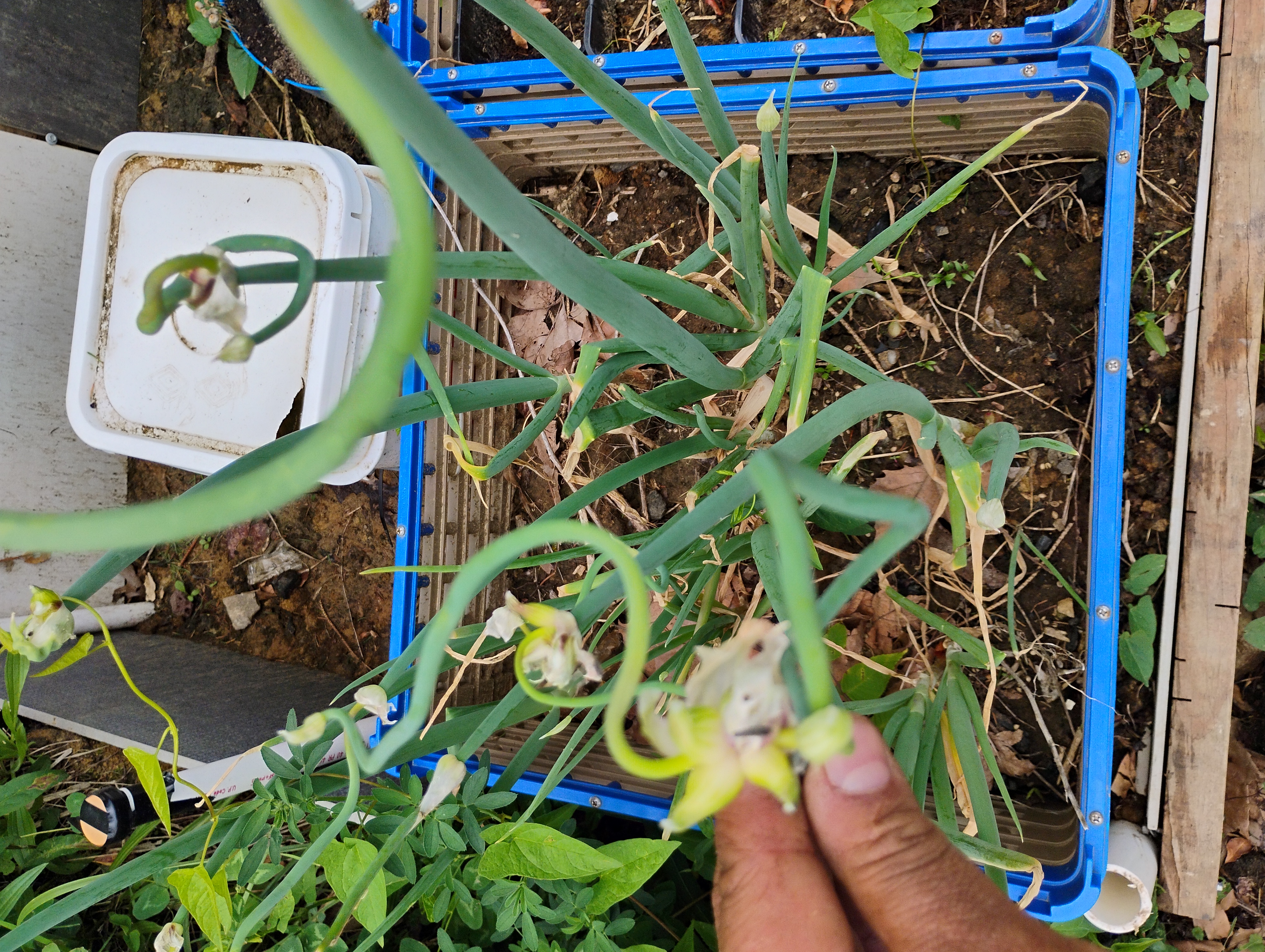
William Bronson wrote:Hey, do you think these bubils are ready to plant?
Nothing ruins a neighborhood like paved roads and water lines.
5


 4
4
- Tim's Homestead Journal - Purchase a copy of Building a Better World in Your Backyard - Purchase 6 Decks of Permaculture Cards -
- Purchase 12x Decks of Permaculture Cards - Purchase a copy of the SKIP Book - Purchase 12x copies of Building a Better World in your Backyard



|
Always respect your superiors. If you have any. - Mark Twain / tiny ad
Heat your home with the twigs that naturally fall of the trees in your yard
http://woodheat.net
|