• Post Reply Bookmark Topic Watch Topic
  • New Topic
permaculture forums growies critters building homesteading energy monies kitchen purity ungarbage community wilderness fiber arts art permaculture artisans regional education skip experiences global resources cider press projects digital market permies.com pie forums private forums all forums
this forum made possible by our volunteer staff, including ...
master stewards:
  • Carla Burke
  • John F Dean
  • Nancy Reading
  • r ransom
  • Jay Angler
  • Timothy Norton
stewards:
  • paul wheaton
  • Pearl Sutton
  • Anne Miller
master gardeners:
  • Christopher Weeks
  • M Ljin
gardeners:
  • Jim Garlits
  • thomas rubino
  • William Bronson

Squash growing experience

 
gardener
Posts: 2239
Location: Zone 6b
1426
forest garden fungi books chicken fiber arts ungarbage
  • Likes 6
  • Mark post as helpful
  • send pies
    Number of slices to send:
    Optional 'thank-you' note:
  • Quote
  • Report post to moderator
I mainly added two secondary macronutrients: calcium and sulfur, and two micronutrients: boron and molybdenum to my one acre. A total of 500 lbs ag lime, 280 lbs gypsum, 25 lbs borax and 1 lb sodium molybdate. I plan on ordering one more ton of lime this fall. It was based on my soil and weather conditions and history of harvests/mineral removal so it may not apply to others.

I started the garden in a grassy area presumably cleared from the upland oak/black walnut forest. Soil is acidic and low in most things. So after adding lots of organic matter, things were thriving in the first few years, growing food seemed easy. I mistakenly assumed fertility would stay high that way with regular addition and recycling of organic matter but the system started to get less and less effective.

I did some modeling and it fits if one or more trace elements are depleting faster than others. First I suspected boron, because most OM I got was grass based and monocots have low boron content (<10ppm in dry weight). Vegetables I grow are largely dicots that need 10x more boron (10-100ppm). Squash in particular, has a really high toxicity threshold (1000 ppm). So when I grew lots of squashes, they had been accumulating boron in the leaves. Those leaves decompose quickly at the end of the season, but my weather is too cold to grow dicot covercrops to recycle the boron but not cold enough to retain it in ground. Over time the ratio drops to a point it is limiting plant growth and can't be corrected from organic input alone.

Similarly, my soil has low molybdenum in the first place, being highly leached and acidic. Local trees all have very high tannin to help them retain and recycle Mo. BTW, Mo is the least abundant essential element (1 to a million to nitrogen), and the only micronutrient that availability is reduced when pH drops and the only one that can be mobilized to the seeds. So after lots of harvests and removing clippings, Mo became so low at one point clovers were gone and beans and brassicas looked sickly with poor quality seeds. Perennials including fruit trees started a slow death as well. The more nitrogen added, organic or not, just made things worse. I did a small quantitative rescue test and the Mo needed was equivalent to a 50# bag of alfalfa pellet (3ppm Mo DW) per 10 sq ft. Again, not feasible in large scale.

I guess for most people with decent soil, adding mature derived from legumes leaves or seeds would be sufficient. I am just having a too low base line to start with. I wish I had those minerals added to the soil before gardening but luckily it's never too late. After I amended the soil, legume, cool season broadleaf and deep-rooted weeds reappeared in my yard, earth worms returned and moles areated the ground. I then just followed the usual organic practices of chop and drop, composting, inoculating biochar with weed tea etc and things are back to normal.

 
pioneer
Posts: 486
Location: WV- up in the hills above Huntington Mall
138
4
hugelkultur personal care foraging rabbit books chicken food preservation cooking fiber arts medical herbs homestead
  • Likes 4
  • Mark post as helpful
  • send pies
    Number of slices to send:
    Optional 'thank-you' note:
  • Quote
  • Report post to moderator
To start, I've not read all the contributions to the thread.

I've put this warning up in other threads, but am placing it here as well for all enquiring minds to have another opportunity for enrichment.

When planting any squash, it is important to know what sub tribe each variety is. Pepo is very commonly the summer squash. But there are winter/pumpkin types in the family.  Pepo don't keep long. All pepo will readily cross with each other and saved seed will reflect that cross.

Maxima is the sub-tribe that grow the really big fruits. Dills Atlantic Giant is in this family.  All maxima will cross pollinate with other maxima, and saved seed will reflect the cross.

Moschata is the sub-tribe that the longest keepers come from. I find them sweetest. Butternut are in this group. Moschata will cross, and the saved seed will reflect that.

There is another sub-tribe that I can't remember at the moment.  

Only distance,  and alot of it (often 100 feet or greater, up to a mile), will help prevent this crossing. Or only planting 1 of any sub-tribe. If I'm growing zucchini (green or yellow), I do not plant any pepo winter squash. I prefer the flavor and keeping qualities of the moschata, and currently have 1 fruit left from last October's harvest. I also like several in the maxima group, and I think the "cheese" are from this bunch.

I would add a link to Pearl's discussion with pictures of good eating winter squash,  but I'm doing this from my old cell phone that has no further updates or support! Maybe after posting I will figure that out.

When I lived in Southern California,  like zone 10 or higher, the squash only produced until short days arrived. They are annuals, and require replanting next year, or more plants this year for greater harvests. But then you need places and methods for keeping, whether it is canning, freezing, drying, or whole.

Here in West Virginia I've been keeping mine in the coldest part of the coldest room, checking and turning them monthly. And I'm down to my last, growing none this year. In favor of additional tomatoes and peppers which we eat more of.
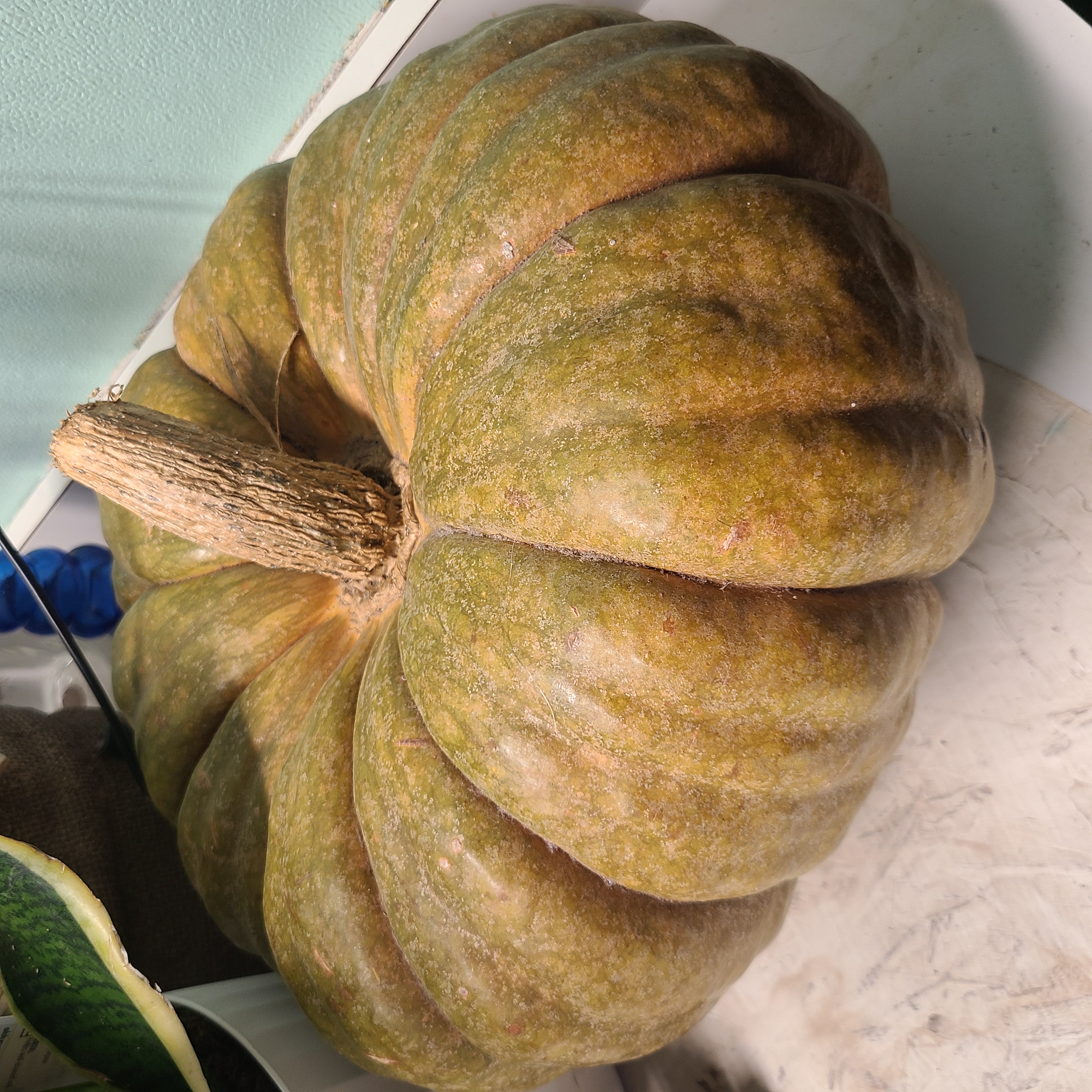
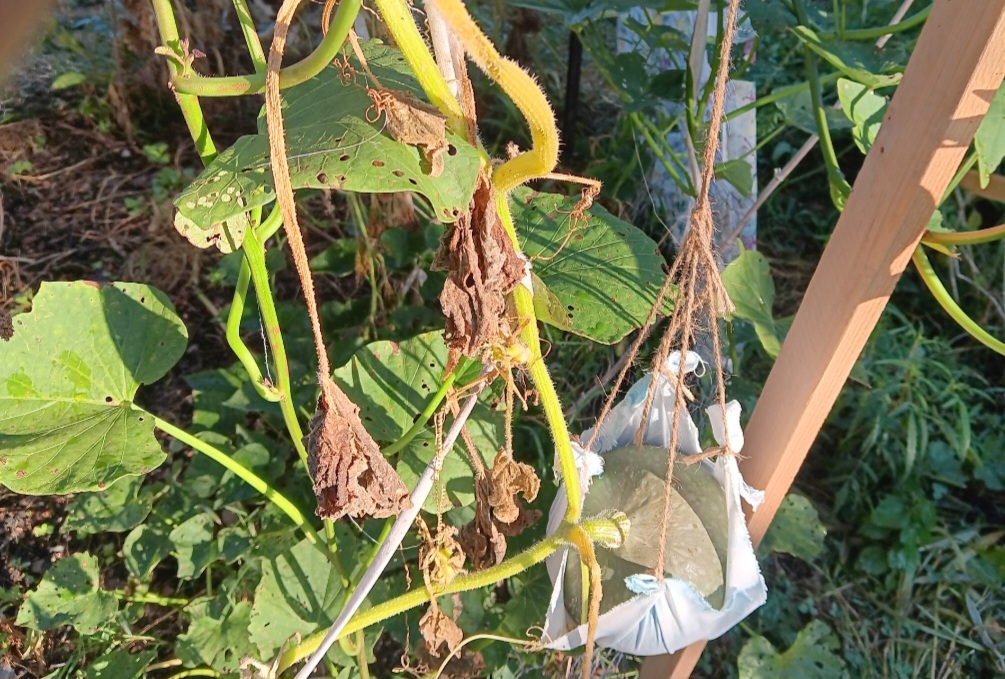
17837043479257624185460601363883.jpg
My last fruit from October 2025
Staff note (Pearl Sutton) :

Fall Decor Pumpkins/squash that are excellent eating
https://permies.com/t/168071/Fall-Decor-Pumpkins-squash-excellent

 
It looks like it's time for me to write you a reality check! Or maybe a tiny ad!
Permaculture Design Magazine
https://permies.com/wiki/237407/permaculture/Permaculture-Design-Magazine
reply
    Bookmark Topic Watch Topic
  • New Topic