posted 7 years ago
Some people are lucky enough that they don't get winter (snow/ice).
I am closer to the pole than most people here. And I am also reasonably close to a place where global warming is happening amongst the fastest.
Other years, I can imagine pussy willows in February (and dying when it turn cold). March came in strong, and we've had many days about +10C.
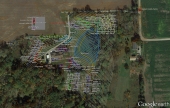
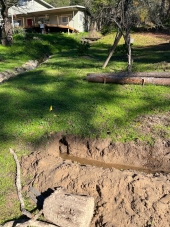
I am trying very hard to get a tractor, and among the things to do, is to put in a lot of swales, so that I can capture more of the spring runoff into the land (and not have it run off).
My soil is mostly clay. My land is a north facing slope (in the northern hemisphere) and is mostly covered by a 40 year old fescue pasture. This wasn't be design.
If I walk just about anywhere where there has been no snow for at least a couple of weeks, the residual grass on top is dry, and when I step down (wearing sandals for scrambling) I feel water just nipping at the bottom of my feet. There is a lot of water sitting under the residual fescue.
Nearly every farmer here, is firmly in the tillage mindset. Their land has been bare for a long time, and absorbing sunlight and warming. My land is covered in light yellow dead grass, and largely reflecting light (I think). And there is all this water sitting on the ground under the grass, which is a tremendous heat sink. No heat gets to the water, and so the water is just sitting there, keeping the land from warming up. Where there is red clover, there are at least blotches of darker, which may absorb more heat, but no idea if that transfers to the ground.
If a person does not do tillage, how does one get heat into the ground in the spring?
I have many piles of wood chips on part of the farm, and like spots of red clover, they appear darker.
If a person had lots of swales on the landscape, I am imagining that at some point mid summer, you set seed bombs of tillage radish on the uphill side of swales, which have a significant fraction of their volume filled with wood chips. The tillage radish germinates and grows a long way into the ground. Come the next spring, we have these soon to be rotting radishes which are almost water conduits, allowing heat transfer deep into the ground, in close association with dark coloured wood chips. Does this get heat into our ground faster, so that we can get a longer growing season?
Do we need to make biochar, and in early spring distribute it on the swales, so as to increase how much heat they absorb from the sun?
Something else?












 1