• Post Reply Bookmark Topic Watch Topic
  • New Topic
permaculture forums growies critters building homesteading energy monies kitchen purity ungarbage community wilderness fiber arts art permaculture artisans regional education skip experiences global resources cider press projects digital market permies.com pie forums private forums all forums
this forum made possible by our volunteer staff, including ...
master stewards:
  • Carla Burke
  • John F Dean
  • Nancy Reading
  • r ransom
  • Jay Angler
  • Timothy Norton
stewards:
  • paul wheaton
  • Pearl Sutton
  • Anne Miller
master gardeners:
  • Christopher Weeks
  • M Ljin
gardeners:
  • Jim Garlits
  • thomas rubino
  • William Bronson

Horseradish planting & growing

 
pollinator
Posts: 187
70
cat purity home care books chicken food preservation cooking fiber arts medical herbs seed composting
  • Likes 5
  • Mark post as helpful
  • send pies
    Number of slices to send:
    Optional 'thank-you' note:
  • Quote
  • Report post to moderator
I just purchased a horseradish crown to plant. I'm curious if anyone here has any tips or suggestions on planting and growing horseradish?
 
gardener
Posts: 534
Location: WV
177
kids cat foraging food preservation medical herbs seed
  • Likes 15
  • Mark post as helpful
  • send pies
    Number of slices to send:
    Optional 'thank-you' note:
  • Quote
  • Report post to moderator
Give it a spot with well-drained soil and it will flourish.  I have some growing in sun and some in partial shade.  I like to take root cuttings when I can to increase my plants but I find that even when I think I've removed the entire plant from an area that it regrows from root fragments left in the soil.  As a matter of fact there's a clump still growing on my great-grandparent's farm that my grandma said had been there as long as she could remember.  She'd have been 98 this year.
 
master pollinator
Posts: 5827
Location: Canadian Prairies - Zone 3b
1675
  • Likes 14
  • Mark post as helpful
  • send pies
    Number of slices to send:
    Optional 'thank-you' note:
  • Quote
  • Report post to moderator
Plant it far, far away from your regular garden growing areas. Once established, it is essentially impossible to eradicate. And it spreads!
 
Steward of piddlers
Posts: 7896
Location: Upstate New York, Zone 5b, 43 inch Avg. Rainfall
4526
monies home care dog fungi trees chicken food preservation cooking building composting homestead
  • Likes 9
  • Mark post as helpful
  • send pies
    Number of slices to send:
    Optional 'thank-you' note:
  • Quote
  • Report post to moderator
I'm getting the itch to grow horseradish but I have heard stories about it's persistence and spreading habit.

Would it be best practice to plant it in a far away corner of the property where it could be isolated from other edible growies or is it safe enough to plant adjacent to some growing beds?

Does it do well in most soils?
 
gardener
Posts: 6444
Location: Carlton County, Minnesota, USA: 3b; Dfb; sandy loam; in the woods
3886
8
forest garden trees books chicken food preservation cooking fiber arts seed woodworking homestead ungarbage
  • Likes 13
  • Mark post as helpful
  • send pies
    Number of slices to send:
    Optional 'thank-you' note:
  • Quote
  • Report post to moderator
It doesn't seem like it spreads problematically here, but it also just grows with no fuss or care. (I've only been here six years and inherited a patch behind the garage, but it seems to be staying put over the timespan that I've been observing.)
 
gardener
Posts: 1244
Location: France, Burgundy, parc naturel Morvan
587
forest garden fish fungi trees food preservation cooking solar wood heat woodworking homestead
  • Likes 14
  • Mark post as helpful
  • send pies
    Number of slices to send:
    Optional 'thank-you' note:
  • Quote
  • Report post to moderator
It's pretty annoying. I've got it in the beds and started using it as a chop and drop plant and still it's spreading in my poor soil. I'd test it out of the way if i could chose again.
 
pollinator
Posts: 271
75
kids urban seed
  • Likes 10
  • Mark post as helpful
  • send pies
    Number of slices to send:
    Optional 'thank-you' note:
  • Quote
  • Report post to moderator
Mine has stayed pretty contained in a raised bed for three years now, but I've heard enough horror stories to think I just got lucky. If I was starting again I'd probably sink a root barrier or just grow it in a large pot sunk into the ground. Easier to harvest that way too.
 
pollinator
Posts: 1004
Location: Illinois
231
  • Likes 15
  • Mark post as helpful
  • send pies
    Number of slices to send:
    Optional 'thank-you' note:
  • Quote
  • Report post to moderator
I have a hard clay soil, and for years it hardly grew at all. Then I started noticing a few young sprouts here and there a few meters away from the main bunch.
I transplanted the main plant into a corner of a raised bed several years ago and it has very gradually gotten larger, but so far no distant sprouts. It has not been really obnoxious, but I suspect hard to get rid of once established.
I planted it 20 years ago just for fun, and so far have never even harvested any. May dig some roots this fall.
 
Posts: 2
Location: Spokane, WA
1
  • Likes 14
  • Mark post as helpful
  • send pies
    Number of slices to send:
    Optional 'thank-you' note:
  • Quote
  • Report post to moderator
I put a couple roots in a reused, 7 gallon plastic tree pot, here at Funky D Ranch, Spokane, WA and am  on year three. So far so good. It is tougher to keep watered but is super resilient. If I miss a day or two in the heat of summer, the 12” broad leaves will droop flat and eventually turn yellow. Once my super smart observational farming skills kick in, I water and it sends up new shoots!!
IMG_1312.jpeg
[Thumbnail for IMG_1312.jpeg]
 
Posts: 7
1
  • Likes 11
  • Mark post as helpful
  • send pies
    Number of slices to send:
    Optional 'thank-you' note:
  • Quote
  • Report post to moderator
It can spread as others have noted - i have had it come up several meters away from the original plants - in uk it loves full sun and access to plenty of water, it's often found thriving along riverbanks so free draining rather than permanently wet.  The leaves can be shredded and used in salads etc and it's a good plant to distract cabbage white butterflies from your expensive brassicas
 
gardener
Posts: 4606
786
7
forest garden fungi trees food preservation bike medical herbs
  • Likes 12
  • Mark post as helpful
  • send pies
    Number of slices to send:
    Optional 'thank-you' note:
  • Quote
  • Report post to moderator
I planted some about 20? years ago.  It started to get shaded out so I moved parts of the roots.  It is an amazing plant! Tons of mild, good tasting huge green leaves.  Mostly I just chop up the leaves and put them in beans, oats, quinoa, rice, etc.  I have ground the root and used it in cocktail sauce and it was great.  However, I don't want to kill the plant, because I eat it so often.   Mine never get a chance to get too big because I eat the leaves so often.  

Since it's cruciferous, it fights cancer.  Out of the 3 new ones I started, 2 are still alive.  None have become troublesome, just productive. The 2 that got shaded have died.  

One caveat-never till where there are horseradishes or you will get tons of little plants around where the pieces of root are.  I have seen this happen when I worked in landscaping many years ago.  

I wouldn't put it in your raised bed. I'd just put it in the ground on its own, in sun.  

It's a great plant.

John S
PDX OR
 
gardener
Posts: 5718
Location: Cincinnati, Ohio,Price Hill 45205
1319
forest garden trees urban
  • Likes 8
  • Mark post as helpful
  • send pies
    Number of slices to send:
    Optional 'thank-you' note:
  • Quote
  • Report post to moderator
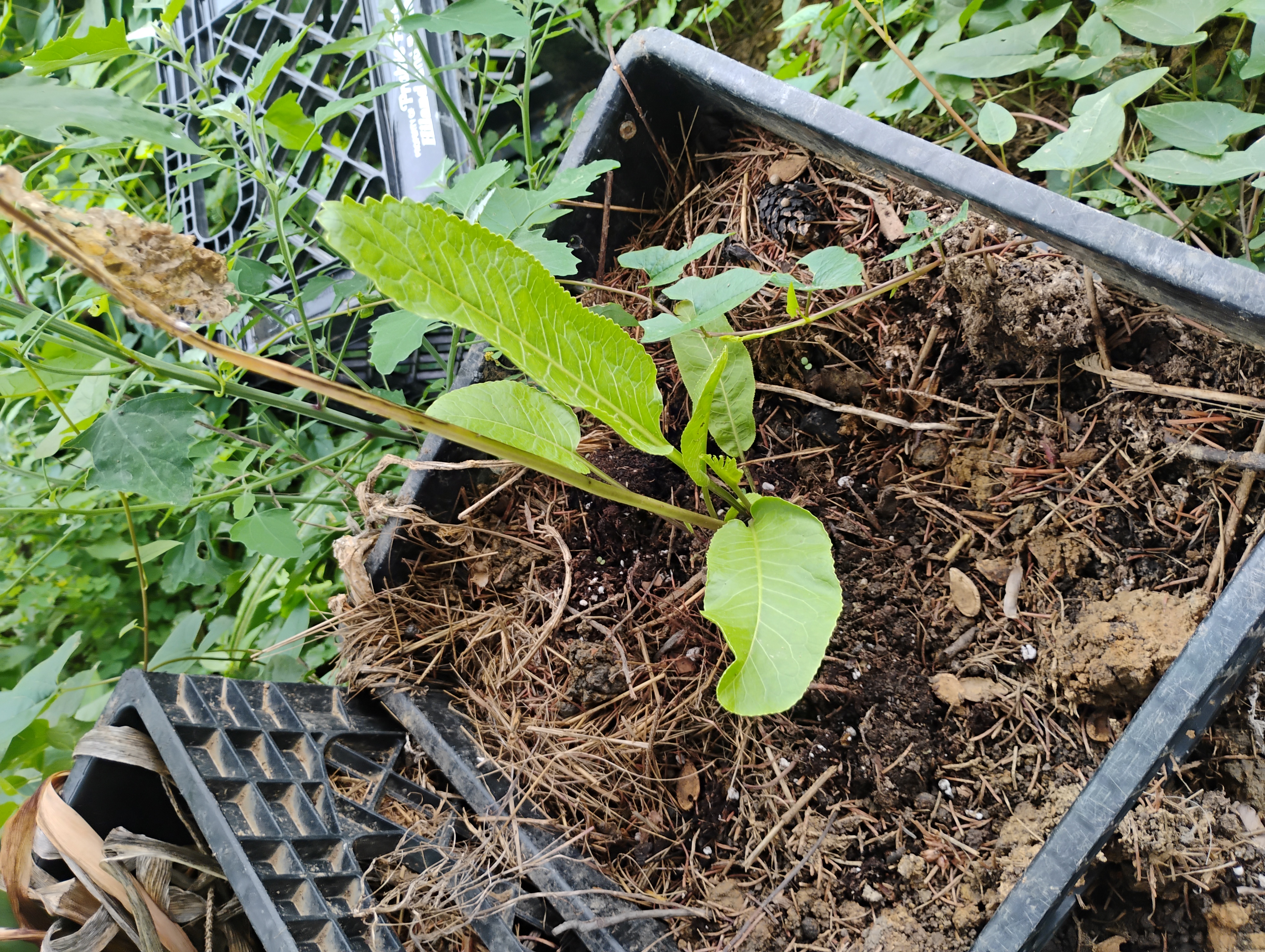
I just planted some two in milk crates.
I'm mostly excited for the leaves, I'm imagining they will be great in a saag or other cream sauce.
While I was trying to figure out where I would plant them, they dried out a couple of times, but always grew new leaves.
That bodes well for using them as a cut and come again crop.

I think the roots will have pest repellent applications, but my research is inconclusive.
It has reputation for protecting potatoes, but the studies I've found don't support that.
I though they could be a good substitute for comfrey,but they seem too "spready".
I think they will eventually go under the fruit trees, less as a pest deterent, more because they will do little harm there.
IMG_20260628_141916568.jpg
Should drain well, and maybe I can use it as a "Horseradish Tractor"
 
gardener
Posts: 3769
Location: Western Slope Colorado.
919
5
goat dog food preservation medical herbs solar greening the desert
  • Likes 7
  • Mark post as helpful
  • send pies
    Number of slices to send:
    Optional 'thank-you' note:
  • Quote
  • Report post to moderator
I think it was already said:  harvesting aggressively pretty much prevents aggressive spreading.  But I bet in arid alkaline soil it doesn’t spread that way.

I have goat pasture.  I will transplant some to the pasture when we have had a better winter— meaning a lot of snow, following a summer and or fall when we got a lot of rain.

Goats like it!  Maybe sheep do too.  And when the animals have access, most things don’t get out of hand!

I have grown it in the past.  It was good to have in the garden, and its roots contribute to soil aggregates formation.  That’s a big plus
 
Posts: 32
Location: Pierce County WA, Northwest and Sound
9
cattle forest garden fungi chicken pig medical herbs bee sheep
  • Likes 9
  • Mark post as helpful
  • send pies
    Number of slices to send:
    Optional 'thank-you' note:
  • Quote
  • Report post to moderator
Horseradish, love the stuff.  Dense clay soil at our farm so it’s a concerted effort to grow.  I was warned of invasive qualities, but I’m fine with that.   I just use it as a companion plant with plating trees in newer areas.  Prevents many versions of tree predation, scavenges free ions from the soil. The leaves sliced wrapped with arugula and chives are an excellent spicy appetizer. Just wondering about different types of horseradish, flavors. Wild herbs show the soul of a place, and an infinite imagination of nature.  Cheers.
 
pollinator
Posts: 95
Location: SE France
30
fungi trees food preservation medical herbs wood heat composting
  • Likes 6
  • Mark post as helpful
  • send pies
    Number of slices to send:
    Optional 'thank-you' note:
  • Quote
  • Report post to moderator
hot hot hot Hello
Very dry and I m resisting watering too much.
Horseradish one of the many favourites of the slugs here. they strip the leaves in a trice.
And the plant makes new leaves, so there.
Like another contributor, I planted horseradish to accompany potatoes. not sure that it made a difference to rodent predation.
There is an adventurous plant that has sprouted in the wood shed.

I thoroughly enjoy horseradish, leaves in salads, the extremely hot root grated made into a condiment and as a medicinal.
The grating is a challenge, if onions make you cry, horseradish is even meaner.

I believe it is an ingredient to four thieves vinegar, a wonderful mixture to drink in winter.

How do you make fire cider with rosemary gladstar?
Directions: In a half-gallon jar, combine horseradish, onion, garlic, ginger, peppers, elderberries, and lemon, and add enough apple cider vinegar to cover. Seal with a nonmetallic lid. Set aside to steep, and shake the jar daily. After 8 weeks, strain the vinegar into a clean jar.

and drink diluted please. Great for when you are feeling under the weather.

good health and cheer and copius blessings
MH
 
Posts: 14
Location: Bavarian Alps / Northern Alps / Europe - equal to zone 7a
6
hugelkultur medical herbs homestead
  • Likes 6
  • Mark post as helpful
  • send pies
    Number of slices to send:
    Optional 'thank-you' note:
  • Quote
  • Report post to moderator
Ahhh Horse radish .. a staple of the Bavarian kitchen, goes great with cheeses, sausages, meat, knödel ...all kinds of great dishes.
So naturally, most of us want to have it in the garden.

Let me share my experience with you.
On one hand it is really easy to grow (it does it all by itself, as long as you get some regular rainfalls) , it needs no maintenance and also not too much water. It simply thrives.

which means, yes , as stated in this thread - it spreads ! Fast and a lot !   Good for harvesting, bad if you planned on having it in the middle of a crop patch , as it will take over larger and larger areas.

Also as mentioned above, aggressive harvesting helps. But then again, who can eat so much horseradish.

Also, important to mention, it sucks up a lot of nutrients - which means it really is hard to grow other vegetables that are high in nutrition need as neighbours.

Hint :  Use it on a hugelbeet and it will thrive for a long time , as nutrition is provided for many years in a row.

Also, horsradish is unfortunately quite prone to mildew attacks. Once it killed my entire horseredish patch within one growing season only. Although I fought against it. And unfortuntely this mildew sort also goes into the roots and the ground, and can really spoil your soil for quite a while.

But enough with the negatives - horseradish is just an amazing root to use in your kitchen.

So my advice is : Find a half sunny, half shaded area in your garden, away from your main vegetable area. Where it can thrive on its own, and spread as it likes. Depening on where you live , just make sure it gets enough water, but not too much.

If your garden doesnt allow for a separate wild growth away from your vegetable garden, or if you are a permie, away from all more gentle plants  in your forest : i strongly suggest to grow it in e separate large , deep pot , or planting box , or highrise bed , just to make sure it thrives but doesnt overspread and diminish the nutrients and plants in general around it.
Once you have done one of the above suggestions, you while have fun for years to come.
Just make sure you watch out for the mildew.

One last remark : I personally in over 7 years now with the current patch, cannot confirm it having any positive anti-pests qualities. rather the opposite, the large thick leaves are giving shade and food for armies of snails and slugs to be honest


pollinator
Posts: 272
74
9
hugelkultur books chicken cooking food preservation greening the desert
  • Likes 5
  • Mark post as helpful
  • send pies
    Number of slices to send:
    Optional 'thank-you' note:
  • Quote
  • Report post to moderator

Thekla McDaniels wrote:I think it was already said:  harvesting aggressively pretty much prevents aggressive spreading.  But I bet in arid alkaline soil it doesn’t spread that way.


So true, here in high desert it only grows where I water it, and no spreading... even 10 years later.

Sandy
 
John Suavecito
gardener
Posts: 4606
786
7
forest garden fungi trees food preservation bike medical herbs
  • Likes 7
  • Mark post as helpful
  • send pies
    Number of slices to send:
    Optional 'thank-you' note:
  • Quote
  • Report post to moderator
I do have some slug predation on my horseradish.  However, it can be a plant used as a slug trap-to keep slugs away from others-it still grows vigorously.  It can also be used for entrapment. Go out, just before you go to bed, or just as you wake up, maybe with a flashlight, and grab all the slugs. Then smear them on some concrete. Then their buddies will come by the next day to eat them and you can kill them too.

John S
PDX OR
 
Thekla McDaniels
gardener
Posts: 3769
Location: Western Slope Colorado.
919
5
goat dog food preservation medical herbs solar greening the desert
  • Likes 5
  • Mark post as helpful
  • send pies
    Number of slices to send:
    Optional 'thank-you' note:
  • Quote
  • Report post to moderator

John Suavecito wrote:I do have some slug predation on my horseradish.  However, it can be a plant used as a slug trap-to keep slugs away from others-it still grows vigorously.  It can also be used for entrapment. Go out, just before you go to bed, or just as you wake up, maybe with a flashlight, and grab all the slugs. Then smear them on some concrete. Then their buddies will come by the next day to eat them and you can kill them too.

John S
PDX OR


For a double whammy:  maybe put a dish of beer (slugs love it, slide in and drown) under the leaves of the horse radish?

Like many people, come for the salad, and it doesn’t work out as intended🤣
 
John Suavecito
gardener
Posts: 4606
786
7
forest garden fungi trees food preservation bike medical herbs
  • Likes 4
  • Mark post as helpful
  • send pies
    Number of slices to send:
    Optional 'thank-you' note:
  • Quote
  • Report post to moderator
Good idea! Only use cheap beer for the slugs.  They prefer it anyway. Save the good stuff for you and your friends.
 
marie-helene kutek
pollinator
Posts: 95
Location: SE France
30
fungi trees food preservation medical herbs wood heat composting
  • Likes 3
  • Mark post as helpful
  • send pies
    Number of slices to send:
    Optional 'thank-you' note:
  • Quote
  • Report post to moderator
Get beer slops
I supply a couple of bars with 5l containers.
The bars are very happy to recycle their beer slops for a good cause.
And the slugs float happily away in the shade of the large twirly horseradish leaves.
Rain rain please rain
blessings even to our slimey friends
MH
 
Posts: 11
Location: Central-ish NC
2
  • Likes 4
  • Mark post as helpful
  • send pies
    Number of slices to send:
    Optional 'thank-you' note:
  • Quote
  • Report post to moderator
Two questions for you experienced types:

1. How deep would a root barrier around a horseradish area need to be? More than 12"? More than 24"?

2. Does spreading kill other plants (what does it *not* kill?) or is it more of an annoyance, popping up where you don't want it (for whatever reason)?

For context, I have red clay and rock soil, so it sounds like aggressive spreading will be somewhat retarded by conditions. I planted some a few years ago in buried (large water bottle sized) containers and nothing came back the 2nd year. Now I have two in grow bags doing all right this year, and one in the ground that has kind-of died back in our driest weeks but seems to be surviving now.

We have several areas that we call "rock planters", where we build up on a slope for this or that. I'm thinking of creating something like that with root barrier, and using it for horseradish and whatever else. Can garlic grow with horseradish, for example?

More than 2 questions, really, but primarily interested in more specifics on requirements to contain it (to the extent feasible) and experience with plants it kills by proximity (if relevant).
 
Douglas Alpenstock
master pollinator
Posts: 5827
Location: Canadian Prairies - Zone 3b
1675
  • Likes 5
  • Mark post as helpful
  • send pies
    Number of slices to send:
    Optional 'thank-you' note:
  • Quote
  • Report post to moderator

Sea Skinley wrote:Two questions for you experienced types:

1. How deep would a root barrier around a horseradish area need to be? More than 12"? More than 24"?

2. Does spreading kill other plants (what does it *not* kill?) or is it more of an annoyance, popping up where you don't want it (for whatever reason)?


I dug a historical horseradish well past 36" in a 6x6' bed and it came back. It took 10 years of "chopping starvation" and an extended drought to finally wipe it out.  (It was transplanted to a new site where it is going great guns and doing no harm.) I would mention that it was enmeshed in the feeder roots of a 3-storey mature spruce tree as well. Horseradish is a tough little mudder.

It does not seem to kill other plants directly (allelopathic etc.) but rather is hyper-competitive. It coexisted with my strawberry bed for many years.

Historical sidenote -- It's always interesting to walk through long-abandoned pioneer homestead sites. Usually these are on the crumbling edge of change, the edge of urban expansion. Sometimes they have been absorbed into city parks, and other times they are on the edge of asphalt and concrete and strip malls, waiting to be absorbed or assimilated. When you walk through, you will find shelterbelts, old crabapple trees, a big divot for the foundation, smaller divots for a dug well and root cellar, rhubarb plants, and horseradish.
 
Mark Land
Posts: 14
Location: Bavarian Alps / Northern Alps / Europe - equal to zone 7a
6
hugelkultur medical herbs homestead
  • Likes 6
  • Mark post as helpful
  • send pies
    Number of slices to send:
    Optional 'thank-you' note:
  • Quote
  • Report post to moderator

Sea Skinley wrote:Two questions for you experienced types:

1. How deep would a root barrier around a horseradish area need to be? More than 12"? More than 24"?

2. Does spreading kill other plants (what does it *not* kill?) or is it more of an annoyance, popping up where you don't want it (for whatever reason)?

For context, I have red clay and rock soil, so it sounds like aggressive spreading will be somewhat retarded by conditions. I planted some a few years ago in buried (large water bottle sized) containers and nothing came back the 2nd year. Now I have two in grow bags doing all right this year, and one in the ground that has kind-of died back in our driest weeks but seems to be surviving now.

We have several areas that we call "rock planters", where we build up on a slope for this or that. I'm thinking of creating something like that with root barrier, and using it for horseradish and whatever else. Can garlic grow with horseradish, for example?

More than 2 questions, really, but primarily interested in more specifics on requirements to contain it (to the extent feasible) and experience with plants it kills by proximity (if relevant).


Douglas already answered the root barrier question so let me share some experience on your second question.

As Douglas said, it doesnt kill plants through being "the tocix neighbour" . As soon as it is in deep ground it tends to grow really fast with really big leaves. And its sheer growth pace outperforms most other plants. As to your example with garlic. It could work for a bit (again horseradish will grow faster than your garlic) and then you would possibly be disappointed with your garlic yield.
Also, the root system is quite dominant in the soil (thats why horseradishes when you buy them are these chunks of big roots) , meaning it takes water andnutrients away from deep in the soil and quite a diameter as well. Again leading to a below par yield for anything directly surrounding it.

On a positive note, if you plant squash in between horseradish, with the mother plant far enough away it will thrive. As squash gets big iteself and can mingle, and intertwine with the other "large plant".

 
Sea Skinley
Posts: 11
Location: Central-ish NC
2
  • Likes 2
  • Mark post as helpful
  • send pies
    Number of slices to send:
    Optional 'thank-you' note:
  • Quote
  • Report post to moderator
Thanks so much, Mark and Douglas. Exactly the kinds of info I was hoping to learn. My thought on 'friendly neighbors' was that less-deep-rooted plants would be better able to get along with it (a la strawberries, squash), if it's not truly allelopathic. We have lots of black walnut so I'm familiar. I love my garlic but other things I grow love it much less, so I was hoping if horseradish and garlic could get along...

A second thought is that trees with a far deeper taproot, even if they also have roots closer to the surface, could get along, but I'm not sure I want to risk any of my intentional trees to an experiment like that. And no doubt timing is everything, how well established the trees are. I might try a horseradish root on the edge of some scrubland we have out front, see how that does.

Thanks again!
 
Thekla McDaniels
gardener
Posts: 3769
Location: Western Slope Colorado.
919
5
goat dog food preservation medical herbs solar greening the desert
  • Likes 2
  • Mark post as helpful
  • send pies
    Number of slices to send:
    Optional 'thank-you' note:
  • Quote
  • Report post to moderator
I have successfully grown horseradish among a mix of sunflowers-tithonia-cosmos and hollyhocks.  And goji berries, though that one’s more invasive than horseradish and with thorns!  I won’t plant gojis again.

And had king stropharia mushrooms pop up under the hollyhock and horseradish leaves.  Mushrooms are sensitive to temperature and humidity, and in an arid situation with intense sunlight, horseradish creates habitat for mushrooms, at least king stropharia.

Which brings me to the idea of shading.  Mainly horseradish takes over by shading.  I think horseradish would shade out strawberries because the low growing berries can’t get to the sunlight.  

I think things that are as tall or taller than horseradish are your best bet.  In growing a food plant, maybe scarlet runner beans, or any climbing bean, would work.  The trellis gets them above horseradish’s shade, and as legumes they have their nitrogen advantage..

I haven’t seen it but I can believe a crawling plant like vining squash would hold its own, or gourds.

If you’re in a place where artichokes survive the winter, they might also be worth a try.
 
William Bronson
gardener
Posts: 5718
Location: Cincinnati, Ohio,Price Hill 45205
1319
forest garden trees urban
  • Mark post as helpful
  • send pies
    Number of slices to send:
    Optional 'thank-you' note:
  • Quote
  • Report post to moderator
Do they hold their leaves overwinter?
 
Mark Land
Posts: 14
Location: Bavarian Alps / Northern Alps / Europe - equal to zone 7a
6
hugelkultur medical herbs homestead
  • Mark post as helpful
  • send pies
    Number of slices to send:
    Optional 'thank-you' note:
  • Quote
  • Report post to moderator

William Bronson wrote: Do they hold their leaves overwinter?


No the leaves die with the first heavy frost. But the plant system stays active throughout the cold season until it is time agian in the spring. then they first build out the root system, from which then they  build new leaves - hence the spreading.
 
Thekla McDaniels
gardener
Posts: 3769
Location: Western Slope Colorado.
919
5
goat dog food preservation medical herbs solar greening the desert
  • Likes 1
  • Mark post as helpful
  • send pies
    Number of slices to send:
    Optional 'thank-you' note:
  • Quote
  • Report post to moderator
Or were you asking about artichokes holding their leaves over winter.

In freezing winters artichokes die to the ground.  I believe they hold their leaves in mild winters.  In a region where they usually hold their leaves… they will lose them in a hard frost, but it won’t kill them.
 
William Bronson
gardener
Posts: 5718
Location: Cincinnati, Ohio,Price Hill 45205
1319
forest garden trees urban
  • Likes 2
  • Mark post as helpful
  • send pies
    Number of slices to send:
    Optional 'thank-you' note:
  • Quote
  • Report post to moderator
I was asking about horseradish, but it's good to know about artichokes.
I have a fascination with the idea of a timesharing plots between warm season perinnials and overwintering annuals.
Sowing a bed of comfrey with winter rye for example.
With that in mind, a bed of horseradish sown with fava beans might work.

 
Thekla McDaniels
gardener
Posts: 3769
Location: Western Slope Colorado.
919
5
goat dog food preservation medical herbs solar greening the desert
  • Mark post as helpful
  • send pies
    Number of slices to send:
    Optional 'thank-you' note:
  • Quote
  • Report post to moderator
William, what’s an overwintering annual?  I have never heard that term.
 
William Bronson
gardener
Posts: 5718
Location: Cincinnati, Ohio,Price Hill 45205
1319
forest garden trees urban
  • Mark post as helpful
  • send pies
    Number of slices to send:
    Optional 'thank-you' note:
  • Quote
  • Report post to moderator
I just made up the term.

Winter wheat, winter rye, fava beans, anything that can start in late summer or fall, over winter and finish in the spring and early summer.

Edit: there are other plants, like good king henry or miners lettuce that might fit the bill as well.
 
Thekla McDaniels
gardener
Posts: 3769
Location: Western Slope Colorado.
919
5
goat dog food preservation medical herbs solar greening the desert
  • Likes 1
  • Mark post as helpful
  • send pies
    Number of slices to send:
    Optional 'thank-you' note:
  • Quote
  • Report post to moderator
Right! Perfect name, I had just never thought of it that way. Thanks for explaining.
 
I agree. Here's the link: http://stoves2.com
reply
    Bookmark Topic Watch Topic
  • New Topic