• Post Reply Bookmark Topic Watch Topic
  • New Topic
permaculture forums growies critters building homesteading energy monies kitchen purity ungarbage community wilderness fiber arts art permaculture artisans regional education skip experiences global resources cider press projects digital market permies.com pie forums private forums all forums
this forum made possible by our volunteer staff, including ...
master stewards:
  • Carla Burke
  • John F Dean
  • Nancy Reading
  • r ransom
  • Jay Angler
  • Timothy Norton
stewards:
  • paul wheaton
  • Pearl Sutton
  • Anne Miller
master gardeners:
  • Christopher Weeks
  • M Ljin
gardeners:
  • Jim Garlits
  • thomas rubino
  • William Bronson

What are your favorite honeysuckle removal tools?

 
Posts: 6
Location: 45387
2
  • Likes 7
  • Mark post as helpful
  • send pies
    Number of slices to send:
    Optional 'thank-you' note:
  • Quote
  • Report post to moderator
I'm in zone 6b, in the first year on 5 acres, this season is mostly about just observing and removing invasives as time allows.

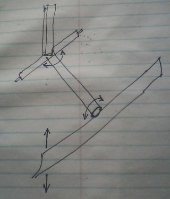
Over winter I cut a bunch of honeysuckle at the ground, knowing that it would pop up this spring. As I'm walking the property I've found that this flooring scraper has been fantastic at knocking down the shoots. The blade is double sided and easy to sharpen. If I need a replacement, or even want to change the cutter shape, its just some flat stock clamped in place. I know you can poison the roots, but I'm hoping to use little to no herbicides anywhere around here.

What are your favorite de-honeysuckling tools? Ive seen high-lift jacks, spud bars, slash and burn.
20260602_163005.jpg
[Thumbnail for 20260602_163005.jpg]
20260602_160615.jpg
[Thumbnail for 20260602_160615.jpg]
20260602_160641.jpg
[Thumbnail for 20260602_160641.jpg]
 
master gardener
Posts: 2621
Location: Zone 5
1535
ancestral skills forest garden foraging composting toilet fiber arts bike medical herbs seed writing ungarbage
  • Likes 7
  • Mark post as helpful
  • send pies
    Number of slices to send:
    Optional 'thank-you' note:
  • Quote
  • Report post to moderator
What kind of honeysuckle is this? I notice that the common bush hedge honeysuckle (L. tatarica complex) dies out when the trees grow in. The native L. canadensis is tolerant of shade. This kind seems like neither by the leaves, but perhaps another kind of bush honeysuckle.

Honeysuckle has some excellent medicinal properties in my experience. I harvest the bark, leaves, twigs, and flowers for tea.
 
Posts: 34
Location: Central Kansas. Zone: 6b
10
  • Likes 6
  • Mark post as helpful
  • send pies
    Number of slices to send:
    Optional 'thank-you' note:
  • Quote
  • Report post to moderator
While I don't recognize the exact variety of bush honeysuckle, I'm sure it's one of the extremely invasive ones. In the midwest we have something called the Amber honeysuckle, (Lonicera maackii), that will actually form a true monoculture under trees and kill all natives where it's established. They are bad news.  Normally most non natives have some benefits and aren't as bad as people say, but honeysuckles are an exception.

Anyways, I have a tiny property and I literally just prune them off with normal pruners. If you keep doing that they eventually starve and die.
 
Zac Reed
Posts: 6
Location: 45387
2
  • Likes 8
  • Mark post as helpful
  • send pies
    Number of slices to send:
    Optional 'thank-you' note:
  • Quote
  • Report post to moderator

M Ljin wrote:What kind of honeysuckle is this? I notice that the common bush hedge honeysuckle (L. tatarica complex) dies out when the trees grow in. The native L. canadensis is tolerant of shade. This kind seems like neither by the leaves, but perhaps another kind of bush honeysuckle.

Honeysuckle has some excellent medicinal properties in my experience. I harvest the bark, leaves, twigs, and flowers for tea.


Lonicera morrowii, nasty stuff that is happy to spring back from the ground after many mowings and prunings. It takes some persistence.

Anna has it right, some of these woody bush varieties absolutely choke out the surrounding area. But my denser maple grove keeps it out for the most part.

I really want to develop an invasive-to-biochar pipeline but I don't want to just burn up a bunch material to sequester the carbon without doing something useful with the heat.
 
pollinator
Posts: 2931
Location: RRV of da Nort, USA
914
  • Likes 11
  • Mark post as helpful
  • send pies
    Number of slices to send:
    Optional 'thank-you' note:
  • Quote
  • Report post to moderator
One word:  Goats.  ;-)
 
Posts: 18
2
  • Likes 10
  • Mark post as helpful
  • send pies
    Number of slices to send:
    Optional 'thank-you' note:
  • Quote
  • Report post to moderator
Japanese vining honeysuckle (L. japonica). The invasive bush variety is usually Amur honeysuckle (L. maackii) in the US, and that stuff is invasive because it's dispersive but the bushes are a lot easier to get under control. We have some of it, practically tree-sized shrubs, and have just been knocking it back to reduce its spread. I don't necessarily feel the need to haul out every bush, just fewer, and restricted enough to hopefully control.

But... ugh, the vining stuff is a genuine nightmare, and I'm currently at a loss on our property. We knocked down the bigger strangling vines across the property last year, and I knew it would of course come back (we had just moved, and first we just needed access to the overgrown property!)... but it has returned as an absolute carpet smothering everything on the ground. I really don't know how to get it under control across such a large zone, other than manual pulling, and that seems impossible to do over an acre of open woodland. Cutting it back does nothing and mostly encourages it to come back more. (And we DID hire goats for two weeks, more for the porcelainberry and multiflora rose than the honeysuckle, but all they do is strip the leaves and thin branches. They helped a lot, but they don't kill it, and it just springs back more aggressively.)

I'm open to other suggestions!!
 
Zac Reed
Posts: 6
Location: 45387
2
  • Likes 6
  • Mark post as helpful
  • send pies
    Number of slices to send:
    Optional 'thank-you' note:
  • Quote
  • Report post to moderator

Syd Ziggie wrote:Japanese vining honeysuckle (L. japonica). The invasive bush variety is usually Amur honeysuckle (L. maackii) in the US, and that stuff is invasive because it's dispersive but the bushes are a lot easier to get under control. We have some of it, practically tree-sized shrubs, and have just been knocking it back to reduce its spread. I don't necessarily feel the need to haul out every bush, just fewer, and restricted enough to hopefully control.

But... ugh, the vining stuff is a genuine nightmare, and I'm currently at a loss on our property. We knocked down the bigger strangling vines across the property last year, and I knew it would of course come back (we had just moved, and first we just needed access to the overgrown property!)... but it has returned as an absolute carpet smothering everything on the ground. I really don't know how to get it under control across such a large zone, other than manual pulling, and that seems impossible to do over an acre of open woodland. Cutting it back does nothing and mostly encourages it to come back more. (And we DID hire goats for two weeks, more for the porcelainberry and multiflora rose than the honeysuckle, but all they do is strip the leaves and thin branches. They helped a lot, but they don't kill it, and it just springs back more aggressively.)

I'm open to other suggestions!!


I genuinely don't know if this is the right answer, but I wonder if a controlled burn could get rid of it.
 
Syd Smith
Posts: 18
2
  • Likes 5
  • Mark post as helpful
  • send pies
    Number of slices to send:
    Optional 'thank-you' note:
  • Quote
  • Report post to moderator

I genuinely don't know if this is the right answer, but I wonder if a controlled burn could get rid of it.


Well, I just looked this up, and apparently burning the vegetation back will make it come back even more aggressively! hahaha oh it's so hopeless, this stuff is some kind of demon spawn
 
M Ljin
master gardener
Posts: 2621
Location: Zone 5
1535
ancestral skills forest garden foraging composting toilet fiber arts bike medical herbs seed writing ungarbage
  • Likes 6
  • Mark post as helpful
  • send pies
    Number of slices to send:
    Optional 'thank-you' note:
  • Quote
  • Report post to moderator
I often notice things get easier when you start having an amicable relationship with a plant.

For me, I don’t think I have any “problem plants”, even though goldenrod, bindweed, mugwort, etc. are present. Along with honeysuckle, buckthorn, dogwood, brambles, roses…

My approach does involve cutting, pulling and the rest, but mostly planting plants where I think they’ll thrive and not forcing anything. It may not work in a small space or where the land was severely abused and disturbed—in that case it may help to continue helping the ecosystem along by chopping and dropping, introducing plants from other areas that would thrive in shade (ramps?)—filling in the gaps where diversity used to be by reintroducing that diversity of plant and fungal life. I’ve had a lot of success reintroducing ramps under a buckthorn tree, for instance—they like the rich soil and shade.

 
Syd Smith
Posts: 18
2
  • Likes 6
  • Mark post as helpful
  • send pies
    Number of slices to send:
    Optional 'thank-you' note:
  • Quote
  • Report post to moderator

M Ljin wrote:I often notice things get easier when you start having an amicable relationship with a plant.

For me, I don’t think I have any “problem plants”, even though goldenrod, bindweed, mugwort, etc. are present. Along with honeysuckle, buckthorn, dogwood, brambles, roses…

My approach does involve cutting, pulling and the rest, but mostly planting plants where I think they’ll thrive and not forcing anything. It may not work in a small space or where the land was severely abused and disturbed—in that case it may help to continue helping the ecosystem along by chopping and dropping, introducing plants from other areas that would thrive in shade (ramps?)—filling in the gaps where diversity used to be by reintroducing that diversity of plant and fungal life. I’ve had a lot of success reintroducing ramps under a buckthorn tree, for instance—they like the rich soil and shade.


Sure, and we're doing that with plenty of things. Most of the plants on the property seem less-than-desireable because they are exotics and either expansive or dispersive. We're mostly trying to remove the multiflora rose, because we could not access nearly a third of the property because it was so overgrown with dense briars. But the Japanese stiltweed that carpets the sunnier parts of the woodland that were disturbed by ash loss? Sure, we'll plant understory to shade it out.

But the vining honeysuckle plant really does smother its neighbors, from the forest floor to the trees. It does not play nice with others. I also haven't been able to uncover anything native and non-destructive that competes with it very effectively. If there is something (that isn't equally problematic), though, please let me know!
 
Happiness is not a goal ... it's a by-product of a life well lived - Eleanor Roosevelt. Tiny ad:
building a better world rather than being angry at bad guys
https://wheaton-labs.com/bootcamp
reply
    Bookmark Topic Watch Topic
  • New Topic