• Post Reply Bookmark Topic Watch Topic
  • New Topic
permaculture forums growies critters building homesteading energy monies kitchen purity ungarbage community wilderness fiber arts art permaculture artisans regional education skip experiences global resources cider press projects digital market permies.com pie forums private forums all forums
this forum made possible by our volunteer staff, including ...
master stewards:
  • Carla Burke
  • Nancy Reading
  • paul wheaton
  • John F Dean
  • r ransom
  • Jay Angler
stewards:
  • Timothy Norton
  • Tereza Okava
  • Pearl Sutton
master gardeners:
  • Christopher Weeks
  • M Ljin
gardeners:
  • Jeremy VanGelder
  • Megan Palmer
  • Thekla McDaniels

Harlequin Hell

 
gardener
Posts: 2088
Location: N. California
1091
2
hugelkultur kids cat dog fungi trees books chicken cooking medical herbs ungarbage
  • Likes 8
  • Mark post as helpful
  • send pies
    Number of slices to send:
    Optional 'thank-you' note:
  • Quote
  • Report post to moderator
I predicted this was going to be a bad year for bugs because We had a super mild winter. I think we got one night that was 32. This spring I braced myself for a difficult year. To be honest it hasn't been as bad as I thought it would be. Aphids on the beans a lot earlier than usual, but not long after the aphid infestation came so many ladybugs. There was actually less damage to the beans then last year.
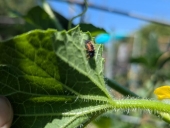
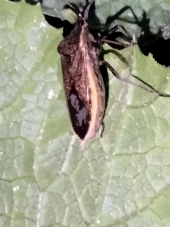
Then the Harlequin bugs started to show up. It's been quite the battle. Thankfully my son has been helping me. He has a very affective system. Unfortunately if he decides it's super bad he will defoliate the plant putting all the leaves in a bucket of soapy water. ( thank goodness my purple tree kale is such a tough plant, it's been naked twice this year) I don't use chemicals, even organic, and I understand there aren't really any predators for Harlequin bugs. That leaves hand picking. The only break is they are bright orange, and don't really try to escape. I find cutting them in half with my flower scissors works for me, and my son fills a bucket with soapy water and puts some of it in a cup. He puts the cup under the bugs and taps the leaves, and they fall into the cup. He says their defense is to drop to the ground, so he uses that to his advantage.
They haven't really done much damage, but it's been very frustrating, and a lot of work keeping them in check.  We will spend all this time removing all that we can, and for a few days it's great. Then one of us will spot one, which ends up being tons. I have even found them on my beans. They prefer brassica's, but will settle for beans if they have to.  
I keep hoping the hot weather will make them go away ( that's what happened with the stink bugs) But just the other day I noticed them in a little 3.5' X 3.5 bed with radish, melon, eggplant, nasturtium and onions. First I removed the radish, then we hand picked them. We got more than 100 bugs out of that bed. No we didn't count them, but when we had gotten a ton of bugs and didn't see any more I watered very well, and they climb up to get out of the water, and my son counted 25 more, so I know we removed way over 100 bugs. I'm lucky my son has been helping me, so we haven't lost anything that was super important, but I am worried about starting my winter veggies. For us winter is when we grow most of the brassica's. Last year, maybe the year before??  I had a rodent problem. I built wood frames covered in chicken wire that fit over several of my bed, like a lid. I should probably cover those with row cover, and put them over my garden beds. It may be the only way to be able to enjoy our brassica's.
Have any of you had to combat these prolific bugs? Do you have a better solution? I'm all ears. Thanks
 
master pollinator
Posts: 403
Location: UK
149
kids urban seed
  • Likes 7
  • Mark post as helpful
  • send pies
    Number of slices to send:
    Optional 'thank-you' note:
  • Quote
  • Report post to moderator
Yeah the mild winter really did set things up badly. I had the same with squash bugs this year, way earlier than normal. The ladybug timing on the aphids is interesting though, feels like the predator pressure does eventually catch up even if it takes a bit. Harlequin bugs are nasty to deal with though, hand picking eggs before they hatch is about the only thing that feels like it actually does something.
 
Posts: 10669
Location: a temperate, clay/loam spot on planet earth, the universe
3823
4
  • Likes 6
  • Mark post as helpful
  • send pies
    Number of slices to send:
    Optional 'thank-you' note:
  • Quote
  • Report post to moderator
We have them.
They are not a serious problem in our gardens although I see a few every year.

Now, I see, reading Jen's post, it's because we don't grow brassicas, none, at all😊

I gave up on them because of the cabbage moth and I do remember the harliquins cleaning up the kale one year but cabbage loopers were the reason I gave up.

This post will help me resist any temptation to buy some collard or kale seed....even to try as a fall/winter crop.

 
pollinator
Posts: 1857
Location: southern Illinois, USA
401
fungi foraging composting toilet food preservation wood heat homestead
  • Likes 12
  • Mark post as helpful
  • send pies
    Number of slices to send:
    Optional 'thank-you' note:
  • Quote
  • Report post to moderator
I found that among the brassicas, mustard seems to be their favorite.  If there is mustard around, they crowd onto it and mostly avoid the others.  I found that by leaving some mustard to go to seed, it keeps most of the bugs on itself, almost until it starts to dry down, and they leave other things like broccoli and collards alone enough to go on producing.  When the mustard finally does dry down, then they will move en masse and overwhelm the other things too, but I get several more weeks out of them this way.  Perhaps if I carefully gathered up all the mustard and it's infestation at exactly the right moment I might get some more control that way....idea to save!
 
gardener
Posts: 2288
Location: Zone 6b
1497
forest garden fungi books chicken fiber arts ungarbage
  • Likes 8
  • Mark post as helpful
  • send pies
    Number of slices to send:
    Optional 'thank-you' note:
  • Quote
  • Report post to moderator
Couple years ago I had very bad Harlequin bug infestation on my kale and I asked about it here
https://permies.com/t/259244/control-harlequin-bugs#2471591

At that time I was trying to deal with various type of pests individually: aphids, mites, squash bugs, borers, weevils, beetles, etc. Later I changed to a more holistic point of view of providing plants with nutrient they need so they are healthy and won't attract pests in the first place. It doesn't mean lots of NPK, a lot of time, it is the opposite. This year my garden is largely bug free now, but pollinators are abundant. There are still some around and they are only attracted to sick plants or part of the plant tissues and are not enough to cause damage.

Everyone's situation is unique so I don't think my mineral management is applicable to others, maybe except certain part of the Ozarks and Appalachian Piedmont. In your case, I probably would check soil pH. Over the growing season, organic matter breaks down and soil pH lowers. Brassicas in general like soil to be neutral to slightly alkaline. If you have multiple plants, test on one with lime water. If that's the cause, bugs will leave that plant alone in a few days.
 
Jen Fulkerson
gardener
Posts: 2088
Location: N. California
1091
2
hugelkultur kids cat dog fungi trees books chicken cooking medical herbs ungarbage
  • Likes 5
  • Mark post as helpful
  • send pies
    Number of slices to send:
    Optional 'thank-you' note:
  • Quote
  • Report post to moderator
Things have been better lately. I haven't seen any for a while until today. They seem to like the nasturtium for some reason. This time I found about a dozen. I watered very well, and looked every time I walked by that bed. I realize I probably won't get rid of them, but I'm content with keeping the numbers down. Even with the large numbers we have dealt with I haven't lost a plant to the Harlequin bugs.
I do plan on covering my seed starting table and cover with a row cover to protect my seedlings which will include a lot of members of the brassica family, just in case. You know what they say about an ounce of prevention.
 
In the renaissance, how big were the dinosaurs? Did you have tiny ads?
Build a better world. Literally.
https://wheaton-labs.com/bootcamp
reply
    Bookmark Topic Watch Topic
  • New Topic