• Post Reply Bookmark Topic Watch Topic
  • New Topic
permaculture forums growies critters building homesteading energy monies kitchen purity ungarbage community wilderness fiber arts art permaculture artisans regional education skip experiences global resources cider press projects digital market permies.com pie forums private forums all forums
this forum made possible by our volunteer staff, including ...
master stewards:
  • Carla Burke
  • Nancy Reading
  • paul wheaton
  • John F Dean
  • r ransom
  • Jay Angler
stewards:
  • Timothy Norton
  • Tereza Okava
  • Pearl Sutton
master gardeners:
  • Christopher Weeks
  • M Ljin
gardeners:
  • Jeremy VanGelder
  • Megan Palmer
  • Thekla McDaniels

Dove or pigeon?

 
steward & author
Posts: 48117
Location: Left Coast Canada
19984
10
art trees books chicken cooking fiber arts
  • Likes 6
  • Mark post as helpful
  • send pies
    Number of slices to send:
    Optional 'thank-you' note:
  • Quote
  • Report post to moderator
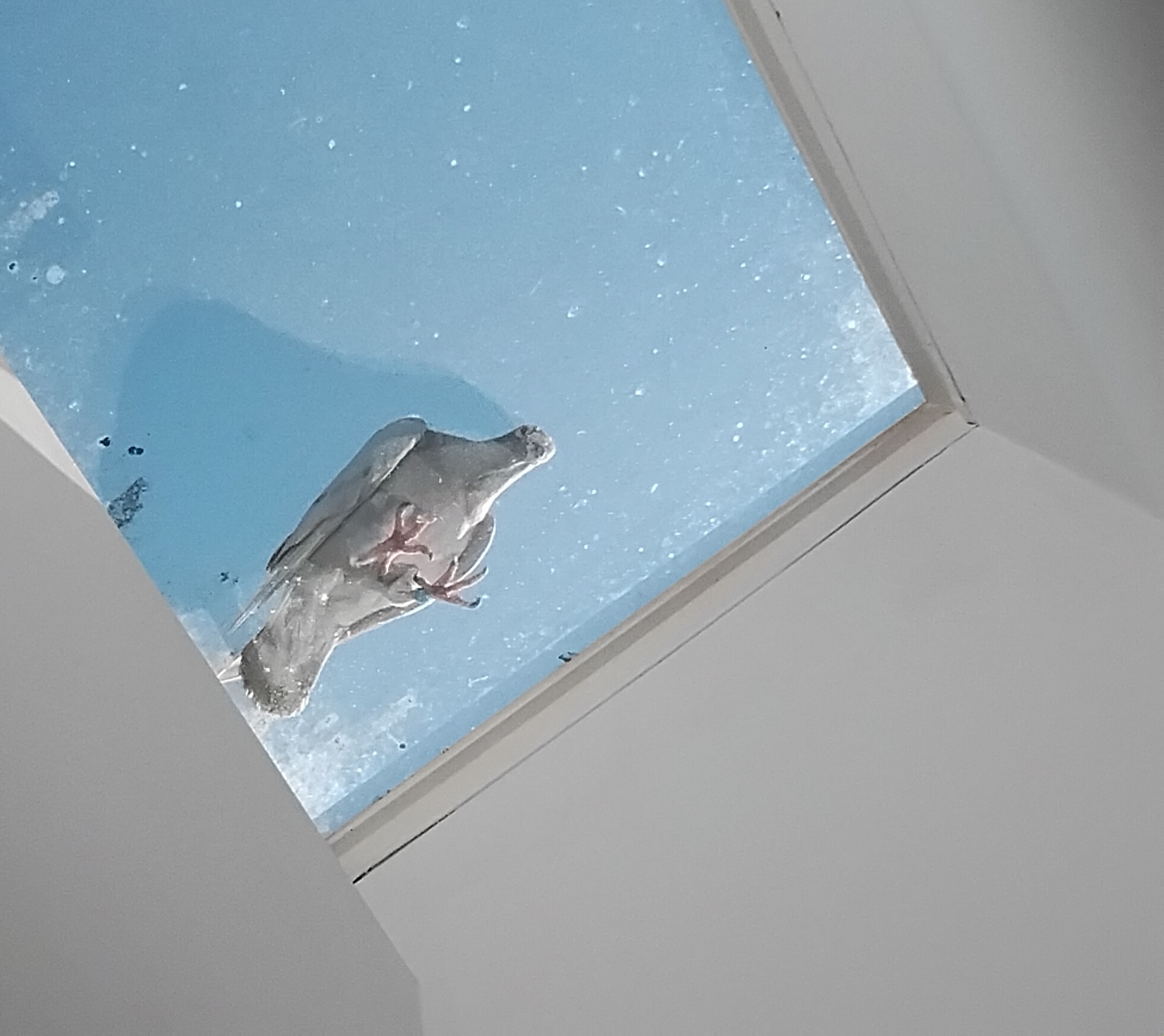
I apologize for the terrible picture, but this guy is shy.  

Thankfully he seemed to focused on trying to get at the chickpeas soaking in the kitcen to notice me.  

A pair of them settled in this spring.  At first I thought them our local wild dove, but this one has a band on his leg, looks domestic.   He's also way fast, like a pigeon/falcon.   Don't know if doves are fast like that.

Anyway, what can you tell me from a blurry photo?
Dove-possibly.jpg
Dove possibly
Dove possibly
 
pollinator
Posts: 323
Location: Middlebury, Vermont zone 5a
112
forest garden books food preservation fiber arts medical herbs homestead
  • Likes 11
  • Mark post as helpful
  • send pies
    Number of slices to send:
    Optional 'thank-you' note:
  • Quote
  • Report post to moderator
That's adorable!  I just googled it:
They belong to the exact same biological family, called Columbidae, and share the same general body shape, short legs, and cooing calls. There is no scientific difference between them.Naming DifferencesThe words come from different languages: "pigeon" comes from French, while "dove" comes from Germanic and Norse roots.People usually call smaller species doves and larger, stouter species pigeons.The common grey city bird is officially named the Rock Pigeon or Rock Dove.The white "doves" released at weddings are often just white-bred versions of the common rock pigeon or specific ringneck doves.
 
Posts: 2
Location: Chicago, Illinois USA
2
  • Likes 12
  • Mark post as helpful
  • send pies
    Number of slices to send:
    Optional 'thank-you' note:
  • Quote
  • Report post to moderator
Judging from your picture, this is a pigeon.  Heavy body, thick tail.  This is not a Mourning Dove, nor a Eurasian Collared Dove (ring neck dove).  The problem arrises because the word "dove" is applied to this whole group of birds, including pigeons.  The band on its leg indicates a few things:  it was born in captivity as a fancy bird and/or it is a racing pigeon that failed to return to its home.  Once a bird does this, the owner does not want the bird back, as it has shown its proclivity to stray.  Why do I know this?  I have been rescuing pigeons and domestic Eurasian Collared Doves for 25 years.  Hope this helps.
 
pollinator
Posts: 3566
Location: Meppel (Drenthe, the Netherlands)
1223
dog forest garden urban cooking bike fiber arts
  • Likes 8
  • Mark post as helpful
  • send pies
    Number of slices to send:
    Optional 'thank-you' note:
  • Quote
  • Report post to moderator
In Dutch both a 'pigeon' and a 'dove' are called 'duif'. There are different species here, with different names: rotsduif (rots=rock), holenduif (holen=caves), houtduif (hout=wood), tortelduif (it makes a sound like trrrr).
 
pollinator
Posts: 118
Location: Half acre on a hill in Central Alabama, Zone 8a and 8b
111
hugelkultur art forest garden fungi foraging food preservation cooking writing composting
  • Likes 11
  • Mark post as helpful
  • send pies
    Number of slices to send:
    Optional 'thank-you' note:
  • Quote
  • Report post to moderator
What we usually call pigeons are doves, too. Rock doves. They're very nearly the same, but that does nothing to answer your question.
Real pigeons are tasty, and most have been hunted out of existence in North America. All but the Band-tailed Pigeon, which is still common along the Pacific coast.

So let's check off the knowns: All these birds are fast. All can be gray. All can have red legs, with the exception of the Band-tailed Pigeons, whose feet tend to be yellow. Rock doves and Band-tailed Pigeons are larger, thicker, and darker gray than your bird.

"Doves" as we know them, are smaller, slimmer, and usually lighter in color (dove gray), like your visitor. There are two common varieties of doves in your neighborhood, native Mourning Doves and Eurasian Collared Doves. The collared ones are bigger than the native ones, are a little bit lighter gray, and have a black crescent at the back of the neck. The leg band may be the giveaway, since the invasive Eurasians are being studied to determine numbers, location, and territory expansion. They're probably tasty, too, and may not be protected from hunting since they are an invasive species. If you decide to harvest them, let the authorities know about the information on the band, and where you found them.

Edit: Just seeing Elise Hahn's comment above. I yield to their wisdom and experience.

 
r ransom
steward & author
Posts: 48117
Location: Left Coast Canada
19984
10
art trees books chicken cooking fiber arts
  • Likes 8
  • Mark post as helpful
  • send pies
    Number of slices to send:
    Optional 'thank-you' note:
  • Quote
  • Report post to moderator
Thanks all.

The wild doves here get larger than most city pigeons, but i don't know much about domestic pigeons.

I don't know if the photo shows it, but this guy has a lot of fluffy white feathers surrounding his beak.  Like capachino foam.  That's something new to me.
 
pollinator
Posts: 895
Location: Clemson, SC ("new" Zone 8a)
225
11
  • Likes 10
  • Mark post as helpful
  • send pies
    Number of slices to send:
    Optional 'thank-you' note:
  • Quote
  • Report post to moderator
Impossible to tell for sure from the picture, but probably a pigeon.  In any case, what we call Pigeons are just Eurasian Rock Doves by another name.  Pigeons, Mourning Doves, Collared Doves, little Ground Doves... they are all different species in the same genus.  It's similar to "pumpkins" vs "winter squash," a distinction without a difference.
 
Posts: 18
1
6
  • Likes 5
  • Mark post as helpful
  • send pies
    Number of slices to send:
    Optional 'thank-you' note:
  • Quote
  • Report post to moderator
Pssst....dont tell the Dove hunters in Oklahoma that their doves are pigeons.  

Real pigeons are tasty, and most have been hunted out of existence in North America. All but the Band-tailed Pigeon, which is still common along the Pacific coast.

Need to come to Oklahoma!  The blue/gray pigeon is alive and well. They are one nasty bird around here. If they can, they will target your car!


So let's check off the knowns: All these birds are fast. All can be gray. All can have red legs, with the exception of the Band-tailed Pigeons, whose feet tend to be yellow. Rock doves and Band-tailed Pigeons are larger, thicker, and darker gray than your bird.

"Doves" as we know them, are smaller, slimmer, and usually lighter in color (dove gray), like your visitor. There are two common varieties of doves in your neighborhood, native Mourning Doves and Eurasian Collared Doves. The collared ones are bigger than the native ones, are a little bit lighter gray, and have a black crescent at the back of the neck. The leg band may be the giveaway, since the invasive Eurasians are being studied to determine numbers, location, and territory expansion. They're probably tasty, too, and may not be protected from hunting since they are an invasive species. If you decide to harvest them, let the authorities know about the information on the band, and where you found them.

Lots of Ring neck doves here. They're well fed. We have grain fields (wheat, sorghum, barley) around here. So yeah they are well fed. Hunting season opens 1 September. Look out!

 
Inge Leonora-den Ouden
pollinator
Posts: 3566
Location: Meppel (Drenthe, the Netherlands)
1223
dog forest garden urban cooking bike fiber arts
  • Likes 8
  • Mark post as helpful
  • send pies
    Number of slices to send:
    Optional 'thank-you' note:
  • Quote
  • Report post to moderator
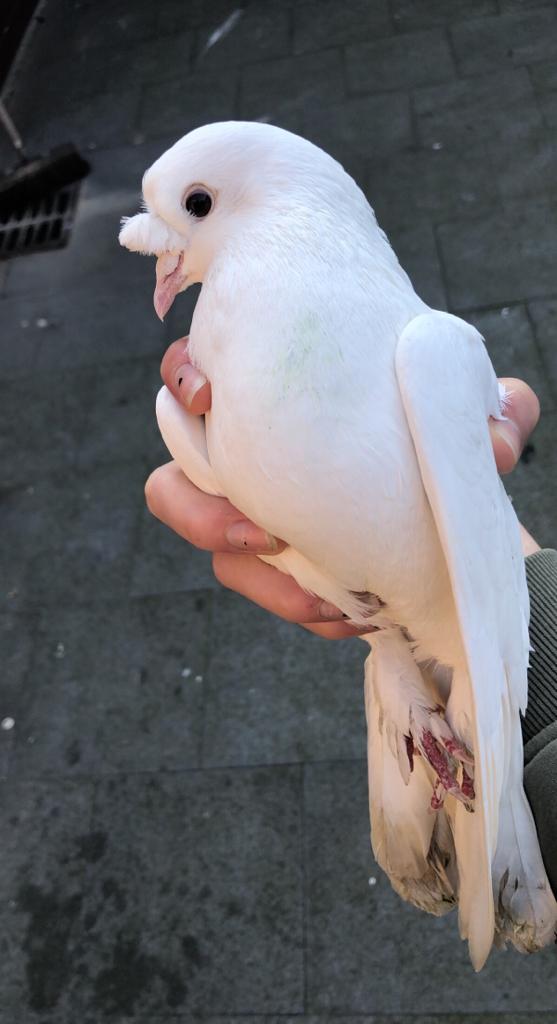
Does the pigeon/dove look like this one?


This is a bred (cultivated?) variety.
The one on the photo is reported as 'missing', but I don't think it felw all the way from the Netherlands to Canada ;-)
 
pollinator
Posts: 1669
Location: zone 4b, sandy, Continental D
456
  • Likes 8
  • Mark post as helpful
  • send pies
    Number of slices to send:
    Optional 'thank-you' note:
  • Quote
  • Report post to moderator
How closely 2 species are related comes down to whether they can successfully breed offsprings. With this in mind, I looked up that aspect:
"Can they mate? Yes, closely related species within the family can sometimes interbreed, especially in captivity.
Are offspring possible?
Hybridization is rare and usually happens only with human intervention.
Fertility: If a hybrid is successfully produced, it is almost always sterile (unable to have babies).
Safety risk: Housing them together can be dangerous. Pigeons are significantly larger and can severely or fatally injure a smaller dove during aggressive or mating behaviors.

Additionally:
"There is no scientific or taxonomic difference between pigeons and doves. Both terms refer to birds in the single biological family Columbidae (order Columbiformes), which contains over 300 species. The distinction is entirely linguistic and informal rather than genetic or evolutionary".
So the distinction is mostly linguistic, not scientific.
Yet, they do not interbreed naturally and when they do, the offspring is sterile.
Well, that didn't light my lantern.
Another thing they have in common, which is rare: They both produce a crop "milk" to rear their young to almost adult size. That's why pigeons, that are a bit larger that doves can be raised as "squabs", (a normal size pigeon that has never flown) for meat.
 
r ransom
steward & author
Posts: 48117
Location: Left Coast Canada
19984
10
art trees books chicken cooking fiber arts
  • Likes 2
  • Mark post as helpful
  • send pies
    Number of slices to send:
    Optional 'thank-you' note:
  • Quote
  • Report post to moderator

Inge Leonora-den Ouden wrote:Does the pigeon/dove look like this one?


This is a bred (cultivated?) variety.
The one on the photo is reported as 'missing', but I don't think it felw all the way from the Netherlands to Canada ;-)


The other one looks a lot more like that, but with slightly colours of our local dove.  I got to look up what kind of dove that is one day.  I call that one the girl and the darker one in the photo the boy because he's always on lookout and the light one vanished about a month ago.

The bit about the beak with the feathers is right.
 
r ransom
steward & author
Posts: 48117
Location: Left Coast Canada
19984
10
art trees books chicken cooking fiber arts
  • Likes 3
  • Mark post as helpful
  • send pies
    Number of slices to send:
    Optional 'thank-you' note:
  • Quote
  • Report post to moderator
I found the human who is the care giver for this bird.  

Pigeon.  

He wasn't sure what type, but the dove colouring we saw  a few months ago was their young colours that looked like size and shape of the local wild dove.
 
What I don't understand is how they changed the earth's orbit to fit the metric calendar. Tiny ad:
12 Better World books +12 SKIP books +12 Cob Style DVDs
https://permies.com/wiki/380865/World-books-SKIP-books-Cob
reply
    Bookmark Topic Watch Topic
  • New Topic