
|

|

|
|

|

|
|
|
|
|
|
|
|
|
|

|

|

|

|
 6


 9
5
Invasive plants are Earth's way of insisting we notice her medicines. Stephen Herrod Buhner
Everyone learns what works by learning what doesn't work. Stephen Herrod Buhner


 7

* Follow your curiosity , Do what you Love *
Permaculture page on Simperi website
7
Leaftide - garden planner w/ 1228 plant types. Need permaculture testers for fruit trees & perennials. Free Pro month for detailed feedback, even just suggesting plants
8
Anne Miller wrote:I plant flowers that pests don't like, such as rosemary, marigolds, and sweet alyssum.
I use soil health to protect plants.
Also their are plants that are resistant to pest and disease.
Water is your friend.
Can you share what you have learned about ways to make a desert sustainable.
3
Cristobal Cristo wrote:My experience with pests is limited to earwigs and gophers in my constant failure garden. My temperatures are lower than UAE, averaging 38 C in summer, reaching 44 C on hottest days. Nights are always cool, below 22 C. Very low humidity for 6 months. 400 mm average precipitation. Continentalized Mediterranean climate.
Hot places need water preservation, but it works as double edged sword.
Mulching with chips/dust attracts earwigs that destroy leaves of "protected" plants beyond self repair threshold. Now I start mulching only if temperatures reach 35 C and it's already past the earwig hatching period.
Deep irrigation attracts gophers that follow the row and destroy every single plant in the row. Planting tomatoes, peppers in wire cages (1 cm opening) protects them sufficiently. Even putting a bottomless wire cylinder around the stalk did help as gophers seemed to be attracted to the bottom part of the stalk only.
Cucurbits were also severed just above the ground. Next year I'm going to plant them over stainless (so it will last many seasons) wire mesh (40x40 cm pieces). Cages would be less practical, because all stalks lay on the ground and wider area has to be protected. Thicker stalks will probably merge with the wire.
Gopher destruction was less problematic in hand watered garden.
One year I got aphids on zucchini so I washed them off with water spray.
In early spring I notice large grasshoppers that destroy cucurbits. I try to catch them and feed to chicken.
I don't encounter anything else, probably because nothing seems to want to grow here so pests are not attracted but maybe because I'm visited by around 20 species of native small birds.
2
Nina Surya wrote:This past summer here in central France was extremely hot and dry, and "nothing moved" - the plants didn't grow.
The prediction for next year is repetition of the hot and dry summer, and I'm planning to pack my plants close to each other, playing with different heights and structures of plants, in order to create lots of foliage, to shade and create humidity and hold moisture in the ground.
I hope I'll get it all working.
I think air humidity might be more of a key factor than anything else.
Watching this conversation like a hawk, eager to learn
2
Joao Winckler wrote:Packing plants close to shade the soil makes sense to me. Bare ground is what cooks first, even in our much milder UK heatwaves. Interesting point about humidity too, I'd not thought of that as being as important as the temperature.
7
Maryam Green wrote:I'm curious, have you found a way to keep the soil moist without attracting too many pests?
6
Morgan Brooks | Plant Style Home - indoor plants, flowers and home gardening: https://plantstylehome.com/
4
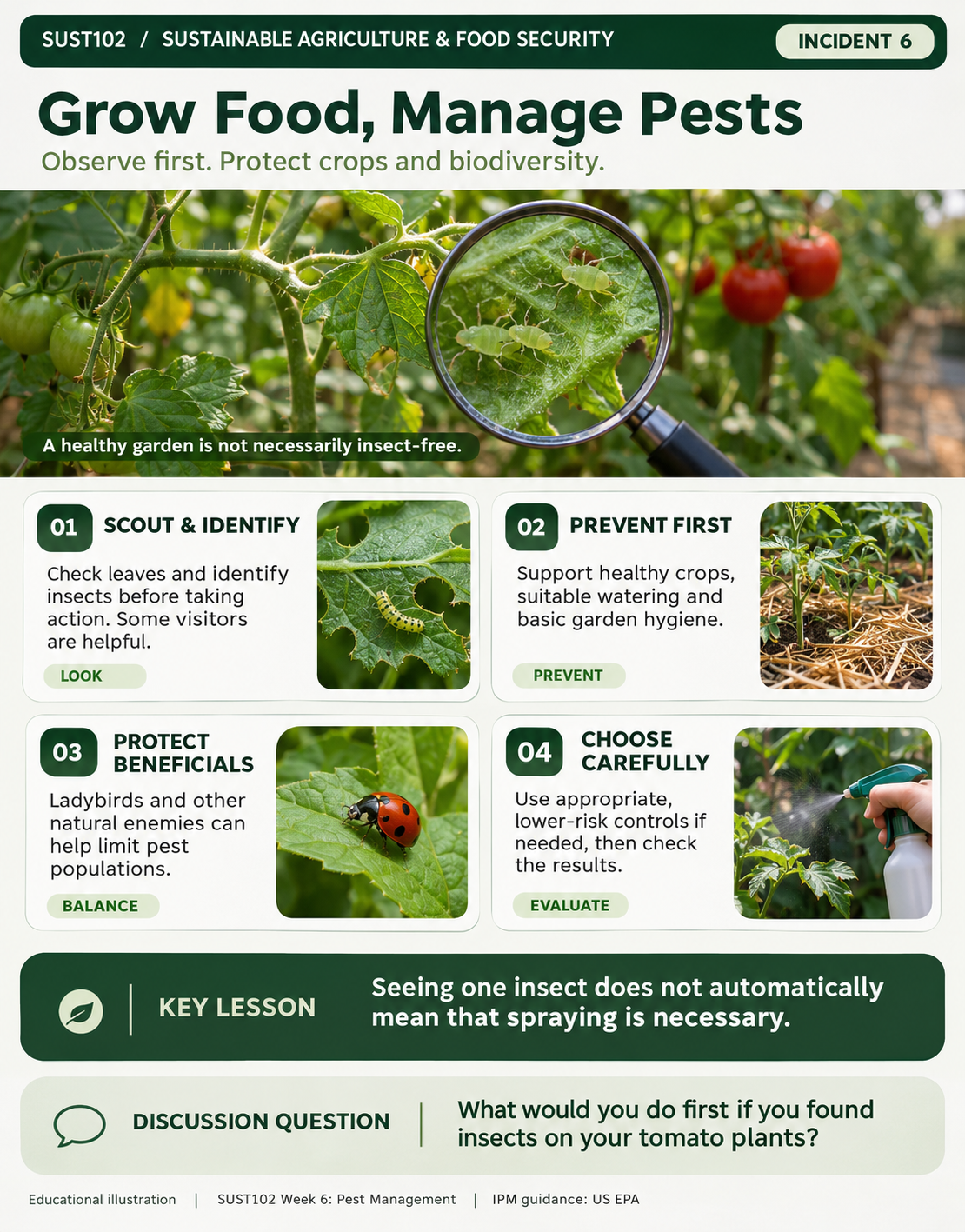
Morgan Brooks wrote:Hi Maryam, thank you for starting this thread, and I really like the observe first idea in your infographic. In my own garden, the method that has helped me most is checking plants closely a few times a week, especially under the leaves, and washing off small aphid clusters with a strong spray of plain water before they spread. I also plant marigolds and herbs like basil and rosemary near vegetables, which seems to bring in more helpful insects and gives pests somewhere else to go.
For your second question, I try not to act on the first insect I see. I look for real damage, like leaves being eaten faster than new growth appears, clusters spreading, or young seedlings wilting. A few holes on a healthy plant usually sorts itself out.
One small addition for your infographic could be a note on watering at the base in the morning, so leaves stay dry and plants cope better with heat. Good luck with your project, and I hope the hot climate tips here help.
9
sow…reap…compost…repeat
4
4
Are you packing the stones densely around the plant to create semi-continuous protective shield?
Densely packed could also deter gophers from emerging near the main stalk and chopping it off.
sow…reap…compost…repeat
1
|
Obey! Obey this tiny ad!
Building a Better World in Your Backyard - physical book SIGNED by both authors!
https://permies.com/t/393911/Building-World-Backyard-physical-book
|