• Post Reply Bookmark Topic Watch Topic
  • New Topic
permaculture forums growies critters building homesteading energy monies kitchen purity ungarbage community wilderness fiber arts art permaculture artisans regional education skip experiences global resources cider press projects digital market permies.com pie forums private forums all forums
this forum made possible by our volunteer staff, including ...
master stewards:
  • Carla Burke
  • John F Dean
  • Nancy Reading
  • r ransom
  • Jay Angler
  • Timothy Norton
stewards:
  • paul wheaton
  • Pearl Sutton
  • Anne Miller
master gardeners:
  • Christopher Weeks
  • M Ljin
gardeners:
  • Jim Garlits
  • thomas rubino
  • William Bronson

Three Sisters Year 4

 
pollinator
Posts: 1020
Location: Illinois
236
  • Likes 1
  • Mark post as helpful
  • send pies
    Number of slices to send:
    Optional 'thank-you' note:
  • Quote
  • Report post to moderator
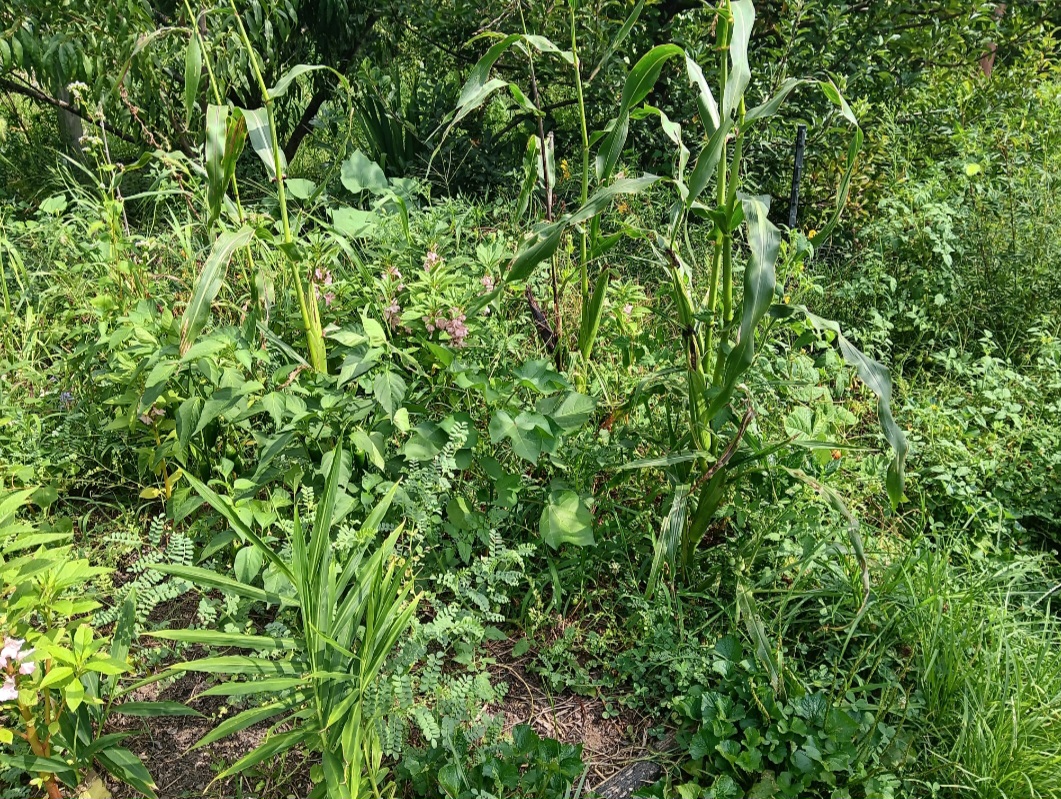
The garden as a whole. You can see the weaker area to the left.
PXL_20260627_231611059.jpg
Indian Garden
Indian Garden
 
Thom Bri
pollinator
Posts: 1020
Location: Illinois
236
  • Likes 6
  • Mark post as helpful
  • send pies
    Number of slices to send:
    Optional 'thank-you' note:
  • Quote
  • Report post to moderator
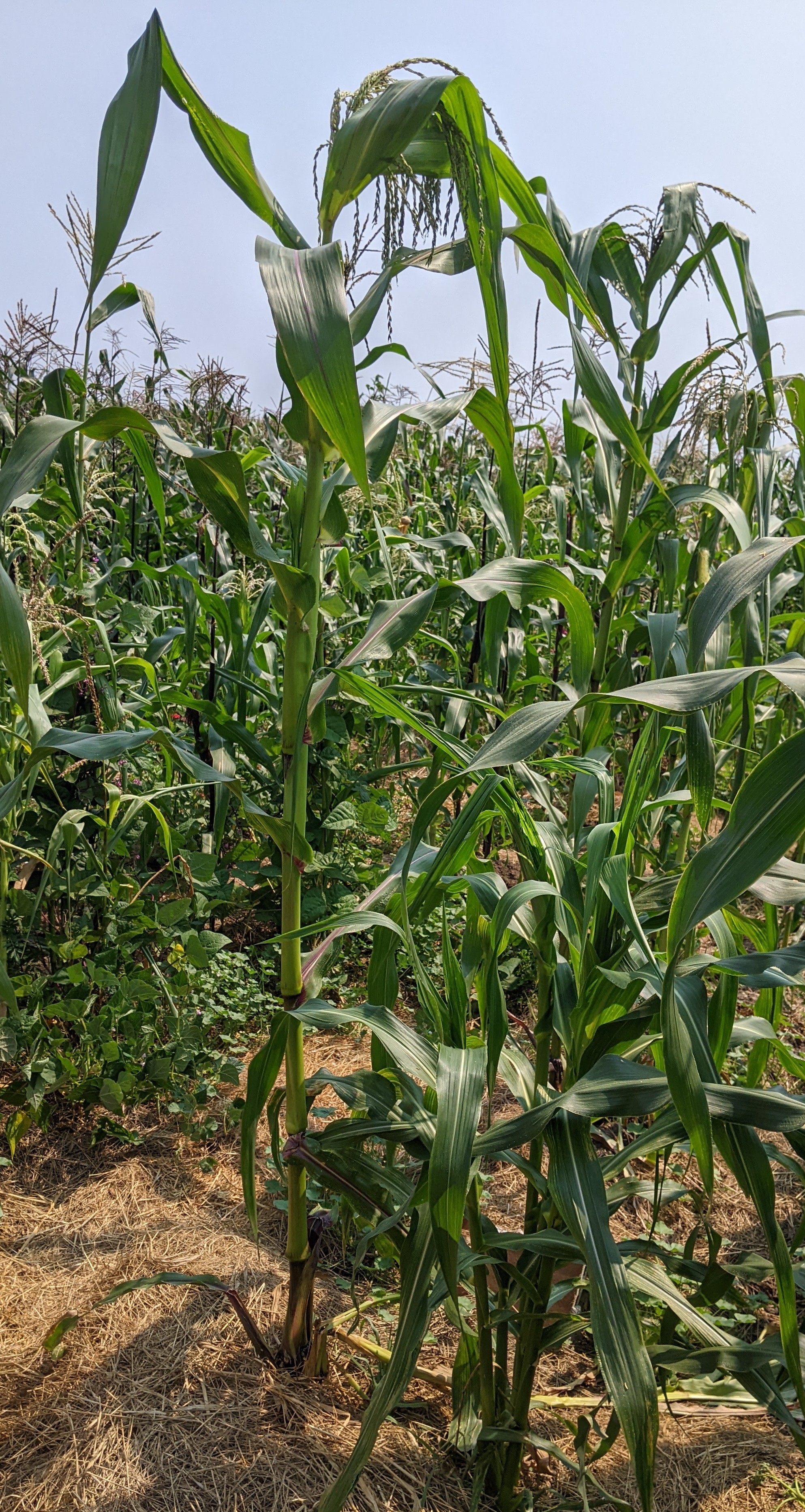
Sweet corn finally catching up. A few of the very early variety are tasseling, even though only about 2 feet tall. That's fine. That variety makes lots of tiny, very good little ears.
As you can see, it is well-guarded.
PXL_20260627_231724628.jpg
Early Sweet Corn
Early Sweet Corn
 
gardener
Posts: 2242
Location: Zone 6b
1434
forest garden fungi books chicken fiber arts ungarbage
  • Likes 6
  • Mark post as helpful
  • send pies
    Number of slices to send:
    Optional 'thank-you' note:
  • Quote
  • Report post to moderator
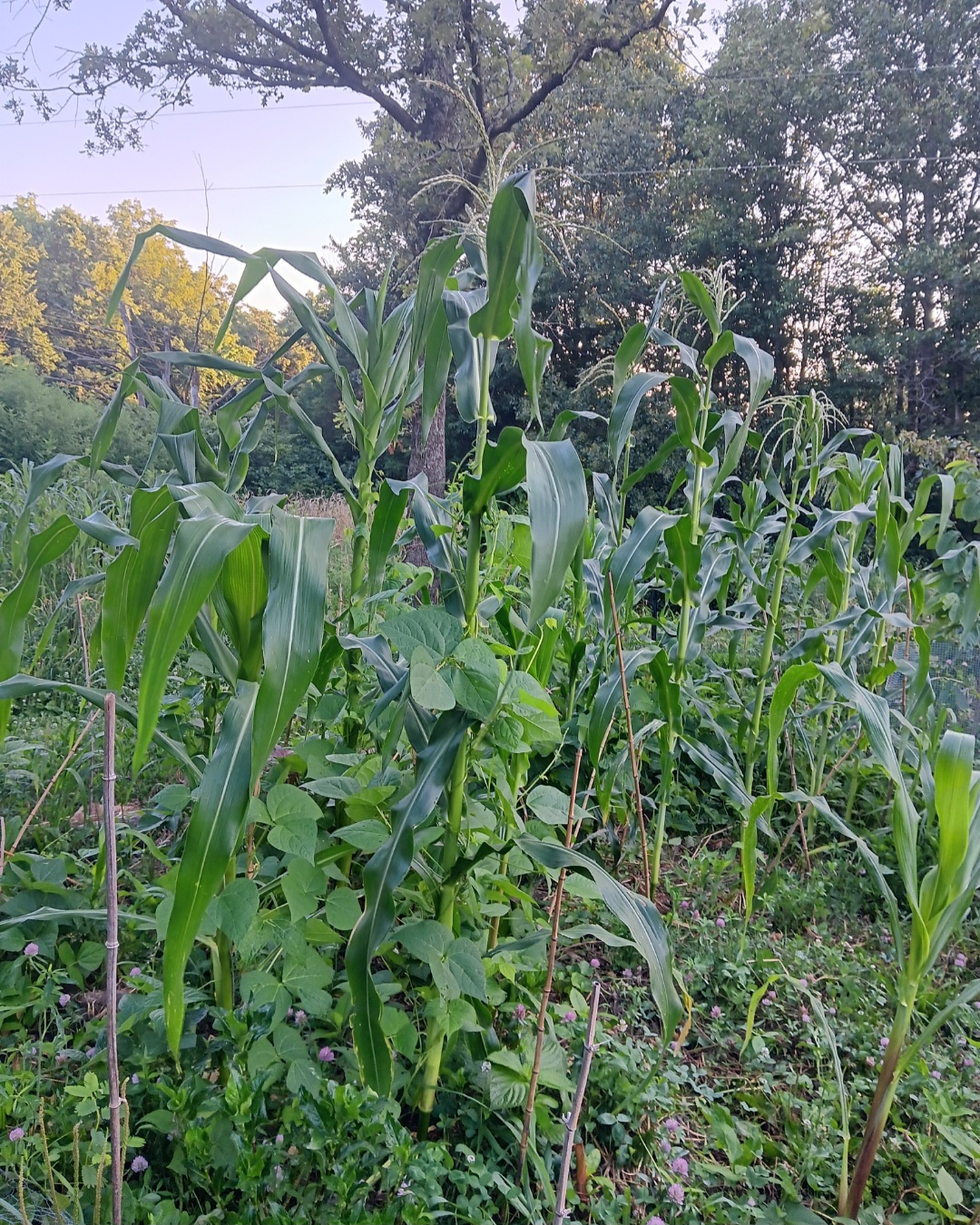
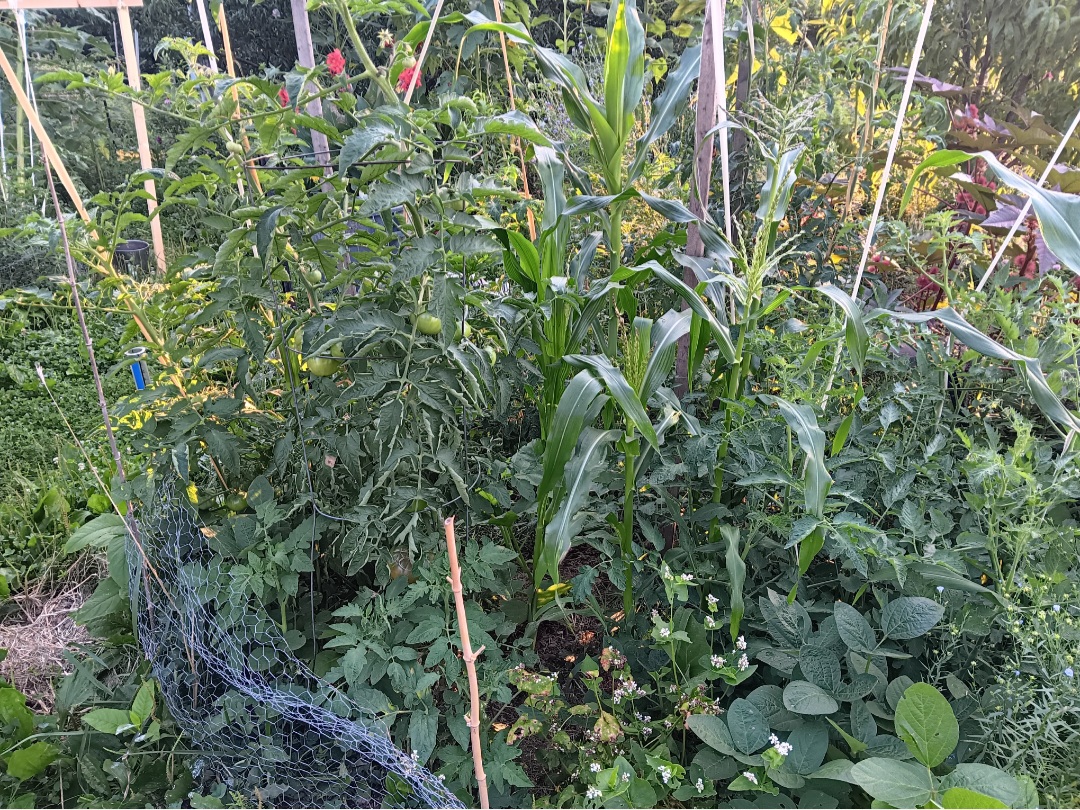
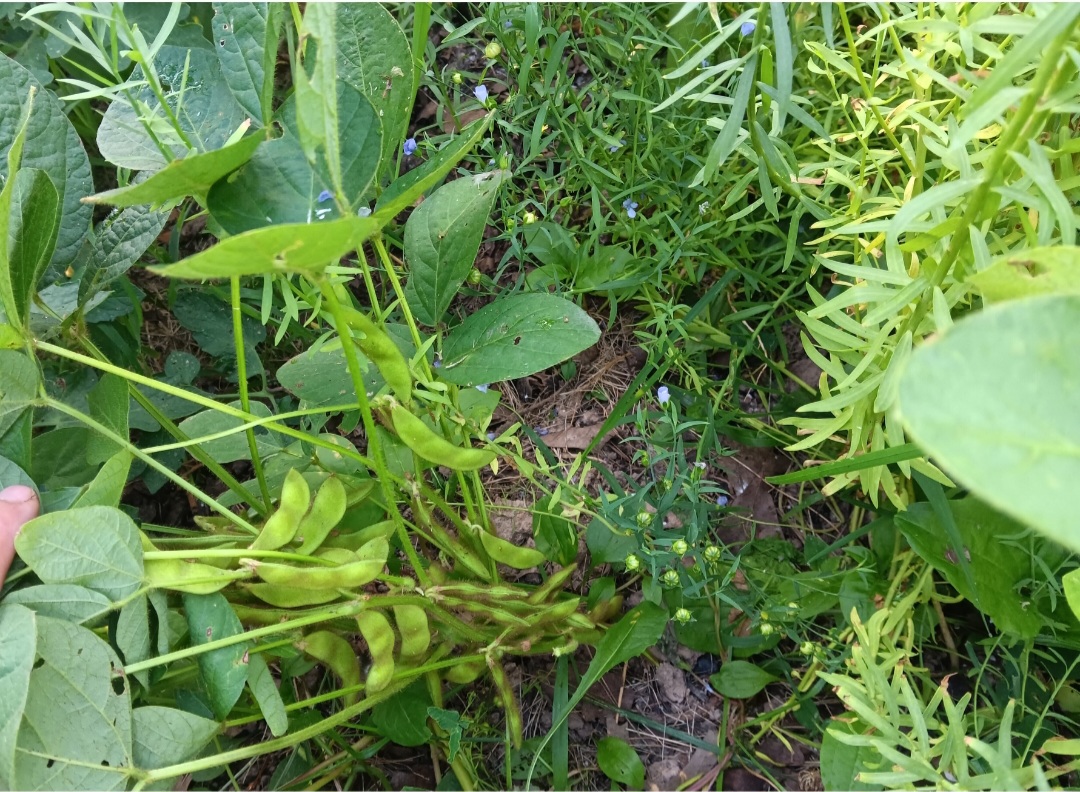
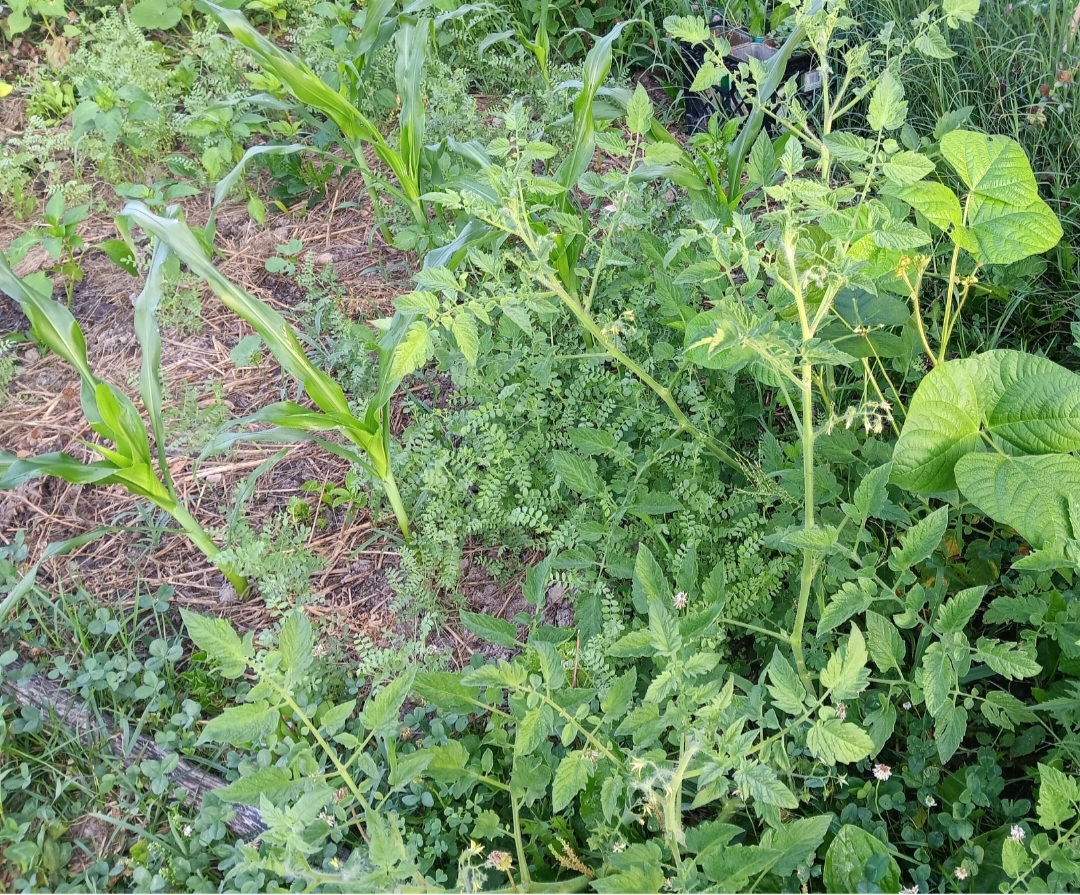
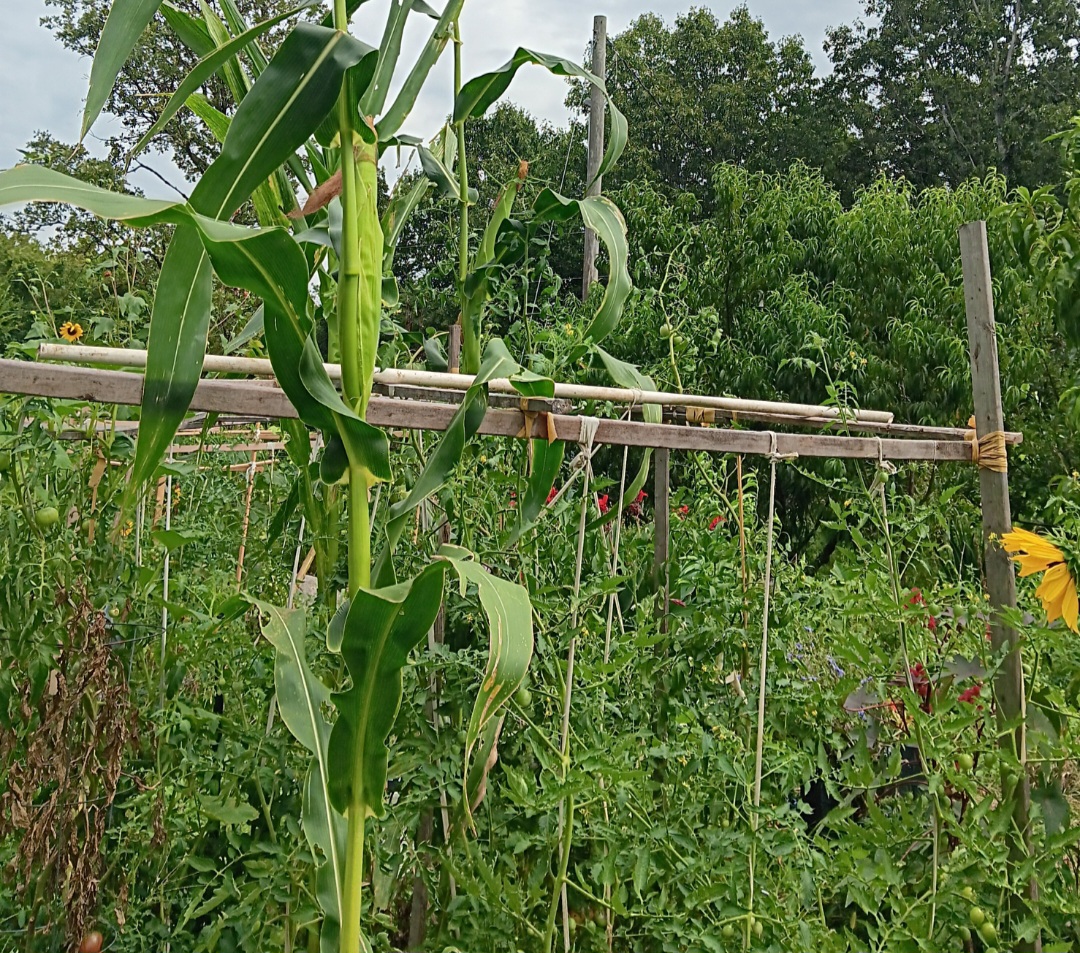
I tried different beans in the polyculture with corns.
1. Climbing indeterminate kidney beans + tall corns planted the same time in Mid April. More yard long beans planted later on.
2. Determinate edamame with short early corns.
3. Chickpeas as ground cover for late planted corns in hot weather.
They all work out fine except for short corns+ climbing beans. I just harvested some ears for sweet corns as the plants are swallowed by the vines.
20260702_065104.jpg
 tasseling inca giant with climbing beans
tasseling inca giant with climbing beans
20260702_064946.jpg
Montana morado amid tomatoes and edamame
20260702_064954.jpg
Tankuro edamame pods filling
20260702_065406.jpg
More planted in June
 
Thom Bri
pollinator
Posts: 1020
Location: Illinois
236
  • Mark post as helpful
  • send pies
    Number of slices to send:
    Optional 'thank-you' note:
  • Quote
  • Report post to moderator
May, love your mix of plants! It's pretty.
You lose some corn production this way, but gain in other ways.
 
Thom Bri
pollinator
Posts: 1020
Location: Illinois
236
  • Likes 5
  • Mark post as helpful
  • send pies
    Number of slices to send:
    Optional 'thank-you' note:
  • Quote
  • Report post to moderator
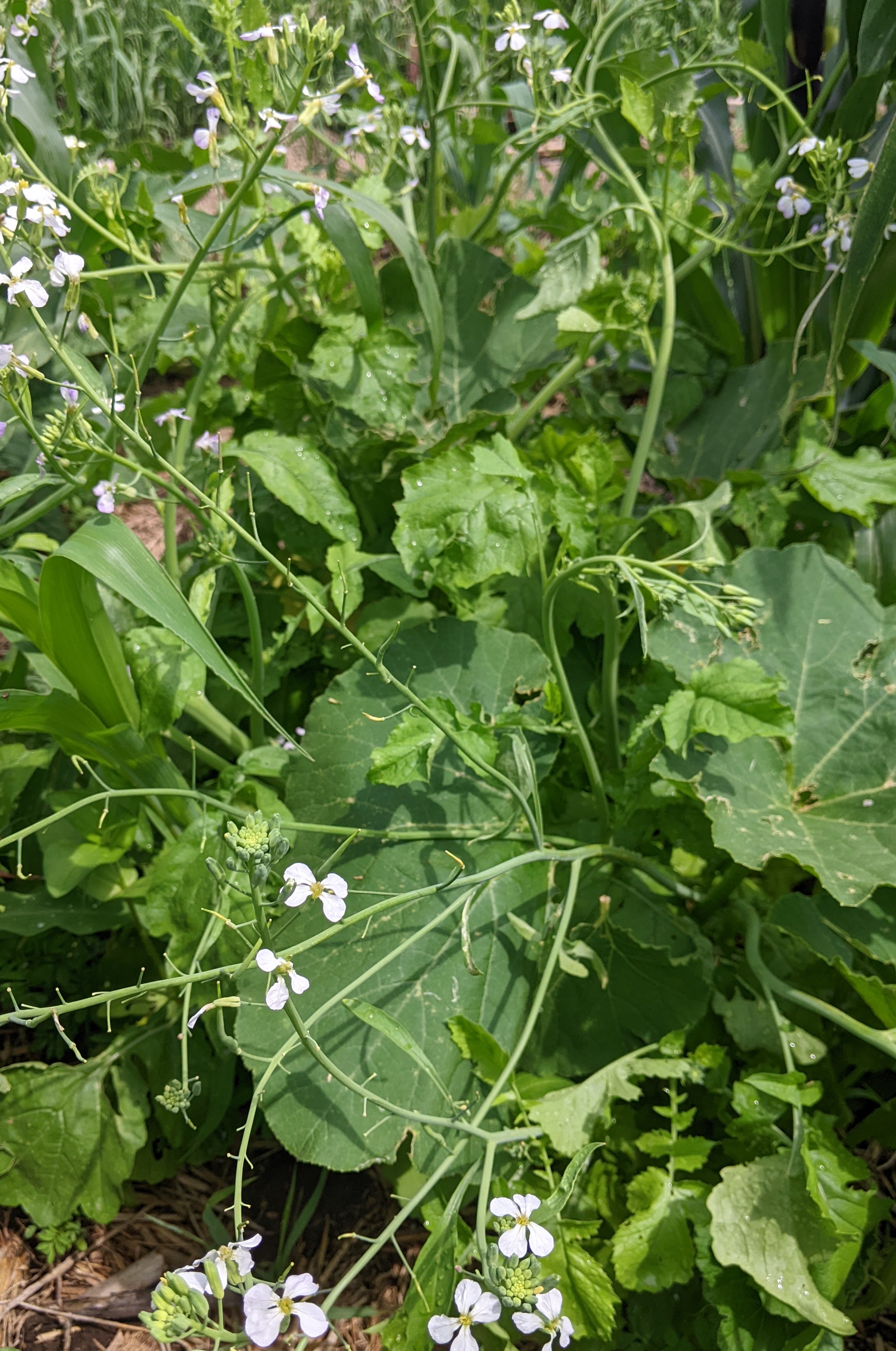
Some companion plants.
PXL_20260703_193834178.jpg
Radish blooming
Radish blooming
 
Thom Bri
pollinator
Posts: 1020
Location: Illinois
236
  • Likes 5
  • Mark post as helpful
  • send pies
    Number of slices to send:
    Optional 'thank-you' note:
  • Quote
  • Report post to moderator
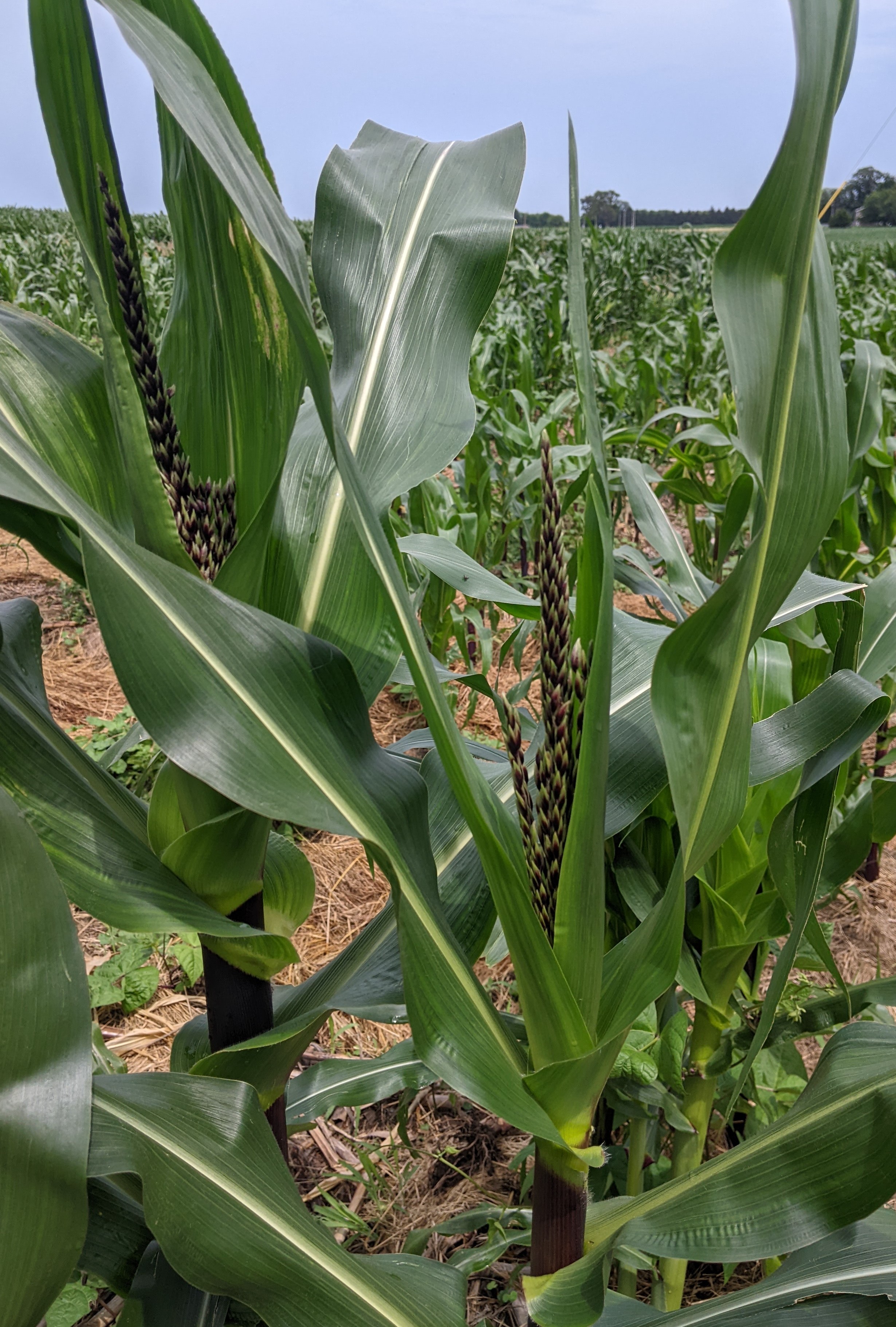
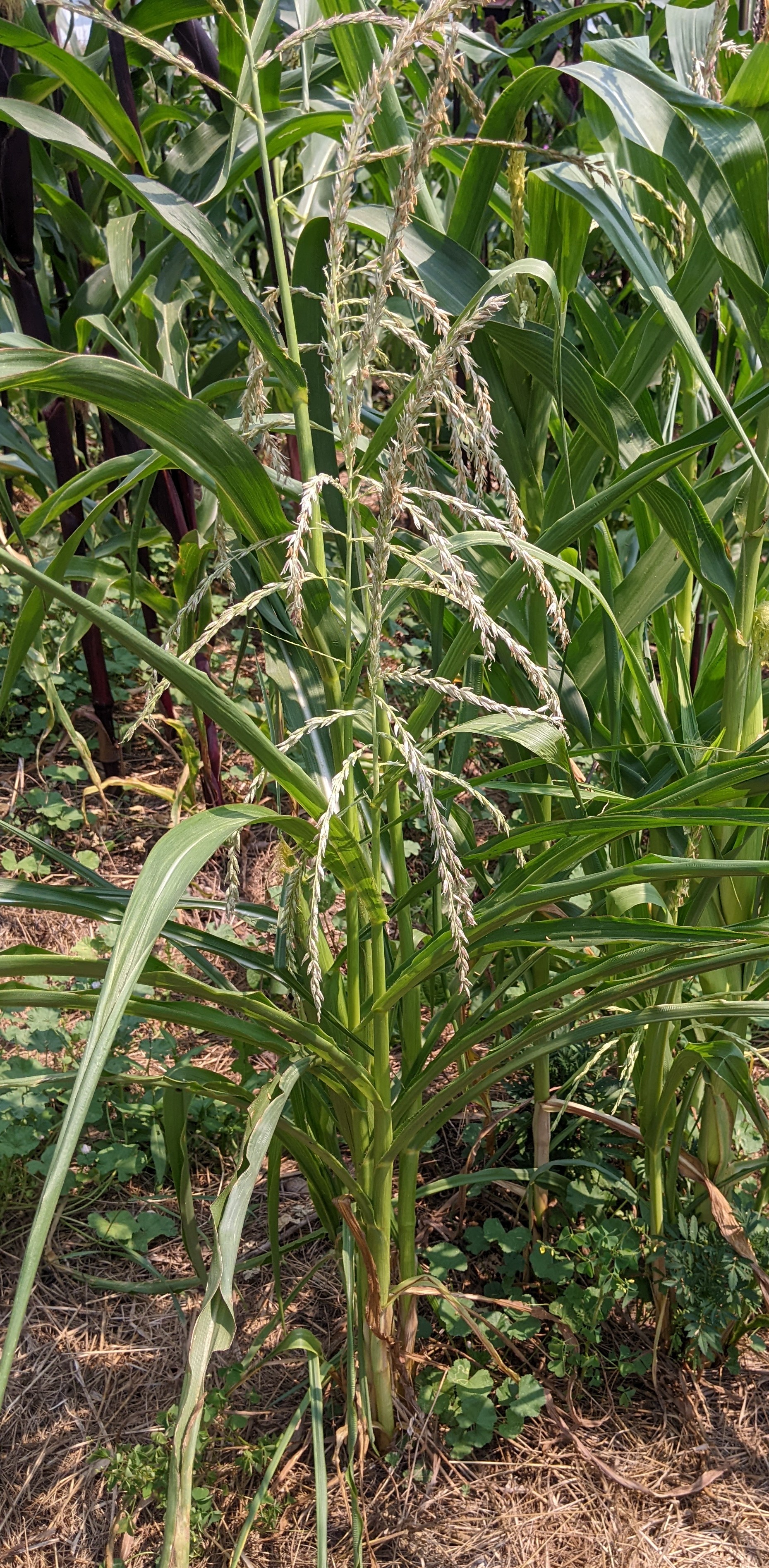
Best corn is about 6 feet tall now and I noticed tassels today. Planted 5/9/26, that makes 55 days exactly. Right on with last year in spite of very different weather. My tallest corn is taller than the commercial hybrid corn planted about the same time, but the average is about the same. Open pollinated corn is highly variable. Also, quite a few hills were replanted so they are delayed, and I have my primary seed, which is proven reliable, and also 3 different commercial open pollinated varieties and one more variety I saved from prior years.

Maize Morado
Mountain Morado
Dakota Black
Glass Gem
My corn. I need to think up a cool name for my corn.

I can count on and predict what my corn will do, but all the others, who knows? I may end up with a couple of useless rows with no production. Last year my Glass Gem failed, even though it had been very good in prior years. I think next year I will plant mostly my own seed rather than unknowns.
PXL_20260703_193453917.jpg
Corn Tasseling
Corn Tasseling
 
Thom Bri
pollinator
Posts: 1020
Location: Illinois
236
  • Likes 4
  • Mark post as helpful
  • send pies
    Number of slices to send:
    Optional 'thank-you' note:
  • Quote
  • Report post to moderator
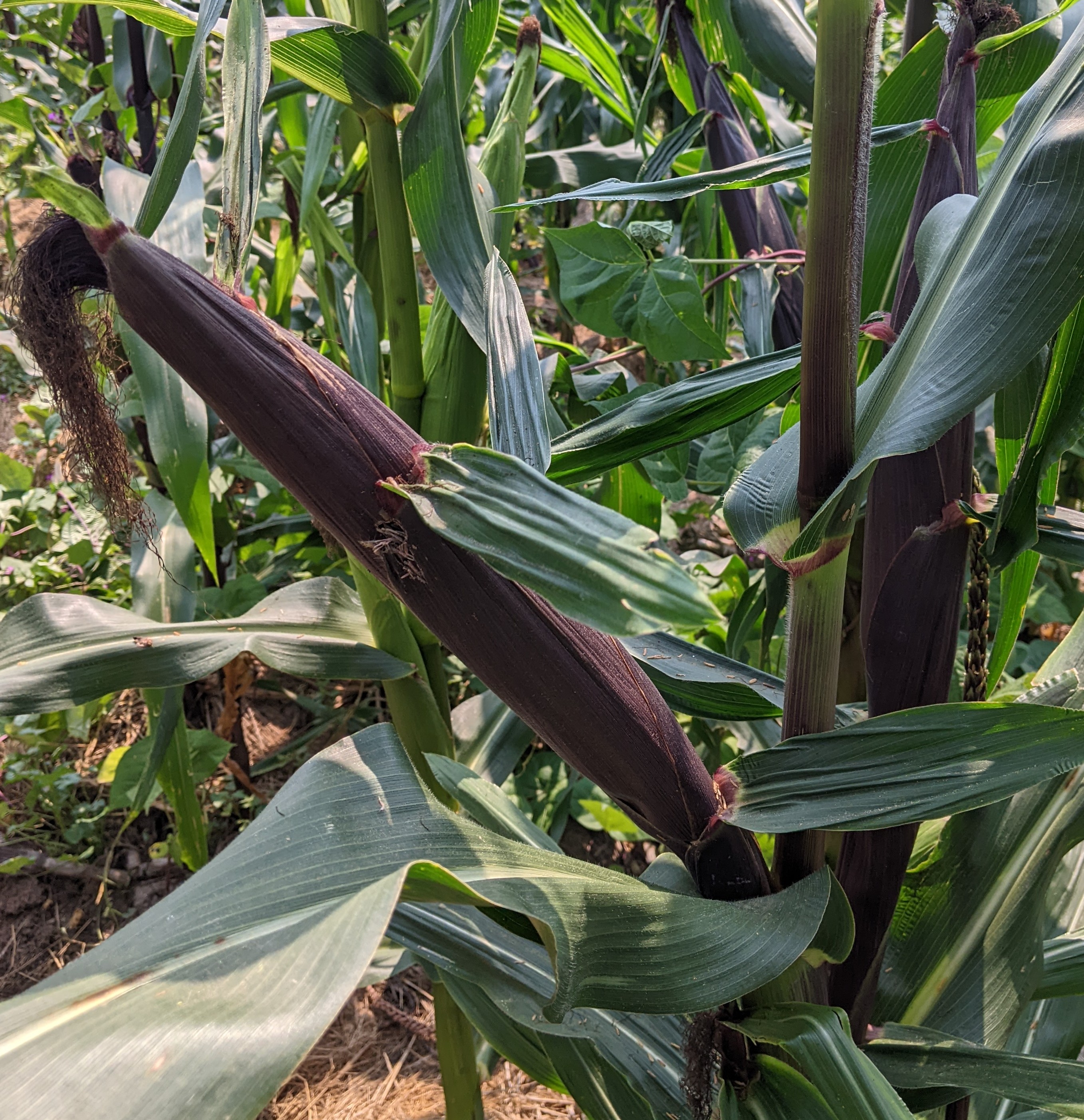
Mountain Morado. Already setting ears.
PXL_20260703_193741236.jpg
[MountainMoradocorn.jpg]
 
Thom Bri
pollinator
Posts: 1020
Location: Illinois
236
  • Likes 1
  • Mark post as helpful
  • send pies
    Number of slices to send:
    Optional 'thank-you' note:
  • Quote
  • Report post to moderator
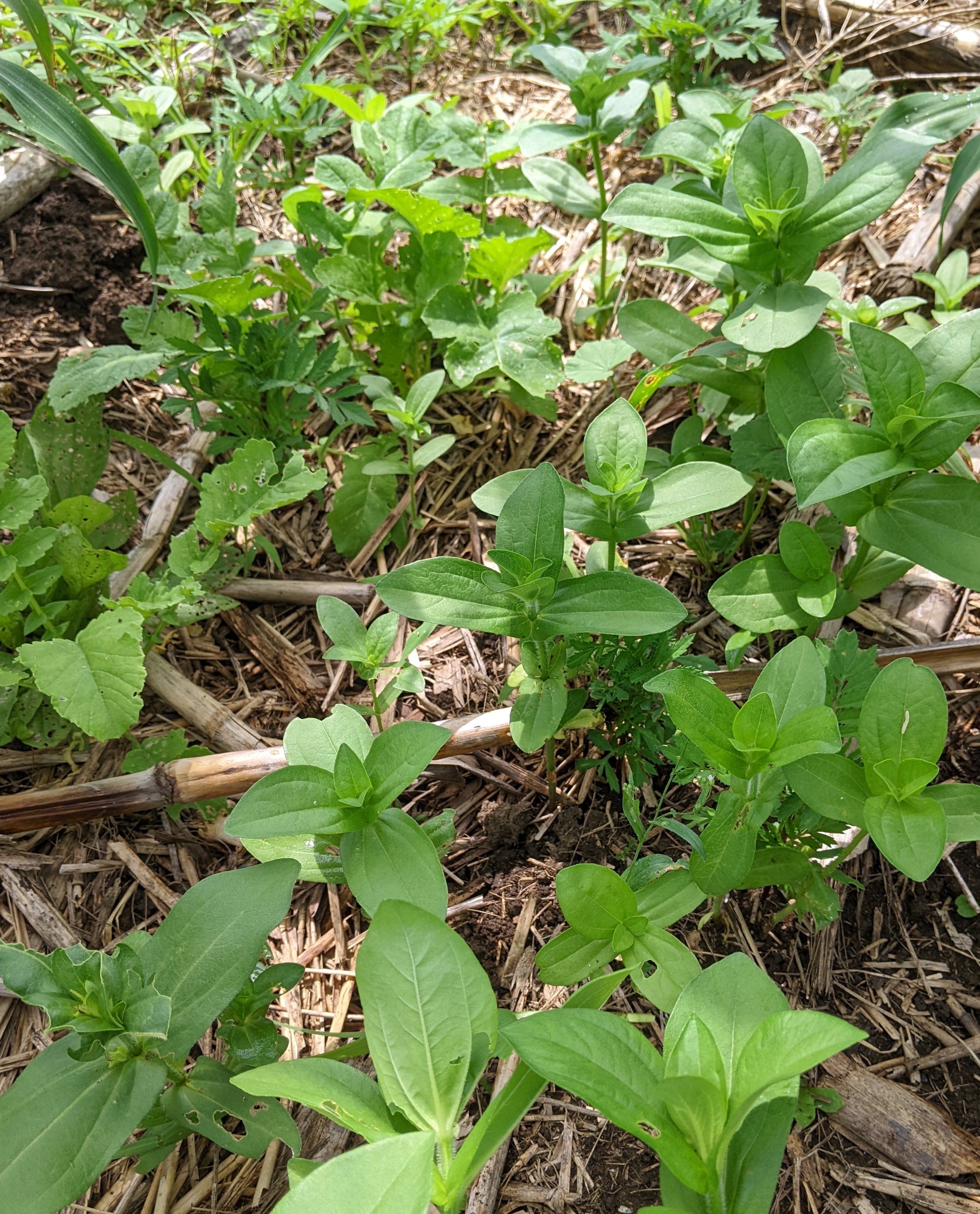
More companions:
PXL_20260703_193914576.jpg
Zinnia and Marigold
Zinnia and Marigold
 
Thom Bri
pollinator
Posts: 1020
Location: Illinois
236
  • Likes 5
  • Mark post as helpful
  • send pies
    Number of slices to send:
    Optional 'thank-you' note:
  • Quote
  • Report post to moderator
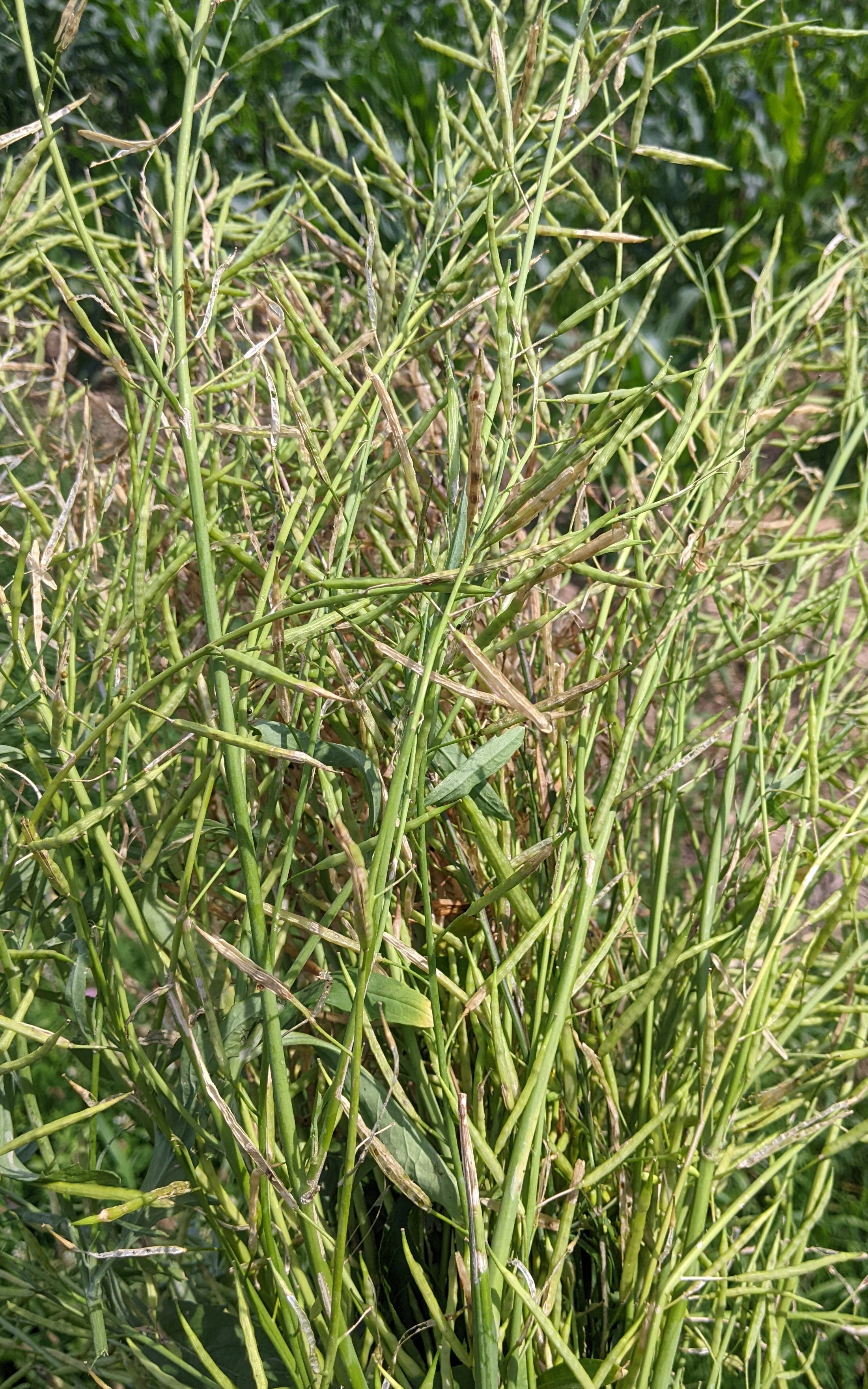
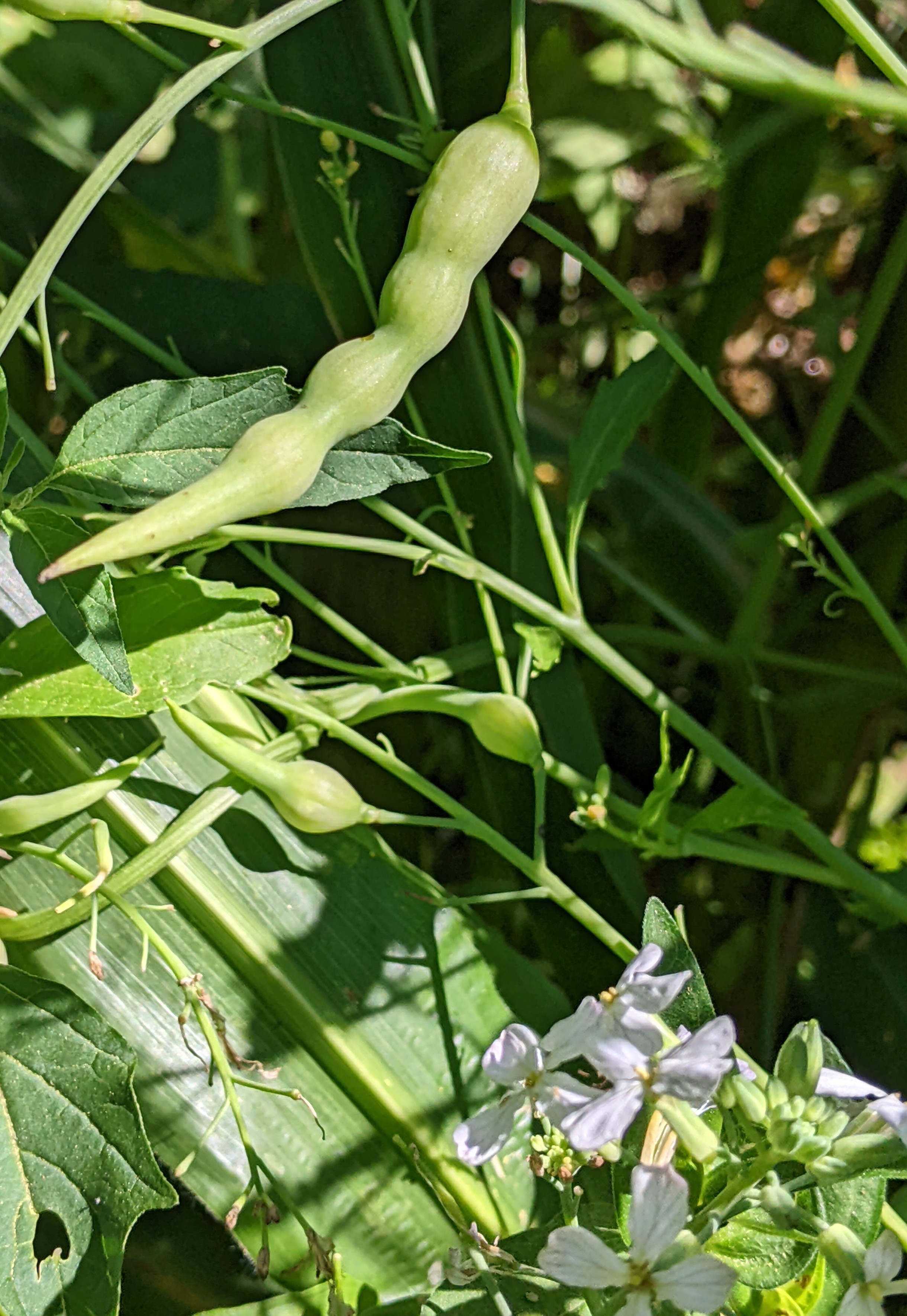
I planted a few radishes, on the theory that the scent would dissuade squash bugs and vine borers. I have killed a few squash bugs so far but not many, yet. Unfortunately seeds are expensive so I didn't plant nearly as many radishes as I had wanted to. But I have lots of various random brassicas that I have planted over the years in my back yard garden. They come up and we eat a few of the leaves and they go to seed. I don't bother planting more and I don't remember what exactly they are.

Right now the earliest of those are going to seed. So I cut a bunch of the seed heads and took them to the 3-sisters garden and scattered them around. I expect a lot of them to grow and by next year they will be an established, permanent part of the garden flora.

Some still kind of green so as they dry I'll kick them around to spread the seeds. And, lots more will be making seeds over the summer so I'll keep doing this until late fall.
PXL_20260703_202059368.jpg
Brassica seeds
Brassica seeds
 
Thom Bri
pollinator
Posts: 1020
Location: Illinois
236
  • Likes 7
  • Mark post as helpful
  • send pies
    Number of slices to send:
    Optional 'thank-you' note:
  • Quote
  • Report post to moderator
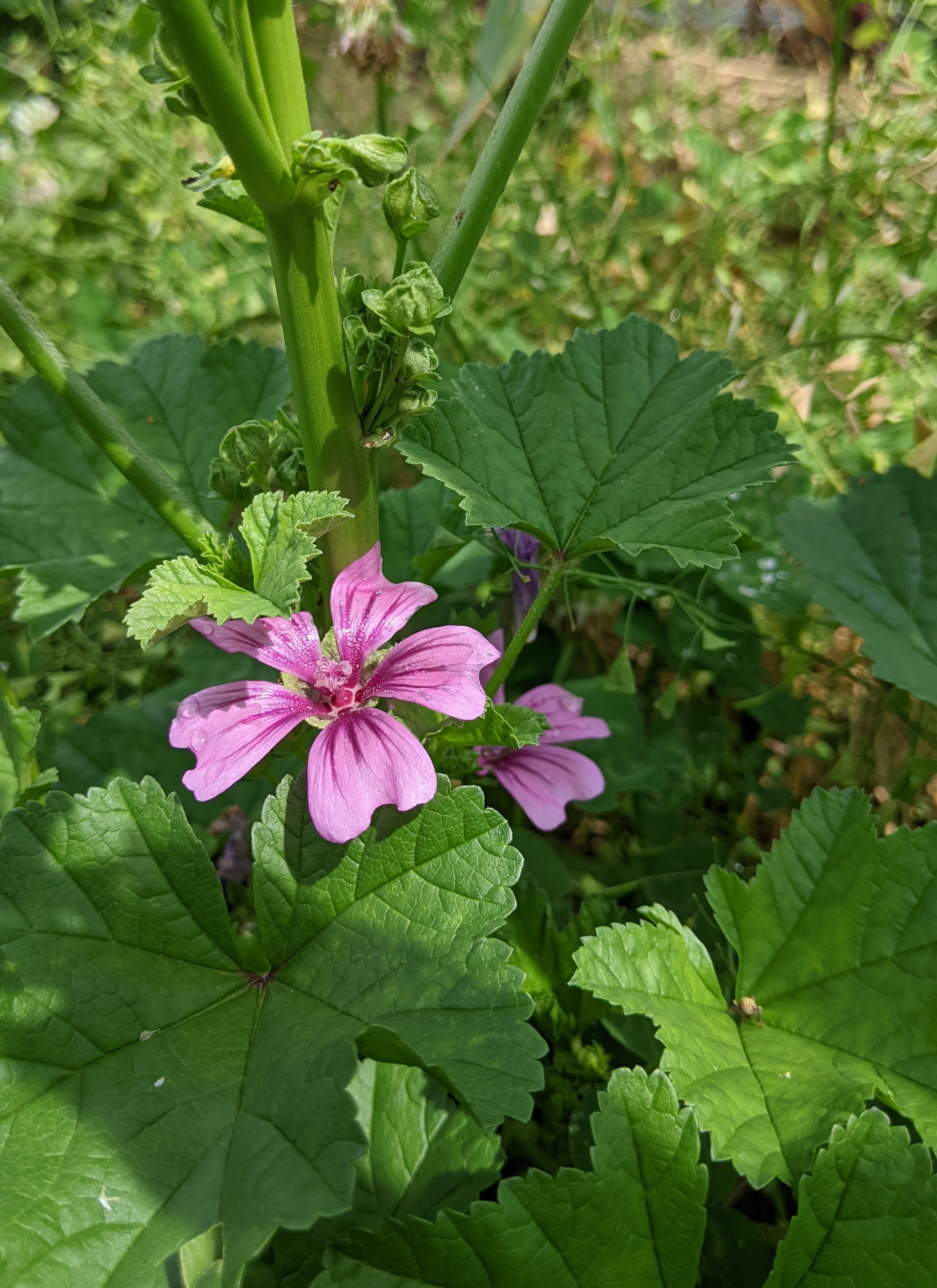
Just a nice flower pic. Spotted this the other day between the corn hills. Nothing I have planted there, but I do have it at home. I assume the seeds got mixed in with the zinnia and marigold seeds I collected last fall, and it got here by accident when I scattered the seeds. Anyway, I like it and will let it go to seed.
French Hollyhock, a type of mallow:
PXL_20260703_194257433.jpg
French Hollyhock
French Hollyhock
 
Thom Bri
pollinator
Posts: 1020
Location: Illinois
236
  • Likes 5
  • Mark post as helpful
  • send pies
    Number of slices to send:
    Optional 'thank-you' note:
  • Quote
  • Report post to moderator
The row of Mountain Morado. It looks pretty lame. Next year I am skipping all the experimental varieties and planting my own corn. One goal of this garden is to test if production gradually drops off if corn is planted year after year using the old Indian methods. I can't get good data if I play around with other factors at the same time.
PXL_20260706_153424982.jpg
[Thumbnail for PXL_20260706_153424982.jpg]
 
Thom Bri
pollinator
Posts: 1020
Location: Illinois
236
  • Likes 2
  • Mark post as helpful
  • send pies
    Number of slices to send:
    Optional 'thank-you' note:
  • Quote
  • Report post to moderator
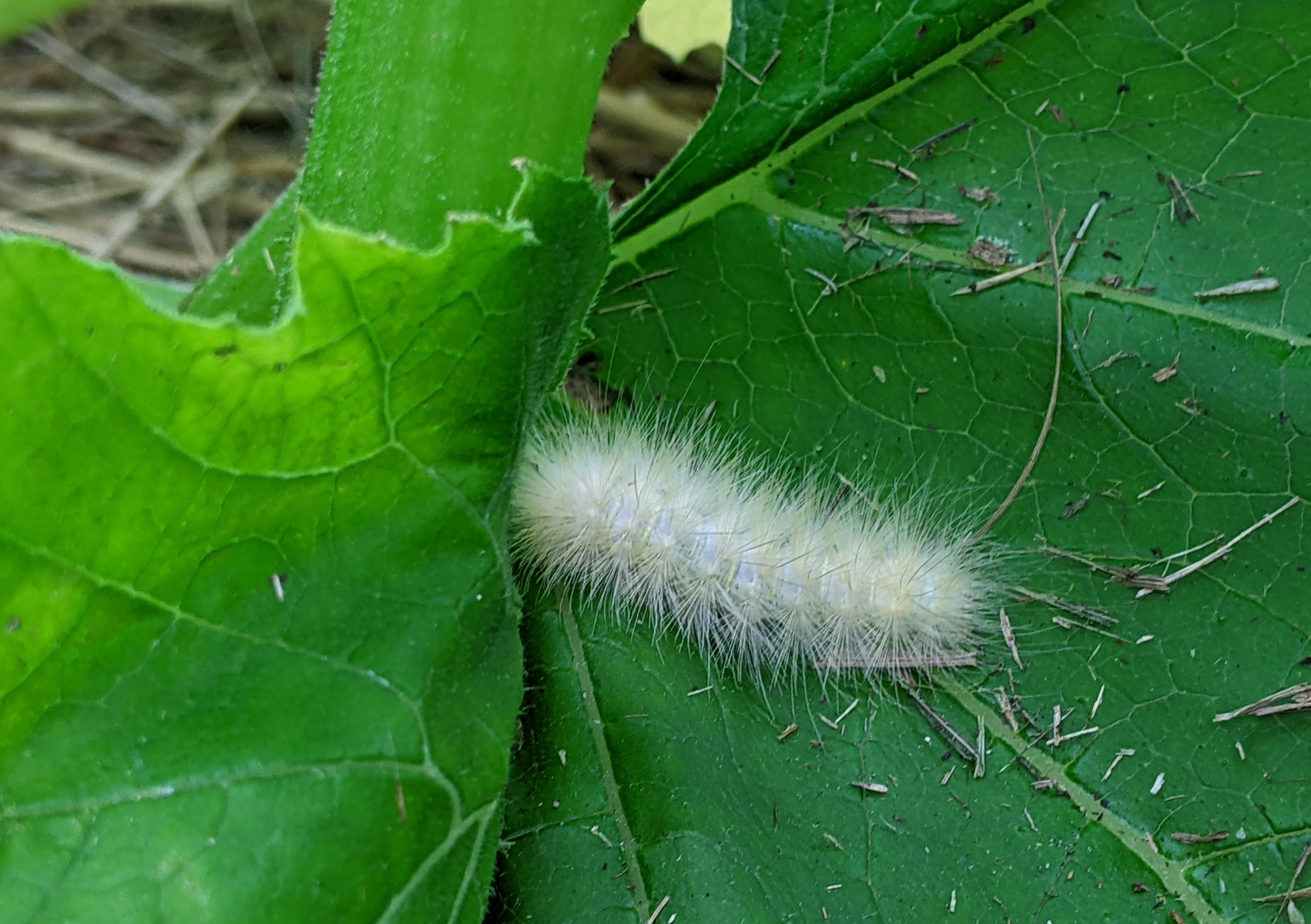
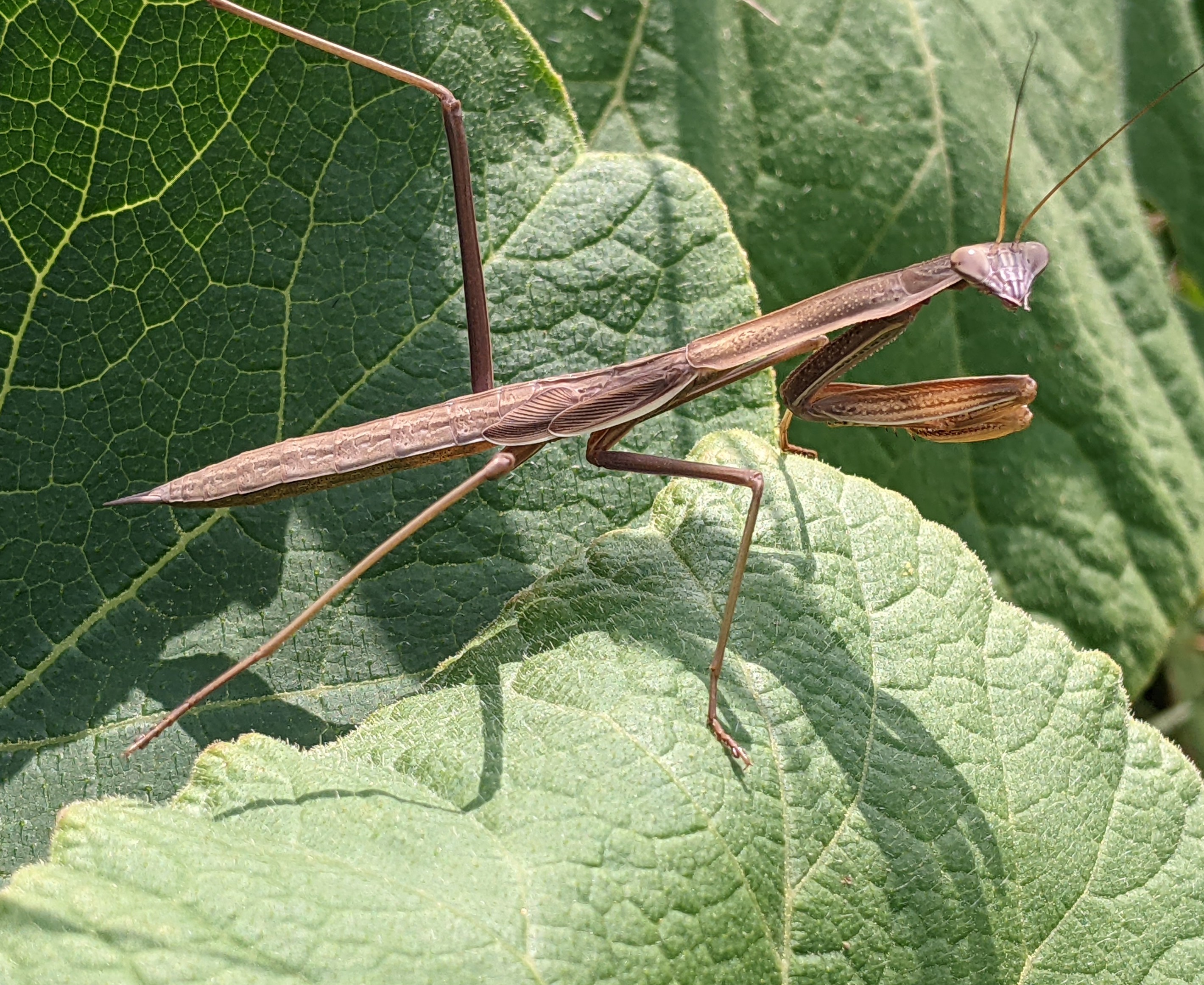
A little friend on my pumpkin. I wonder what sort of bug it will turn in to.
PXL_20260709_173218527.jpg
Caterpillar
Caterpillar
 
Thom Bri
pollinator
Posts: 1020
Location: Illinois
236
  • Likes 4
  • Mark post as helpful
  • send pies
    Number of slices to send:
    Optional 'thank-you' note:
  • Quote
  • Report post to moderator
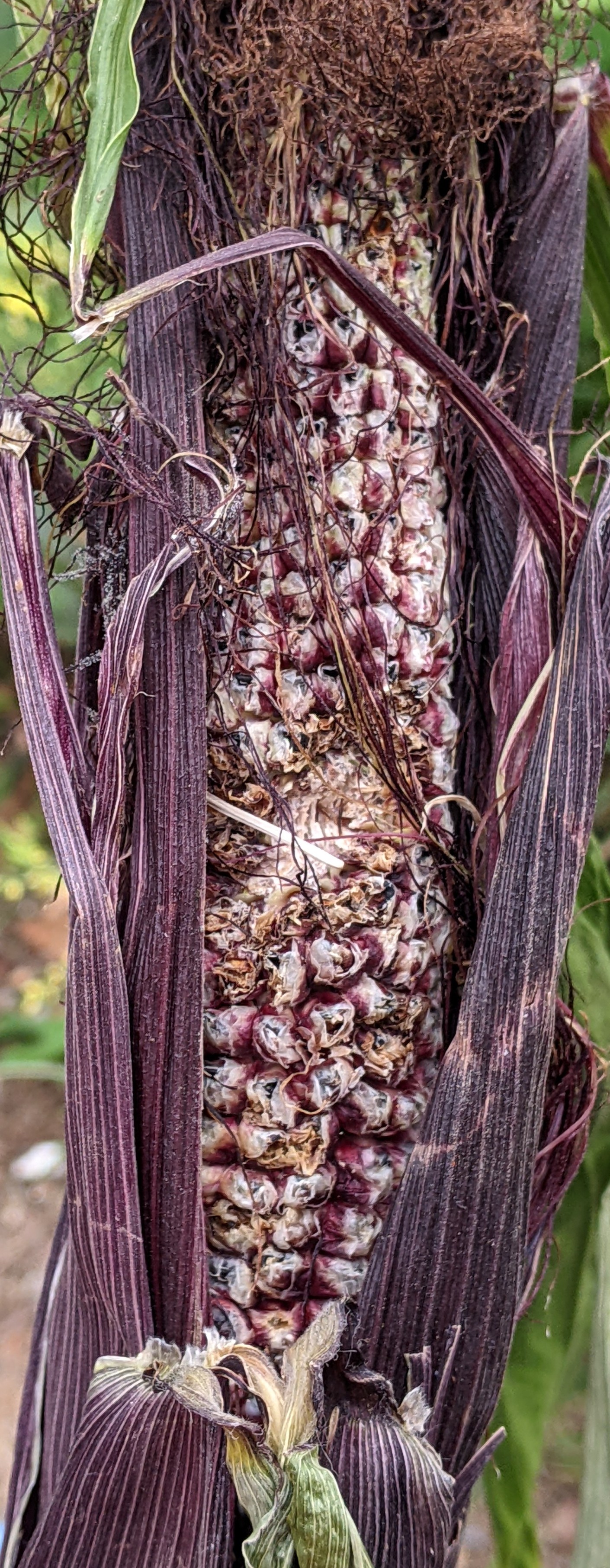
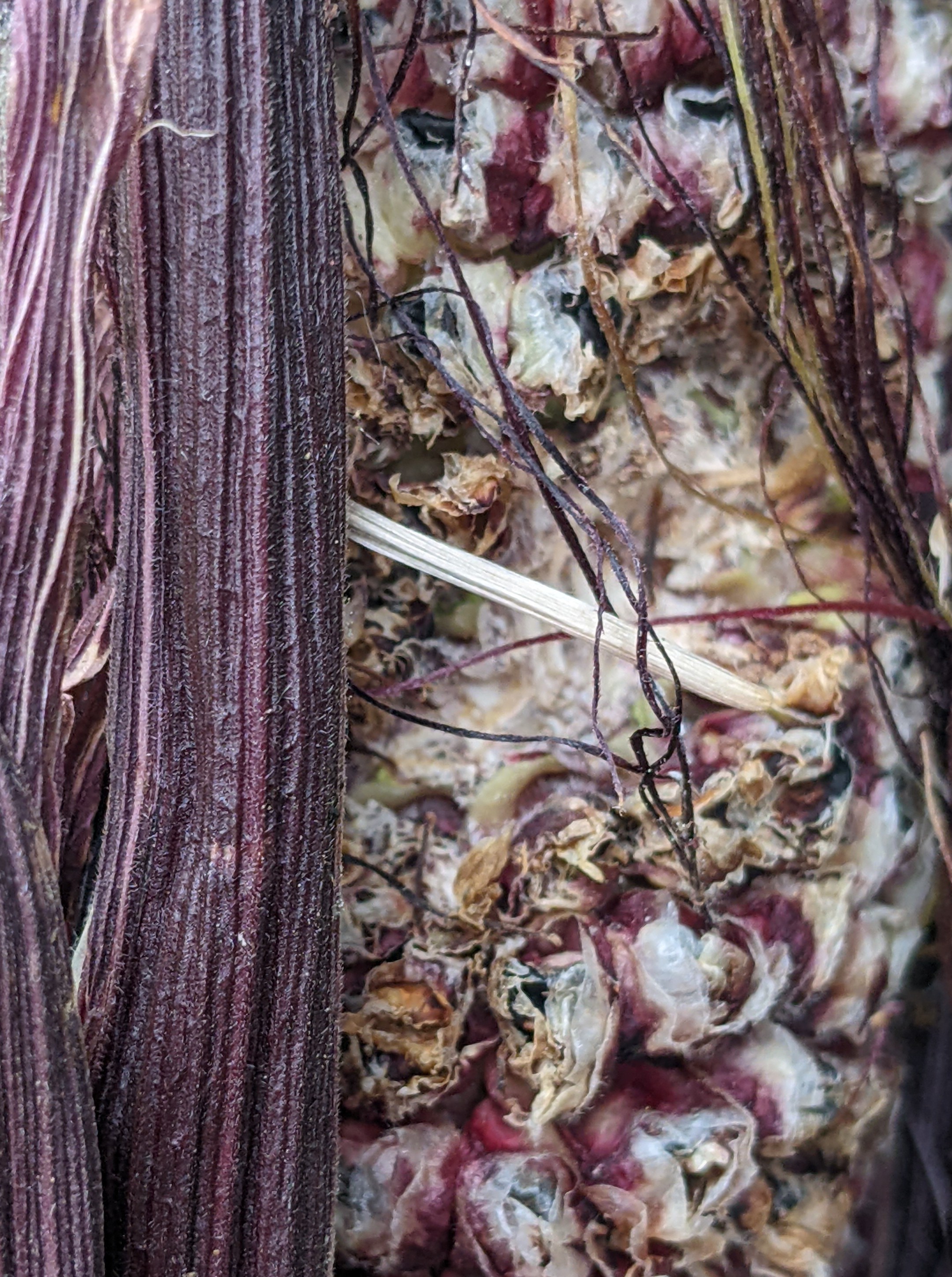
Deer bit it right in half!
PXL_20260709_173425366.jpg
[corneardamagedbydeer.jpg]
 
Thom Bri
pollinator
Posts: 1020
Location: Illinois
236
  • Likes 4
  • Mark post as helpful
  • send pies
    Number of slices to send:
    Optional 'thank-you' note:
  • Quote
  • Report post to moderator
Picking beans and killing squash bugs today. Temp low 90s.
I found where the squash bugs hide in hot weather. They cluster right at the base of the squash vine where the vine enters the dirt. I was just messing around and happened to move some mulch from around a vine and there was a cluster of them. So I went along the row looking at the squash bases and there were clusters of bugs at most of them. Lots of bugs. Much easier than finding them one at a time by looking under the leaves.

In my other garden, (the more conventional one, non-organic), early in the spring and several times since them I have treated the vines at the bases. Very few squash bugs on those vines and very few egg masses. I believe that possibly treating only the bases, a few inches right where they protrude from the soil, might be a useful thing. Now to figure out a good plant extract that repels squash bugs. I have some saved tobacco leaves and may try that. Or radish.

Found squash bug eggs on soy and bean leaves today. Quite a lot.
 
May Lotito
gardener
Posts: 2242
Location: Zone 6b
1434
forest garden fungi books chicken fiber arts ungarbage
  • Likes 5
  • Mark post as helpful
  • send pies
    Number of slices to send:
    Optional 'thank-you' note:
  • Quote
  • Report post to moderator

Thom Bri wrote: One goal of this garden is to test if production gradually drops off if corn is planted year after year using the old Indian methods.


The black soil of corn belt is the most fertile soil in the world and the three-sister method makes balanced use of soil minerals. There are C3 vs C4 plants, nitrogen fixer vs non-fixer and different root structures. Their nutritional needs are complementary so it will take you quite awhile to run short.  In my personal experience, brassicas sowed in Mid summer can be an early indicator if soil fertility drops. Daikon radish with deep tap root is more sensitive than arugula with a more fibrous root system.  The seedlings would germinate normally but fail to past first true leaf stage. If you want to give it a test, just broadcast some seeeds under the canopy of squashes in the first week of August.
 
Thom Bri
pollinator
Posts: 1020
Location: Illinois
236
  • Likes 2
  • Mark post as helpful
  • send pies
    Number of slices to send:
    Optional 'thank-you' note:
  • Quote
  • Report post to moderator

May Lotito wrote:

Thom Bri wrote: One goal of this garden is to test if production gradually drops off if corn is planted year after year using the old Indian methods.


The black soil of corn belt is the most fertile soil in the world and the three-sister method makes balanced use of soil minerals. There are C3 vs C4 plants, nitrogen fixer vs non-fixer and different root structures. Their nutritional needs are complementary so it will take you quite awhile to run short.  In my personal experience, brassicas sowed in Mid summer can be an early indicator if soil fertility drops. Daikon radish with deep tap root is more sensitive than arugula with a more fibrous root system.  The seedlings would germinate normally but fail to past first true leaf stage. If you want to give it a test, just broadcast some seeeds under the canopy of squashes in the first week of August.


This garden has very little black soil. One row along the south edge and a few spots on the other edges. Not surprisingly these areas always look great. Most of the garden is clay dug up years ago when we buried an old barn that blew down, and one corner was part of a gravel drive and is a thin layer of black soil over crushed rock. I can't get a shovel down more than a few inches due to the rocks. But with mounding the corn has about a foot of dirt so the corn does Okay there too.

Re brassicas. I have been spreading fresh seeds this summer. The radish seeds I spread in the spring did well. Hoping for a good rain to see if the new seeds sprout. These are all sorts of mixed seeds, whatever is going to seed in my home garden.
 
Thom Bri
pollinator
Posts: 1020
Location: Illinois
236
  • Likes 6
  • Mark post as helpful
  • send pies
    Number of slices to send:
    Optional 'thank-you' note:
  • Quote
  • Report post to moderator
Corn starting to look pretty good. Most is tasseling and some silks showing. Happy so far. Looking forward to some rain by week's end. Starting to pick beans every few days. In a week there will be too many to keep up with.

PXL_20260713_180824639.jpg
[fieldofcorn.jpg]
PXL_20260713_180920640.jpg
[cornsilk.jpg]
 
gardener
Posts: 6501
Location: Carlton County, Minnesota, USA: 3b; Dfb; sandy loam; in the woods
3927
8
forest garden trees books chicken food preservation cooking fiber arts seed woodworking homestead ungarbage
  • Likes 5
  • Mark post as helpful
  • send pies
    Number of slices to send:
    Optional 'thank-you' note:
  • Quote
  • Report post to moderator
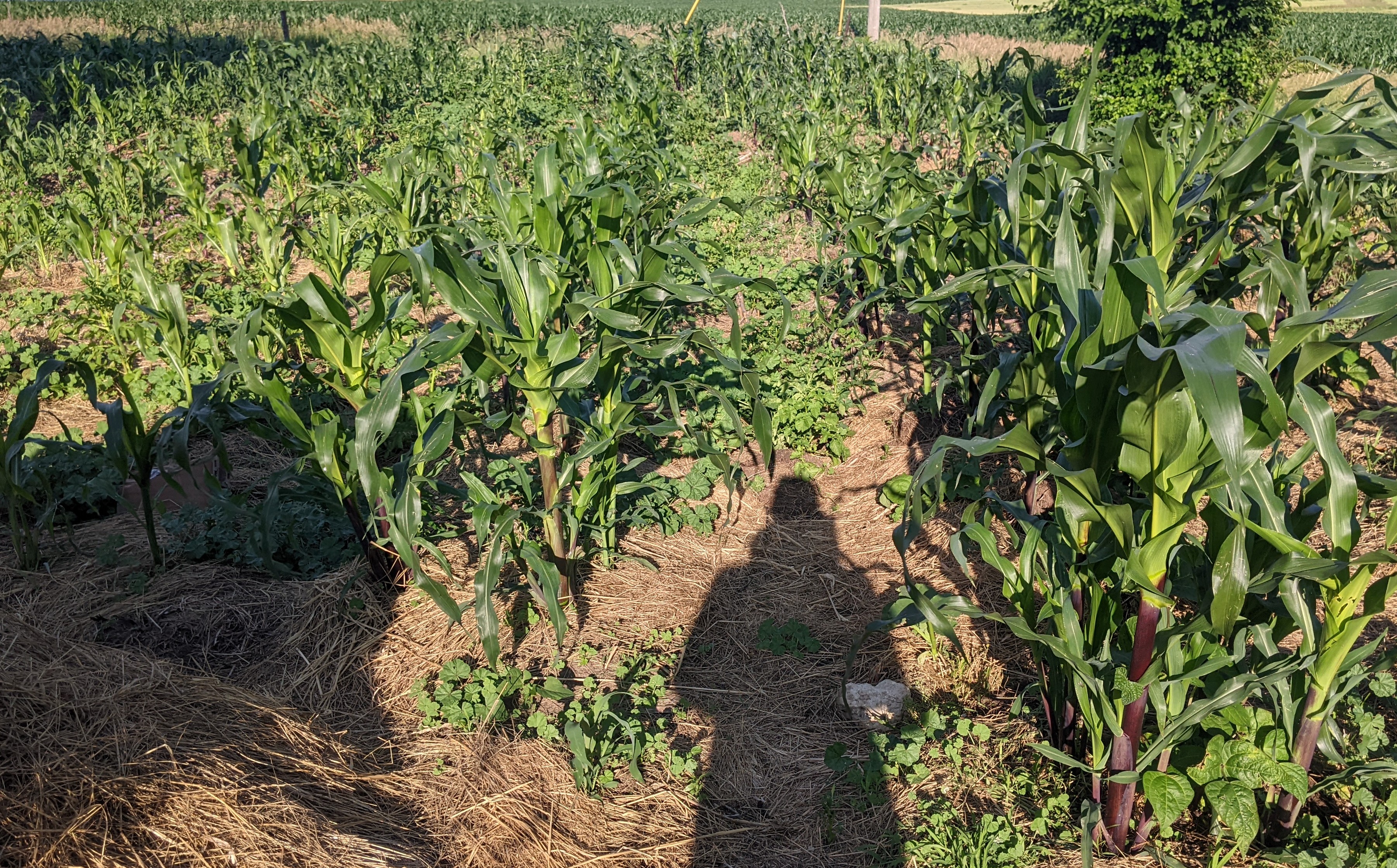
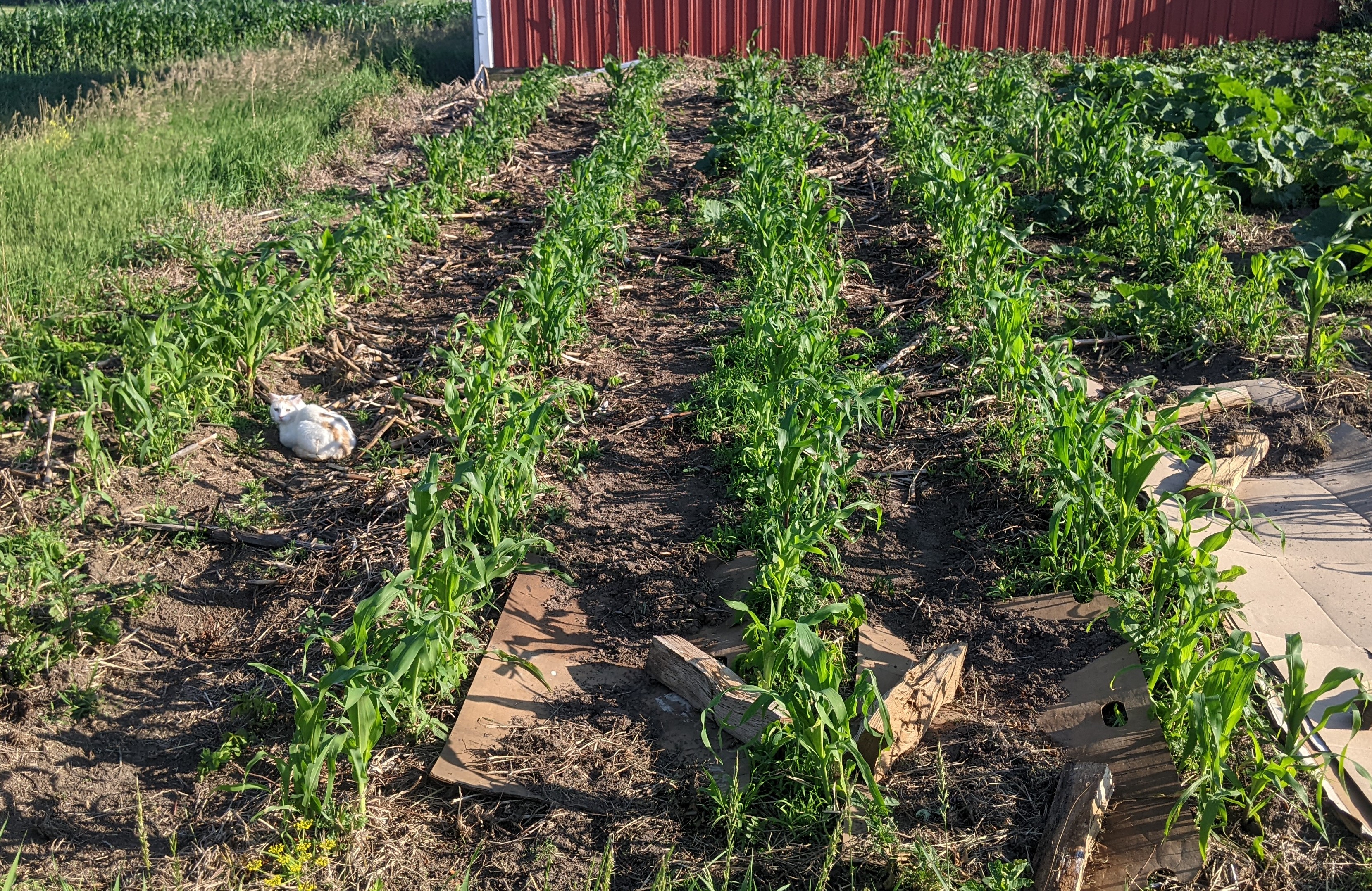
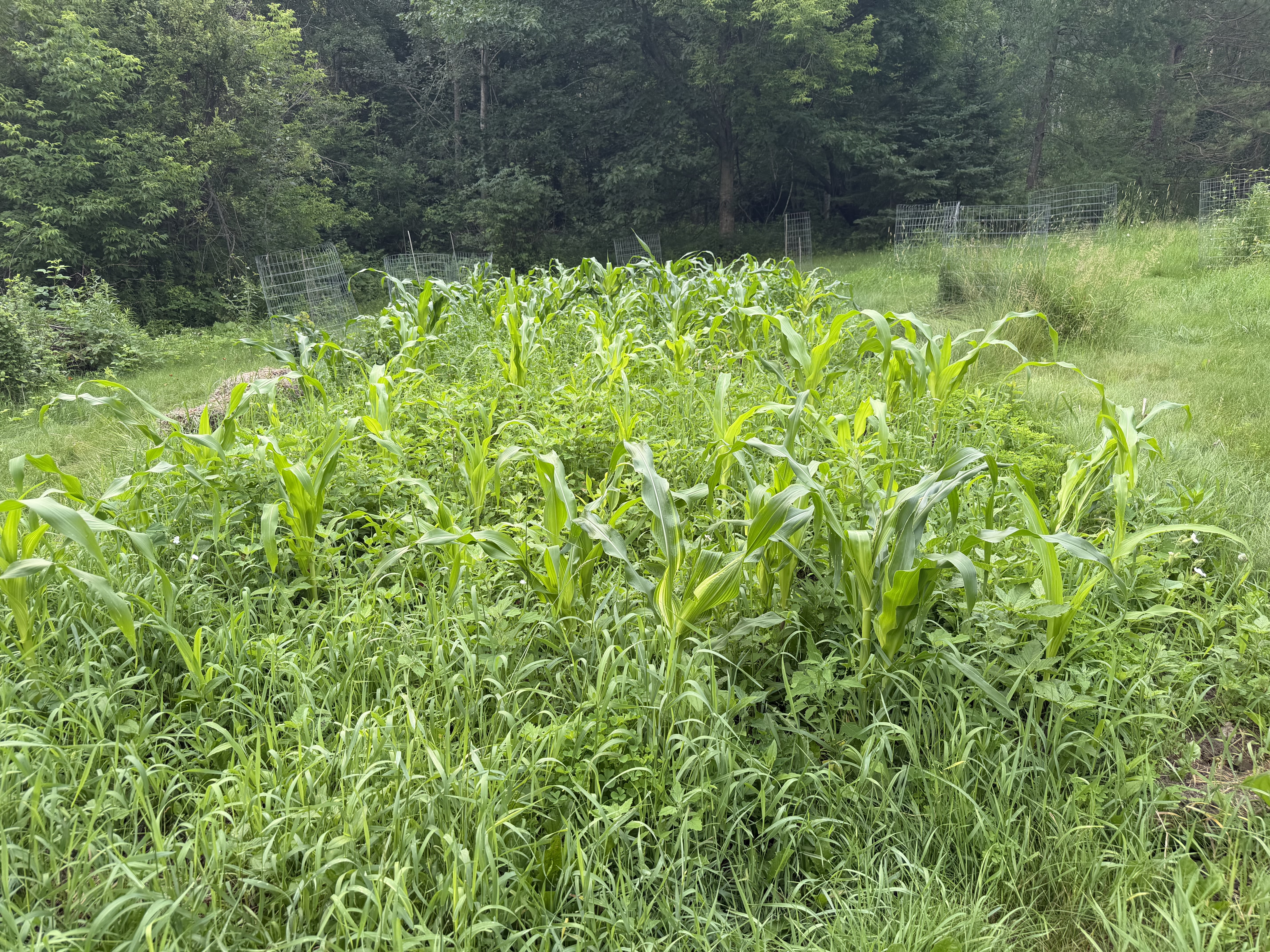
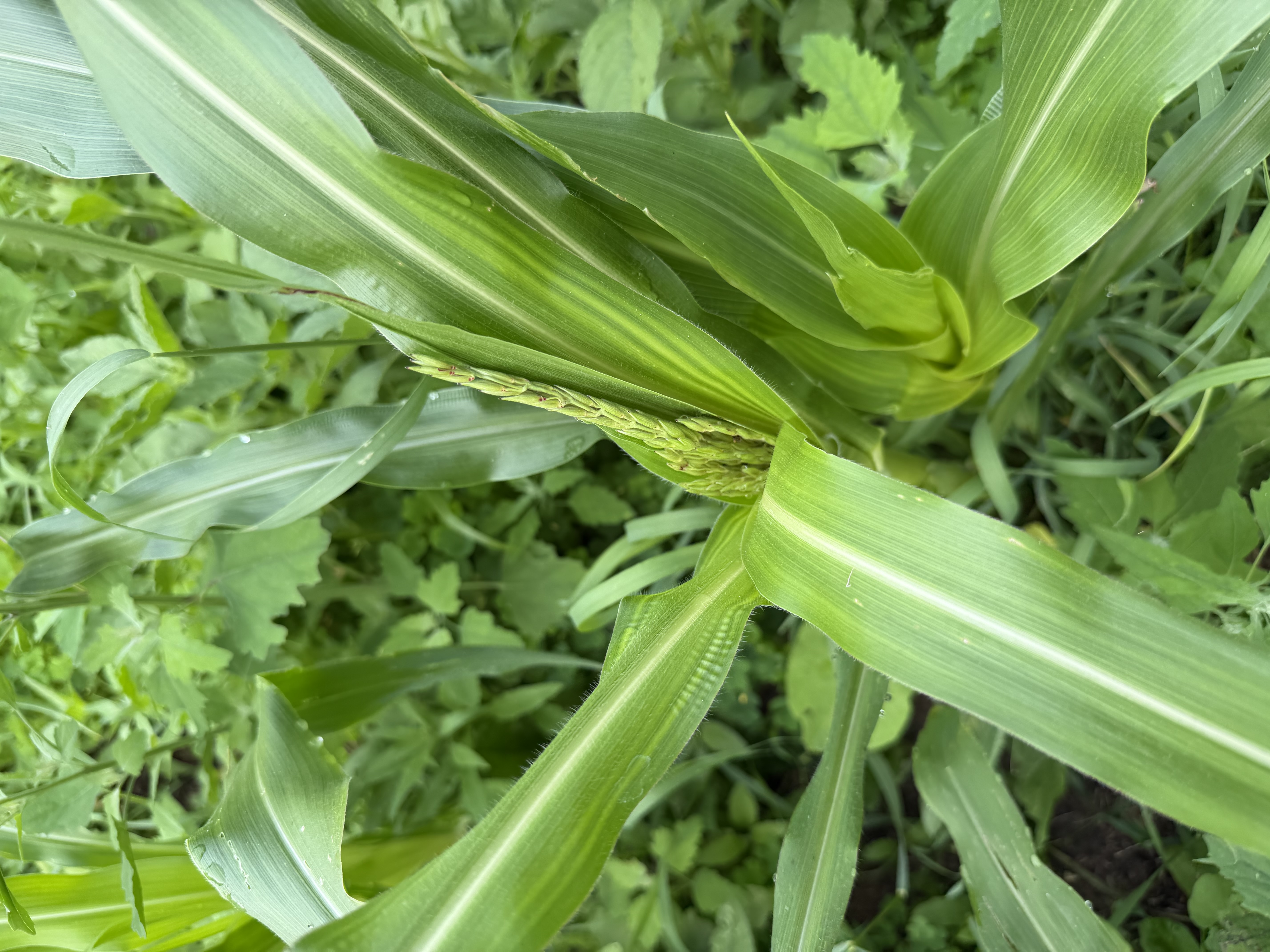
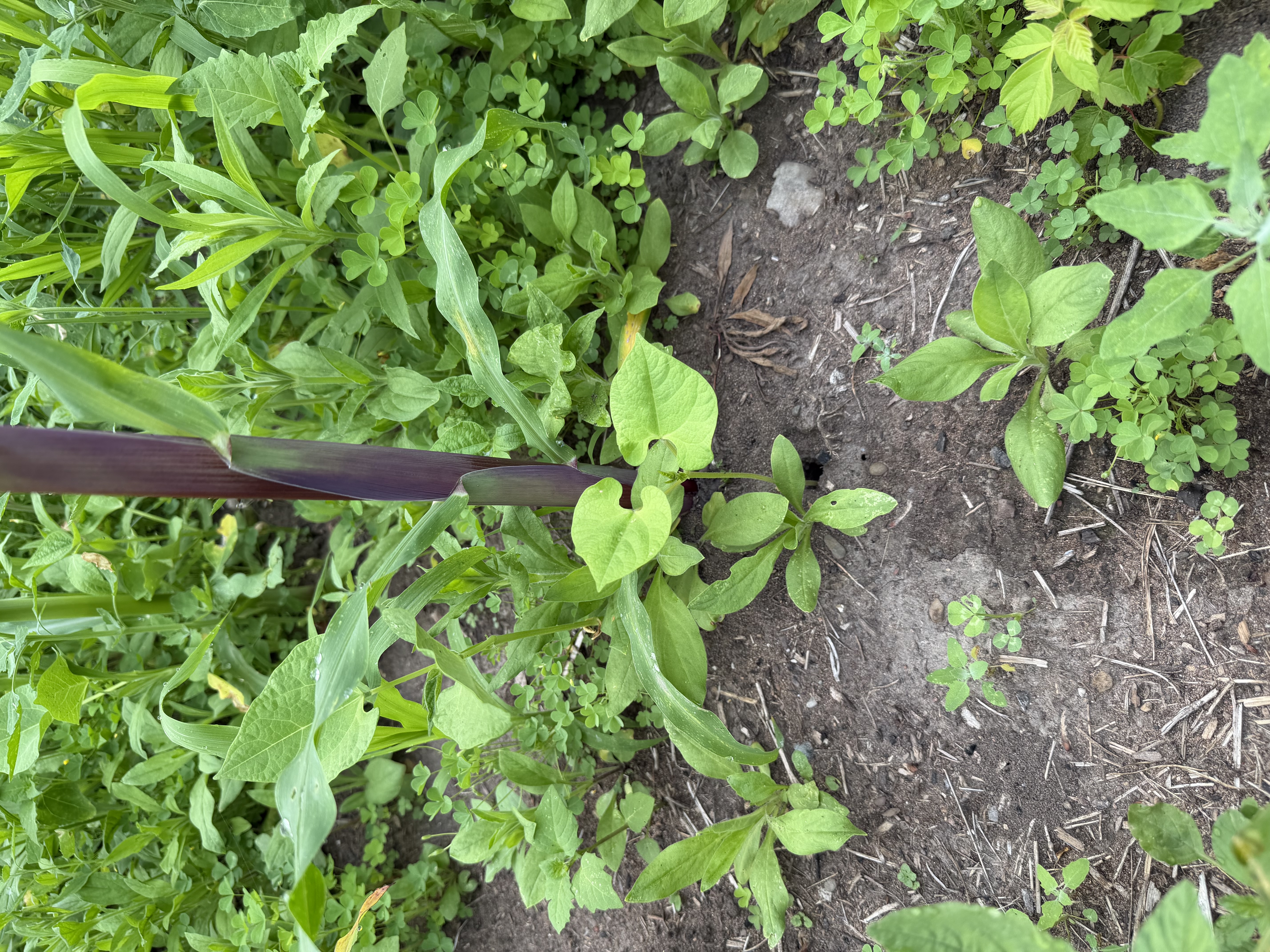
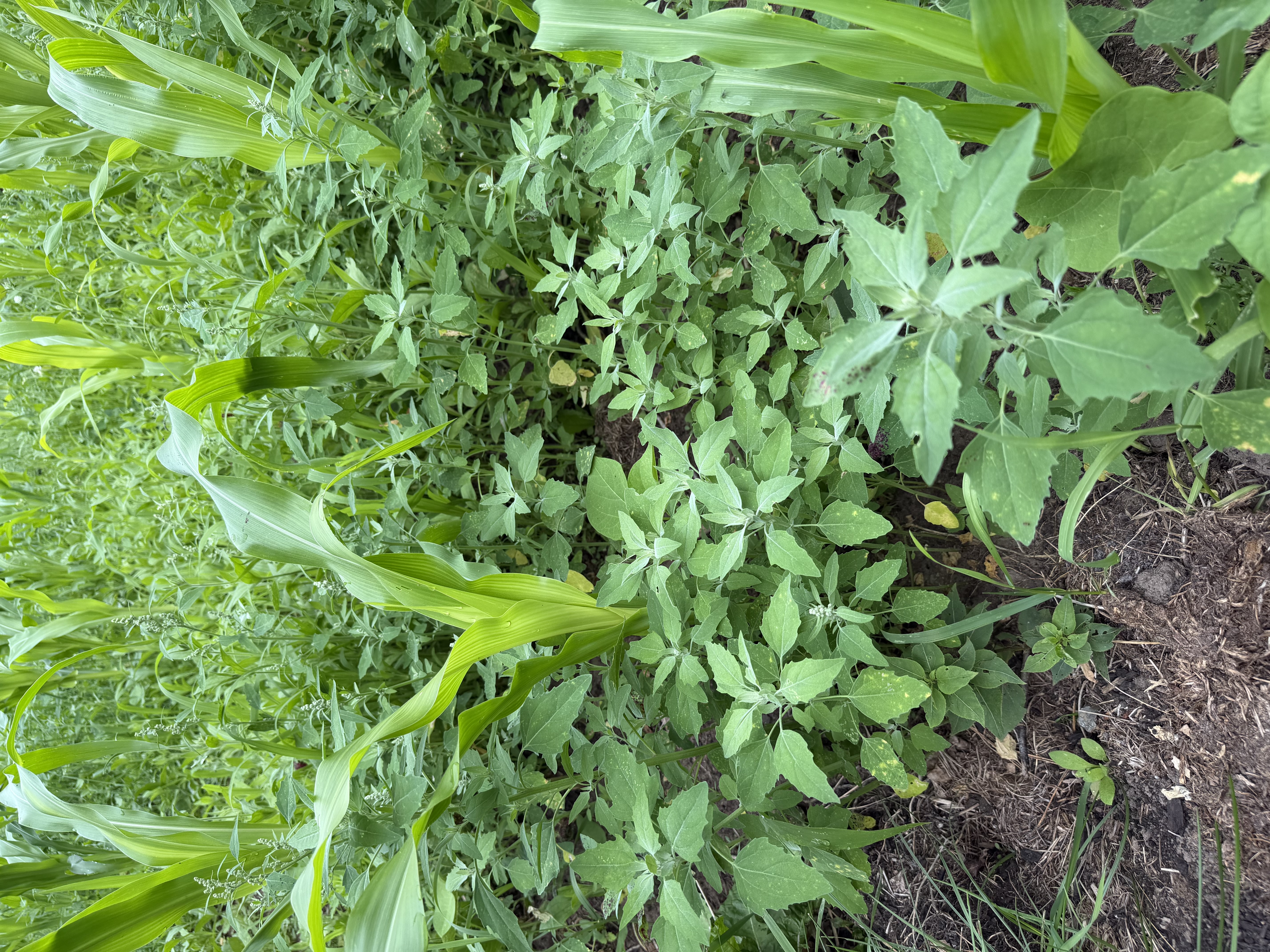
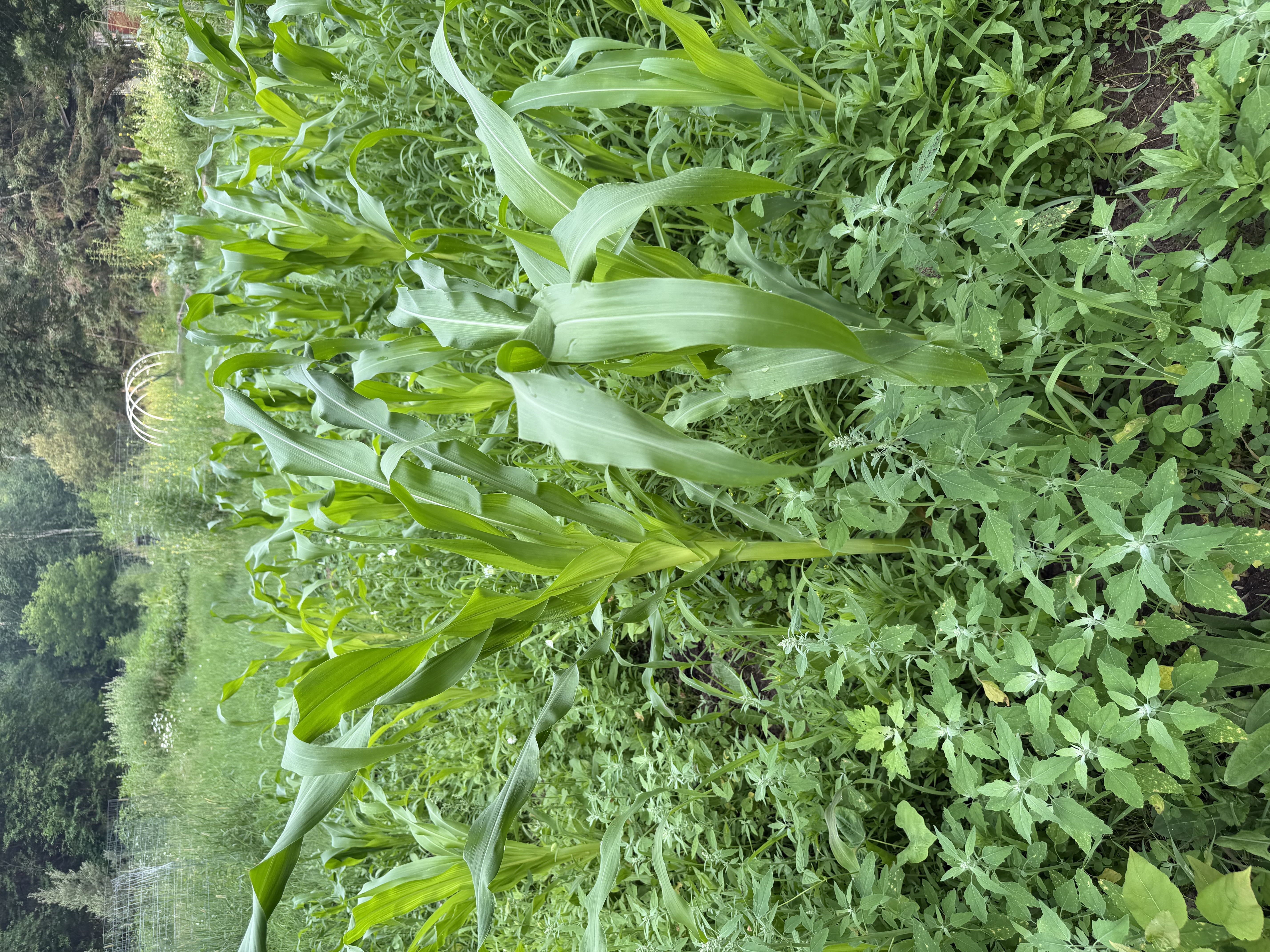
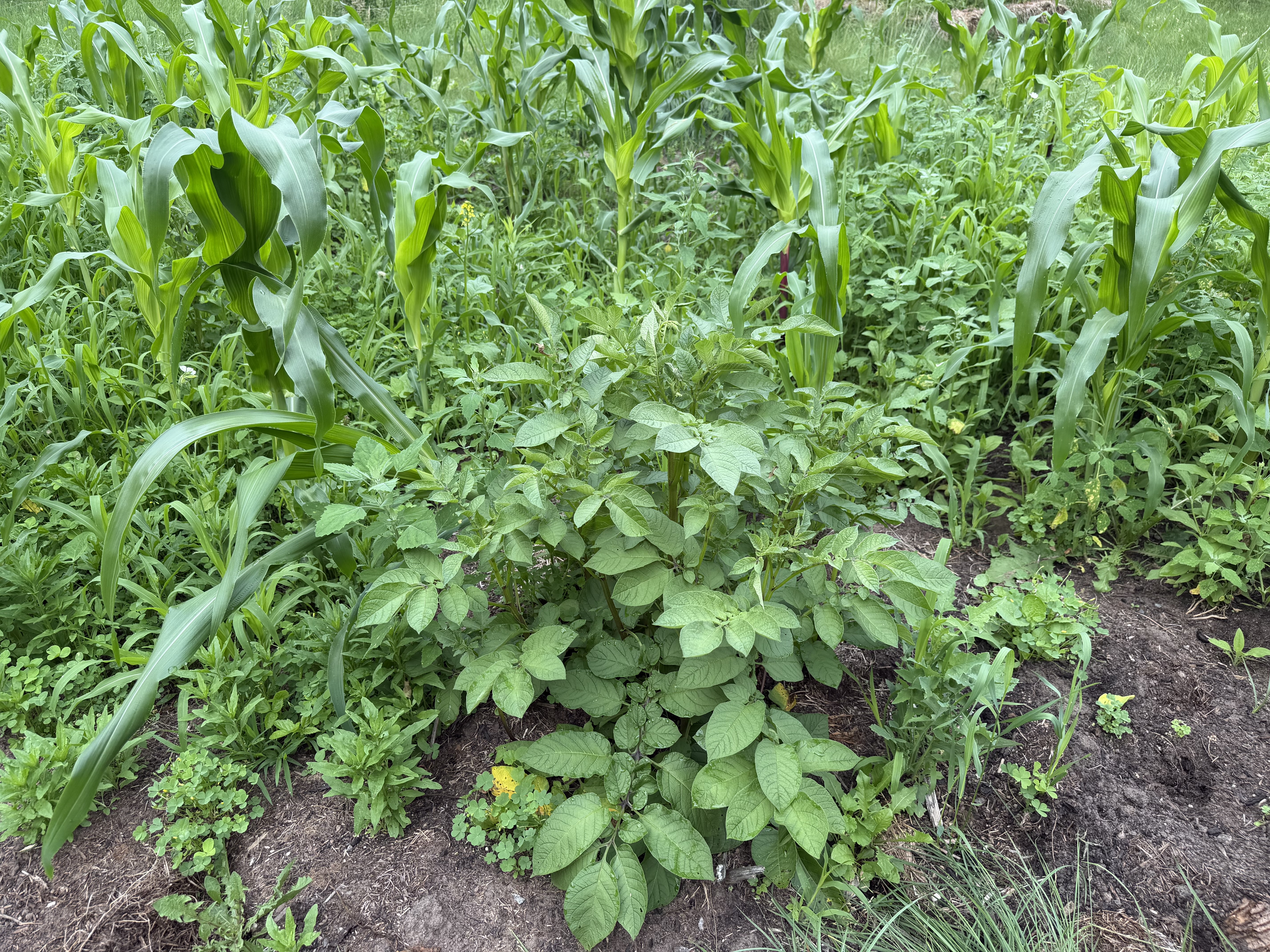
Being up north, I’m behind everyone but working to catch up! Squash seeds have been in the ground for 5-6 days but I saw no sign of their leaves yet.
IMG_6089.jpeg
Overview
Overview
IMG_6090.jpeg
Tassel emergence
Tassel emergence
IMG_6091.jpeg
Beans are out but not climbing yet
IMG_6092.jpeg
*lots* of quelites
*lots* of quelites
IMG_6093.jpeg
The tallest stalk is about four feet. Two feet is more common.
IMG_6094.jpeg
Happy potato volunteer.
 
Thom Bri
pollinator
Posts: 1020
Location: Illinois
236
  • Likes 2
  • Mark post as helpful
  • send pies
    Number of slices to send:
    Optional 'thank-you' note:
  • Quote
  • Report post to moderator

Christopher Weeks wrote:Being up north, I’m behind everyone but working to catch up! Squash seeds have been in the ground for 5-6 days but I saw no sign of their leaves yet.


What kind of squash?
Those lambsquarters are stealing all the nitrogen!
 
Christopher Weeks
gardener
Posts: 6501
Location: Carlton County, Minnesota, USA: 3b; Dfb; sandy loam; in the woods
3927
8
forest garden trees books chicken food preservation cooking fiber arts seed woodworking homestead ungarbage
  • Likes 4
  • Mark post as helpful
  • send pies
    Number of slices to send:
    Optional 'thank-you' note:
  • Quote
  • Report post to moderator

Thom Bri wrote:What kind of squash?


I planted two kinds in each hole: 1) seed from the longest-keeping maxima that I grew three years ago. It was a mottled beige flat pumpkin-shaped thing with some warts but not complete coverage and 2) some hulless green seed from (I think) a Mexican vining pepo.

Those lambsquarters are stealing all the nitrogen!


Then the corn better learn how to get some from the air! (And also, in a couple of weeks, I'll harvest the majority of the lambsquarters for the greens.)
 
May Lotito
gardener
Posts: 2242
Location: Zone 6b
1434
forest garden fungi books chicken fiber arts ungarbage
  • Likes 5
  • Mark post as helpful
  • send pies
    Number of slices to send:
    Optional 'thank-you' note:
  • Quote
  • Report post to moderator
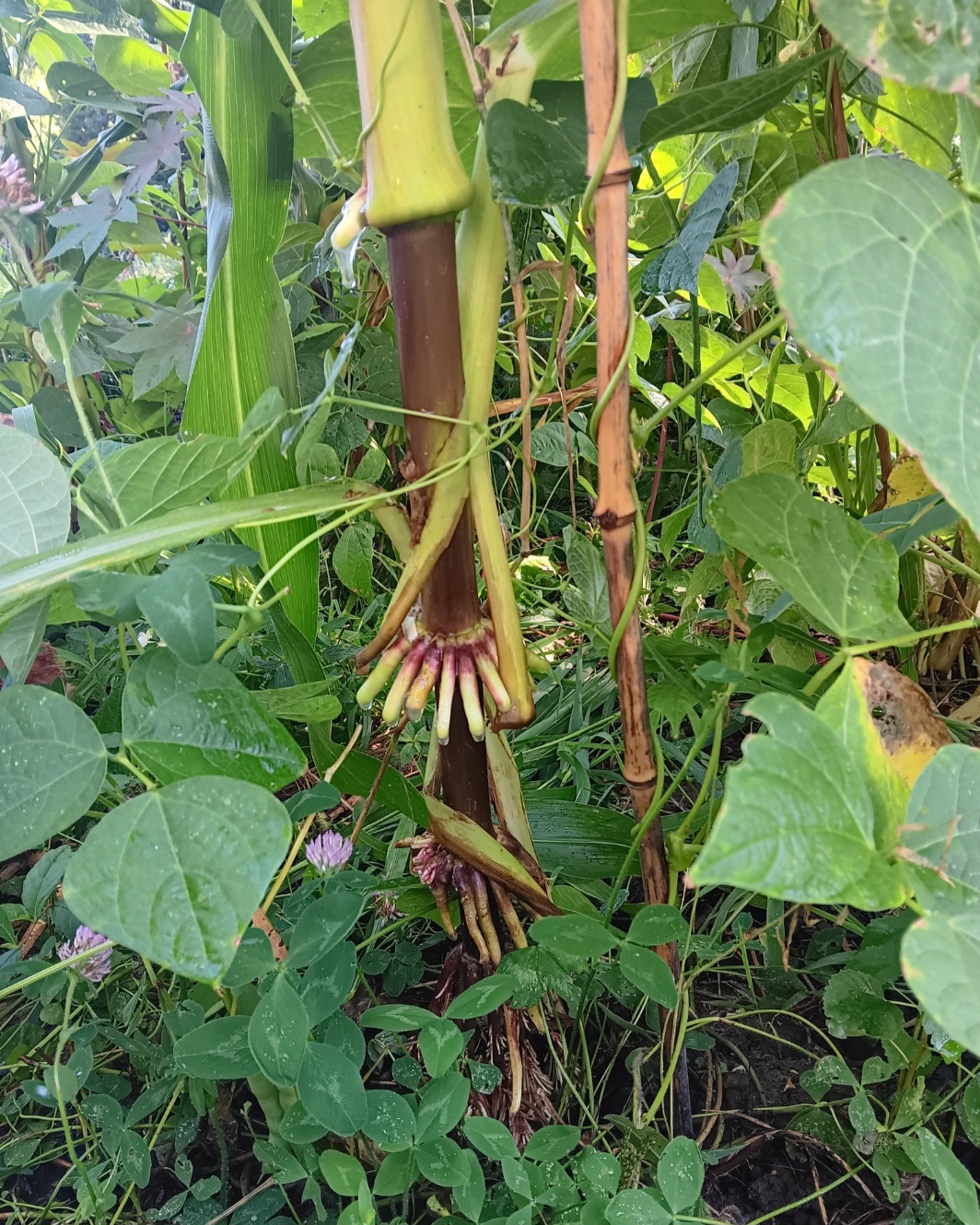
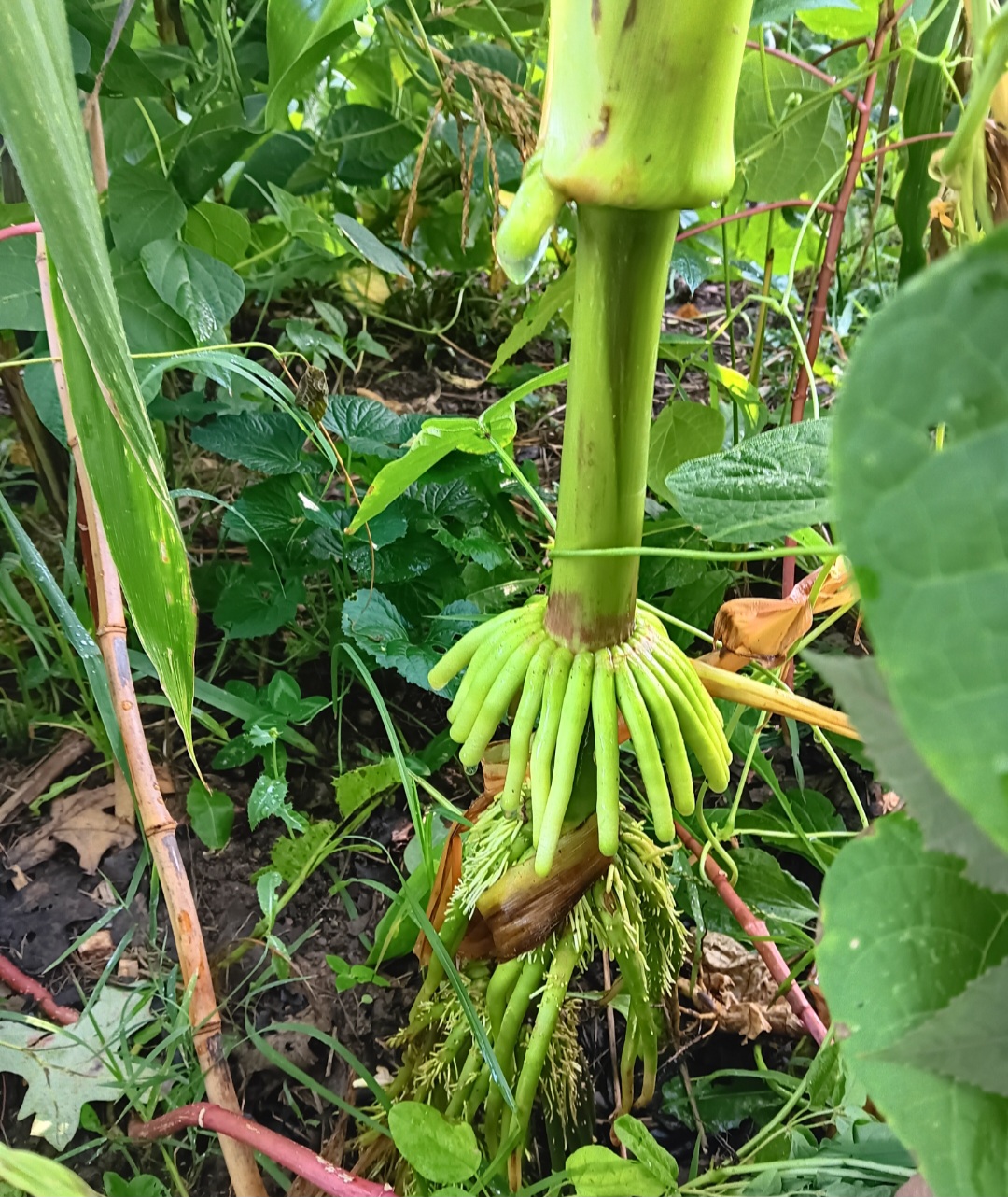
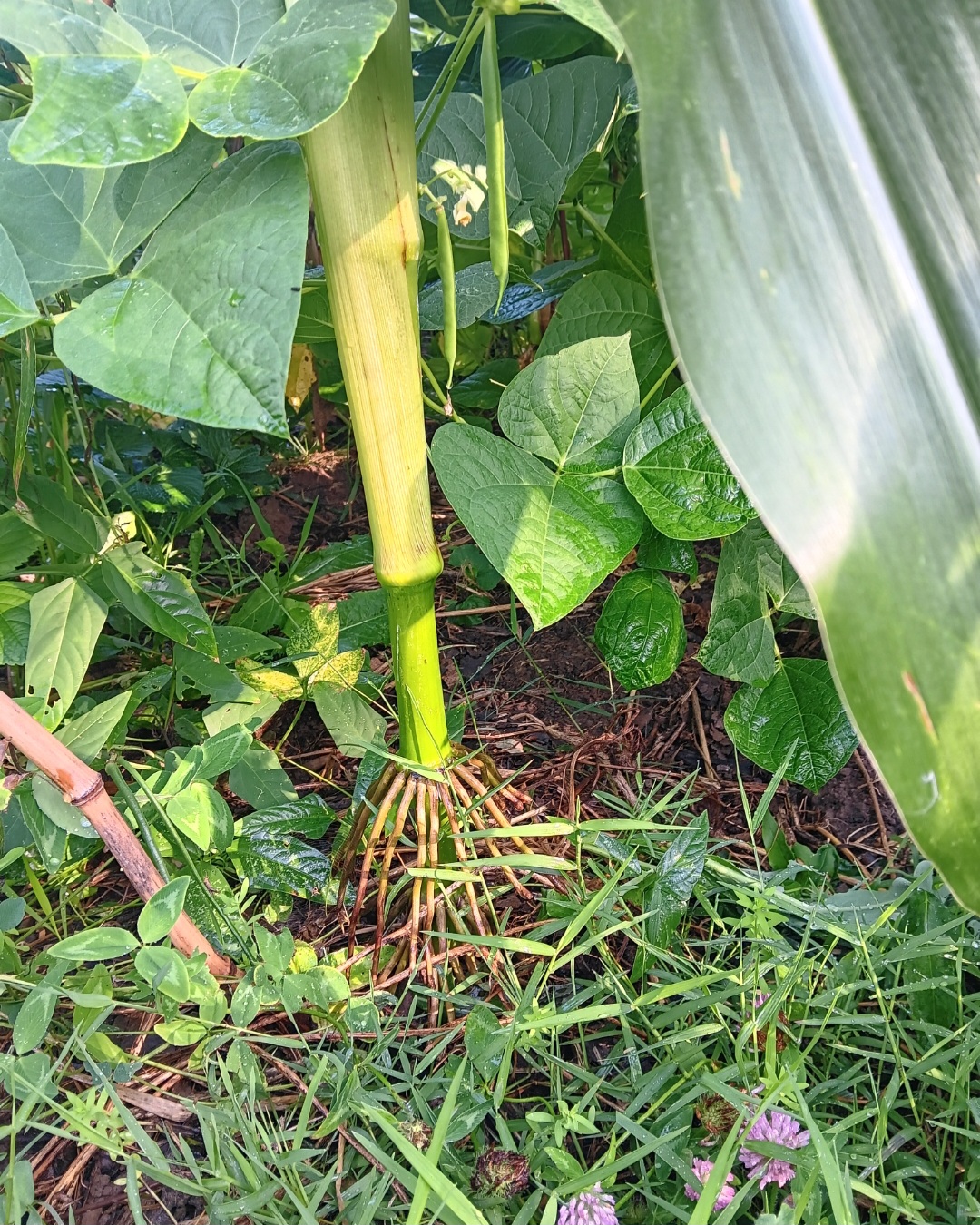
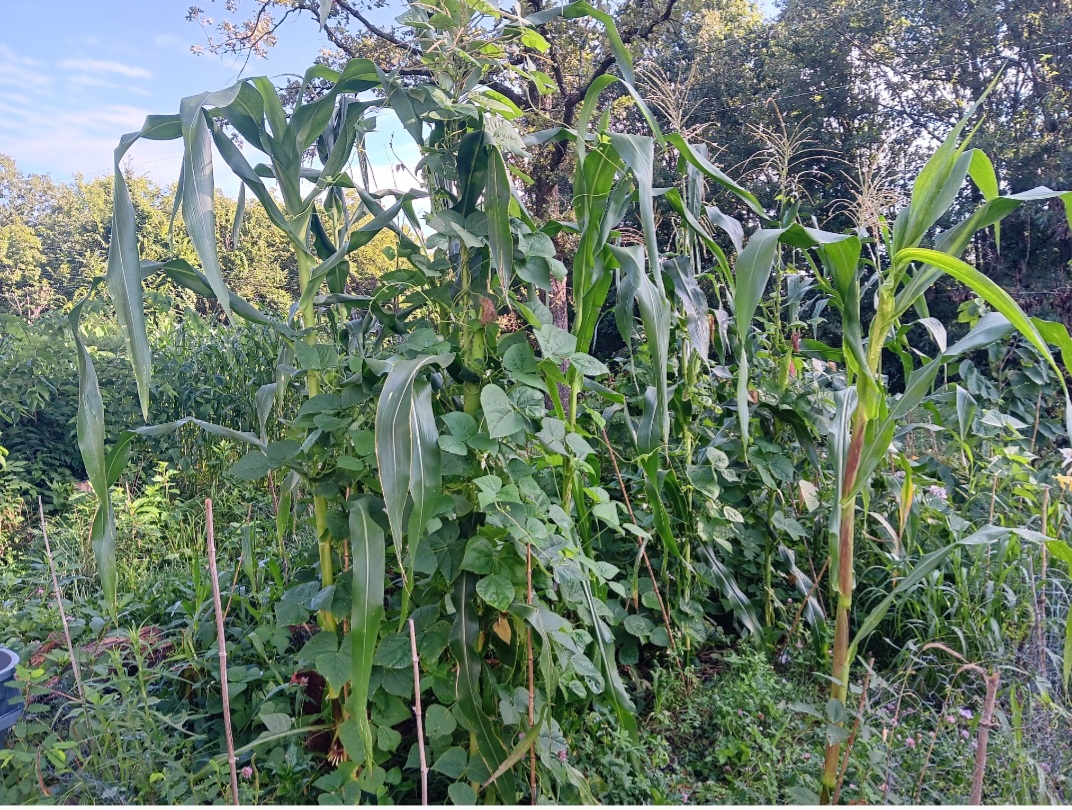
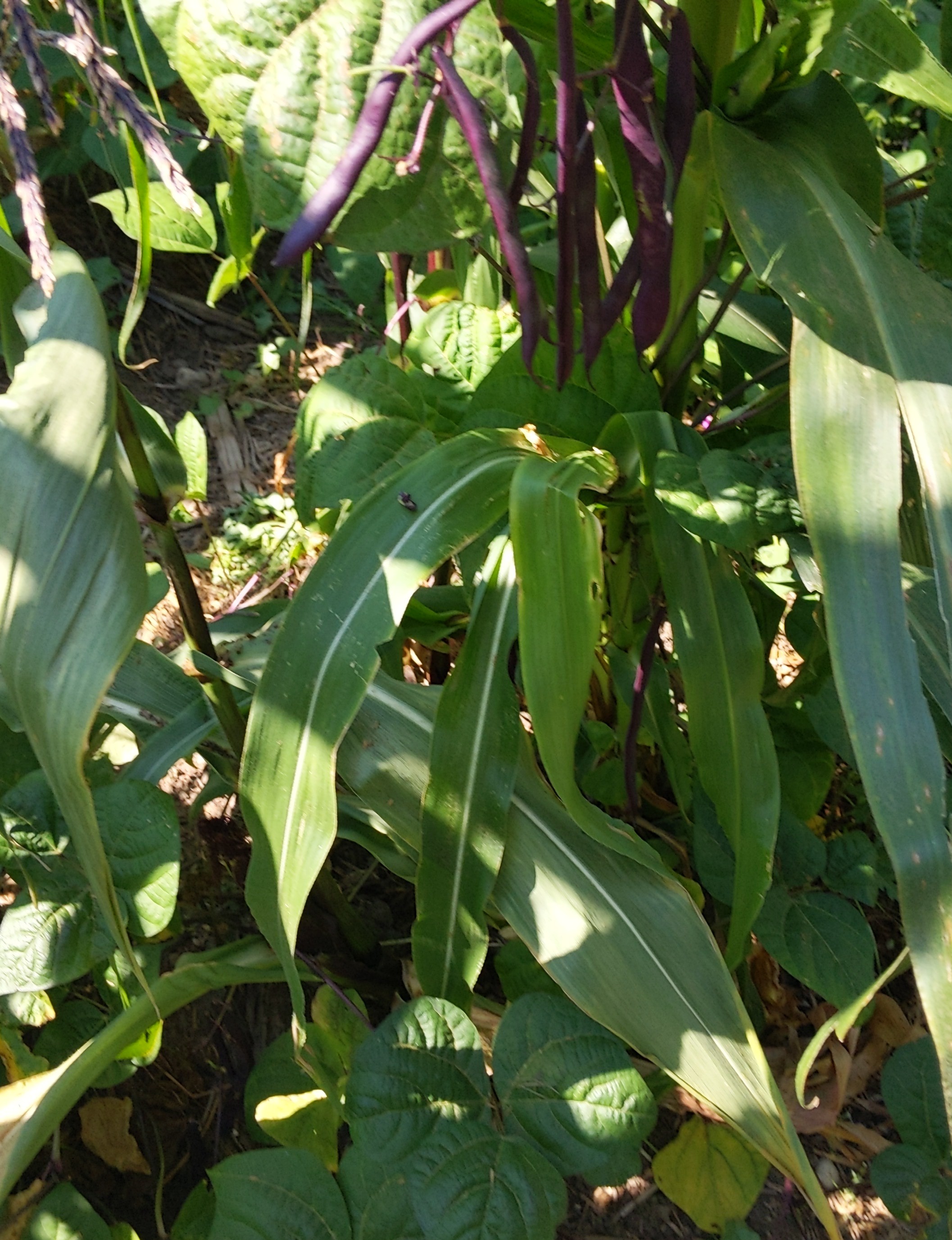
My giant Inca maize /choclo grow multiple rings of air roots while other varieties tend to have fewer row of brace roots. Lots of mucilage dripping at the tips after a storm but dry out in between. If there are nitrogen fixing bacteria, they would be less effective compared to those grown in the tropical region with frequent rainfall. Nevertheless, these Inca corns are robust. Some already have ears maturing and some still keep on growing.
20260719_084237.jpg
Giant Inca aerial roots
20260719_084336.jpg
Musilage after rain
Musilage after rain
20260719_084309.jpg
Bloody butcher corn nearby
20260719_090030.jpg
Garden in Mid summer
 
Thom Bri
pollinator
Posts: 1020
Location: Illinois
236
  • Likes 5
  • Mark post as helpful
  • send pies
    Number of slices to send:
    Optional 'thank-you' note:
  • Quote
  • Report post to moderator

May Lotito wrote:My giant Inca maize /choclo grow multiple rings of air roots while other varieties tend to have fewer row of brace roots. Lots of mucilage dripping at the tips after a storm but dry out in between. If there are nitrogen fixing bacteria, they would be less effective compared to those grown in the tropical region with frequent rainfall. Nevertheless, these Inca corns are robust. Some already have ears maturing and some still keep on growing.


Brace roots is a highly variable trait in my corn. Some years lots in multiple rows, other years hardly any. Genetic or environmental? Probably both. Some produce lots of mucilage. Heading to the farm soon and will take a look, but have not really noticed any brace roots this year so far.

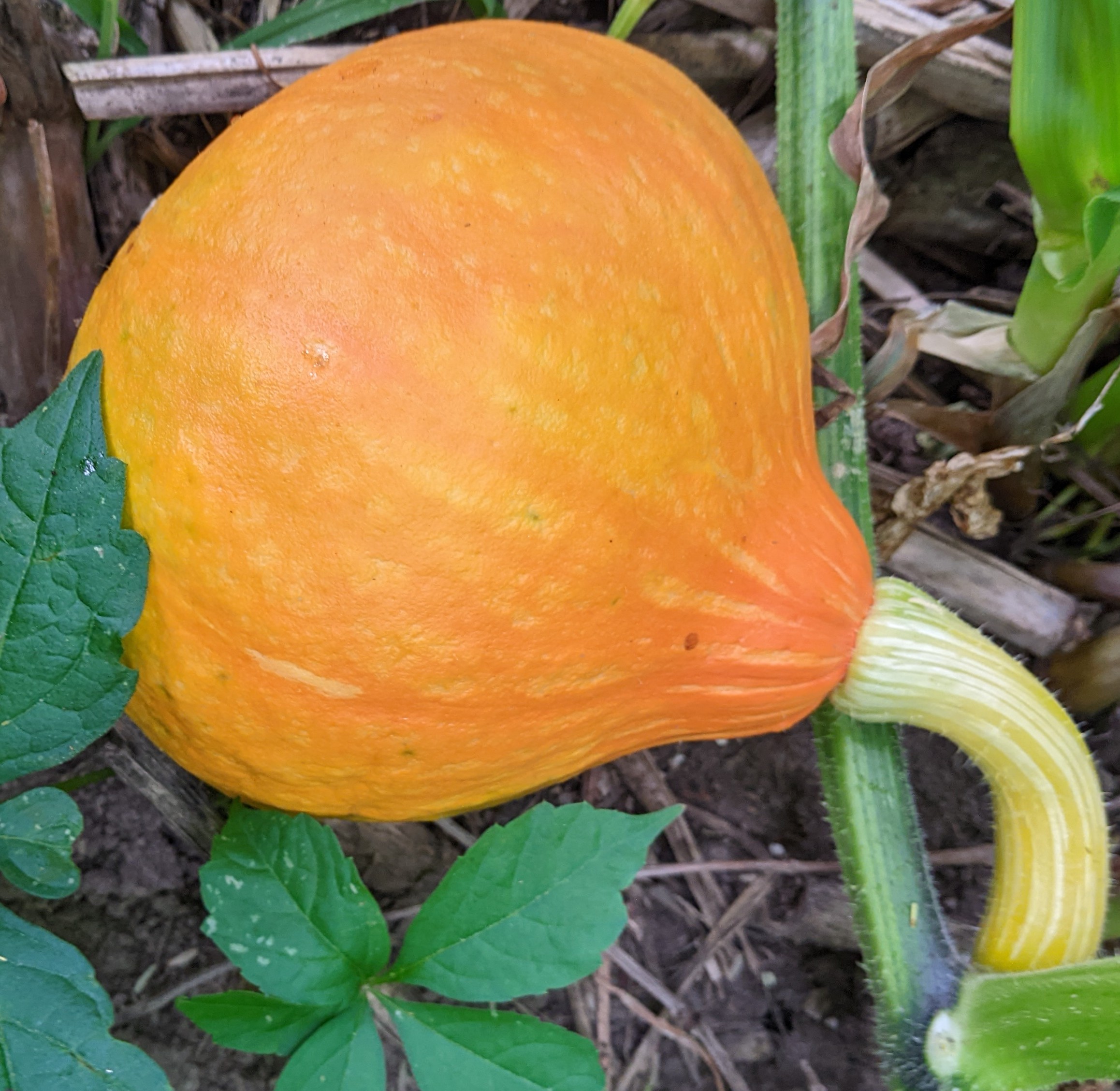
Some Maxima squash, Red Kuri:
PXL_20260718_151744437.jpg
Red Kuri Squash
Red Kuri Squash
 
Thom Bri
pollinator
Posts: 1020
Location: Illinois
236
  • Likes 2
  • Mark post as helpful
  • send pies
    Number of slices to send:
    Optional 'thank-you' note:
  • Quote
  • Report post to moderator
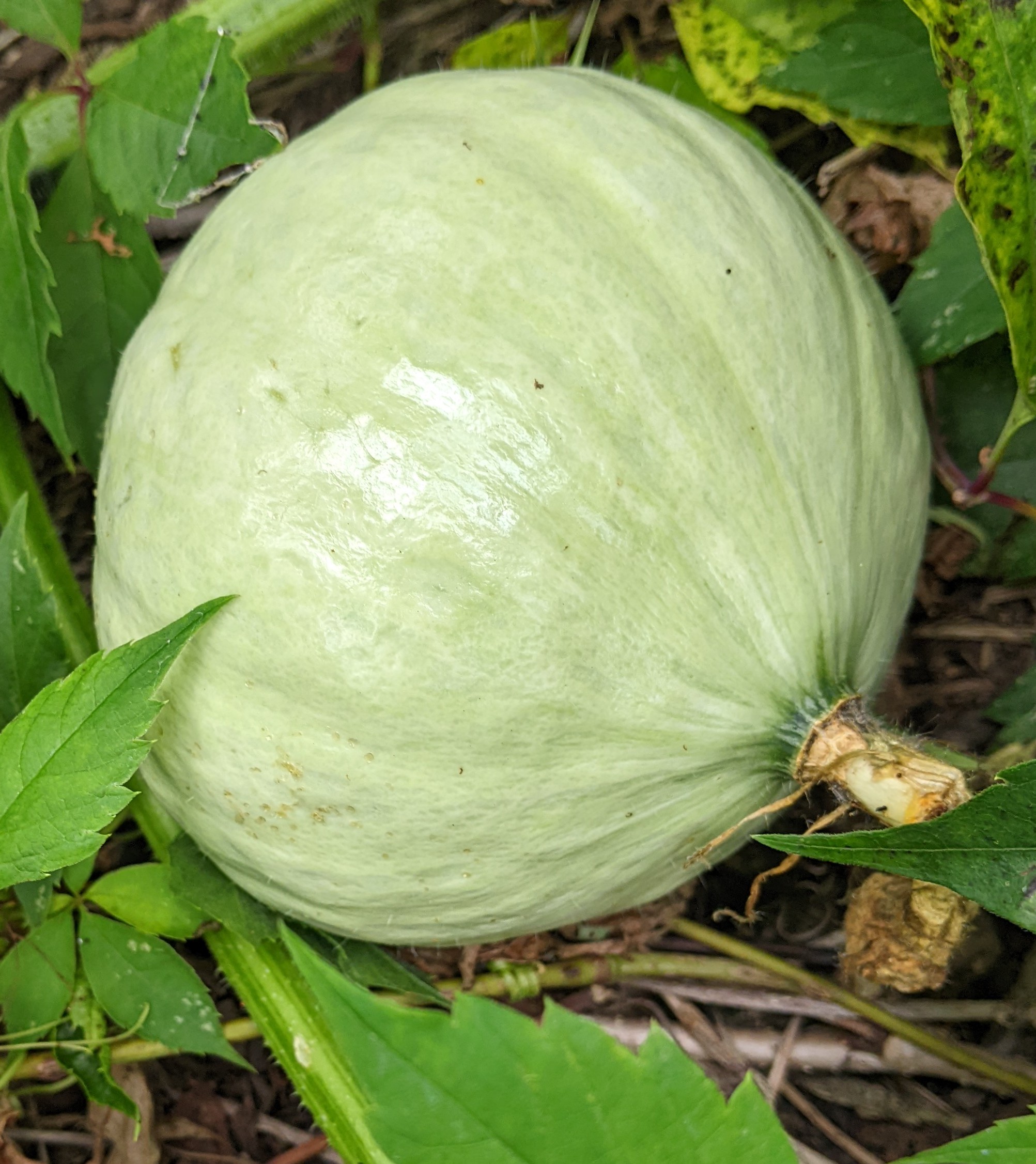
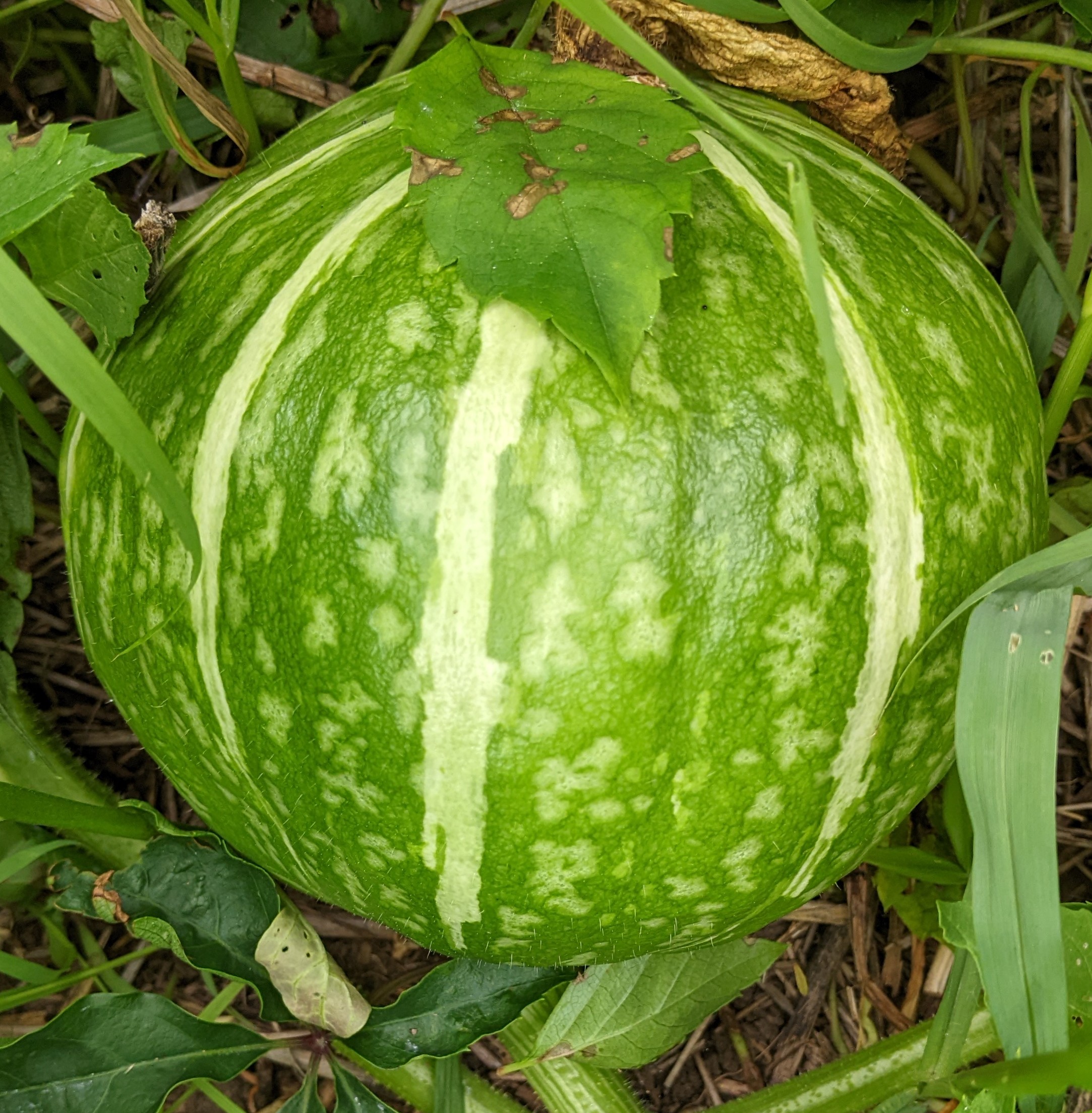
Kabocha squash, two types:
PXL_20260718_152755898.jpg
Kabocha
Kabocha
PXL_20260718_152812728.jpg
Kabocha
Kabocha
 
Thom Bri
pollinator
Posts: 1020
Location: Illinois
236
  • Mark post as helpful
  • send pies
    Number of slices to send:
    Optional 'thank-you' note:
  • Quote
  • Report post to moderator
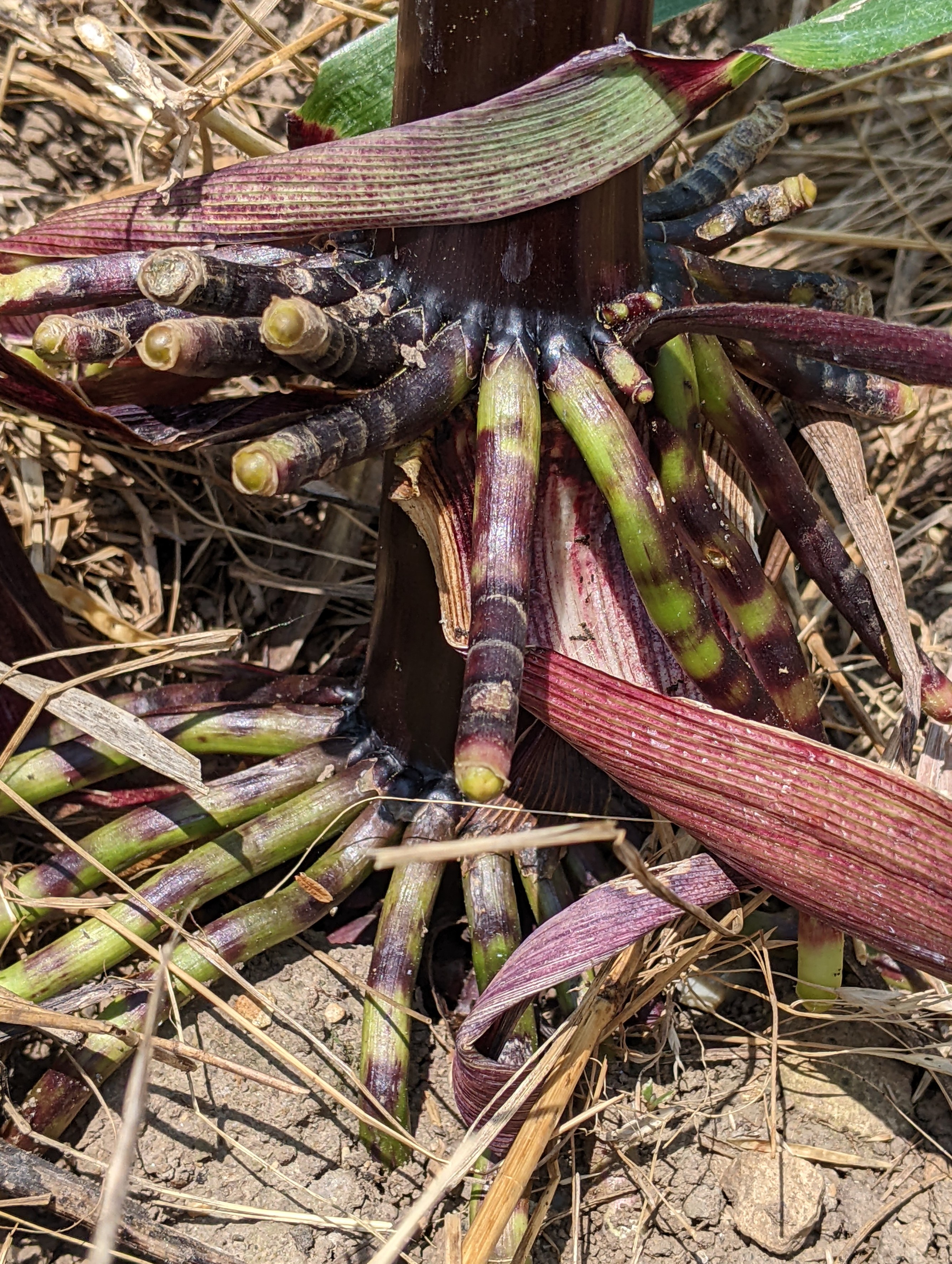
Brace roots. Very dry recently, not seeing any mucous. Most of the brace roots are buried when I mound up the hills.

PXL_20260719_181253500.jpg
Corn Brace Roots
Corn Brace Roots
 
Thom Bri
pollinator
Posts: 1020
Location: Illinois
236
  • Likes 1
  • Mark post as helpful
  • send pies
    Number of slices to send:
    Optional 'thank-you' note:
  • Quote
  • Report post to moderator
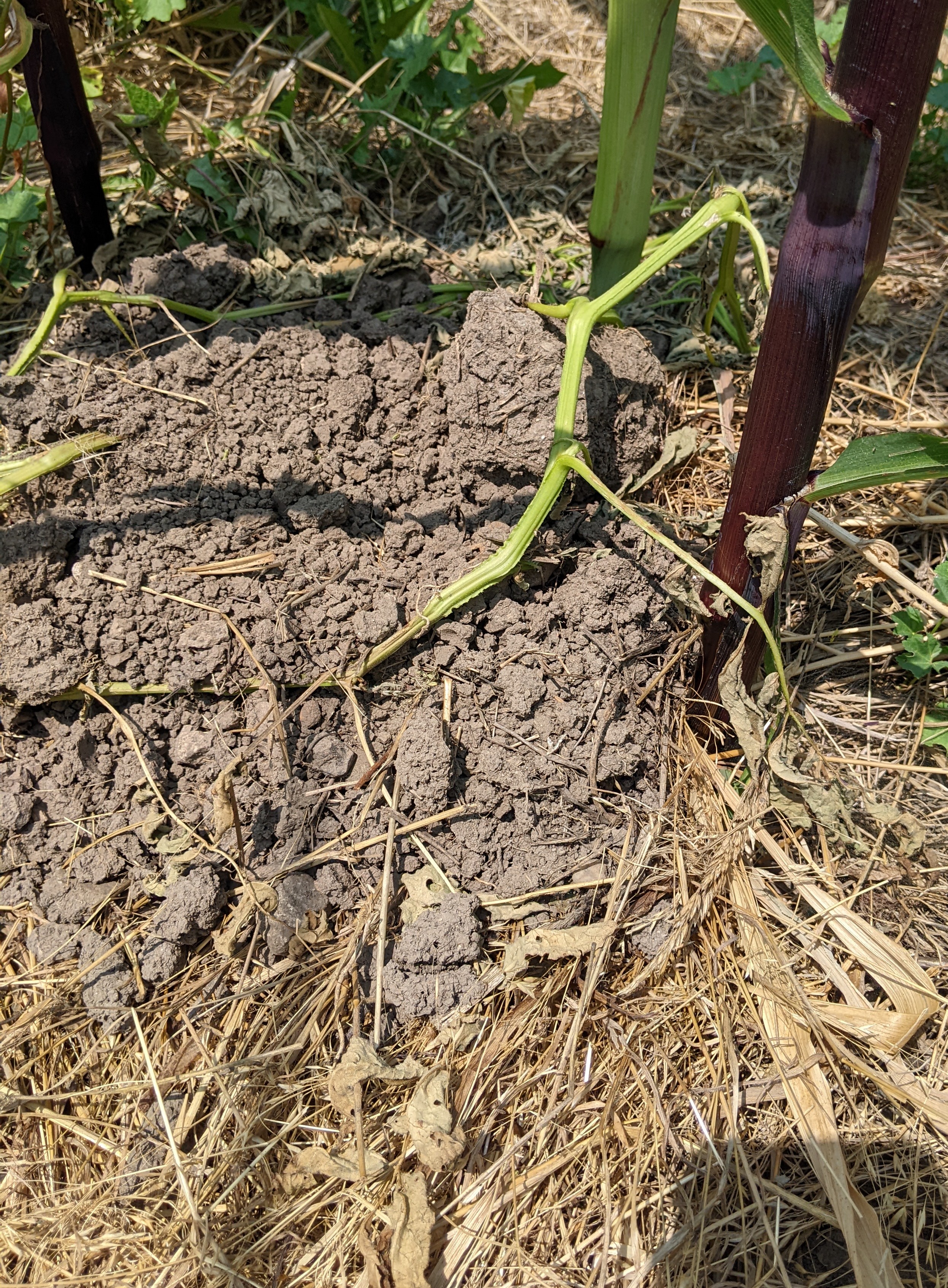
Dug potatoes today from between the corn hills. Very convenient system. The dirt goes on top the corn hills just when it is needed most, mid-July when it is hot and dry. Last rain was July 5th, and temps in the 90s, so things are getting dry. So far, the corn looks good, no rolled leaves. Pollination in full swing.
Pic shows hilled corn with fresh dirt on top:
PXL_20260719_181357729.jpg
Hilled corn
Hilled corn
 
Thom Bri
pollinator
Posts: 1020
Location: Illinois
236
  • Mark post as helpful
  • send pies
    Number of slices to send:
    Optional 'thank-you' note:
  • Quote
  • Report post to moderator
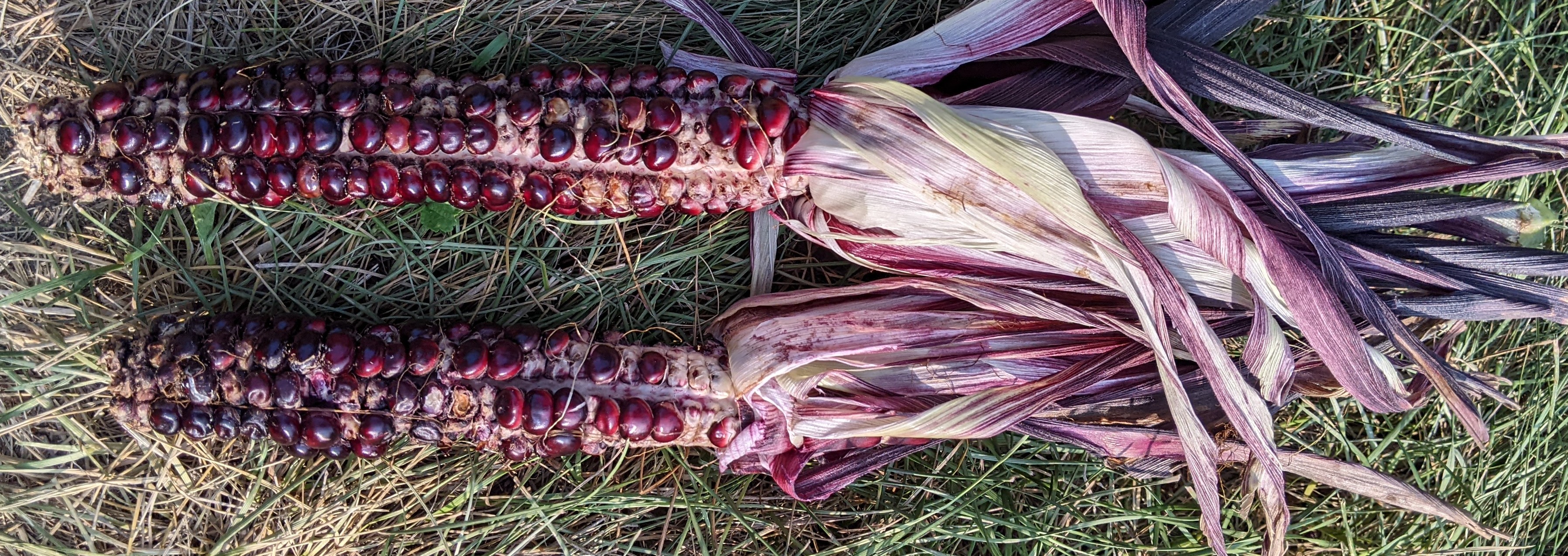
First corn picked this year. Mountain Morado. Planted 5/9/26. 71 days. The corn is still in the dough stage so can be harvested but still pretty early. I picked them because the plant was damaged by deer and bugs.
PXL_20260719_223338864.jpg
Mountain Morado
Mountain Morado
 
Do not threaten THIS beaver! Not even with this tiny ad:
building a permaculture community with hands on gardening and natural building
https://wheaton-labs.com/bootcamp
reply
    Bookmark Topic Watch Topic
  • New Topic