|

|

|

|

|

|
|
|
|
|
|
|
|

|
.png)
|

|
|
|
 3
3


One can never be too kind to oneself or others.
Never our fault, always our responsibility


 2
2


 2
2
2
2
3
2
2
2
2
3
One can never be too kind to oneself or others.
Never our fault, always our responsibility
2
2
 2
2
One can never be too kind to oneself or others.
Never our fault, always our responsibility
2
2
2
3
5
2
r ransom wrote:So, I'm not breaking music laws by doing this?
It's ok to change music or do people get angry?
3
r ransom wrote:..
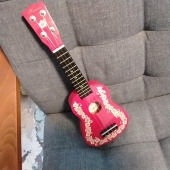
My affordable ukulele refuses to do this. Probably because it is affordable.
If I want to play the medieval song in the original post, or Concerning Hobbits, I will need to find a way to compensate for the hammer on and pull off notes.
...
David Wieland wrote:
r ransom wrote:..
My affordable ukulele refuses to do this. Probably because it is affordable.
If I want to play the medieval song in the original post, or Concerning Hobbits, I will need to find a way to compensate for the hammer on and pull off notes.
...
The clarity of sound you get from a hammer-on depends on at least three things: distance to the fretboard, speed of attack, and firmness of the "hammer" fingertip. The string length is likely a factor too, which limits the use.
An alternative to a hammer-on is a double pluck, which works to get more volume, if you can fit it in.
2
1
![[Thumbnail for Screenshot_20260220_083614_OneDrive.jpg]](/t/367040/a/284045/Screenshot_20260220_083614_OneDrive.jpg "Filename: Screenshot_20260220_083614_OneDrive.jpg
Description:") 5
5
r ransom wrote:Returning to concerning hobbits (because this is the minimum skill level I want to achieve)
If these two notes are both G, what is the advantage of having one on the open G string and one with the 7th fret C string?
My instinct says it's easier to play an open string than a fretted one. But the arranger seems to know something I do not.
2
3
2
3
r ransom wrote:How hard is it to make a bone nut and saddle for a ukulele?
Is it a specific kind of bone or...?
One can never be too kind to oneself or others.
Never our fault, always our responsibility
3
r ransom wrote:I need to do a set up for the ukulele anyway. The intonation is nearly a full sharp/flat out on fret 12.
r ransom wrote:How about holly? We saved a few chunks from one we chopped down 10 years ago. It should be somewhere in the workshop.
One can never be too kind to oneself or others.
Never our fault, always our responsibility
2
2
2
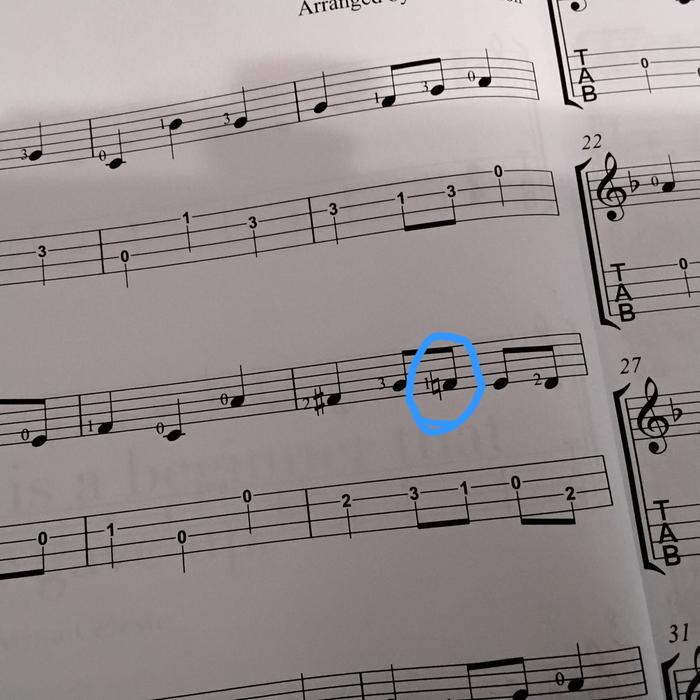
r ransom wrote:What is this sign called and what does it do?
Ukulele music and tab from the Sor book. Treble cleft, one flat on B line, 3/4 time.
The Notation Key at start of book doesn't say this symbol.
It's not a sharp, as we have one to the left. Above we can see the note written normal has the same tab. So I am obviously supposed to do something special. Any ideas?
One can never be too kind to oneself or others.
Never our fault, always our responsibility
2
2
One can never be too kind to oneself or others.
Never our fault, always our responsibility
M Ljin wrote:This could go for ukulele or guitar or any string instrument with multiple strings—

|
My, my, aren't you a big fella. Here, have a tiny ad:
Permaculture Voices 1, 2 and 3 - all 117 hours of video!
https://permies.com/t/voices123
|