• Post Reply Bookmark Topic Watch Topic
  • New Topic
permaculture forums growies critters building homesteading energy monies kitchen purity ungarbage community wilderness fiber arts art permaculture artisans regional education skip experiences global resources cider press projects digital market permies.com pie forums private forums all forums
this forum made possible by our volunteer staff, including ...
master stewards:
  • Carla Burke
  • Nancy Reading
  • r ransom
  • John F Dean
  • paul wheaton
  • Jay Angler
stewards:
  • Timothy Norton
  • Pearl Sutton
  • Tereza Okava
master gardeners:
  • Christopher Weeks
  • M Ljin
gardeners:
  • Jeremy VanGelder
  • Matt McSpadden
  • thomas rubino

How do you source your biochar quench water?

 
Steward of piddlers
Posts: 7362
Location: Upstate New York, Zone 5b, 43 inch Avg. Rainfall
4010
monies home care dog fungi trees chicken food preservation cooking building composting homestead
  • Likes 6
  • Mark post as helpful
  • send pies
    Number of slices to send:
    Optional 'thank-you' note:
  • Quote
  • Report post to moderator
I feel fortunate.

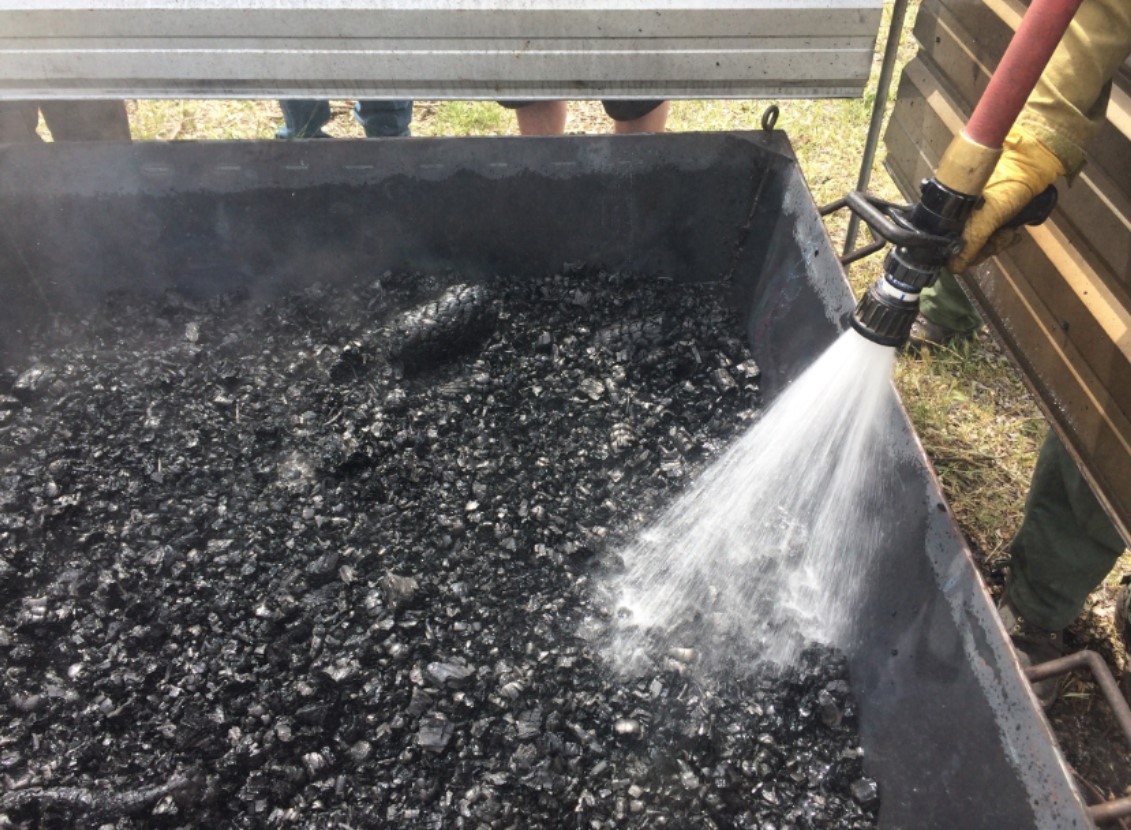
I am connected to a municipal water source at my house which is near my biochar production site. When it is time to put out the fire, I can turn on a garden hose and deluge the fire until it goes out. I realize that not everyone has such easy access to a volume of water and it got me thinking. How do you manage your quench water when water is not so easily sourced?

What does everyone do for quench water?

I could imagine that this might be a good place to reuse grey water, but one would have to accumulate that water and then be able to dump it where they would want it.

Has anyone figured out how much water it actually takes? I feel like I use a bunch of water every time, more than I think it would normally take at least.

Quenching Biochar
 
gardener
Posts: 5577
Location: Cincinnati, Ohio,Price Hill 45205
1204
forest garden trees urban
  • Likes 7
  • Mark post as helpful
  • send pies
    Number of slices to send:
    Optional 'thank-you' note:
  • Quote
  • Report post to moderator
I prefer rainwater, but if it's not available, I make due with city water.
Our city water has chloramine, which doesn't evaporate.
Ideally , one would use reuse the same rainwater over and over.

 
Posts: 214
Location: South Central Virginia
38
  • Likes 9
  • Mark post as helpful
  • send pies
    Number of slices to send:
    Optional 'thank-you' note:
  • Quote
  • Report post to moderator
I never use water I cut off the air. No O2 no burn.
 
larry kidd
Posts: 214
Location: South Central Virginia
38
  • Likes 7
  • Mark post as helpful
  • send pies
    Number of slices to send:
    Optional 'thank-you' note:
  • Quote
  • Report post to moderator
When you wet or wash ash you're actively making lye. I put this in that other thread thinking it was this one.
 
pollinator
Posts: 4245
Location: Tennessee 7b
353
  • Likes 6
  • Mark post as helpful
  • send pies
    Number of slices to send:
    Optional 'thank-you' note:
  • Quote
  • Report post to moderator
My home runs on rainwater, so I have to be cognizant during the dry season. I have gone to doing the leaning barrel method. When it’s done, I do a quick steam to help crack the carbon and cool it slightly, then put the lid on and let it cool down without oxygen. I probably use 5 gallons for a 55 gallon barrel batch. There is no water left, it all steams off by morning.
 
gardener
Posts: 4527
733
7
forest garden fungi trees food preservation bike medical herbs
  • Likes 3
  • Mark post as helpful
  • send pies
    Number of slices to send:
    Optional 'thank-you' note:
  • Quote
  • Report post to moderator
I make my biochar in the driveway, so access to the hose is easy. Quenching it activates it.  The biochar is close to sterile at that point. If you let the water sit for 4 hours, the chlorine will waft off. If you add a small amount of compost or similar, it will break down the chloramine. Enough to turn it light brown. Chloramine kills the biological activity in the water. They put it in the pipes because sometimes the water takes a week to get to you.

John S
PDX OR
 
Posts: 10
2
  • Likes 5
  • Mark post as helpful
  • send pies
    Number of slices to send:
    Optional 'thank-you' note:
  • Quote
  • Report post to moderator
Because I heat with wood. so I use tin #10 cans in my stove. Cut one end from each, drill a 1/2" hole in each raminaing end, crimp to to fit into the other, pack with wood chip and put on a fire. The drilled holes will produce flames as the gas gets burned off. If you have several cans you cans you get more char. It isn't as fast as burning logs but the smaller chips are easier to break up and it doesn't require constant attention.
 
Posts: 287
15
9
  • Likes 3
  • Mark post as helpful
  • send pies
    Number of slices to send:
    Optional 'thank-you' note:
  • Quote
  • Report post to moderator
I have a secret weapon.

It's magic powder.

If I need to interrupt a burn, I smother the lot with
magic powder.

It takes a while to make enough but I have done
it and so can you.

What is it?

It's just white ash. The end result of an ember exhausting
all it's fuel.

Scoop it up. Sift it and save the rejects for a re-burn.

What passes through the sieve is magic powder.

It has nothing left to combust so I dump enough
to prevent any chance of a fire escaping and
burning the neighbourhood down.

You need to cordon it so that no wild animal
can tip this over and spill red hot embers.

Scoop, sieve, smother, repeat. It never wears out.
Just don't sneeze and keep the wind out.

Leave this to cool down overnight and you are
done.

The other alternative is fine beach sand only
I don't live near the beach.

Bottom line - no water required except to wash
your hands.
 
Whip out those weird instruments of science and probe away! I think it's a tiny ad:
Learn Permaculture through a little hard work
https://wheaton-labs.com/bootcamp
reply
    Bookmark Topic Watch Topic
  • New Topic