• Post Reply Bookmark Topic Watch Topic
  • New Topic
permaculture forums growies critters building homesteading energy monies kitchen purity ungarbage community wilderness fiber arts art permaculture artisans regional education skip experiences global resources cider press projects digital market permies.com pie forums private forums all forums
this forum made possible by our volunteer staff, including ...
master stewards:
  • Carla Burke
  • John F Dean
  • r ransom
  • Nancy Reading
  • Timothy Norton
  • Jay Angler
stewards:
  • paul wheaton
  • Pearl Sutton
  • Eric Hanson
master gardeners:
  • Christopher Weeks
  • M Ljin
gardeners:
  • thomas rubino
  • Megan Palmer
  • Benjamin Dinkel

DSR2 Batch box in Nova Scotia

 
Apprentice Rocket Scientist
Posts: 4
9
  • Likes 12
  • Mark post as helpful
  • send pies
    Number of slices to send:
    Optional 'thank-you' note:
  • Quote
  • Report post to moderator
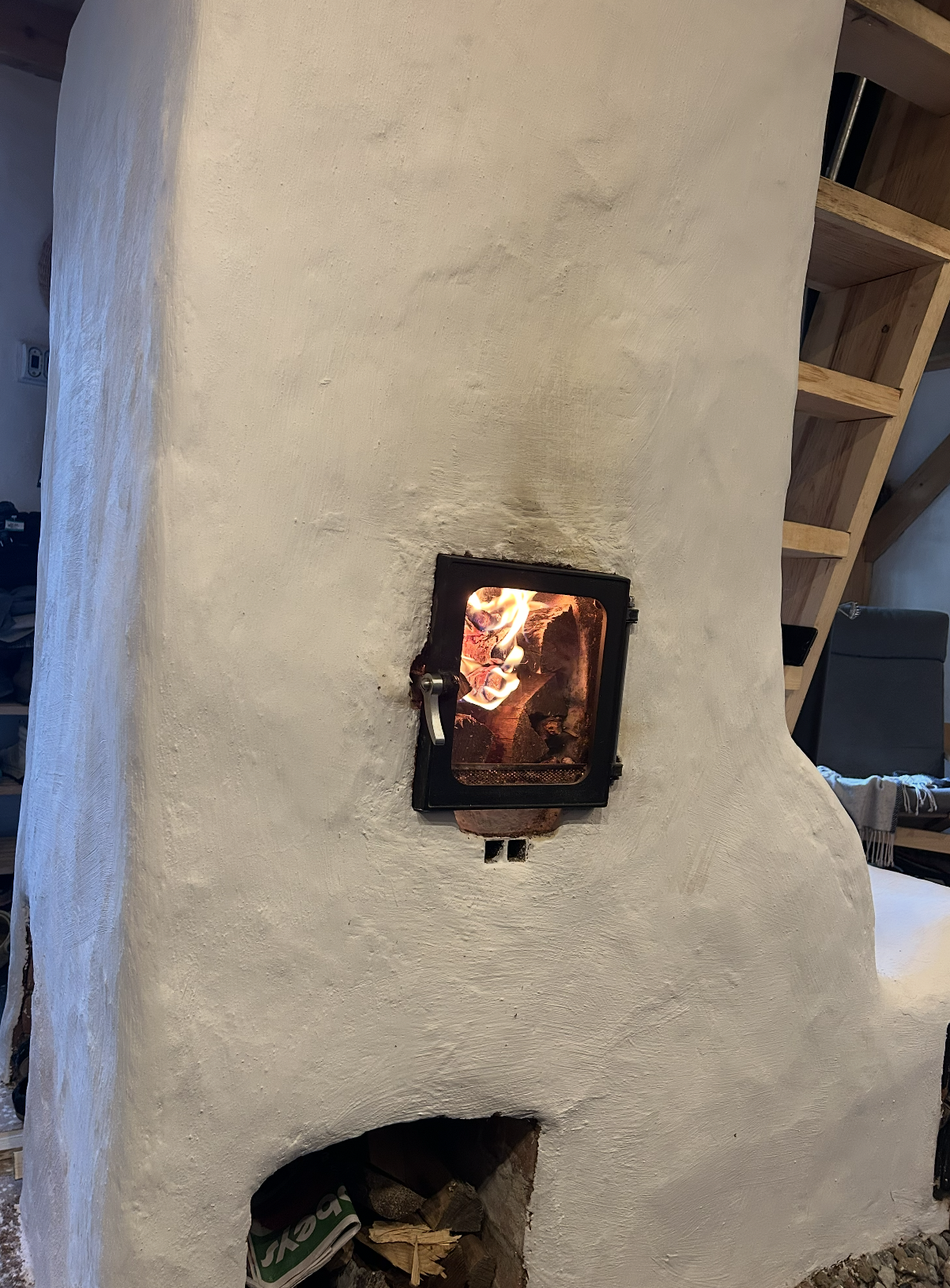
Last spring my wife and I started building a DSR2 batchbox rocket mass heater in our small strawbale cabin near Lunenburg, Nova Scotia, Canada.

A few weeks ago we fired it up for the first time and have been loving it so far! We wanted to thank all of the Rocket Scientists in this group for posting the information that allowed the build to happen, especially Peter for sharing your research and designs that we used for the heater.

Some additional info:
- 5" riser and flue
- DSR2 core made with firebrick using clay/sand mortar
- bell made from reclaimed clay brick with clay/sand mortar
- exterior 1" clay/sand plaster harvested from site + limewash
- bench/chair with cleanout and 5" flue joined existing 15' chimney with small bend
- firebox door from Salamander Stoves in the UK

So far, with overnight lows around -2C we have been having one 1-hour fire in the morning and staying nice and toasty with an even level of heat until the following morning.

We are in the process of building a larger house and hope to build a larger batchbox heater in a couple of years time. With that in mind, lessons learned so far:
1. We underestimated the importance of the size of the primary air intake. At first it was too small, leading to a couple of very smokey fires until it was enlarged to the correct dimensions.
2. Our flue is not insulated until it exits the roof and we now wish it was! Because of the lower temperature flue gases and uninsulated metal stovepipe we are getting quite a bit of condensation dripping out at the bottom.  We're planning to add some insulation at about the 7-12' level to hopefully reduce/eliminate the condensation.
3. Because of the small size of the cabin (375 square feet) the air pressure in the building does affect the draft in the flue. We have one extractor fan in our loft and when turned on it must reduce the pressure in the cabin enough to cause smoke to come out of the cleanout in the bench.
4. This one should have been obvious but it wasn't to us. It takes a few consecutive days of firing to get the entire mass from cold to 'operating' temperature. Ie. The bench doesn't warm up after the first couple fires and the "dragon" doesn't really come to life until day 3. At least that was our experience.
5. Even without lighting the heater we noticed a difference in temperature and humidity during the summer and fall due to the thermal mass. Fewer hot summer days and not as many cool autumn nights!

All in all we love our heater and are now trying to convince everyone we know to build one!

Happy to try to answer any questions or share construction details. Unfortunately we were too busy building to take photos of that process.

Thanks folks!
James & Kate
batchbox-cabin-1.png
A double shoebox rocket masonry heater in Nova Scotia
batchbox-cabin-2.png
[Thumbnail for batchbox-cabin-2.png]
batchbox-sketch-1.png
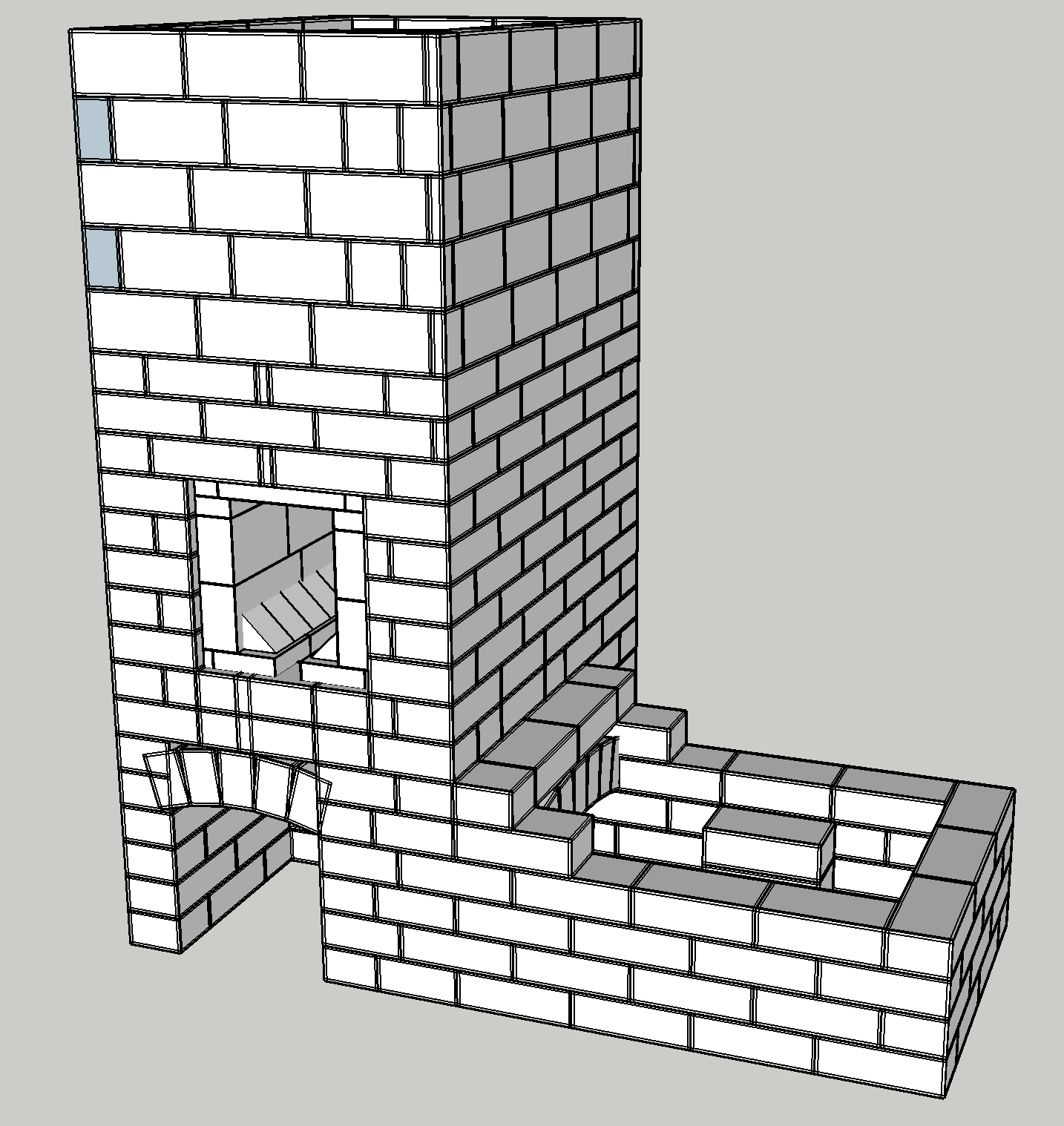
layout of the bricks in a batch rocket masonry heater
batchbox-sketch-2.png
[Thumbnail for batchbox-sketch-2.png]
 
Posts: 809
Location: Sierra Nevada foothills, 350 m, USDA 8b, sunset zone 7
174
  • Likes 4
  • Mark post as helpful
  • send pies
    Number of slices to send:
    Optional 'thank-you' note:
  • Quote
  • Report post to moderator
Good job Kate and James!

I understand that the two square holes are for the secondary air channel. Do you close it for the night?
 
master steward
Posts: 8051
Location: southern Illinois, USA
3041
goat cat dog chicken composting toilet food preservation pig solar wood heat homestead composting
  • Likes 2
  • Mark post as helpful
  • send pies
    Number of slices to send:
    Optional 'thank-you' note:
  • Quote
  • Report post to moderator
Hi James,

Welcome to Permies.
 
James Wills
Apprentice Rocket Scientist
Posts: 4
9
  • Likes 5
  • Mark post as helpful
  • send pies
    Number of slices to send:
    Optional 'thank-you' note:
  • Quote
  • Report post to moderator

Cristobal Cristo wrote:Good job Kate and James!

I understand that the two square holes are for the secondary air channel. Do you close it for the night?


Thanks Cristobal!

We have no option to close the primary/secondary air intakes overnight.  The secondary is simply a couple square tubes we had welded to spec for the floor channel. There is a damper in the exhaust flue that we close overnight.
 
master rocket scientist
Posts: 6949
Location: latitude 47 N.W. montana zone 6A
3950
cat pig rocket stoves
  • Likes 7
  • Mark post as helpful
  • send pies
    Number of slices to send:
    Optional 'thank-you' note:
  • Quote
  • Report post to moderator
Hi Guys, Thanks for sharing!
Do you monitor the outgoing exhaust gas temperature?
With only one fire a day, you may not be achieving or maintaining gas temps above 130°F (54 °C).
I highly recommend using a low-cost digital thermometer with a wire probe inserted into the outgoing chimney.
You don't need to use an insulated pipe indoors, as it won't lose enough heat inside the cabin.

With my Shorty core inside the house and only one fire a day, condensation is an issue.
I utilize my bypass to help even out the temps.
As soon as I switch from one fire a day, to one in the morning and another in the evening, my bypass can remain shut, and the outgoing gas temperatures range from 160°F to 200°F
Not a drop of black water anywhere.

I realize you are coastal rather than mountainous, and your temps will be more moderate.
Could you try two smaller fires a day and see if that helps?

With Shorty, we often have windows open, sometimes all night, even in northern Montana!

Here is the gauge I am using
https://www.amazon.com/Proster-Thermocouple-Thermometer-Dual-Channel-Thermocouples/dp/B071V7T6TZ/ref=sr_1_4?nsdOptOutParam=true&sr=8-4


thomas rubino
master rocket scientist
Posts: 6949
Location: latitude 47 N.W. montana zone 6A
3950
cat pig rocket stoves
  • Likes 8
  • Mark post as helpful
  • send pies
    Number of slices to send:
    Optional 'thank-you' note:
  • Quote
  • Report post to moderator
Oh my James
Closing off your chimney is very dangerous!
Closing your secondary's is easy, and I think the DSR uses a similar door/ airframe as Shorty.
It should have a way to shut it off.
Check out this thread.
https://permies.com/t/361932/Holding-heat-overnight-importance-shutting
 
Cristobal Cristo
Posts: 809
Location: Sierra Nevada foothills, 350 m, USDA 8b, sunset zone 7
174
  • Likes 7
  • Mark post as helpful
  • send pies
    Number of slices to send:
    Optional 'thank-you' note:
  • Quote
  • Report post to moderator
I hope it's a partially closing damper.
How is the primary air getting to the firebox?
 
James Wills
Apprentice Rocket Scientist
Posts: 4
9
  • Likes 9
  • Mark post as helpful
  • send pies
    Number of slices to send:
    Optional 'thank-you' note:
  • Quote
  • Report post to moderator

Cristobal Cristo wrote:I hope it's a partially closing damper.
How is the primary air getting to the firebox?


Yes, partially closed, not to worry. The primary air is delivered through an intake below the door, just above the secondary intake, since the door didn't have its own intake.
 
James Wills
Apprentice Rocket Scientist
Posts: 4
9
  • Likes 9
  • Mark post as helpful
  • send pies
    Number of slices to send:
    Optional 'thank-you' note:
  • Quote
  • Report post to moderator
Thanks Thomas, these are excellent points.

thomas rubino wrote:Do you monitor the outgoing exhaust gas temperature?
With only one fire a day, you may not be achieving or maintaining gas temps above 130°F (54 °C).
I highly recommend using a low-cost digital thermometer with a wire probe inserted into the outgoing chimney.
You don't need to use an insulated pipe indoors, as it won't lose enough heat inside the cabin.


Not yet other than by putting my hand on the stovepipe. It's barely warm to the touch so I would guess we are well below 54C.

thomas rubino wrote:

With my Shorty core inside the house and only one fire a day, condensation is an issue.
I utilize my bypass to help even out the temps.
As soon as I switch from one fire a day, to one in the morning and another in the evening, my bypass can remain shut, and the outgoing gas temperatures range from 160°F to 200°F
Not a drop of black water anywhere.

I realize you are coastal rather than mountainous, and your temps will be more moderate.
Could you try two smaller fires a day and see if that helps?


We'll definitely try this, especially with temperatures dropping soon. It would be fantastic if that solved the condensation issue. We didn't have the space to include a bypass with this layout but I will certainly be including one in our next build!

thomas rubino wrote:
Closing off your chimney is very dangerous!
Closing your secondary's is easy, and I think the DSR uses a similar door/ airframe as Shorty.
It should have a way to shut it off.


Sorry, didn't mean to alarm anyone. We can partially close it in an attempt to minimize heat loss. But after reading your other post it makes more sense to close the intakes. I'll try to come up with a way to do that, even if it's just covering with an insulating material.

Thanks!
 
pioneer
Posts: 1005
Location: Inter Michigan-Superior Woodland Forest
173
6
transportation gear foraging trees food preservation bike building solar writing woodworking wood heat
  • Likes 5
  • Mark post as helpful
  • send pies
    Number of slices to send:
    Optional 'thank-you' note:
  • Quote
  • Report post to moderator
I'd be interested to see wider, establishing shots with the exhaust and everything (if it won't give away too many secrets about the bat cave)...
 
pollinator
Posts: 410
44
  • Likes 4
  • Mark post as helpful
  • send pies
    Number of slices to send:
    Optional 'thank-you' note:
  • Quote
  • Report post to moderator
In defense of his method, I should point out that closing a damper is not closing the exhaust completely

Dampers are not solid cast iron, at least not in my 40 years of using wood stoves. Plenty of exhaust flows through the design of the damper
Screenshot_20251127_191526_Samsung-Internet.jpg
[Thumbnail for Screenshot_20251127_191526_Samsung-Internet.jpg]
 
Rocket Scientist
Posts: 4722
Location: Upstate NY, zone 5
671
5
  • Likes 7
  • Mark post as helpful
  • send pies
    Number of slices to send:
    Optional 'thank-you' note:
  • Quote
  • Report post to moderator
If using a commercial wood stove damper, there will be no safety issue. A purpose-built damper could give total closure, so the point is worth raising.
 
Rico Loma
pollinator
Posts: 410
44
  • Mark post as helpful
  • send pies
    Number of slices to send:
    Optional 'thank-you' note:
  • Quote
  • Report post to moderator
Thanks Glenn, I had no idea folks would make such a thing. I guess it would have utility if a family left town for extended time during winter, and had other heat that could cycle up the chimney draft, wasting propane or electricity
 
Posts: 74
9
  • Likes 5
  • Mark post as helpful
  • send pies
    Number of slices to send:
    Optional 'thank-you' note:
  • Quote
  • Report post to moderator
Being able to close the damper to the flue fully is also forbidden here in Belgium, you are required to leave minimum 15%, up to 25% of the system size free to prevent CO issues. In my case, for a 150mm system size, it wil require a hole of around 60 mm. I'm still doubting installing one, since it's more work, but on the other hand will allow me to decrease any residual airflow through the heater, which has shown to be very important to hold the heat.

A question to you Thomas, hearing about your condensation issue: would you suggest further decreasing the recommended ISA for the shorty? I will only be firing my bbr once a day, so I'd like to avoid condensation.
 
thomas rubino
master rocket scientist
Posts: 6949
Location: latitude 47 N.W. montana zone 6A
3950
cat pig rocket stoves
  • Likes 7
  • Mark post as helpful
  • send pies
    Number of slices to send:
    Optional 'thank-you' note:
  • Quote
  • Report post to moderator
Hi Julian;
When I built my Shorty, she was the first in the US.
Only a few had been built in Europe.
I built mine using the ISA numbers for a first-generation batchbox.
After hearing the temperature numbers I  was receiving, Peter lowered the ISA numbers on Shorty.

The condensation, for me, in the short term, is simply ugly black water that can seep from my cleanout door.
In a long-term situation, if it continued, there could be rot issues if built on a wooden floor.
Although now it is cold enough, I can have a small morning and evening fire, and there is no condensation.
I am considering trying a square of rigid insulation to keep the water inside the bell rather than on my floor.

Check this thread out, Julian  https://permies.com/t/361932/Holding-heat-overnight-importance-shutting
Don't add a damper; close off your intakes instead.

20251128_122220.jpg
[Thumbnail for 20251128_122220.jpg]
 
Glenn Herbert
Rocket Scientist
Posts: 4722
Location: Upstate NY, zone 5
671
5
  • Likes 6
  • Mark post as helpful
  • send pies
    Number of slices to send:
    Optional 'thank-you' note:
  • Quote
  • Report post to moderator
I fabricated a 4" stainless steel guillotine damper for the bypass in the RMH I am building for my best friend, because I want no flow from the top of the bell unless bypassing. There are few other situations where a total shutoff damper would be needed.
 
gardener
Posts: 1154
Location: +52° 1' 47.40", +4° 22' 57.80"
580
woodworking rocket stoves wood heat
  • Likes 12
  • Mark post as helpful
  • send pies
    Number of slices to send:
    Optional 'thank-you' note:
  • Quote
  • Report post to moderator

Julian Adam wrote:A question to you Thomas, hearing about your condensation issue: would you suggest further decreasing the recommended ISA for the shorty? I will only be firing my bbr once a day, so I'd like to avoid condensation.


The ISA for the Shorty core is down to 85% of the recommendation for a first generation core. Or: calculate the cross section area of the chinmey pipe in square meters, and multiply that by 255. This will give you the correct ISA for a Shorty core. Tried last month with the large heater in the Sculpter's shop, and it works beautifully, running with an exit temperature of just 90C (194F) while everything is on operating temperature.
 
Julian Adam
Posts: 74
9
  • Likes 8
  • Mark post as helpful
  • send pies
    Number of slices to send:
    Optional 'thank-you' note:
  • Quote
  • Report post to moderator

thomas rubino wrote:
I built mine using the ISA numbers for a first-generation batchbox. After hearing the temperature numbers I  was receiving, Peter lowered the ISA numbers on Shorty.


This I was completely unaware of, or must have forgotten already!
FYI, about the condensation, it also contains sulphur, making it acidic. For biomass combustion, it's a major concern in terms of low temperature corrosion (I'm following this up at work). 'Clean' wood contains little to no sulphur, or chlorine (so it's not like your chimney will get holes within one or two years) but it may still cause corrosion over time. Coincidentally (or Peter is aware), the 90 °C in the chimney I've seen him mention a few times as minimum is also typically around the sulphur dew point for clean wood - so that 90°C, I would consider completely safe in terms of corrosion.

thomas rubino wrote:
Check this thread out, Julian  https://permies.com/t/361932/Holding-heat-overnight-importance-shutting
Don't add a damper; close off your intakes instead.


I've seen your thread passing by Thomas! It's these kinds of experiments that demonstrate valuable insights. I hope by this time next year I'll be able to contribute something as well. (Unfortunately other renovation priorities still keeping me from finishing the BBR). In my case, the chimney will be within the bell, so inevitably I will be heating the air inside of it with the mass, which I assume will create extra draft and flow through my mass (I'm not yet confident I will be able to weld a fully sealing door, haha)
 
Julian Adam
Posts: 74
9
  • Likes 8
  • Mark post as helpful
  • send pies
    Number of slices to send:
    Optional 'thank-you' note:
  • Quote
  • Report post to moderator

Peter van den Berg wrote:
The ISA for the Shorty core is down to 85% of the recommendation for a first generation core.


That's what I thought, thanks for confirming Peter!

Peter van den Berg wrote:
Tried last month with the large heater in the Sculpter's shop  
and it works beautifully


I've been following your posts closely, wat een prachtige mammoet! Makes me a little sad I cannot find the time to finish my own. Looking forward to the rest of the sculpter build!
 
An electric car saves 2 tons of CO2 out of 30. This tiny ad is carbon neutral.
Learn Permaculture through a little hard work
https://wheaton-labs.com/bootcamp
reply
    Bookmark Topic Watch Topic
  • New Topic