• Post Reply Bookmark Topic Watch Topic
  • New Topic
permaculture forums growies critters building homesteading energy monies kitchen purity ungarbage community wilderness fiber arts art permaculture artisans regional education skip experiences global resources cider press projects digital market permies.com pie forums private forums all forums
this forum made possible by our volunteer staff, including ...
master stewards:
  • Nancy Reading
  • Carla Burke
  • John F Dean
  • Timothy Norton
  • r ransom
  • Jay Angler
  • Pearl Sutton
stewards:
  • Devaka Cooray
  • Leigh Tate
  • paul wheaton
master gardeners:
  • Christopher Weeks
gardeners:
  • M Ljin
  • thomas rubino
  • Megan Palmer

Land Purchase Criteria

 
Posts: 64
Location: Rethymno, Crete
6
  • Likes 6
  • Mark post as helpful
  • send pies
    Number of slices to send:
    Optional 'thank-you' note:
  • Quote
  • Report post to moderator
Hey all,
I know I've posted on here similar discussions but would love to hear more from people about specific things that you would prioritize when looking for the perfect property to start a permaculture project with self sufficiency as the goal.  I'm trying to think of everything here, including things that could impact our overall quality of life.  We've made plenty of mistakes in the past with choosing places to live and I want to get it right this time!

Is no water a deal-breaker?

Is being able to hear and see traffic going by a deal breaker, and would you avoid being right next to a paved road with light traffic?

Are power lines in close proximity a deal breaker?

In the case of one property that we are the most seriously considering, is the fact that it flooded once pretty badly several years ago due to a broken dam a deal breaker?

Is nice flat land better than something with more of a slope?

What else should we be looking at here?

 
steward
Posts: 18343
Location: USDA Zone 8a
4656
dog hunting food preservation cooking bee greening the desert
  • Likes 6
  • Mark post as helpful
  • send pies
    Number of slices to send:
    Optional 'thank-you' note:
  • Quote
  • Report post to moderator
Water is a necessity and hauling water is no fun.

For most folks road noise is a deal breaker, especially from a very busy road or if there are small children.

Being off a paved road with light traffic sounds okay to me.

Power lines close to the property is a must even if a person is off grid as that is something that might be added as folks age and running electric from the nearest pole is expensive.

Flooding is a deal breaker as it is not possible to predict what Mother Nature is going to do even if the cause was a broken dam.  Loss of property and lives are too precious.

I love a gentle slope and I live on top of a mountain.

What else?  It depends on what you want the land for. A permaculture project is could mean different strokes for different folks ...

Gardening and animals or one or the other or living a sustainable life?

My property came with a water well, a pond, electricity, and sewer ... all the comfort of home, including an unfinished house.  The ultimately, best purchase we have ever made.
 
master steward
Posts: 8183
Location: southern Illinois, USA
3135
goat cat dog chicken composting toilet food preservation pig solar wood heat homestead composting
  • Likes 5
  • Mark post as helpful
  • send pies
    Number of slices to send:
    Optional 'thank-you' note:
  • Quote
  • Report post to moderator
Water tops the list.  I look at proximity to medical care and hardware stores.  Lumber is a little less important. Roads come in somewhere in the consideration.

One flood gets my attention.  I would not rule it out. But, I have always bought homestead property on hills.
 
Posts: 832
Location: Sierra Nevada foothills, 350 m, USDA 8b, sunset zone 7
186
  • Likes 6
  • Mark post as helpful
  • send pies
    Number of slices to send:
    Optional 'thank-you' note:
  • Quote
  • Report post to moderator
Water is the deal breaker in hot arid summer climate. Of course dry farming exists, but in arid Mediterranean it's limited to olives and almonds. At the beginning I was really excited with the prospect of growing without water, but it was a complete failure for me. Even with water things fail on a regular basis.

Light traffic may be acceptable, as long as there are not future plans to turn this road into a highway or expressway. I personally would not like to be adjacent to even light traffic road. My cats are free roaming and I would not like to see them dead.

I would not like to have high voltage power lines over my head, but if they were 200 m away (but not closer) I would probably accept it. Proximity to power lines is not only possible radiation problem (current physic says it's low energy due to low frequency, but life is way more complex than that), but also the fact that it will have easements around and future extension of the power lines would encroach even more on your land. Even if it had no easements, if the state decides to widen the energy corridor they will do it.

Flat terrain is better than slope, but it depends on the steepness, orientation, soil, etc.
-southern/western slope will be more perpendicular to the sun rays
-steep slopes will have shallow soil and shallow soil will not hold much water
-irrigation on steep slopes is problematic; despite using pressure control emitters, the top trees on my 5 degree slope get 2 times less water than bottom ones
-if the slope is steep it's dangerous to use tractor

Occasional flooding at the bottom is not a problem as long as you are aware of it and you build higher enough. I'm saying "enough", because there may be always more intense flooding in the future. Valleys are an asset in the mountains - usually they will have deeper and fertile soils and more underground water. At the same time, please be aware that a well by a stream may have salty water. I would never buy a property with bad water.
Valley bottom may have clay rich soil which can be used for building,
Some valleys may also experience temperature inversions resulting in freezes but also cooler summer nights.

Having some trees or any source of shade is greatly helpful if not critical.
 
pollinator
Posts: 4225
Location: Tennessee 7b
348
  • Likes 5
  • Mark post as helpful
  • send pies
    Number of slices to send:
    Optional 'thank-you' note:
  • Quote
  • Report post to moderator
ZONING. If you have to ask council permission to do any little thing, it becomes a nightmare quickly.  
 
Posts: 29
8
  • Likes 4
  • Mark post as helpful
  • send pies
    Number of slices to send:
    Optional 'thank-you' note:
  • Quote
  • Report post to moderator
Floods, lack of water, power, bad soils, weather etc.… I think you can get creative with all that, but you’re screwed if you buy land in an area of bad governance and problematic neighbors.  
 
John F Dean
master steward
Posts: 8183
Location: southern Illinois, USA
3135
goat cat dog chicken composting toilet food preservation pig solar wood heat homestead composting
  • Likes 4
  • Mark post as helpful
  • send pies
    Number of slices to send:
    Optional 'thank-you' note:
  • Quote
  • Report post to moderator
Hi Craig,

Great points. I sold my Minnesota homestead for a variety of issues. But the major reason was neighbors.   I had at least three neighbors with major  drinking problems.  As for government, from the start I sought out minimal restrictions.
 
pollinator
Posts: 5892
Location: Bendigo , Australia
533
plumbing earthworks bee building homestead greening the desert
  • Likes 4
  • Mark post as helpful
  • send pies
    Number of slices to send:
    Optional 'thank-you' note:
  • Quote
  • Report post to moderator
I think all the opinions are worth consideration.
I would add;
- Do you want to sell at the farm gate?
- A flood zone may have better quality soil, but you dont want a structure swept away
- water is always #1, but if you can capture rainfall it will be easier.
- Power can come from solar panels etc and may be better value than posts and wires nearby.
- Area of land you require may create different needs.
- slopes can be used to you advantage, moving water, flood protection.
- Soil quality is very important, its hard to improve from rubbish soil.
 
Dareios Alexandre
Posts: 64
Location: Rethymno, Crete
6
  • Likes 4
  • Mark post as helpful
  • send pies
    Number of slices to send:
    Optional 'thank-you' note:
  • Quote
  • Report post to moderator
Thanks for your thoughts, although I'm not sure I agree about the power lines, and for me, being off grid is a priority. For me, my priority is to grow a wide range of diverse fruit varieties with maximum self sufficiency as the main goal.

Anne Miller wrote:Water is a necessity and hauling water is no fun.

For most folks road noise is a deal breaker, especially from a very busy road or if there are small children.

Being off a paved road with light traffic sounds okay to me.

Power lines close to the property is a must even if a person is off grid as that is something that might be added as folks age and running electric from the nearest pole is expensive.

Flooding is a deal breaker as it is not possible to predict what Mother Nature is going to do even if the cause was a broken dam.  Loss of property and lives are too precious.

I love a gentle slope and I live on top of a mountain.

What else?  It depends on what you want the land for. A permaculture project is could mean different strokes for different folks ...

Gardening and animals or one or the other or living a sustainable life?

My property came with a water well, a pond, electricity, and sewer ... all the comfort of home, including an unfinished house.  The ultimately, best purchase we have ever made.

 
Dareios Alexandre
Posts: 64
Location: Rethymno, Crete
6
  • Likes 4
  • Mark post as helpful
  • send pies
    Number of slices to send:
    Optional 'thank-you' note:
  • Quote
  • Report post to moderator
Agree with you about the water. We need to prioritize that. Would you only consider a property that has a well? What about a rainwater harvesting system? Could this cover water needs in a Med climate?
I'm the same as you with the traffic...I really value only hearing the sounds of nature!
Also the power lines! I wanna be as far away from those things as possible and I see no benefit if we want to be completely off grid anyway.

If you were looking for a new place would you have a minimum land size in mind or does it just depend on what you wanna do?

Cristobal Cristo wrote:Water is the deal breaker in hot arid summer climate. Of course dry farming exists, but in arid Mediterranean it's limited to olives and almonds. At the beginning I was really excited with the prospect of growing without water, but it was a complete failure for me. Even with water things fail on a regular basis.

Light traffic may be acceptable, as long as there are not future plans to turn this road into a highway or expressway. I personally would not like to be adjacent to even light traffic road. My cats are free roaming and I would not like to see them dead.

I would not like to have high voltage power lines over my head, but if they were 200 m away (but not closer) I would probably accept it. Proximity to power lines is not only possible radiation problem (current physic says it's low energy due to low frequency, but life is way more complex than that), but also the fact that it will have easements around and future extension of the power lines would encroach even more on your land. Even if it had no easements, if the state decides to widen the energy corridor they will do it.

Flat terrain is better than slope, but it depends on the steepness, orientation, soil, etc.
-southern/western slope will be more perpendicular to the sun rays
-steep slopes will have shallow soil and shallow soil will not hold much water
-irrigation on steep slopes is problematic; despite using pressure control emitters, the top trees on my 5 degree slope get 2 times less water than bottom ones
-if the slope is steep it's dangerous to use tractor

Occasional flooding at the bottom is not a problem as long as you are aware of it and you build higher enough. I'm saying "enough", because there may be always more intense flooding in the future. Valleys are an asset in the mountains - usually they will have deeper and fertile soils and more underground water. At the same time, please be aware that a well by a stream may have salty water. I would never buy a property with bad water.
Valley bottom may have clay rich soil which can be used for building,
Some valleys may also experience temperature inversions resulting in freezes but also cooler summer nights.

Having some trees or any source of shade is greatly helpful if not critical.

 
Dareios Alexandre
Posts: 64
Location: Rethymno, Crete
6
  • Likes 4
  • Mark post as helpful
  • send pies
    Number of slices to send:
    Optional 'thank-you' note:
  • Quote
  • Report post to moderator
Unfortunately all of Greece is basically a nightmare as far as rules and regulations and having to ask permission for every little thing, but this is where we are so I'm hoping we can find some ways around it.

R Scott wrote:ZONING. If you have to ask council permission to do any little thing, it becomes a nightmare quickly.  

 
Dareios Alexandre
Posts: 64
Location: Rethymno, Crete
6
  • Likes 4
  • Mark post as helpful
  • send pies
    Number of slices to send:
    Optional 'thank-you' note:
  • Quote
  • Report post to moderator
Thanks Jon. Yes we very much want to be off grid, that's a priority for us. I would love to sell at the farm gate, not sure how well it would work here, it's not really a thing here in Greece, but worth a try. Yeah the place we're at now has terrible soil, I'm having trouble growing much of anything here, so definitely want to prioritize good soil for the next place!

John C Daley wrote:I think all the opinions are worth consideration.
I would add;
- Do you want to sell at the farm gate?
- A flood zone may have better quality soul, but you dont want a structure swept away
- water is always #1, but if you can capture rainfall it will be easier.
- Power can come from solar panels etc and may be better value than posts and wires.
- Area you require may create different needs.
- slopes can be used to you advantage, moving water, flood protection.
- Soil quality is very important, its hard to improve from rubbish soil.

 
pollinator
Posts: 134
Location: Memphis (zone 7b/8a)
56
  • Likes 6
  • Mark post as helpful
  • send pies
    Number of slices to send:
    Optional 'thank-you' note:
  • Quote
  • Report post to moderator
I live on a moderately busy 2 lane road but I have a thick barrier of shrubs and trees separating it from the property and the house sits on a hill overlooking it so it makes me feel like the lord of the valley.

Easy access to jobs is a big priority for those of us who don't generate much income from agriculture. I have a 5 minute commute to work thanks to my proximity to the city which frees up a lot of my non work day to do stuff on the land.

As for soil,  if it grows anything, that's a good starting point! My land is overrun with invasive shrubs that outcompete a lot of what I plant but that just makes it ideal for goats.
 
Cristobal Cristo
Posts: 832
Location: Sierra Nevada foothills, 350 m, USDA 8b, sunset zone 7
186
  • Likes 6
  • Mark post as helpful
  • send pies
    Number of slices to send:
    Optional 'thank-you' note:
  • Quote
  • Report post to moderator
I think rain harvesting is feaseable if you have no other choices - no or bad well water, no streams/ponds, desert climate with low precipitation or restrective well drilling regulations. I would consider a property without a well only if I knew that the area has good water, sufficient amount and not too deep (the deeper the well the more expensive and usually lower yield).
If well is avalable try to look for a minimum 50 l/minute yield. The more the better. In the time of extreme drought, lower yielding wells may simply stop yielding anything.

Land size needed depends on soil/climate combination. For orchard, vegetables and a few animals 2 hectares is sufficient assuming that land is fertile enough to produce sufficient amount of vegetation for the grazers. If you plan on having more sheep/goats - the more terrain the better. It's better to have a smaller plot with excellent water, soil and microclimate than ten times bigger with rocks and aridity.

Water and soil are your main objectives, because they are bulky ingredients. Everything else can be relatively easily adjusted, but if you start with low quality soil and low water it may result in major frustration. I have tons of water and deep soils and I struggle to produce any vegetables, but at the same time have more and more fruits and quite a lot of sheep.

Are you still considering the citrus orchard?
Maybe if you share a list of your land finds it will be easier to help you.
 
Anne Miller
steward
Posts: 18343
Location: USDA Zone 8a
4656
dog hunting food preservation cooking bee greening the desert
  • Likes 5
  • Mark post as helpful
  • send pies
    Number of slices to send:
    Optional 'thank-you' note:
  • Quote
  • Report post to moderator

Dareios Alexandre wrote:Thanks for your thoughts, although I'm not sure I agree about the power lines, and for me, being off grid is a priority. For me, my priority is to grow a wide range of diverse fruit varieties with maximum self sufficiency as the main goal.

Anne Miller wrote:Power lines close to the property is a must even if a person is off grid as that is something that might be added as folks age and running electric from the nearest pole is expensive.


I wasn't considering high lines as suggest by someone.  I was thinking the normal electric lines.  Lines that don't obstruct views.

We have owned an off grid property for over 30 years,  There is a power line though we just did not want to pay that expense.

It was my dream to live off grid.  The property was not set up to maintain electric, etc so Dear Hubby just could not pull the power cord from the TV.

We have enjoyed that property and our daughter fell in love with it so the property has been well loved and now serve a BnB business.

If the goal is to grow fruit  and live a self sufficient lifestyle then that makes water a major priority.  Of course water catchment is very possible with enough rainfall.
 
master pollinator
Posts: 5286
Location: Due to winter mortality, I stubbornly state, zone 7a Tennessee
2249
7
forest garden foraging books food preservation cooking fiber arts bee medical herbs
  • Likes 4
  • Mark post as helpful
  • send pies
    Number of slices to send:
    Optional 'thank-you' note:
  • Quote
  • Report post to moderator
I have power lines on two sides of my acre. Anything planted on them is subject to being destroyed by the power company's crews. If I were shopping again, I would only buy with one side of power lines. Any high power lines? A hard no.


As for water, take a peek at John Dailey's water cachement thread here.
 
John C Daley
pollinator
Posts: 5892
Location: Bendigo , Australia
533
plumbing earthworks bee building homestead greening the desert
  • Likes 1
  • Mark post as helpful
  • send pies
    Number of slices to send:
    Optional 'thank-you' note:
  • Quote
  • Report post to moderator
I have done research on the area,
- Mediterranean climate with mild, rainy winters and hot, dry summers.
- Mountainous inland areas are cooler and receive more rain than the coastal region.
- Average Annual Rainfall: Rethymno receives approximately 574 mm (22.6 inches)
of precipitation annually, with the majority falling between October and April.
RAINFALL COLLECTION PROCESS
With 574mm of rain a year, you need 34 sq M of roof to collect 20,000L of water.
[ 20,000 / 574 = 34 ]
Somebody who has water supplied with a meter can tell us how much a garden uses, I dont know.
But in Bendigo I use about40,000L for myself. per annum. Average family in Victoria uses about 175,000L of water annually.
From https://agriculture.vic.gov.au/farm-management/drought-support/tools-and-calculators/farm-water-calculator/garden-use
they list the volumes of water used for garden etc for different rainfall areas.
I notice homes for sale on Crete, promote the fact they have water storage tanks installed.
Here is a Greek company that makes tanks, listing size and cost.
https://plastikon.gr/wp-content/uploads/2022/02/PLASTIKON-BROCHURE.pdf


Dareios Alexandre
Posts: 64
Location: Rethymno, Crete
6
  • Mark post as helpful
  • send pies
    Number of slices to send:
    Optional 'thank-you' note:
  • Quote
  • Report post to moderator
Thanks Jon, sounds like it's definitely doable!

John C Daley wrote:I have done research on the area,
- Mediterranean climate with mild, rainy winters and hot, dry summers.
- Mountainous inland areas are cooler and receive more rain than the coastal region.
- Average Annual Rainfall: Rethymno receives approximately 574 mm (22.6 inches)
of precipitation annually, with the majority falling between October and April.
RAINFALL COLLECTION PROCESS
With 574mm of rain a year, you need 34 sq M of roof to collect 20,000L of water.
[ 20,000 / 574 = 34 ]
Somebody who has water supplied with a meter can tell us how much a garden uses, I dont know.
But in Bendigo I use about40,000L for myself. per annum. Average family in Victoria uses about 175,000L of water annually.
From https://agriculture.vic.gov.au/farm-management/drought-support/tools-and-calculators/farm-water-calculator/garden-use
they list the volumes of water used for garden etc for different rainfall areas.
I notice homes for sale on Crete, promote the fact they have water storage tanks installed.
Here is a Greek company that makes tanks, listing size and cost.
https://plastikon.gr/wp-content/uploads/2022/02/PLASTIKON-BROCHURE.pdf


Dareios Alexandre
Posts: 64
Location: Rethymno, Crete
6
  • Likes 2
  • Mark post as helpful
  • send pies
    Number of slices to send:
    Optional 'thank-you' note:
  • Quote
  • Report post to moderator
Seems like a combination of as many different water sources as possible would be ideal. I imagine that for myself and my family we don't want to have animals so our land size requirement would be smaller. We are still considering the citrus orchard but not as excited about it as I was...the truth is Valencia oranges are not a profitable crop here and the flooding history as well as proximity to road and power lines is not ideal for me.
I will share it here anyway though so you can check it out and tell me what you think: https://www.elizabethestateagency.com/en/akinita/landplotDetails.php?id=156 and coordinates:
35.47363726537598,23.83009672164917

Just in the last couple days, due to high prices and lack of interesting properties for sale we've been exploring options in other parts of Greece and are looking at 2 in the southern Peloponnese.

These are houses with land and one is already fully off grid! I'd be curious to hear what you and anyone else has to say about these!

https://www.messiniaproperties.com/estate_property/a-unique-countryside-off-grid-bungalow-with-stunning-views/
and corrdinates: 36°58'16.7"N 21°53'57.9"E

https://www.spitogatos.gr/en/property/1118490265


Cristobal Cristo wrote:I think rain harvesting is feaseable if you have no other choices - no or bad well water, no streams/ponds, desert climate with low precipitation or restrective well drilling regulations. I would consider a property without a well only if I knew that the area has good water, sufficient amount and not too deep (the deeper the well the more expensive and usually lower yield).
If well is avalable try to look for a minimum 50 l/minute yield. The more the better. In the time of extreme drought, lower yielding wells may simply stop yielding anything.

Land size needed depends on soil/climate combination. For orchard, vegetables and a few animals 2 hectares is sufficient assuming that land is fertile enough to produce sufficient amount of vegetation for the grazers. If you plan on having more sheep/goats - the more terrain the better. It's better to have a smaller plot with excellent water, soil and microclimate than ten times bigger with rocks and aridity.

Water and soil are your main objectives, because they are bulky ingredients. Everything else can be relatively easily adjusted, but if you start with low quality soil and low water it may result in major frustration. I have tons of water and deep soils and I struggle to produce any vegetables, but at the same time have more and more fruits and quite a lot of sheep.

Are you still considering the citrus orchard?
Maybe if you share a list of your land finds it will be easier to help you.

 
Cristobal Cristo
Posts: 832
Location: Sierra Nevada foothills, 350 m, USDA 8b, sunset zone 7
186
  • Likes 2
  • Mark post as helpful
  • send pies
    Number of slices to send:
    Optional 'thank-you' note:
  • Quote
  • Report post to moderator
If you don't plan on having animals them 1 ha should be sufficient Please remember that animal manure is your main soil improvement material in such climate.
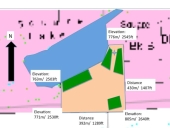
Visually I like the orange orchard and just read that it also has some olives. If I had this many oranges, I would get pigs. Nothing would be wasted. How busy is this narrow road? One car per hour or per minute? I understand it's located at the higher part of the property.
I have not noticed high voltage power lines. If the lines that are there are just feeder lines (around 15 kV or even twice more) I would  not care as long as they do not transect the land in the middle. The water canal means there is water. The floodzone looks greener than anything around, so maybe you could get two milk goats at some point even if you don't plan now. It would be also good for chicken pen (movable when flooding). Probably the best spot for vegetables, because there would be more moisture there all year long and more humid air from canal water.

From two houses the more expensive wins. The cheaper one is just too ugly for me, but looks that it's located in some valley. The more expensive is on the hill(s). It is off grid, but does not say if it has sufficient water. It looks good and quality and the views are stunning, however the orange land looks most idyllic, pastoral and peaceful. Everything is ready, so - much less adventure (at higher price) and less choices to make. Being on the mainland, one can just take a car and get anywhere within Euro-Asia. The 330k house looks like it would have the poorest soil, being on the hill in chaparral like biome. It also has a lot of olives.

If I had to choose I would pick oranges as I love designing and building and I like having animals and  plenty of water. I would have shade of many trees and a producing orchard.

If you don't want to build then for two times as much money you have a ready package. I know it's personal but also a lot depends on your age. If you start late in life and from scratch you may not have enough energy to develop all you need the way you want.
 
Dareios Alexandre
Posts: 64
Location: Rethymno, Crete
6
  • Likes 3
  • Mark post as helpful
  • send pies
    Number of slices to send:
    Optional 'thank-you' note:
  • Quote
  • Report post to moderator
Hi Cristo,
Apologies for the late reply. Thank you, I appreciate all your ideas and will take them into consideration. Things are changing every day here it seems and now my family and I are actually looking into other countries outside of Greece, like the south of Spain, where there are more opportunitis to buy income producing fruit farms.

Cristobal Cristo wrote:If you don't plan on having animals them 1 ha should be sufficient Please remember that animal manure is your main soil improvement material in such climate.
Visually I like the orange orchard and just read that it also has some olives. If I had this many oranges, I would get pigs. Nothing would be wasted. How busy is this narrow road? One car per hour or per minute? I understand it's located at the higher part of the property.
I have not noticed high voltage power lines. If the lines that are there are just feeder lines (around 15 kV or even twice more) I would  not care as long as they do not transect the land in the middle. The water canal means there is water. The floodzone looks greener than anything around, so maybe you could get two milk goats at some point even if you don't plan now. It would be also good for chicken pen (movable when flooding). Probably the best spot for vegetables, because there would be more moisture there all year long and more humid air from canal water.

From two houses the more expensive wins. The cheaper one is just too ugly for me, but looks that it's located in some valley. The more expensive is on the hill(s). It is off grid, but does not say if it has sufficient water. It looks good and quality and the views are stunning, however the orange land looks most idyllic, pastoral and peaceful. Everything is ready, so - much less adventure (at higher price) and less choices to make. Being on the mainland, one can just take a car and get anywhere within Euro-Asia. The 330k house looks like it would have the poorest soil, being on the hill in chaparral like biome. It also has a lot of olives.

If I had to choose I would pick oranges as I love designing and building and I like having animals and  plenty of water. I would have shade of many trees and a producing orchard.

If you don't want to build then for two times as much money you have a ready package. I know it's personal but also a lot depends on your age. If you start late in life and from scratch you may not have enough energy to develop all you need the way you want.

 
Cristobal Cristo
Posts: 832
Location: Sierra Nevada foothills, 350 m, USDA 8b, sunset zone 7
186
  • Likes 2
  • Mark post as helpful
  • send pies
    Number of slices to send:
    Optional 'thank-you' note:
  • Quote
  • Report post to moderator
Dareios,

I did not know that you want to have income producing fruit farm.
In this case I would suggest to look for larger plots and definitely with high yielding water source.
Assuming 200 trees/ha with 10x5 (or 7x7) m grid planting, if mature and depending on the species they would produce on average 50 kg/tree, so 10 tons of fruit if everything goes smoothly (it hardly ever does with natural approach). 10000 kg of fruit sold at for example $3/kg would generate $30k. Is it much or not, depends on the lifestyle and if everything is debt free.
In hot summer Mediterranean you will be limited to the number of species that you can successfully grow naturally. At the same time it would be the species that everybody grows - mostly olives and almonds. So to be competitive with a selection of not popular species/cultivars you need water. Closer to the coast or on islands, you will be able to grow larger variety, deeper inland - where the climate is more continentailized (like mine), you will be more limited.

You will have to find out what could grow relatively easily and at the same time people would love to consume it. For example where I live, it's almost impossible to buy quality figs (despite it was a fig growing region 100 years ago). The same for grapes they just taste like sugar infused rubbish. Both of these species grow easily in a right spot so I'm investing in them, expanding every year with the best (and unknown) cultivars. I don't do it for income, but at some point when I have excess I can sell a cutting edge fruit if I wish.

I also recommend the melons and watermelons. There is a huge selection to choose from (I already tried 50 different cultivars and have my favorites) and usually the market offers one kind watermelon and two types of melon. According to my observations, cucurbits are the easiest to grow vegetable in hot summer Mediterranean.
 
You had your fun. Now it's time to go to jail. Thanks for your help tiny ad.
Learn Permaculture through a little hard work
https://wheaton-labs.com/bootcamp
reply
    Bookmark Topic Watch Topic
  • New Topic