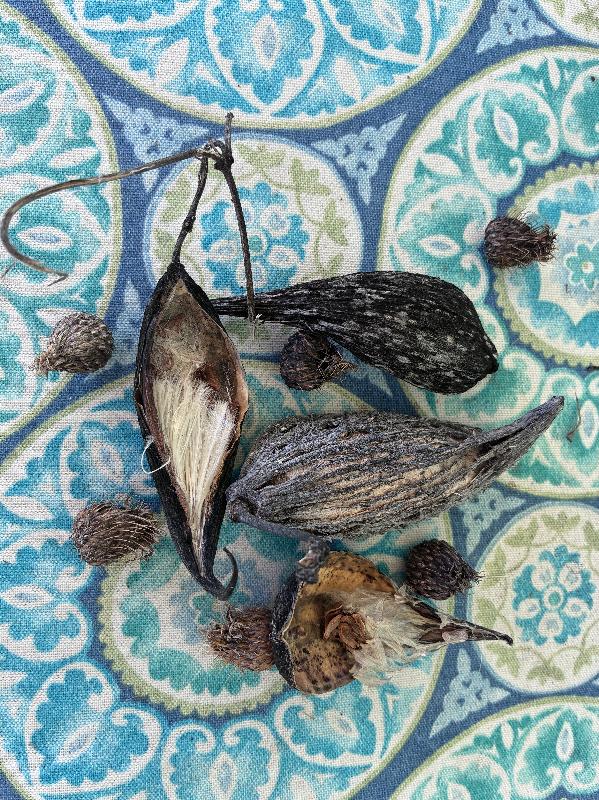
A couple of milkweed pod survived along my local river trail. At least, they were the only ones I found while I was actively looking for them. I collected them in a canning jar I carry with me when I'm looking for specific things. I also found some purple coneflower but that's beside the point. Both are in the picture below.
I'm putting them in an area of my backyard that I'm letting turn to meadow, carefully and with as little intervention as possible. I say that with a caveat because I'm purposely introducing plants I want to grow there.
I've planted a few seeds already but I have a ton more. I also ordered some swamp milkweed from a well known seed company, but they're in the fridge right now getting stratified. I'll be able to plant them in the fall.
So...are there best practices to help them germinate? Have you had success or failure? What do you feel contributed to either of those?
I would look to nature's way on how milkweed disperses and increases. Common milkweed is a very cool plant with the silk as the wings for the seed. Naturally the milkweed shatters in the fall and the seed lays on the ground over winter. The freeze/thaw cycle is used in many seeding applications, and this helps to integrate the seeds with the soil. Cold stratification is nothing more than mimicking the non-growing season. Common milkweed is quite a large seed, and I would just cover them with a thin layer of soil, they increase by rhizomes. I can't say as to the type soil they prefer but are found in the tallgrass prairie region along with swamp milkweed, a beautiful flower and plant.
I tried to mimic nature with some of the seeds. Others, I used my garden claw to pull up a plug of dirt, turned it over, placed a couple of seeds on the moist soil, and lightly covered them. I did this in about six locations. I should know pretty soon if this worked.
Jim
Doug McEvers wrote:Jim,
I would look to nature's way on how milkweed disperses and increases. Common milkweed is a very cool plant with the silk as the wings for the seed. Naturally the milkweed shatters in the fall and the seed lays on the ground over winter. The freeze/thaw cycle is used in many seeding applications, and this helps to integrate the seeds with the soil. Cold stratification is nothing more than mimicking the non-growing season. Common milkweed is quite a large seed, and I would just cover them with a thin layer of soil, they increase by rhizomes. I can't say as to the type soil they prefer but are found in the tallgrass prairie region along with swamp milkweed, a beautiful flower and plant.
I don't do anything crazy with mine except I like to spread them in the late fall before the winter snows hit. I'll just toss the seeds around areas that milkweed tends to grow, essentially disturbed exposed areas. These tend to be the edges of my property and I have had success with it growing.
I would say my germination rates are not spectacular, but I am not putting special effort in for them to succeed so it isn't a surprise to me.
Sounds like you're doing it right. The direct sow with a bit of soil coverage is how I'd approach it too. Common milkweed can be slow to show — sometimes nothing happens the first year and then it just appears the next spring once it's had a full cold cycle. Worth marking the spots so you don't accidentally disturb them.
Leaftide - garden planner w/ 1228 plant types. Need permaculture testers for fruit trees & perennials. Free Pro month for detailed feedback, even just suggesting plants
It is going to grow where it wants to anyway, right? I hope my efforts this year pay off in the next year. I am thinking long term and as I like to say...everything here is an experiment. If I can get something established on the upwind part of the meadow, seeds should disperse across my property after that. At least some of them. One or two are eventually bound to take hold. Mebbe.
Jim
Timothy Norton wrote:I don't do anything crazy with mine except I like to spread them in the late fall before the winter snows hit. I'll just toss the seeds around areas that milkweed tends to grow, essentially disturbed exposed areas. These tend to be the edges of my property and I have had success with it growing.
I would say my germination rates are not spectacular, but I am not putting special effort in for them to succeed so it isn't a surprise to me.
I'm gonna mark the spots. Thanks for mentioning that. Then there won't be any questions.
Jim
Joao Winckler wrote:Sounds like you're doing it right. The direct sow with a bit of soil coverage is how I'd approach it too. Common milkweed can be slow to show — sometimes nothing happens the first year and then it just appears the next spring once it's had a full cold cycle. Worth marking the spots so you don't accidentally disturb them.
Years ago I dug up a plant and put it in my back yard. They have been growing there ever since. I enjoy breaking open the dried pods and watching the seeds blow around in the wind. Not sure how my neighbors would feel about that if they knew. Lots of milkweed growing now.
The ones you picked up in the wild would be sown in October.
The Swamp milkweed maybe okay now. Just follow the instructions on the packet.
Invasive plants are Earth's way of insisting we notice her medicines. Stephen Herrod Buhner
Everyone learns what works by learning what doesn't work. Stephen Herrod Buhner
That’s awesome, Thom! I hope I have the same success, and where I live, the neighbors may or may not care. They all mow their lawns like suburbanites!
Jim
Thom Bri wrote:Years ago I dug up a plant and put it in my back yard. They have been growing there ever since. I enjoy breaking open the dried pods and watching the seeds blow around in the wind. Not sure how my neighbors would feel about that if they knew. Lots of milkweed growing now.
Thanks for chipping in. I left enough seeds to plant some this fall. And again, the swamp milkweed seeds that I bought are being cold stratified in my refrigerator right now. I will be very intentional this fall about getting them some good soil contact and light cover. Hopefully in a couple years, I will have a milkweed success story.
Jim
Anne Miller wrote:The ones you picked up in the wild would be sown in October.
The Swamp milkweed maybe okay now. Just follow the instructions on the packet.
Hopefully in a couple years, I will have a milkweed success story.
Jim, you might want to be careful what you wish for!
My butterfly weed stays put and I would love more of it but have not got the seeds to germinate other than the first time when I grew this plant.
BUT....my common milkweed is quite active and likes to roam.
I had just a few plants started from seed in pots and planted them in different spots...we're weeding it out of the big garden for the fourth year 🙄
I have only one long wide row a good distance from the gardens where we will let it spread...we mow both sides there and even then it's popping up several spots up to 10 or more feet away....it is so lovely though...fragrent blooms and a favorite for monarch caterpillars every year.
I don't think any of the other milkweeds spread by what I assume are runners like it does?
"We're all just walking each other home." -Ram Dass
"Be a lamp, or a lifeboat, or a ladder."-Rumi
"It's all one song!" -Neil Young
I'm trying to get some started on a new site myself, especially since reading that not only is it a food for monarch butterflies, but that fireflies also forage on the blooms! So it's a win for at least two additional natural wonders! So I gathered a bunch of seed last fall, scattered some around right then, planted some in an outdoor bed in the fall, and then some more in the cold frame in the spring along with the tomatoes and other veggies. So far, only the seeds planted with the veg in the coldframe came up at all! I've since transplanted these out, so hopefully natural spread will suffice from there. I guess this proves that sometimes everything you read isn't the whole story!
I’m building a couple cold frames this summer, so I will try that too! Thanks for the idea.
Jim
Alder Burns wrote:I'm trying to get some started on a new site myself, especially since reading that not only is it a food for monarch butterflies, but that fireflies also forage on the blooms! So it's a win for at least two additional natural wonders! So I gathered a bunch of seed last fall, scattered some around right then, planted some in an outdoor bed in the fall, and then some more in the cold frame in the spring along with the tomatoes and other veggies. So far, only the seeds planted with the veg in the coldframe came up at all! I've since transplanted these out, so hopefully natural spread will suffice from there. I guess this proves that sometimes everything you read isn't the whole story!
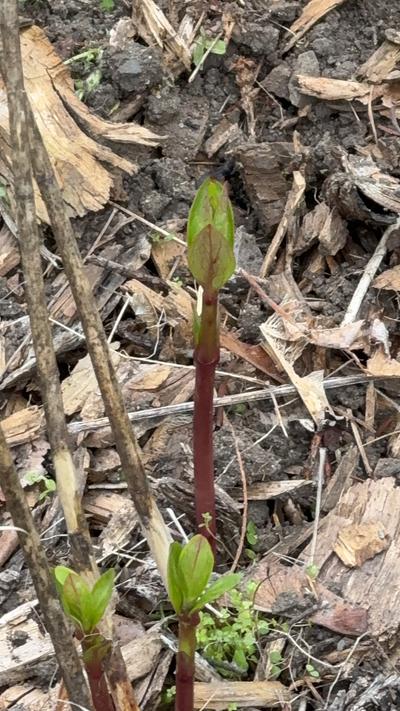
This thread got me wondering about the milkweed seeds I broadcasted in my side yard the previous year. I went down to check and saw some must have taken!
Timothy Norton wrote:This thread got me wondering about the milkweed seeds I broadcasted in my side yard the previous year. I went down to check and saw some must have taken!
@ Timothy....those look more like dogbane shoots than common milkweed. I don't think milkweed are ever purple stemmed like that. Not good for food for people or for monarchs, though it's a good fiber plant according to some.
This tiny ad says you shall not pass
Heat your home with the twigs that naturally fall of the trees in your yard






 11
11