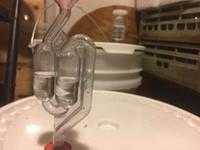


I had my milk ferment today, and it was awesome! So, essentially the recipe was whole milk plus a little yoghurt, and shake it twice a day (once in morning, once at night). And all of this is done at room temperatrure. I burped it as necessary to prevent messes. I let it ferment for seven days like this, and for one more day I added honey. The honey made the yoghurt drink pleasantly fizzy and a little sweet. In total, this ferment took eight days, and it was well worth it!
I'm currently making my third generation jars of milk ferments, and the bacterial culture seem to be very well-adapted to homogenized milk, because the first generation took an entire week for anything to happen. Then, the second generation took couple days to get active, and now, the third generation took less than twenty four hours to become active.
Also, I would not have thought that milk get so bubbly! Because, the second generation jar has been producing so much activity that it bent out the top of the jar this morning, because I didn't burp it soon enough.
I currently have the following sets of ferments going.
-5 milk ferments
--1 milk ferment if a second generation jar that was inoculated from the first generation jar and had honey added
--2 milk ferments are third generation jars that were inoculated with the second generation (one has honey added, and the other is just milk)
--2 milk ferments are fourth generation jars that were inoculated with the third and second generation jar contents (one has honey added and one just milk)
--I have noticed that the ones with honey added to them are significantly more bubbly. I also noted that the first generation jar had a slower gentle ferment for an entire week and then a rapid fizzy ferment during the last 34 hours when honey was added.
-5 vegetable ferments
--1 is a broccoli and onions ferment in salt water
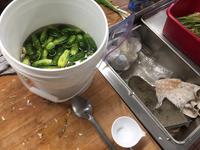
--1 is a cucumber ferment in salt water mixed with juices from the fruit ferments
--3 of them are just a hodge-podge of vegetables stuffed into jars with saltwater
-3 fruit ferments
--1 ferment is another banaa date ferment
--1 ferment is pure apples
--1 ferment is a month long fruit ferment that has been revived with bananas
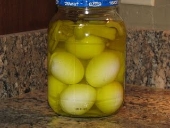
-3 soft boiled egg ferments
--these were inoculated with yoghurt, have their shells on, and were cooked at slightly different temperatures (b/c I'm figuring out how to soft boil eggs above sea level)
It takes me about twenty four hours for milk to go from liquid to a semi-coagulated yoghurt like drink. This drink has a mild yoghurt flavor.
My longer milk ferments, like the 7-day and longer ferments, get to be very very sour and extremely carbonated. They also have a strong-ish smell, but they still taste awesome!
I thought this milk ferment was pretty cool looking. I'm nto entirely sure what's happening in this one; I am thinking it is becoming curds and whey. Though, the milky white part appears to be very bubbly and fluffy. My other milk ferments are turning into yoghurt or a sour fizzy milk drink.
I think it is also interesting to note how the physical actions on my ferments affect them. The ones that are turning into plain yoghurt are ones that I have not shaken or disturbed, but just left alone to sit calmly. The ones that are turning into fizzy carbonated drinks are ones that showed similar separation occurring, but I then shook to mix the two parts- watery liquid and milky white stuff- back together.
I still have ferments going. I brought my active ferments down to a much smaller collection so that I can hide them easily when room inspections come around.
My active fermenting jars are as follows:
- an unshaken milk ferment (this is so that it seperates into curds and whey; whereas, if I shake it daily, it would make a fizzy sour milk drink)
- a banana ferment with minimal salt (this is so it is more of a sour and bubbly yeast ferment)
- a vegetable ferment with salt and inoculated with yoghurt (this is so that it is a lactic acid bacteria ferment)
- an oatmeal ferment made by mixing oats with the liquid from both the milk and fruit ferments (so I get both lactic acid bacteria and yeast inoculating the culture)
- a mixed fruit, oats, and milk ferment (just so that I can see what happens and taste the results!!!)
My ferments in the picture are from left to right: mixed ferment of oats/milk/fruit, milk ferment, oats ferment, veggie ferment, and fruit ferment.
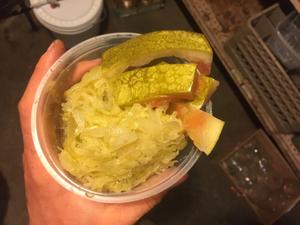
I was taught this morning before hay crew how to make sauerkraut and brined pickles. We followed the recipes from the Ball Blue Book Guide to Preserving. The brined pickles were made with just pure salt, vinegar, water, and cucumbers. The sauerkraut was made with just cabbage and pure salt.
I checked the sauerkraut after a week, and I think I will let it go longer. I want a stronger fermented flavor. At the moment, it really tastes pretty much like salted cabbage, which is pretty good, but I'd prefer it stronger. So, I'll check ti in another week.