
• Post Reply Bookmark Topic Watch Topic
  • New Topic
permaculture forums growies critters building homesteading energy monies kitchen purity ungarbage community wilderness fiber arts art permaculture artisans regional education skip experiences global resources cider press projects digital market permies.com pie forums private forums all forums
this forum made possible by our volunteer staff, including ...
master stewards:
  • Carla Burke
  • Nancy Reading
  • paul wheaton
  • John F Dean
  • r ransom
  • Jay Angler
stewards:
  • Timothy Norton
  • Tereza Okava
  • Pearl Sutton
master gardeners:
  • Christopher Weeks
  • M Ljin
gardeners:
  • Jeremy VanGelder
  • Megan Palmer
  • Thekla McDaniels

Beans and garlic; how close is too close?

 
pollinator
Posts: 1819
Location: Victoria BC
337
  • Likes 3
  • Mark post as helpful
  • send pies
    Number of slices to send:
    Optional 'thank-you' note:
  • Quote
  • Report post to moderator
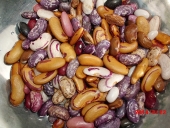
I am planting a bunch of types of dry bush beans.

I have overly wide paths between my garlic beds, due to tractor geometry. Plenty of room for a row of beans down each path..

But, lots of sources say that garlic will stunt beans...

How close is too close?

What is the mechanism responsible for the stunting?


Has anyone experienced stunted beans that they would blame on garlic, or grown them close with no issue?
 
pollinator
Posts: 890
Location: Kansas
238
forest garden fungi bee medical herbs writing greening the desert
  • Likes 5
  • Mark post as helpful
  • send pies
    Number of slices to send:
    Optional 'thank-you' note:
  • Quote
  • Report post to moderator

D Nikolls wrote:But, lots of sources say that garlic will stunt beans...

How close is too close?

What is the mechanism responsible for the stunting?


Has anyone experienced stunted beans that they would blame on garlic, or grown them close with no issue?


It won't answer the primary question, but I have learned that garlic puts out sulfur through its roots. I had a sulfur deficiency in my natural (non-chemical) hydroponics last year and this year I tested putting a clove of garlic in several of my buckets. The plants with the garlic had distinct signs of sulfur toxicity (stunting, burning leaf edges, lower uptake of nitrogen). The problem was immediate, once the garlic started putting down roots. One of these was a bean. Since I took the garlic out it has returned to regular growth. This was in the same net pot, so within inches. I'm guessing that at least part of the problem with bean stunting is sulfur. The bean, of course, wasn't affected by the nitrogen issue, but it was severely stunted and had the burned leaf edges of sulfur toxicity.
 
Posts: 67
Location: Limburg, Flanders, Belgium
35
hugelkultur kids forest garden books chicken writing
  • Likes 2
  • Mark post as helpful
  • send pies
    Number of slices to send:
    Optional 'thank-you' note:
  • Quote
  • Report post to moderator

Lauren Ritz wrote:
It won't answer the primary question, but I have learned that garlic puts out sulfur through its roots. I had a sulfur deficiency in my natural (non-chemical) hydroponics last year and this year I tested putting a clove of garlic in several of my buckets. The plants with the garlic had distinct signs of sulfur toxicity (stunting, burning leaf edges, lower uptake of nitrogen). The problem was immediate, once the garlic started putting down roots. One of these was a bean. Since I took the garlic out it has returned to regular growth. This was in the same net pot, so within inches. I'm guessing that at least part of the problem with bean stunting is sulfur. The bean, of course, wasn't affected by the nitrogen issue, but it was severely stunted and had the burned leaf edges of sulfur toxicity.


This is interesting! Would this also mean that it might not be a good idea to plant beans where garlic was (garlic came out in June so beans could go right in after)? Or would the excess sulfur disappear as soon as the garlic does?
 
Lauren Ritz
pollinator
Posts: 890
Location: Kansas
238
forest garden fungi bee medical herbs writing greening the desert
  • Likes 2
  • Mark post as helpful
  • send pies
    Number of slices to send:
    Optional 'thank-you' note:
  • Quote
  • Report post to moderator

Sanna Heijnis wrote:

Lauren Ritz wrote:
It won't answer the primary question, but I have learned that garlic puts out sulfur through its roots. I had a sulfur deficiency in my natural (non-chemical) hydroponics last year and this year I tested putting a clove of garlic in several of my buckets. The plants with the garlic had distinct signs of sulfur toxicity (stunting, burning leaf edges, lower uptake of nitrogen). The problem was immediate, once the garlic started putting down roots. One of these was a bean. Since I took the garlic out it has returned to regular growth. This was in the same net pot, so within inches. I'm guessing that at least part of the problem with bean stunting is sulfur. The bean, of course, wasn't affected by the nitrogen issue, but it was severely stunted and had the burned leaf edges of sulfur toxicity.


This is interesting! Would this also mean that it might not be a good idea to plant beans where garlic was (garlic came out in June so beans could go right in after)? Or would the excess sulfur disappear as soon as the garlic does?


I don't know whether it would disappear. I suppose it would eventually. Since beans are a nitrogen fixer, I shouldn't think that the nitrogen issue would be a problem. The pots with the beans weren't just being watered with a sulfur additive, but actually had a growing garlic bulb in with the main plant. I suspect the sulfur toxicity was because of proximity more than the presence of the garlic bulb, but that would be something else to test.
 
pollinator
Posts: 3562
Location: Meppel (Drenthe, the Netherlands)
1222
dog forest garden urban cooking bike fiber arts
  • Likes 4
  • Mark post as helpful
  • send pies
    Number of slices to send:
    Optional 'thank-you' note:
  • Quote
  • Report post to moderator
Interesting. I never heard this before. But it might be an explanation why the green beans I planted did not succeed (only one of them has grown out to be a plant, with a few beans): there was garlic in the same bed. Very close in distance and partly overlapping in time.

 
Posts: 12
Location: Central-ish NC
3
  • Likes 6
  • Mark post as helpful
  • send pies
    Number of slices to send:
    Optional 'thank-you' note:
  • Quote
  • Report post to moderator

Sanna Heijnis wrote:

Lauren Ritz wrote:
[...] garlic puts out sulfur through its roots. [...]


This is interesting! Would this also mean that it might not be a good idea to plant beans where garlic was (garlic came out in June so beans could go right in after)? Or would the excess sulfur disappear as soon as the garlic does?


Can't answer about beans, and not sure sulfur is the only thing going on there. What I can attest is that garlic's unfriendly effect definitely can last at least six months, apparently longer for some 'followers'.

Source: Accidental experiment when I put garlic into a spare space in my main garden one fall, and tried easily a half-dozen things in that space mid-late summer after harvest. Dill died, cucumbers died, squash died, and I think I tried some flowers also. It's in kind of a bridge place between two sections, and this season I've lost a tomato there and a couple of peanuts. So, not an experiment I'll try again any time soon.
 
master gardener
Posts: 6701
Location: Carlton County, Minnesota, USA: 3b; Dfb; sandy loam; in the woods
4122
8
forest garden trees books chicken food preservation cooking fiber arts seed woodworking homestead ungarbage
  • Likes 9
  • Mark post as helpful
  • send pies
    Number of slices to send:
    Optional 'thank-you' note:
  • Quote
  • Report post to moderator

Lauren Ritz wrote:I have learned that garlic puts out sulfur through its roots.


I wonder where it gets the sulfur.

ETA: I went and read up. The deal is, soil is rich in sulfate -- which all(?) plants need, including beans. But alliums and especially garlic produce sulfur-based organic molecules (allicin, ajoene, diallyl disulfide, methyl allyl sulfides, &c.) that can harm certain microbes and plants, and legumes are especially vulnerable. So, neat!
 
pollinator
Posts: 282
Location: Mid-Michigan, USA
108
3
chicken food preservation medical herbs building wood heat homestead
  • Likes 6
  • Mark post as helpful
  • send pies
    Number of slices to send:
    Optional 'thank-you' note:
  • Quote
  • Report post to moderator
Well, that explains why, when I first started my little food forest with young fruit trees surrounded by garlic or onion bulbs and different types of legumes planted to vine up the wire cages around the saplings, the legumes never took off.  I had assumed some critter or other ate them as they emerged, but the close proximity to the garlic and onion may actually have been the issue.  🤦‍♀️
 
master pollinator
Posts: 375
Location: UK
135
kids urban seed
  • Likes 9
  • Mark post as helpful
  • send pies
    Number of slices to send:
    Optional 'thank-you' note:
  • Quote
  • Report post to moderator
Yeah that tracks with what happened in my food forest too. Planted beans to fix nitrogen around young fruit trees but had garlic and onions nearby and nothing took. Took me embarrassingly long to put two and two together.
 
This is my favorite tiny ad:
Experience months or even years of natural building and growing your own food
https://wheaton-labs.com/bootcamp
reply
    Bookmark Topic Watch Topic
  • New Topic