• Post Reply Bookmark Topic Watch Topic
  • New Topic
permaculture forums growies critters building homesteading energy monies kitchen purity ungarbage community wilderness fiber arts art permaculture artisans regional education skip experiences global resources cider press projects digital market permies.com pie forums private forums all forums
this forum made possible by our volunteer staff, including ...
master stewards:
  • Carla Burke
  • John F Dean
  • Nancy Reading
  • r ransom
  • Jay Angler
  • Timothy Norton
stewards:
  • paul wheaton
  • Pearl Sutton
  • Anne Miller
master gardeners:
  • Christopher Weeks
  • M Ljin
gardeners:
  • Jim Garlits
  • thomas rubino
  • William Bronson

A big (painful) reason for me not to do hugelkultur

 
master pollinator
Posts: 2154
Location: Ashhurst New Zealand (Cfb - oceanic temperate)
747
duck forest garden fungi trees chicken cooking solar sheep wood heat woodworking rocket stoves
  • Likes 11
  • Mark post as helpful
  • send pies
    Number of slices to send:
    Optional 'thank-you' note:
  • Quote
  • Report post to moderator
So I've been doing "lazy man's hugels" around the place for several years now. Mostly in the form of dumping logs and stumps in strategic places and then covering (or not) with wood chip and cut grass or weeds. Most of the time I'm not planting in them but instead using their beneficial presence to help out neighbouring trees and berry patches. The first one I did alongside a stand of hazelnut and chestnut trees has just about rotted down to nothing in places and the trees seem to have been enjoying its existence.

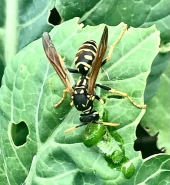
But I'm currently feeling the itchy aftereffects of a dozen or more wasp stings I got last Saturday when I was wandering around collecting seedheads from red clover and lotus to spread around. I leaned over a fence to grab an armload of dried vegetation and was attacked. Turns out there was a big nest of invasive wasps under some rotting logs and branches that I had piled in that corner. A couple got under my shirt and nailed me multiple times, one falling into my waistband and causing mischief there as well.

This is the fourth time in the past couple of years that I have discovered wasp nests in the hugels. It's exactly what they look for: soft, punky wood that's easy for them to tunnel into and close to the ground (unlike paper wasps, who like to be up at least a meter in trees and brush, on a fence, or up under a roof overhang). The last one I found was back in February under one of the hazelnut trees as I was crouched down picking up nuts...at least I had my wits about me and avoided stirring them up.

So I'm reassessing whether I keep doing this and be more wary, or go back to the "mulch everything" default that works well for me. I don't want to add wasp patrol to my ever-expanding seasonal task list, but maybe I just need to accept that it's like cutting all the baby cherry trees and pulling ivy seedlings: something that needs to be done every year because they keep showing up.
 
pollinator
Posts: 1520
Location: Milwaukie Oregon, USA zone 8b
182
  • Likes 4
  • Mark post as helpful
  • send pies
    Number of slices to send:
    Optional 'thank-you' note:
  • Quote
  • Report post to moderator
I'm sorry that happened, wasps are brutal.  I can understand why, for you, mulching might work better.
 
Posts: 45
Location: Half acre on a hill in Central Alabama, Zone 8a and 8b
34
hugelkultur fungi foraging
  • Likes 11
  • Mark post as helpful
  • send pies
    Number of slices to send:
    Optional 'thank-you' note:
  • Quote
  • Report post to moderator
This may sound a little creepy, but wasps of all kinds can recognize people by their scents (of course), and by facial recognition.

I used to do battle with all the terrifying wasps - especially the ground-dwelling variety - same as every other sensible human. Now whenever I find a nest I stand close by, and let them fly over to check me out. If it's a ground nest, I'll flag it with a stick close by to remind me not to stumble over it.

The process seems to work. Twice last tear and once already this season I had the same experience of jamming my hand in a bush or debris pile and causing a cloud response from the wasps. Instead of running, I stood very still, and let them come over to investigate. While they flew around and hovered close to check me out, I could almost imaging them saying, "Oh, that guy. We see him around here all the time."  No fuss. No stings. So far.
 
steward
Posts: 18945
Location: USDA Zone 8a
4794
dog hunting food preservation cooking bee greening the desert
  • Likes 2
  • Mark post as helpful
  • send pies
    Number of slices to send:
    Optional 'thank-you' note:
  • Quote
  • Report post to moderator
I am sorry to hear about the wasp attack.

Were you able to get the stingers out?

Have you tried putting ice pack on the stings?

Apple cider vinegar, baking soda paste or honey are helpful remedies.
 
steward & author
Posts: 46509
Location: Left Coast Canada
18948
10
art trees books chicken cooking fiber arts
  • Likes 6
  • Mark post as helpful
  • send pies
    Number of slices to send:
    Optional 'thank-you' note:
  • Quote
  • Report post to moderator
Do the wasps like the burried wood or the surface wood?

 
Yeardly Arthur
Posts: 45
Location: Half acre on a hill in Central Alabama, Zone 8a and 8b
34
hugelkultur fungi foraging
  • Likes 6
  • Mark post as helpful
  • send pies
    Number of slices to send:
    Optional 'thank-you' note:
  • Quote
  • Report post to moderator

r ransom wrote:Do the wasps like the burried wood or the surface wood?


They all seem to like rotting surface wood to make paper for their nests. The ground dwelling yellowjackets probably prefer buried wood since it may offer spaces that are easier to hollow out for their hives. I've seen them take over chipmunk nests in and under cinder blocks, in the same season that other colonies dig right down into hard clay only fifty yards away. I guess it's up to the queen to pick the neighborhood and furnishings.

As far as wood piles go, they offer protection for both kinds of nests. I have several piles around our place for firewood, potting soil and dead hedges. I approach them all with a degree of caution, expecting to find snakes, spiders and wasps - hopefully before they find me. The same goes for the blackberry patch: look before you reach.
 
master steward
Posts: 15463
Location: Pacific Wet Coast
9849
duck books chicken cooking food preservation ungarbage
  • Likes 11
  • Mark post as helpful
  • send pies
    Number of slices to send:
    Optional 'thank-you' note:
  • Quote
  • Report post to moderator
There are huge differences in types of wasps, and aggressiveness is one of the characteristics. As weird as it may sound, what Arthur said in his post about wasps learning to recognize non-aggressive humans has been my experience also.

The trouble sometime is getting that first meeting completed successfully without getting stung.

Wasps also tend to get goofy when cool weather comes on, as they can't all overwinter. If there's a lot of rotting fruit on the ground, that also increases the risk (the one thing the deer are good at, is picking up windfalls!)

So far, I have not had issues with the wood I've planted in beds, but I've tended to plant it fairly deep. That could be the difference in the particular wasps in your ecosystem. Wasps do have benefits (caterpillar consumption is high on my list and some are pollinators).  Despite reacting on the high side of "bad" myself, I try to find ways to work around them. I will use various non-toxic removal methods if they choose a *really* bad spot to nest.
 
Yeardly Arthur
Posts: 45
Location: Half acre on a hill in Central Alabama, Zone 8a and 8b
34
hugelkultur fungi foraging
  • Likes 7
  • Mark post as helpful
  • send pies
    Number of slices to send:
    Optional 'thank-you' note:
  • Quote
  • Report post to moderator

Jay Angler wrote:. I will use various non-toxic removal methods if they choose a *really* bad spot to nest.


One of the easiest tricks is to tack a small paper bag or wad of newspaper near a wasp nest. They will think it is a bigger colony and relocate on their own.
 
I like my tiny ads with a little salt
grow your own garden and build your own home in the gardening gardeners program
https://wheaton-labs.com/bootcamp
reply
    Bookmark Topic Watch Topic
  • New Topic